Results by title
41 books match the query 'Personal Growth'
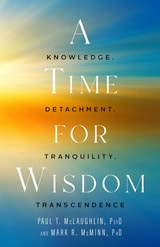
A Time for Wisdom
Knowledge, Detachment, Tranquility, TranscendencePaul T. McLaughlin
Templeton Press, 2022
These are volatile times. Fear, suspicion, and cynicism are chronic. A mere tweet inflames the passions of millions while click-bait “hot takes” stoke the amygdalas of everyone with an Internet connection. We treat those not in our tribe as a threat and deem anyone with a different opinion as evil. Mistaking myopia for measure, we lack all sense of proportion in our judgments. We are shortsighted, mired in the present, ignorant of history, and blind to the future. We thought that technology would save us by connecting us to each other and the world’s information. Instead, it enticed our vices, encouraged our biases, and eroded the one virtue we need now more than ever: wisdom.
A Time for Wisdom is for readers who feel beleaguered by the incivility of the modern world, dispirited by its coarse rhetoric and toxic partisanship. It is an invitation to escape the shallow cacophony and restore peace and perspective to our daily lives. Written by two psychologists, the book takes the best scientific research on wisdom and integrates it with timeless concepts that have, for ages, guided troubled souls through life’s hardships. From this foundation, the authors present four steps we can follow to practice wisdom in the 21st Century:
- Receiving knowledge.
- Practicing detachment.
- Experiencing tranquility.
- Cultivating transcendence.
These are profound and spiritual principles that can bring us immense satisfaction when we aspire to live by them.
In A Time for Wisdom, the authors show us how. They commend a course of action towards the Good, the True, and the Beautiful, towards calm and clear moral reasoning. They lead us out of the circus of contemporary life and show us a path beyond our petty self-centeredness. By journeying along that path, we can, like the great sages and scientists before us, rise above the immediacy of the moment and partake of the numinous and the infinite.
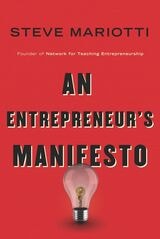
An Entrepreneur’s Manifesto
Steve Mariotti
Templeton Press, 2015
In an increasingly competitive world market, how does the United States rank? Many Americans are worried about the economic state of their nation, especially now that countries like China are becoming ever more economically powerful. What does America need to both stabilize and energize its economy?
Entrepreneurship, Steve Mariotti claims, is vital. An Entrepreneur’s Manifesto is Mariotti’s rallying cry for the world to recognize the potential that business creation holds for the individual and the economy. Mariotti explores how entrepreneurship affects schools and prisons, developed cities and isolated villages, brick-and-mortar stores, and internet-based businesses. He takes a hard look at the research on entrepreneurial education, entrepreneurship, government policy, and the social and cultural attributes most likely to foster successful business creation, incorporating his discussions with some of the best minds on the question of entrepreneurship. Mariotti also examines how the rise of the Internet and Web-based innovations like crowdfunding have both changed—and not changed—the fundamentals of promoting those who take the ultimate gamble of going into business for themselves.
As the author of several leading textbooks on the subject and founder of the Network for Teaching Entrepreneurship (NFTE), a global nonprofit organization that has educated more than 500,000 students and trained more than 5,000 teachers in 50 countries, Mariotti is both an experienced and reliable leader in what he calls the entrepreneurial revolution. Mariotti frequently writes for the Huffington Post and has been recruited by the State Department to discuss his ideas on youth entrepreneurship in Cambodia and other developing countries seeking to escape the shackles of centrally planned economic policies.
Neither a dry recitation of academic theory nor a scattered collection of feel-good stories, An Entrepreneur’s Manifesto builds on Mariotti’s unique perspective to offer a critique that is both inspiring and practical. Riveting stories complement enlightening real-world perspectives, making the work relatable and inspiring.
“There is no more revolutionary act,” Mariotti says, “than starting a business.”
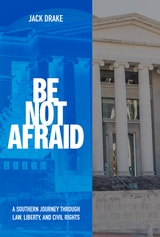
Be Not Afraid
A Southern Journey Through Law, Liberty, and Civil RightsJack Drake
University of Alabama Press, 2026
A civil rights attorney’s unflinching memoir about the fight against segregation and systemic racism through landmark legal battles in Alabama
Be Not Afraid: A Southern Journey Through Law, Liberty, and Civil Rights is a timely and unflinching memoir from civil rights attorney Jack Drake, who has spent decades on the front lines of Alabama’s legal battles for racial justice. Raised in a segregated community in Gardendale, Alabama, Drake came of age during the civil rights movement and became a pivotal figure in cases that reshaped the state’s legal and moral landscape.
Drake helped reform Alabama’s grossly inadequate mental health system and supported voting rights efforts throughout Alabama. His career underscores the crucial role private attorneys and grassroots advocates played in enforcing civil rights laws long after their passage.
Through vivid recollections of courtroom battles, civil rights alliances, and personal transformation, Be Not Afraid offers an intimate view into the persistence and courage required to challenge systemic injustice. At a time when debates over equity and democracy remain pressing, Drake’s story is both a powerful reflection on the past and a call to action for the present. It speaks to the enduring importance of legal advocacy and community solidarity in the fight for a more just society, making it essential reading for those engaged in civil rights history, law, or social change.
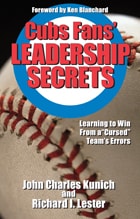
Cubs' Fans Leadership Secrets
Learning to Win From a Cursed Team's ErrorsJohn Charles Kunich and Richard I. Lester
Parkhurst Brothers, Inc., 2009
Cubs fans have often focused on one or two star performers, to the detriment of the team's overall performance.
Stars have often been selfish and devoted to their own success. Leaders have toleratged them, often at a price
to the whole team. Effective leadership recognizes the dangers in this situation. Here's their antidote--in a
highly-readable book that's hot off the press! Foreword by bestselling-author Ken Blanchard.
Discovering the Laws of Life
Sir John Templeton
Templeton Press, 2009
Do Nothing
Peace for Everyday Living: Reflections on Chuang Tzu's PhilosophySiroj Sorajjakool
Templeton Press, 2009
"Words," writes Chuang Tzu, "are for catching ideas; once you've caught the idea, you can forget the words." In Do Nothing, author Siroj Sorajjakool lends us some of his insightful words to help us all "catch" the provocative ideas of one of China's most important literary and philosophical giants—one who emerged at a time when China had several such giants philosophizing on Tao or "the Way."
Though his thinking dates back to the fourth century, Chuang Tzu's Tao has profound implications for our modern lives. He welcomes an existence that is radically removed from the image of normalcy that society often projects, wherein the individual must always strive for more, always seek greater productivity, and always try to better him or herself and his or her place in life. Chuang Tzu would posit that the definitions of normalcy, success, and happiness are arbitrarily assigned and that our rigid and unquestioning adherence to these so-called "norms" leads to existential restlessness and unease. Instead of striving, he would say, be still. Instead of acquiring, embrace nothingness. Instead of seeking to understand the limitlessness of the universe during your brief and extremely limited existence, enjoy the wonder of it.
Siroj Sorajjakool suggests that when we can embrace nothingness, we undergo a spiritual transformation that liberates us to see more clearly and truly find ourselves. He offers a very personal exploration of Chuang Tzu's Tao, first in its historical and literary context, and then in the context of our twenty-first century existence. What emerges is a liberating and highly readable meditation on the many lessons we can "catch" from Chuang Tzu on how we view our aspirations, our joys and sorrows, our successes and failures, and what it means to be a worthwhile person.
Drawing Your Stress Away
A Draw-It-Yourself Coloring BookLucia Capacchione
Ohio University Press, 2017
Everyday Leadership
Getting Results in Business, Politics, and LifeDaniel Granholm Mulhern
University of Michigan Press, 2007
“A book that truly speaks to everyone. . . . Always practical, often inspiring, this is more a reference book than a self-improvement text, and a great read for any would-be leader.”
—Roger Penske, owner of Penske Corporation and Penske Racing
“Sound, practical advice driven home with real-world examples. . . . This is a must-read book for anyone who wants to make a positive difference in the lives of others in their community, their business, or their family.”
—Dennis W. Archer, former mayor of Detroit
“Everyday Leadership is a treasure chest of engaging stories, practical tips, and rich insights into how we each can make a difference in the world when we take responsibility for the personal power that we have. . . . once you’ve taken Everyday Leadership to heart you’ll leave this world a little bit better than you found it.”
—Jim Kouzes, coauthor of The Leadership Challenge
“Everyday Leadership taught me as much about how to be a better person as it did about being a better leader. In fact, it revealed how much the two are the same. Excellent and helpful reading for anyone.”
—Marianne Williamson, author of Return to Love and Everyday Grace
Everyday Leadership offers strategies to improve leadership skills, achieve results, and gain greater satisfaction in these hectic times. It speaks to the everyday leader, whether that person is a principal, pastor, parent, or CEO.
Daniel Granholm Mulhern brings the art of management down to earth, presenting stories that illuminate some of the best ideas about real human leadership. He offers practical steps to achieve the goal of leading well in our lives through creating a vision, communicating that vision, and living it in simple yet powerful ways.
Daniel Granholm Mulhern is the “First Gentleman” of the State of Michigan and an accomplished consultant, business coach, and motivational speaker. In addition to the personal support and counsel he offers his wife, Governor Jennifer Mulhern Granholm, Dan contributes his professional expertise, spearheading the effort to make Michigan’s state government a model for the nation as a “great place to do great work!” Dan also chairs the Michigan Community Service Commission, which promotes and coordinates volunteer efforts across the state.
Generation WTF
From What the #$%&! to a Wise, Tenacious, and Fearless You: Advice on How to Get There from Experts and WTFers Just Like YouChristine B. Whelan
Templeton Press, 2011
We all know what “WTF” usually means: it’s an exclamation of frustration, anger, and an understandable reaction to the brutal new economic realities that have hit young adults harder than any other group. WTF happened to promises of a bright future? What happened to the jobs? And what do we do now that the rules have changed?
Recent college grads were raised in a time of affluence and entitlement, lulled into thinking that a golden future would happen. Young adults with few role models to teach values like thrift, perseverance, and self-control are ill-equipped to cope with sacrifice and failure. Their dismal employment prospects are merely the most visible symptom of more significant challenges. Fortunately, it’s not too late to change course. This optimistic, reflective, and technologically savvy generation already possesses the tools to thrive—if only they learn to harness the necessary skills for success.
In Generation WTF, Christine Whelan does just that. Dr. Whelan, one of the foremost authorities on the history of the self-help genre, worked with more than one hundred young people to test and tweak the best old-school advice and personalize it for the modern twenty-something. After a decade of researching the industry—and years advising “WTFers” as they struggle to make their way in the “real world”—Dr. Whelan knows firsthand what advice works and what Generation WTF has to offer.
Rather than focusing on the frustration that “WTF” usually stands for, Dr. Whelan leads the charge to reclaim the acronym as a battle cry for a positive future: Generation WTF will be a wise, tenacious, and fearless generation, strengthened by purpose and hope. This practical new guide will show these WTFers the way to success and instill lasting habits that will serve them well in both good times and bad.
Godly Love
A Rose Planted in the Desert of Our HeartsStephen G. Post
Templeton Press, 2008
In this uplifting new book, author Stephen G. Post explores the mysteries and the wonder of Godly love. This all-important love is personal, unconditional, unlimited, generative, and omnipresent. The title alludes to Isaiah 35, how Godly love is said to plant a rose in our hearts precisely when we feel like a desert with no more love to give.
Post draws on his life experiences and works at the Institute for Research on Unlimited Love as he intersperses personal anecdotes with spiritual truths and research on human happiness. In the process, he defines the concept of Godly love and illustrates how important it can be in our lives—not only emotionally and spiritually but physically as well. "Godly love," he writes, "is the only foundation in the universe that we can really lean on."
We all have deserts in life, so we all need Godly love. Without it, the downward slide to cynicism, hostility, and cool indifference can be too easy. These meditations on the subject will nurture our confidence in the power of a love greater than our own when we need it most.
Gratitude
Affirming One Another Through StoriesLen Froyen
Parkhurst Brothers, Inc., 2013
Hello, This Is Your Body Talking
A Draw-It-Yourself Coloring BookLucia Capacchione
Ohio University Press, 2017
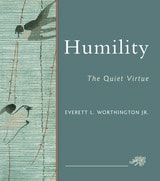
Humility
The Quiet VirtueEverett L. Worthington
Templeton Press, 2007
Humility is a virtue that can be difficult to describe because of its paradoxical nature: claiming authority about humility and claiming that one is humble both suggest a lack of humility. In Humility, Everett L.Worthington Jr. seeks a way around this paradox by looking to people who are considered by others to be humble. He suggests people as examples: Jesus, Siddhartha, Gandhi, Mother Teresa, and Martin Luther King Jr. He looks, too, at people whom he admires. He examines the characteristics of humility they share, and, in doing so, formulates a working understanding of humility.
Science has made few attempts to measure humility, Worthington points out, but those few studies do give a different, but complementary, perspective on humility than the wisdom of the ages. Humility may not be a skill we can learn, but people can be inspired to be humble. "Great people—and ordinary people acting nobly—can inspire us," Worthington writes. "When we catch the spirit, we can transfer that spirit from ourselves to others." Quotations interspersed throughout the book reinforce the message that the unassuming virtue of humility transforms lives.
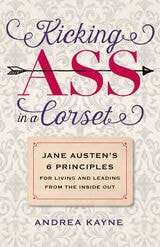
Kicking Ass in a Corset
Jane Austen’s 6 Principles for Living and Leading from the Inside OutAndrea Kayne
University of Iowa Press, 2021
What can organizational leaders in business, education, government, and most any enterprise learn from an unemployed, unmarried woman who lived in patriarchal, misogynistic rural England more than 200 years ago? As it turns out, a great deal. In identifying the core virtues of Austen’s heroines—confidence, pragmatism, diligence, integrity, playfulness, and humility—Andrea Kayne uncovers the six principles of internally referenced leadership that, taken together, instruct women how to tap into a deep well-spring of personal agency and an internal locus of control no matter what is going on around them. Utilizing practical exercises, real-life case studies, and literary and leadership scholarship, Kicking Ass in a Corset maps out effective leadership that teaches readers how to tune out the external noise and listen to themselves so that they can truly live and lead from the inside out.
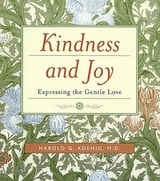
Kindness and Joy
Expressing the Gentle LoveHarold G Koenig
Templeton Press, 2006
This book includes guidance as well as information and inspiration. There are practical recommendations on how to perform acts of kindness in personal lives and at work, toward friends, colleagues, and family members—even with one's enemies. Suggestions are also offered on ways to encourage others to be kind so they, too, can experience the joy that results.
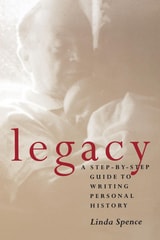
Legacy
A Step-By-Step Guide To Writing Personal HistoryLinda Spence
Ohio University Press, 1997
When Linda Spence asked her aging mother to write her life story, her mother stared at a blank sheet of paper and asked—“How? Where do I begin?” In this practical guide to capturing those memories that have been stored away, Linda Spence provides the questions that are the keys to unlocking the memories that make up a life.
Beyond the vital statistics are the personal stories that tell what it was like, what we did, and why we did it, how we feel about our choices, and what our circumstances were. Through encouraging coaching, shared memories, and open-ended questions, the process of producing a personal history becomes intriguing and engaging.
With Legacy the possibilities expand: a personal record is preserved—with its myths, traditions, joys, pains, gains, and losses; a family opens a potential dialogue that will last for generations; the writer has an opportunity for insight and resolution; the culture of a time and place is noted; the tradition of personal story is revitalized, and our present and future find nourishment and knowledge in the past.
Either as a gift that can act as a shared experience as the memories are recounted or as a personal way to take account of one’s experiences, often long since forgotten, Legacy is indeed a way to get one’s story down.
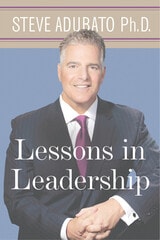
Lessons in Leadership
Steve Adubato, PhD
Rutgers University Press, 2016
Listen to Your Work
Job-Active Advice from a Battle-Scarred MentorCollins Andrews
Parkhurst Brothers, Inc., 2009
Make Your Job a Calling Resource Guide
Bryan J. Dik
Templeton Press, 2014
It is designed to assist instructors, book study leaders, career counselors, human resources professionals, and individual readers who seek to delve deeper into the book, Make Your Job a Calling. In each chapter of the guide, the reader is given (1) a chapter summary, (2) general themes, (3) discussion questions, and (4) suggested activities. The suggested activities often involve a free write where you are encouraged to write your thoughts down without editing yourself. In a free-write you are not concerned with proper grammar or punctuation. Rather, you write your immediate thoughts down in a free-flowing manner. This allows for deep exploration and can inform rich discussion of ideas in a productive learning environment.
The elements in this guide are designed to facilitate the reflection and discussion process, providing readers with useful starting points. Of course, not all group leaders will find every question or activity useful for their particular group, which is why we encourage flexible use of the material. By all means, pick, choose, add to, and adapt according to your sense of what will be most helpful for the group you are leading.
Whether you feel stuck or overwhelmed, hopeful or uncertain, or energized and ready to go, this guide can assist you in that journey.
Make Your Job a Calling
How the Psychology of Vocation Can Change Your Life at WorkBryan J. Dik
Templeton Press, 2013
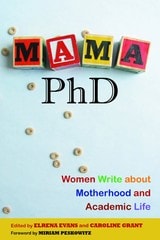
Mama, PhD
Women Write about Motherhood and Academic LifeEvans, Elrena
Rutgers University Press, 2008
Amid these disadvantages, what is a Mama, PhD to do? This literary anthology brings together a selection of deeply felt personal narratives by smart, interesting women who explore the continued inequality of the sexes in higher education and suggest changes that could make universities more family-friendly workplaces.
The contributors hail from a wide array of disciplines and bring with them a variety of perspectives, including those of single and adoptive parents. They address topics that range from the level of policy to practical day-to-day concerns, including caring for a child with special needs, breastfeeding on campus, negotiating viable maternity and family leave policies, job-sharing and telecommuting options, and fitting into desk/chair combinations while eight months pregnant.
Candid, provocative, and sometimes with a wry sense of humor, the thirty-five essays in this anthology speak to and offer support for any woman attempting to combine work and family, as well as anyone who is interested in improving the university's ability to live up to its reputation to be among the most progressive of American institutions.
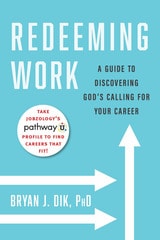
Redeeming Work
A Guide to Discovering God's Calling for Your CareerBryan J. Dik
Templeton Press, 2020
The author, Bryan Dik, PhD, is one of the leading psychologists in the world who specializes in vocation. A professor, entrepreneur, and follower of Christ, Dik wrote this book as a labor of love after devoting his career to research and development of practical strategies for helping others find purposeful work. His message: there are abundant opportunities for Christians to forge careers that answer God’s calling for their lives. In Redeeming Work, he shares the tools you need to find these opportunities and pursue them successfully.
Your purchase of Redeeming Work comes with a special bonus: free access to an evidence-based online career assessment system called PathwayU. By taking this assessment, you’ll learn about what makes you unique, including what you enjoy (interests), what matters to you (values), your general tendencies (personality), and what you most need from an organization (workplace preferences). Then, you’ll be able to explore career paths (and current job openings) that fit the pattern of gifts God has given you.

Searching for Soul
A Survivor's GuideBobbe Tyler
Ohio University Press, 2009
Shortlisted for the 2010 Eric Hoffer Award’s Montaigne Medal
To dive deep into your inner life. To explore what matters most: wisdom, happiness, the pain of loss, self–accountability, aging, and more. Searching for Soul: A Survivor’s Guide is a breathtakingly honest case study: a self-examination resulting in the discovery of a meaningful life.
Bobbe Tyler blends her story with in-depth commentary, framing each chapter as a response to one of a set of questions, appended to the book, entitled The Harvesting Wisdom Interview. In her search for fulfillment, Tyler asks and answers the most difficult questions about the trauma of mental illness, divorce, financial and emotional despair. The rewards of this hard–won wisdom belong not to her alone but by way of her unflinching examination of life’s many paths, dead ends, and circuitous routes — to anyone who has faced a life–choice gone wrong — or known the indescribable recovery from addiction or abuse, or longed for the peace that seems just out of reach. This searing self–appraisal provides hope and fellowship for those who seek to know themselves better.
Searching for Soul
A Survivor’s GuideBobbe Tyler
Ohio University Press, 2009
To dive deep into your inner life. To navigate its complexity and explore your story in depth. To discover who you are exactly—the courage you have when life breaks apart, how conscious you become in that process, and how rich you feel learning the meaning of your life. On a search for wholeness, Bobbe Tyler delves deep to find and tell her story—the trauma of familial mental illness, marriage and divorce, spiritual despair, accountability, addiction and the joy of recovery, surviving loss, and finally that which matters most: love in all its ways. The rewards of her wisdom belong not to her alone but, by way of her unflinching examination of life’s many paths, to all who have a story of their own to tell—who have faced a life-choice gone wrong, or met the peace that had always seemed just out of reach. This searing self-appraisal provides a model for those who seek to know themselves better and are willing to sound their depths to find their story in full.
Self-Control in Seven Steps
Christine B. Whelan
Templeton Press, 2012
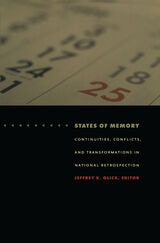
States of Memory
Continuities, Conflicts, and Transformations in National RetrospectionJeffrey K. Olick, ed.
Duke University Press, 2003
The contributors—including historians and social scientists—describe societies’ struggles to produce and then use ideas of what a “normal” past should look like. They examine claims about the genuineness of revolution (in fascist Italy and communist Russia), of inclusiveness (in the United States and Australia), of innocence (in Germany), and of inevitability (in Israel). Essayists explore the reputation of Confucius among Maoist leaders during China’s Cultural Revolution; commemorations of Martin Luther King Jr. in the United States Congress; the “end” of the postwar era in Japan; and how national calendars—in signifying what to remember, celebrate, and mourn—structure national identification. Above all, these essays reveal that memory is never unitary, no matter how hard various powers strive to make it so.
States of Memory will appeal to those scholars—in sociology, history, political science, cultural studies, anthropology, and art history-who are interested in collective memory, commemoration, nationalism, and state formation.
Contributors. Paloma Aguilar, Frederick C. Corney, Carol Gluck, Matt K. Matsuda, Jeffrey K. Olick, Francesca Polletta, Uri Ram, Barry Schwartz, Lyn Spillman, Charles Tilly, Simonetta Falasca Zamponi, Eviatar Zerubavel, Tong Zhang
Templeton Plan
21 Steps to Personal Success and Real HappinessSir John Templeton
Templeton Press, 2013
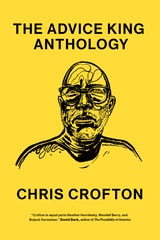
The Advice King Anthology
Chris Crofton
Vanderbilt University Press, 2022
If you are looking for traditional advice, this might not be the book for you. But if you care to find the incendiary, subversive, and hilarious alongside actual thoughts about addiction, depression, gentrification, politics, poetry, music, economic policy, living in New Nashville, and (inevitably) romance, the Advice King has much to offer.
The Advice King Anthology
Chris Crofton
Vanderbilt University Press, 2022
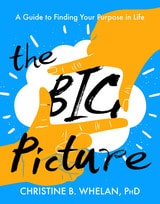
The Big Picture
A Guide to Finding Your Purpose in LifeChristine B. Whelan
Templeton Press, 2016
“If young adults could be guided in the right direction for a life journey of meaning and purpose, we would be grooming the leaders of tomorrow for a better world. This book is the perfect guide.” —Deepak Chopra, MD, FACP, founder of the Chopra Center for Wellbeing
What am I going to do for the rest of my life?
This question is familiar for young people at a turning point—whether it’s facing the end of high school, college, graduate school, or just a dead-end job. Maybe they have the degree they want but don’t know where to start their job search. Perhaps they’re still choosing a major and, given the range—from “Biochemistry” to “Adventure Education”—are lost in the options. Maybe they’re facing a mountain of debt but don’t want to get locked into a job they hate.
While other books might advise writing resumes or preparing for interviews, they only go so far. Young people want more than just another job—they want a life, and a meaningful one at that.
Enter The Big Picture. Created by the leading authority on self-help research and reviewed by over six hundred college students, Dr. Christine B. Whelan’s The Big Picture offers a guide to discovering one’s talents, dreams, and desires that can lead one to a fulfilling career but fulfilling life. It guides young people to take a step back and look at the “big picture” of who they are, what they want, and why they’re here.
Through quizzes and questionnaires which college students have vetted, Whelan guides the reader through “big picture” questions like,
- What are my talents—and how can I use those to help others and create meaning?
- How have my life experiences shaped who I am and what I can give?
- What do I value—and how can I be happy while being true to those values?
Although there are endless books on finding a job, this is the first book that presents research-based and tested material to help young people answer the question, What will I do with my life? The Big Picture provides the resources needed to find—and live—a purposeful life. An excellent gift for a graduate or a guide for yourself.

The Burnout-Belonging Connection
Why Burnout is Not Our Fault and How Community Can Fortify Us Against ItLisa M. Nunn
Rutgers University Press, 2027
For over a decade now, we’ve been hearing the wrong messages about burnout: we are told that we have to fix ourselves in order to fix burnout. This misguided wisdom says that better time management, stronger boundaries, and more yoga-mindfulness-gratitude-exercise-vacation are the solution. Nope. Stronger, healthier communities are the solution. Lisa M. Nunn shows us that the same dynamics that create the social bonds of belonging, when absent, become the drivers of burnout. Greedy communities drive burnout; respectful communities foster belonging. Unfair communities drive burnout; trustworthy communities foster belonging. Negligent communities drive burnout; attentive communities foster belonging. The book offers 35 strategies to cultivate strong belonging—and in doing so minimize burnout—in our workplaces, families, friendship circles, volunteer organizations, athletic clubs, and every other community in our lives.
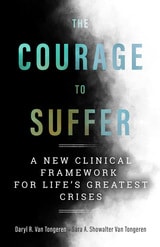
The Courage to Suffer
A New Clinical Framework for Life's Greatest CrisesDaryl R. Van Tongeren
Templeton Press, 2020
Suffering is an inescapable part of life. Some suffering is so profound, so violating, or so dogged that it fundamentally changes people in indelible ways. Many existing therapeutic approaches, from a medical model, treat suffering as mental illness and seek a curative solution. However, such approaches often fail to examine the deep questions that suffering elicits (e.g., existential themes of death, isolation, freedom, identity, and meaninglessness) and the far-reaching ways in which suffering affects the lived experience of each individual.
In The Courage to Suffer, Daryl and Sara Van Tongeren introduce a new therapeutic framework that helps people flourish in the midst of suffering by cultivating meaning.
Drawing from scientific research, clinical examples, existential and positive psychology, and their own personal stories of loss and sorrow, Daryl and Sara’s integrative model blends the rich depth of existential clinical approaches with the growth focus of strengths-based approaches.Through cutting edge-research and clinical case examples, they detail five “phases of suffering” and how to work with a client's existential concerns at each phase to develop meaning. They also discuss how current research suggests to build a flourishing life, especially for those who have endured, and are enduring, suffering.
Daryl and Sara show how those afflicted with suffering, while acknowledging the reality of their pain, can still choose to live with hope.
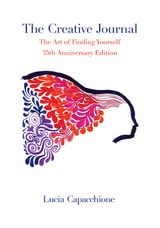
The Creative Journal
The Art of Finding Yourself: 35th Anniversary EditionLucia Capacchione
Ohio University Press, 2015
Originally released in 1980, Lucia Capacchione’s The Creative Journal has become a classic in the fields of art therapy, memoir and creative writing, art journaling, and creativity development. Using more than fifty prompts and vibrantly illustrated examples, Capacchione guides readers through drawing and writing exercises to release feelings, explore dreams, and solve problems creatively. Topics include emotional expression, healing the past, exploring relationships, self-inventory, health, life goals, and more. The Creative Journal introduced the world to Capacchione’s groundbreaking technique of writing with the nondominant hand for brain balancing, finding innate wisdom, and developing creative potential.
This thirty-fifth anniversary edition includes a new introduction and an appendix listing the many venues that have adopted Capacchione’s methods, including public schools, recovery programs, illness support groups, spiritual retreats, and prisons. The Creative Journal has become a mainstay text for college courses in psychology, art therapy, and creative writing. It has proven useful for journal keepers, counselors, and teachers. Through doodles, scribbles, written inner dialogues, and letters, people of all ages have discovered vast inner resources.
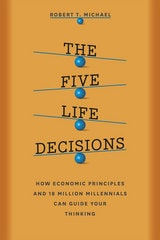
The Five Life Decisions
How Economic Principles and 18 Million Millennials Can Guide Your ThinkingRobert T. Michael
University of Chicago Press, 2016
Economist Robert T. Michael won’t tell you what to choose. Instead, he’ll show you how to make smarter choices. Michael focuses on five critical decisions we all face about college, career, partners, health, and parenting. He uses these to demonstrate how the science of scarcity and choice—concepts used to guide major business decisions and shape national legislation—can offer a solid foundation for our own lives. Employing comparative advantage can have a big payoff when picking a job. Knowing how to work the marketplace can minimize uncertainty when choosing a partner. And understanding externalities—the ripple of results from our actions—can clarify the if and when of having children.
Michael also brings in data from the National Longitudinal Survey of Youth, a scientific sample of 18 million millennials in the United States that tracks more than a decade of young adult choices and consequences. As the survey’s longtime principal investigator and project director, Michael shows that the aggregate decisions can help us understand what might lie ahead along many possible paths—offering readers insights about how their own choices may turn out.
There’s no singular formula for always making the right choice. But the adaptable framework and rich data at the heart of The Five Life Decisions will help you feel confident in whatever you decide.
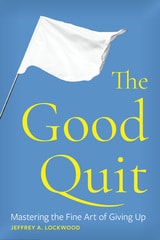
The Good Quit
Mastering the Fine Art of Giving UpJeffrey A. Lockwood
University of Wyoming Press, 2026
Masterful quitting contributes to genuine success, but this practice nevertheless has been largely overlooked by scholars, teachers, coaches, and leaders. This book is a three-part exploration. In conceptual terms it asks, Is it really quitting if the decision is reversible, involuntary, or partial? In normative terms, it explores whether quitting must be well-reasoned, -timed, and -enacted to be justifiable. In applicable terms, it emphasizes phronesis, or “practical wisdom,” and contributes to the understanding that what constitutes quitting, and doing so well, is vital to making decisions about whether to persevere or abandon difficult ventures.
Flourishing is more complex than “grit-or-quit” advocates suggest. To thrive, we must come to know why, when, and how to quit. The Good Quit approaches this topic from an expansive and philosophical point of view, making it valuable for anyone contemplating the what, when, why, and how of quitting.

The Recovery of Unconscious Memories
Hypermnesia and ReminiscenceMatthew Hugh Erdelyi
University of Chicago Press, 1996
Sketching out the scientific foundations for a unified theory of repression that integrates the findings of the laboratory and the clinic, this comprehensive and authoritative synthesis of a century of memory research will be crucial reading for psychologists and clinicians, as well as forensic and legal professionals interested in the recovery of "inaccessible" memories.
"By debunking hypnosis, [Erdelyi] has allowed the debate on memory to move forward. . . . Erdelyi's work on hypermnesia is very important to our understanding of the mechanisms of memory and the brain."—Janet D. Feigenbaum, Times Literary Supplement
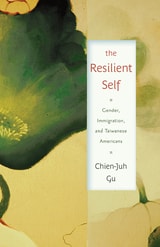
The Resilient Self
Gender, Immigration, and Taiwanese AmericansGu, Chien-Juh
Rutgers University Press, 2017
Most of the women immigrated as dependents when their U.S.-educated husbands found professional jobs upon graduation. Constrained by their dependent visas, these women could not work outside of the home during the initial phase of their settlement. The significant contrast of their lives before and after immigration—changing from successful professionals to foreign housewives—generated feelings of boredom, loneliness, and depression. Mourning their lost careers and lacking fulfillment in homemaking, these highly educated immigrant women were forced to redefine the meaning of work and housework, which in time shaped their perceptions of themselves and others in the family, at work, and in the larger community.
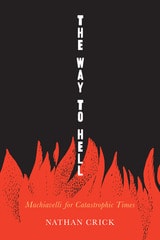
The Way to Hell
Machiavelli for Catastrophic TimesNathan Crick
University of Alabama Press, 2024
An incisive and erudite survey of Machiavelli, the catastrophes of his times and ours, and his counsel for responding to an era of constant crises.
Catastrophe looms. Political, environmental, epidemic, and military crises arrive with increasing frequency. In The Way to Hell, Nathan Crick argues that our perilous times call for the strongest medicine in the Western canon: Machiavelli. Crick reminds contemporary readers about the Florentine master’s advice—that one must learn the road to Hell precisely to avoid taking it.
Like a knowledgeable friend, Crick offers contemporary readers a guide to Machiavelli’s world, work, and warnings. He takes in the sweep of Western history, comparing Machiavelli’s work with ancient sources such as Cicero and Thucydides. And as Machiavelli has never stopped provoking comment, Crick treats readers to a feast of responses to Machiavelli’s work—caustic, learned, and humorous—in the five centuries since he lived.
Including both Machiavelli’s best-known works, The Prince and Discourses on Livy, as well as his personal correspondence and comic plays, Crick asks anew the questions that bedeviled Machiavelli’s beloved Florentine republic: When is force necessary? When are lies justified? Is cruelty defensible? When does social protest slip into violent revolution? What is the correct response to catastrophe?
Like Machiavelli himself, The Way to Hell is witty, stimulating, and challenging. In a world seemingly on the road to Hell, Machiavelli offers an alternative route. His bracing vision exhorts readers to see the dangers in their path and to take action with vigor and determination. Far from a vision of cynicism, Machiavelli offers a beacon of hope for a world that seems on the brink.
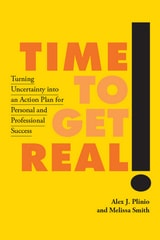
Time to Get Real!
Turning Uncertainty into an Action Plan for Personal and Professional SuccessAlex J. Plinio
Rutgers University Press, 2019
The Life and Career Planning Model in Time to Get Real! has been utilized by individuals in early, mid and later career and life. Too many individuals let life happen to them. Control more of your life through readiness and preparation. We can help you visualize a future that you desire and a road that you can travel to get there.
Written by Alex J. Plinio, and Melissa Smith, acclaimed business leaders and life and career planning specialists, this book is filled with instructive case studies, illuminating stories, interactive exercises, and inspirational quotes enabling you to unlock those things leading to personal satisfaction and success. The Life and Career Planning Model helps you target what matters the most to you in your life while providing the impetus to move you forward in a positive direction. Whether you are 21, 41, or 61, it is now Time to Get Real!
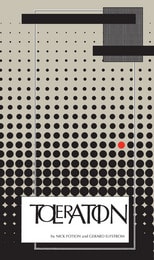
Toleration
Nicholas G. Fotion
University of Alabama Press, 1992
A compelling exploration of the idea that enables diverse people to live together with respect, dignity, and understanding.
Most regard toleration as an unattractive fallback position of compromise and so tend to overlook it in favor of such active concepts as freedom, equality, and justice. Fotion and Elfstrom argue that toleration offers us the useful possibility of responding to a difficult situation with a degree of flexibility not possible with the dichotomous concepts of good-bad, right-wrong, ethical-unethical, Right-Left.
Tolerating saturates ordinary human life and infuses public discussions of religion, morality, and politics. It forms a major strand in the history of Western European thought. Yet the word “toleration” and similar terms are rarely used. Unnoticed and unremarked, they are like the air that surrounds us, vitally important yet invisible.The authors seek to address this oversight in several ways. They begin with a thorough conceptual analysis of toleration and its kindred concepts. They are convinced that an appreciation of the importance of the family of toleration concepts must be founded on an understanding of the various ways in which they function in our language and our lives. In addition, they examine the historical development of the concept of toleration and canvass the major arguments people have employed either to urge toleration or to disparage it. They examine the role of toleration in liberal political philosophy and respond to the major critics of liberal toleration.
The authors also discuss a number of factors that cause toleration to be overlooked in political debate and personal reflection and offer evidence to support the view that this omission is unfortunate. In particular, they argue that toleration has the crucial role of helping people live with one another with respect and dignity in the fractious and contentious world we inhabit. With the rise of racism and other forms of religious, political, and social intolerance, people on all sides of the present debates concerning multi-culturalism and diversity will benefit from this timely and lucidly argued philosophical discussion of the concepts of toleration and its possible application in a less-than-perfect world.
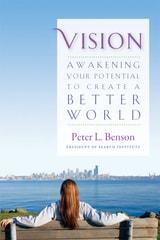
Vision
Awakening Your Potential to Create a Better WorldPeter Benson
Templeton Press, 2009
According to Peter L. Benson, the capacity to generate vision is among life's most beautiful and unheralded gifts. To him, a vision is more than just a goal, more than just a dream of what could be—it is a summons, a pull towards the future, an inspired call to make real that which should be. In Vision: Awakening Your Potential to Create a Better World, Benson takes readers on an uplifting exploration of this powerful concept.