Results by title
4 books match the query 'Personal space in literature'
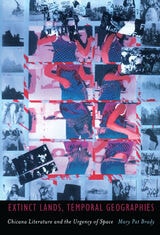
Extinct Lands, Temporal Geographies
Chicana Literature and the Urgency of SpaceMary Pat Brady
Duke University Press, 2002
The history of the American Southwest in large part entails the transformation of lived, embodied space into zones of police surveillance, warehouse districts, highway interchanges, and shopping malls—a movement that Chicana writers have contested from its inception. Brady examines this long-standing engagement with space, first in the work of early newspaper essayists and fiction writers who opposed Anglo characterizations of Northern Sonora that were highly detrimental to Mexican Americans, and then in the work of authors who explore border crossing. Through the writing of Sandra Cisneros, Cherríe Moraga, Terri de la Peña, Norma Cantú, Monserrat Fontes, Gloria Anzaldúa, and others, Brady shows how categories such as race, gender, and sexuality are spatially enacted and created—and made to appear natural and unyielding. In a spatial critique of the war on drugs, she reveals how scale—the process by which space is divided, organized, and categorized—has become a crucial tool in the management and policing of the narcotics economy.
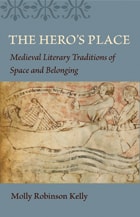
The Hero's Place
Medieval Literary Traditions of Space and BelongingMolly Robinson Kelly
Catholic University of America Press, 2009
The Public Life of Privacy in Nineteenth-Century American Literature
Stacey Margolis
Duke University Press, 2005
Margolis provides readings of fiction by Hawthorne and James as well as Susan Warner, Mark Twain, Charles Chesnutt, and Pauline Hopkins. In these writers’ works, she traces a distinctive novelistic tradition that viewed social developments—such as changes in political partisanship and childhood education and the rise of new politico-legal forms like negligence law—as means for understanding how individuals were shaped by their interactions with society. The Public Life of Privacy in Nineteenth-Century American Literature adds a new level of complexity to understandings of nineteenth-century American culture by illuminating a literary tradition full of accidents, mistakes, and unintended consequences—one in which feelings and desires were often overshadowed by all that was external to the self.
The Spaces of Violence
James R. Giles
University of Alabama Press, 2006
Exploring the landscapes, cultures, and psychological spaces where violence takes root in contemporary American fiction.
The Spaces of Violence is an insightful work of literary criticism in which James R. Giles investigates the complex relationship between violence and space in contemporary American fiction. Through close readings of novels by influential writers including Russell Banks, Cormac McCarthy, Lewis Nordan, Dorothy Allison, Don DeLillo, Denis Johnson, Sherman Alexie, Robert Stone, and Bret Easton Ellis, Giles demonstrates how violence is shaped by the physical, social, and psychological environments in which it occurs.
Drawing on spatial and cultural theory, Giles argues that these novels inhabit a distinctive "fourthspace," a realm existing at the margins of mainstream society where violence permeates everyday life and destabilizes traditional boundaries of identity, community, and morality. Whether set in rural landscapes, urban centers, suburban communities, football stadiums, or transient spaces such as highways and bus stations, the works examined reveal how environments become intertwined with systems of power, alienation, trauma, and destruction.
The book concludes by extending its analysis to representations of violence within family structures, highlighting the far-reaching effects of social and cultural fragmentation. Offering a sophisticated framework for understanding violence in literature, The Spaces of Violence is an important contribution to contemporary literary and cultural studies.