Results by title
5 books match the query 'Personality and culture'
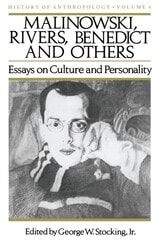
Malinowski, Rivers, Benedict and Others
Essays on Culture and PersonalityEdited by George W. Stocking, Jr.
University of Wisconsin Press, 1988
History of Anthropology is a series of annual volumes, inaugurated in 1983, each of which treats a theme of major importance in both the history and current practice of anthropological inquiry. Drawing its title from a poem of W. H. Auden's, the present volume, Malinowski, Rivers, Benedict, and Others (the fourth in the series) focuses on the emergence of anthropological interest in "culture and personality" during the 1920s and 1930s. It also explores the historical, cultural, literary, and biological background of major figures associated with the movement, including Bronislaw Manlinowski, Edward Sapir, Abram Kardiner, Ruth Benedict, Margaret Mead, and Gregory Bateson. Born in the aftermath of World War I, flowering in the years before and after World War II, severely attacked in the 1950s and 1960s, "culture and personality" was subsequently reborn as "psychological anthropology." Whether this foreshadows the emergence of a major anthropological subdiscipline (equivalent to cultural, social, biological, or linguistic anthropology) from the current welter of "adjectival" anthropologies remain to be seen. In the meantime, the essays collected in the volume may encourage a rethinking of the historical roots of many issues of current concern. Included in this volume are the contributions of Jeremy MacClancy, William C. Manson, William Jackson, Richard Handler, Regna Darnell, Virginia Yans-McLaughlin, James A. Boon, and the editor.
[more]
Stanzas
Word and Phantasm in Western CultureGeorgio Agamben
University of Minnesota Press, 1992
Stanzas is a fascinating blend of philology, medieval physics and psychology, the psychoanalysis of toys, and contemporary linguistics and philosophy. In this unique work, Giorgio Agamben attempts to reconfigure the epistemological foundation of Western culture. He rereads Freud and Saussure to discover the impossibility of metalanguage and of synthesis that could be reflected in the transparency of signs. There is no "superior language" that can read the obscure scenes of the unconscious, and the "symbol" is always the return of the repressed in an improper signifier.
This impossibility leads Agamben to the problem of representation. He argues that because language is the locus of the production and storage of phantasms, all real objects are fractured by phantasmic itineraries that in turn divide poetry and philosophy, joy and knowledge.
Giorgio Agamben teaches philosophy at the Collège International de Philosophie in Paris and at the University of Macerata in Italy. He is the author of Language and Death (1991), The Coming Community (1993), and Means without End (2000).
[more]
The End of the World
Cultural Apocalypse and TranscendenceErnesto de Martino
University of Chicago Press, 2023
The first English translation of a classic work of twentieth-century anthropology and philosophy.
A philosopher, historian of religions, and anthropologist, Ernesto de Martino (1908–1965) produced a body of work that prefigured many ideas and concerns that would later come to animate anthropology. In his writing, we can see the roots of ethnopsychiatry and medical anthropology, discussions of reflexivity and the role of the ethnographer, considerations of social inequality and hegemony from a Gramscian perspective, and an anticipation of the discipline’s “existential turn.” We also find an attentiveness to hope and possibility, despite the gloomy title of his posthumously published book La fine del mondo, or The End of the World. Examining apocalypse as an individual as well as a cultural phenomenon, treating subjects both classic and contemporary and both European and non-Western, ranging across ethnography, history, literature, psychiatry, and philosophy, de Martino probes how we relate to our world and how we might be better subjects and thinkers within it. This new translation offers English-language readers their first chance to engage with de Martino’s masterwork, which continues to appear prescient in the face of the frictions of globalization and environmental devastation.
A philosopher, historian of religions, and anthropologist, Ernesto de Martino (1908–1965) produced a body of work that prefigured many ideas and concerns that would later come to animate anthropology. In his writing, we can see the roots of ethnopsychiatry and medical anthropology, discussions of reflexivity and the role of the ethnographer, considerations of social inequality and hegemony from a Gramscian perspective, and an anticipation of the discipline’s “existential turn.” We also find an attentiveness to hope and possibility, despite the gloomy title of his posthumously published book La fine del mondo, or The End of the World. Examining apocalypse as an individual as well as a cultural phenomenon, treating subjects both classic and contemporary and both European and non-Western, ranging across ethnography, history, literature, psychiatry, and philosophy, de Martino probes how we relate to our world and how we might be better subjects and thinkers within it. This new translation offers English-language readers their first chance to engage with de Martino’s masterwork, which continues to appear prescient in the face of the frictions of globalization and environmental devastation.
[more]
The Feeling Intellect
Selected WritingsPhilip Rieff
University of Chicago Press, 1989
Collected here for the first time, these writings demonstrate the range and precision of Philip Rieff's sociology of culture. Rieff addresses the rise of psychoanalytic and other spiritual disciplines that have reshaped contemporary culture.
[more]
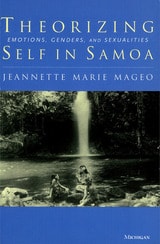
Theorizing Self in Samoa
Emotions, Genders, and SexualitiesJeannette Marie Mageo
University of Michigan Press, 1998
Theorizing Self in Samoa develops a new theory of the self in culture through a psychological and historical ethnography of Samoa. As in many non-Western cultures, Samoan understandings of the self are more sociocentric--accentuating the social roles that people play--than egocentric--emphasizing individual, interior feelings and perceptions. Yet in Samoa, as in any culture, aspects of the self that are not emphasized in cultural explanations of personhood continually reappear, and must somehow be accounted for. Jeannette Marie Mageo argues that all cultures attempt to encompass these stray experiences of the self within a discursive system. She introduces a way of charting human development through cultural discourses, which helps reveal how emotion, gender, and sexuality are constructed in Samoan society and other cultures, including our own. The second half of the book explores the effects of cultural contact and colonialization on the innermost experience of cultural subjects. With its long ethnographic record, Samoa provides a unique opportunity to consider the dialectic between historical change and personal experience, opening a perspective on the ways in which cultural history is forever leaving its fingerprints upon human lives. Theorizing Self in Samoa marks out important territory for psychological anthropology and students of Oceania, and will appeal also to students and scholars in cultural studies, women's studies, and history. Jeannette Marie Mageo is Associate Professor of Anthropology, Washington State University.
[more]