Results by title
20 books match the query 'Pharmaceutical industry'
Biocapital
The Constitution of Postgenomic LifeKaushik Sunder Rajan
Duke University Press, 2006
Sunder Rajan’s ethnography informs his theoretically sophisticated inquiry into how the contemporary world is shaped by the marriage of biotechnology and market forces, by what he calls technoscientific capitalism. Bringing Marxian theories of value into conversation with Foucaultian notions of biopolitics, he traces how the life sciences came to be significant producers of both economic and epistemic value in the late twentieth century and early twenty-first.
Chemical Heroes
Pharmacological Supersoldiers in the US MilitaryAndrew Bickford
Duke University Press, 2020
Competitiveness and Death
Trade and Politics in Cars, Beef, and DrugsGary Winslett
University of Michigan Press, 2021
Gary Winslett builds on new trade theories to explain when and why businesses are most likely to lobby governments to reduce these regulatory trade barriers. He argues that businesses prevail when they can connect with broader concerns about national economic competitiveness. He examines how activist organizations overcome collective action problems and defend regulatory differences, arguing that they succeed when they can link their desire for barriers with preventing needless death. Competitiveness and Death provides a political companion to new trade theories in economics, questioning cleavage-based explanations of trade politics, demonstrating the underappreciated importance of activists, suggesting the limits of globalization, providing in-depth examination of previously ignored trade negotiations, qualifying the California Effect (the shift toward stricter regulatory standards), and showing the relative rarity of regulations used as disguised protectionism.

Crab Wars
A Tale of Horseshoe Crabs, Bioterrorism, and Human HealthWilliam Sargent
University Press of New England, 2006

Crab Wars
A Tale of Horseshoe Crabs, Ecology, and Human HealthWilliam Sargent
Brandeis University Press, 2021
Because every drug certified by the FDA must be tested using the horseshoe crab derivative known as Limulus lysate, a multimillion-dollar industry has emerged involving the license to bleed horseshoe crabs and the rights to their breeding grounds. William Sargent presents a thoroughly accessible insider’s guide to the discovery of the lysate test, the exploitation of the horseshoe crab at the hands of multinational pharmaceutical conglomerates, local fishing interests, and the legal and governmental wrangling over the creatures’ ultimate fate. In the end, the story of the horseshoe crab is a sobering reflection on the unintended consequences of scientific progress and the danger of self-regulated industries controlling a limited natural resource. This new edition brings the story up to date as companies race to manufacture alternatives to the horseshoe crab blood, which is now essential for testing vaccines such as those developed to counter COVID-19. However, horseshoe crab populations are still dwindling, with profound implications not only for the future of the crabs themselves but also for the ecosystems that depend on them.

Drugs for Life
How Pharmaceutical Companies Define Our HealthJoseph Dumit
Duke University Press, 2012
Global Pharmaceuticals
Ethics, Markets, PracticesAdriana Petryna, Andrew Lakoff, and Arthur Kleinman, eds.
Duke University Press, 2006
Whether considering how American drug companies seek to create a market for antidepressants in Japan, how Brazil has created a model HIV/AIDS prevention and treatment program, or how the urban poor in Delhi understand and access healthcare, these essays illuminate the roles of corporations, governments, NGOs, and individuals in relation to global pharmaceuticals. Some essays show how individual and communal identities are affected by the marketing and availability of medications. Among these are an exploration of how the pharmaceutical industry shapes popular and expert understandings of mental illness in North America and Great Britain. There is also an examination of the agonizing choices facing Ugandan families trying to finance AIDS treatment. Several essays explore the inner workings of the emerging international pharmaceutical regime. One looks at the expanding quest for clinical research subjects; another at the entwining of science and business interests in the Argentine market for psychotropic medications. By bringing the moral calculations involved in the production and distribution of pharmaceuticals into stark relief, this collection charts urgent new territory for social scientific research.
Contributors. Kalman Applbaum, João Biehl, Ranendra K. Das, Veena Das, David Healy, Arthur Kleinman, Betty Kyaddondo, Andrew Lakoff, Anne Lovell, Lotte Meinert, Adriana Petryna, Michael A. Whyte, Susan Reynolds Whyte
Globalisation and Industrial Relations
The Pharmaceutical Industry in Germany and the United KingdomLuitpold Rampeltshammer
Campus Verlag, 2008
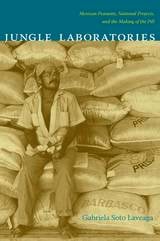
Jungle Laboratories
Mexican Peasants, National Projects, and the Making of the PillGabriela Soto Laveaga
Duke University Press, 2009
Soto Laveaga traces the political, economic, and scientific development of the global barbasco industry from its emergence in the 1940s, through its appropriation by a populist Mexican state in 1970, to its obsolescence in the mid-1990s. She focuses primarily on the rural southern region of Tuxtepec, Oaxaca, where the yam grew most freely and where scientists relied on local, indigenous knowledge to cultivate and harvest the plant. Rural Mexicans, at first unaware of the pharmaceutical and financial value of barbasco, later acquired and deployed scientific knowledge to negotiate with pharmaceutical companies, lobby the Mexican government, and ultimately transform how urban Mexicans perceived them. By illuminating how the yam made its way from the jungles of Mexico, to domestic and foreign scientific laboratories where it was transformed into pills, to the medicine cabinets of millions of women across the globe, Jungle Laboratories urges us to recognize the ways that Mexican peasants attained social and political legitimacy in the twentieth century, and positions Latin America as a major producer of scientific knowledge.
Living Worth
Value and Values in Global Pharmaceutical MarketsStefan Ecks
Duke University Press, 2022
Medical Monopoly
Intellectual Property Rights and the Origins of the Modern Pharmaceutical IndustryJoseph M. Gabriel
University of Chicago Press, 2014
Drawing on a wealth of previously unused archival material, Medical Monopoly combines legal, medical, and business history to offer a sweeping new interpretation of the origins of the complex and often troubling relationship between the pharmaceutical industry and medical practice today. Joseph M. Gabriel provides the first detailed history of patent and trademark law as it relates to the nineteenth-century pharmaceutical industry as well as a unique interpretation of medical ethics, therapeutic reform, and the efforts to regulate the market in pharmaceuticals before World War I. His book will be of interest not only to historians of medicine and science and intellectual property scholars but also to anyone following contemporary debates about the pharmaceutical industry, the patenting of scientific discoveries, and the role of advertising in the marketplace.
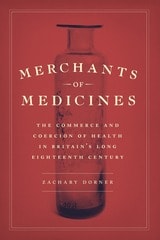
Merchants of Medicines
The Commerce and Coercion of Health in Britain’s Long Eighteenth CenturyZachary Dorner
University of Chicago Press, 2020
In Merchants of Medicines, Zachary Dorner follows the earliest industrial pharmaceuticals from their manufacture in the United Kingdom, across trade routes, and to the edges of empire, telling a story of what medicines were, what they did, and what they meant. He brings to life business, medical, and government records to evoke a vibrant early modern world of London laboratories, Caribbean estates, South Asian factories, New England timber camps, and ships at sea. In these settings, medicines were produced, distributed, and consumed in new ways to help confront challenges of distance, labor, and authority in colonial territories. Merchants of Medicines offers a new history of economic and medical development across early America, Britain, and South Asia, revealing the unsettlingly close ties among medicine, finance, warfare, and slavery that changed people’s expectations of their health and their bodies.
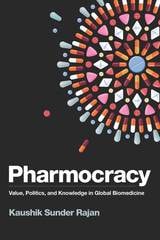
Pharmocracy
Value, Politics, and Knowledge in Global BiomedicineKaushik Sunder Rajan
Duke University Press, 2017

Sick Planet
Corporate Food and MedicineStan Cox
Pluto Press, 2008
Neoliberals often point to improvements in public health and nutrition as examples of globalisation's success, but this book argues that the corporate food and medicine industries are destroying environments and ruining living conditions across the world.
Scientist Stan Cox expertly draws out the strong link between Western big business and environmental destruction. This is a shocking account of the huge damage that drug manufacturers and large food corporations are inflicting on the health of people and crops worldwide. Companies discussed include Wal-Mart, GlaxoSmithKline, Tyson Foods and Monsanto. On issues ranging from the poisoning of water supplies in South Asia to natural gas depletion and how it threatens global food supplies, Cox shows how the demand for profits is always put above the public interest.
While individual efforts to "shop for a better world" and conserve energy are laudable, Cox explains that they need to be accompanied by an economic system that is grounded in ecological sustainability if we are to find a cure for our Sick Planet.
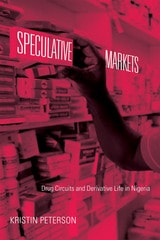
Speculative Markets
Drug Circuits and Derivative Life in NigeriaKristin Peterson
Duke University Press, 2014
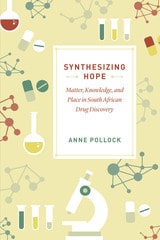
Synthesizing Hope
Matter, Knowledge, and Place in South African Drug DiscoveryAnne Pollock
University of Chicago Press, 2019
Consideration of this case exposes the limitations of global health frameworks that implicitly posit rich countries as the only sites of knowledge production. Analysis of iThemba identifies the problems inherent in global north/south divides at the same time as it highlights what is at stake in who makes knowledge and where. It also provides a concrete example for consideration of the contexts and practices of postcolonial science, its constraints, and its promise.
Synthesizing Hope explores the many legacies that create conditions of possibility for South African drug discovery, especially the specific form of settler colonialism characterized by apartheid and resource extraction. Paying attention to the infrastructures and laboratory processes of drug discovery underscores the materiality of pharmaceuticals from the perspective of their makers, and tracing the intellectual and material infrastructures of South African drug discovery contributes new insights about larger social, political, and economic orders.
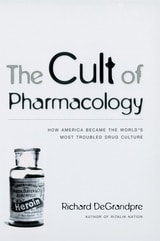
The Cult of Pharmacology
How America Became the World's Most Troubled Drug CultureRichard DeGrandpre
Duke University Press, 2006
Exploring how this rather benign relationship with psychoactive drugs was transformed into one of confusion and chaos, The Cult of Pharmacology tells the dramatic story of how, as one legal drug after another fell from grace, new pharmaceutical substances took their place. Whether Valium or OxyContin at the pharmacy, cocaine or meth purchased on the street, or alcohol and tobacco from the corner store, drugs and drug use proliferated in twentieth-century America despite an escalating war on “drugs.”
Richard DeGrandpre, a past fellow of the National Institute on Drug Abuse and author of the best-selling book Ritalin Nation, delivers a remarkably original interpretation of drugs by examining the seductive but ill-fated belief that they are chemically predestined to be either good or evil. He argues that the determination to treat the medically sanctioned use of drugs such as Miltown or Seconal separately from the illicit use of substances like heroin or ecstasy has blinded America to how drugs are transformed by the manner in which a culture deals with them.
Bringing forth a wealth of scientific research showing the powerful influence of social and psychological factors on how the brain is affected by drugs, DeGrandpre demonstrates that psychoactive substances are not angels or demons irrespective of why, how, or by whom they are used. The Cult of Pharmacology is a bold and necessary new account of America’s complex relationship with drugs.
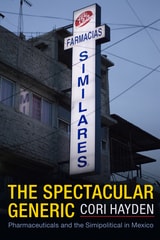
The Spectacular Generic
Pharmaceuticals and the Simipolitical in MexicoCori Hayden
Duke University Press, 2023
Therapeutic Revolutions
Pharmaceuticals and Social Change in the Twentieth CenturyEdited by Jeremy A. Greene, Flurin Condrau, and Elizabeth Siegel Watkins
University of Chicago Press, 2016
This collection challenges the historical accuracy of this revolutionary narrative and offers instead a more nuanced account of the process of therapeutic innovation and the relationships between the development of medicines and social change. These assembled histories and ethnographies span three continents and use the lived experiences of physicians and patients, consumers and providers, and marketers and regulators to reveal the tensions between universal claims of therapeutic knowledge and the actual ways these claims have been used and understood in specific sites, from postwar West Germany pharmacies to twenty-first century Nigerian street markets. By asking us to rethink a story we thought we knew, Therapeutic Revolutions offers invaluable insights to historians, anthropologists, and social scientists of medicine.
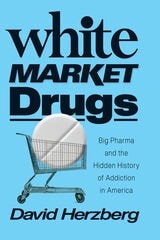
White Market Drugs
Big Pharma and the Hidden History of Addiction in AmericaDavid Herzberg
University of Chicago Press, 2020
These markets are widely acknowledged but no one has explained how they became so central to the medical system in a nation famous for its “drug wars”—until now. Drawing from federal, state, industry, and medical archives alongside a wealth of published sources, Herzberg re-connects America’s divided drug history, telling the whole story for the first time. He reveals that the driving question for policymakers has never been how to prohibit the use of addictive drugs, but how to ensure their availability in medical contexts, where profitability often outweighs public safety. Access to white markets was thus a double-edged sword for socially privileged consumers, even as communities of color faced exclusion and punitive drug prohibition. To counter this no-win setup, Herzberg advocates for a consumer protection approach that robustly regulates all drug markets to minimize risks while maintaining safe, reliable access (and treatment) for people with addiction.
Accomplishing this requires rethinking a drug/medicine divide born a century ago that, unlike most policies of that racially segregated era, has somehow survived relatively unscathed into the twenty-first century.
By showing how the twenty-first-century opioid crisis is only the most recent in a long history of similar crises of addiction to pharmaceuticals, Herzberg forces us to rethink our most basic ideas about drug policy and addiction itself—ideas that have been failing us catastrophically for over a century.