Results by title
13 books match the query 'Pharmacology'
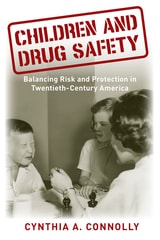
Children and Drug Safety
Balancing Risk and Protection in Twentieth-Century AmericaConnolly, Cynthia A
Rutgers University Press, 2018
Children and Drug Safety traces the development, use, and marketing of drugs for children in the twentieth century, a history that sits at the interface of the state, business, health care providers, parents, and children. This book illuminates the historical dimension of a clinical and policy issue with great contemporary significance—many of the drugs administered to children today have never been tested for safety and efficacy in the pediatric population.
Each chapter of Children and Drug Safety engages with major turning points in pediatric drug development; themes of children’s risk, rights, protection and the evolving context of childhood; child-rearing; and family life in ways freighted with nuances of race, class, and gender. Cynthia A. Connolly charts the numerous attempts by Congress, the Food and Drug Administration, the American Academy of Pediatrics, and leading pediatric pharmacologists, scientists, clinicians, and parents to address a situation that all found untenable.
Open access edition funded by the National Endowment for the Humanities.
The text of this book is licensed under a Creative Commons Attribution NonCommercial-NoDerivatives 4.0 International License: https://creativecommons.org/licenses/by-nc-nd/4.0/
Healing and Society in Medieval England
A Middle English Translation of the Pharmaceutical Writings of Gilbertus AnglicusFaye M. Getz
University of Wisconsin Press, 1991
Originally composed in Latin by Gilbertus Anglicus (Gilbert the Englishman), his Compendium of Medicine was a primary text of the medical revolution in thirteenth-century Europe. Composed mainly of medicinal recipes, it offered advice on diagnosis, medicinal preparation, and prognosis. In the fifteenth-century it was translated into Middle English to accommodate a widening audience for learning and medical “secrets.”
Faye Marie Getz provides a critical edition of the Middle English text, with an extensive introduction to the learned, practical, and social components of medieval medicine and a summary of the text in modern English. Getz also draws on both the Latin and Middle English texts to create an extensive glossary of little-known Middle English pharmaceutical and medical vocabulary.
Iatrogenicity
Causes and Consequences of Iatrogenesis in Cardiovascular MedicineGussak, Ihor B
Rutgers University Press, 2017
Edited by two renowned cardiology experts, Iatrogenicity: Causes and Consequences of Iatrogenesis in Cardiovascular Medicine addresses both the iatrogenicity that arises with cardiovascular interventions, as well as non-cardiovascular interventions that result in adverse consequences on the cardiovascular system. The book aims to achieve three things: to summarize the available information on this topic in a single high-yield volume; to highlight the human and financial cost of iatrogenesis; and to describe and propose potential interventions to ameliorate the effects of iatrogenesis. This accessible book is a practical reference for any practicing physician who sees patients with cardiovascular issues. .
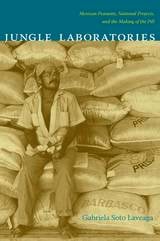
Jungle Laboratories
Mexican Peasants, National Projects, and the Making of the PillGabriela Soto Laveaga
Duke University Press, 2009
Soto Laveaga traces the political, economic, and scientific development of the global barbasco industry from its emergence in the 1940s, through its appropriation by a populist Mexican state in 1970, to its obsolescence in the mid-1990s. She focuses primarily on the rural southern region of Tuxtepec, Oaxaca, where the yam grew most freely and where scientists relied on local, indigenous knowledge to cultivate and harvest the plant. Rural Mexicans, at first unaware of the pharmaceutical and financial value of barbasco, later acquired and deployed scientific knowledge to negotiate with pharmaceutical companies, lobby the Mexican government, and ultimately transform how urban Mexicans perceived them. By illuminating how the yam made its way from the jungles of Mexico, to domestic and foreign scientific laboratories where it was transformed into pills, to the medicine cabinets of millions of women across the globe, Jungle Laboratories urges us to recognize the ways that Mexican peasants attained social and political legitimacy in the twentieth century, and positions Latin America as a major producer of scientific knowledge.
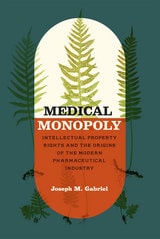
Medical Monopoly
Intellectual Property Rights and the Origins of the Modern Pharmaceutical IndustryJoseph M. Gabriel
University of Chicago Press, 2014
Drawing on a wealth of previously unused archival material, Medical Monopoly combines legal, medical, and business history to offer a sweeping new interpretation of the origins of the complex and often troubling relationship between the pharmaceutical industry and medical practice today. Joseph M. Gabriel provides the first detailed history of patent and trademark law as it relates to the nineteenth-century pharmaceutical industry as well as a unique interpretation of medical ethics, therapeutic reform, and the efforts to regulate the market in pharmaceuticals before World War I. His book will be of interest not only to historians of medicine and science and intellectual property scholars but also to anyone following contemporary debates about the pharmaceutical industry, the patenting of scientific discoveries, and the role of advertising in the marketplace.
Neuropharmacotherapy in Critical Illness
Brophy, Gretchen
Rutgers University Press, 2017
In the treatment of neurocritical disease states, pharmacotherapeutic strategies are increasingly relevant. Neuropharmacotherapy in Critical Illness is the first book that provides this information in a high-yield format for the busy healthcare provider. Edited and authored by leading experts in the field, this book provides practitioners with clinical pearls on neuropharmacology, dosing strategies, monitoring, adverse events, drug interactions, and evidence-based pharmacotherapy.
Physical and Biophysical Foundations of Pharmacy Practice
Issues in Drug DeliveryGordon L. Flynn, Michael S. Roberts
Michigan Publishing Services, 2015
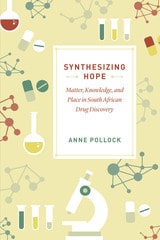
Synthesizing Hope
Matter, Knowledge, and Place in South African Drug DiscoveryAnne Pollock
University of Chicago Press, 2019
Consideration of this case exposes the limitations of global health frameworks that implicitly posit rich countries as the only sites of knowledge production. Analysis of iThemba identifies the problems inherent in global north/south divides at the same time as it highlights what is at stake in who makes knowledge and where. It also provides a concrete example for consideration of the contexts and practices of postcolonial science, its constraints, and its promise.
Synthesizing Hope explores the many legacies that create conditions of possibility for South African drug discovery, especially the specific form of settler colonialism characterized by apartheid and resource extraction. Paying attention to the infrastructures and laboratory processes of drug discovery underscores the materiality of pharmaceuticals from the perspective of their makers, and tracing the intellectual and material infrastructures of South African drug discovery contributes new insights about larger social, political, and economic orders.
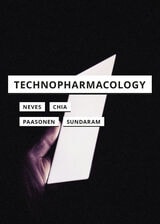
Technopharmacology
Joshua Neves
University of Minnesota Press, 2022
Exploring networked technologies and bioeconomy and their links to biotechnologies, pharmacology, and pharmaceuticals
Being on social media, having pornography or an internet addiction, consciousness hacking, and mundane smartness initiatives are practices embodied in a similar manner to the swallowing of a pill. Such close relations of media technologies to pharmaceuticals and pharmacology is the focus of this book. Technopharmacology is a modest call to expand media theoretical inquiry by attending to the biological, neurological, and pharmacological dimensions of media and centers on emergent affinities between big data and big pharma.
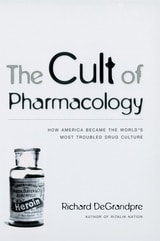
The Cult of Pharmacology
How America Became the World's Most Troubled Drug CultureRichard DeGrandpre
Duke University Press, 2006
Exploring how this rather benign relationship with psychoactive drugs was transformed into one of confusion and chaos, The Cult of Pharmacology tells the dramatic story of how, as one legal drug after another fell from grace, new pharmaceutical substances took their place. Whether Valium or OxyContin at the pharmacy, cocaine or meth purchased on the street, or alcohol and tobacco from the corner store, drugs and drug use proliferated in twentieth-century America despite an escalating war on “drugs.”
Richard DeGrandpre, a past fellow of the National Institute on Drug Abuse and author of the best-selling book Ritalin Nation, delivers a remarkably original interpretation of drugs by examining the seductive but ill-fated belief that they are chemically predestined to be either good or evil. He argues that the determination to treat the medically sanctioned use of drugs such as Miltown or Seconal separately from the illicit use of substances like heroin or ecstasy has blinded America to how drugs are transformed by the manner in which a culture deals with them.
Bringing forth a wealth of scientific research showing the powerful influence of social and psychological factors on how the brain is affected by drugs, DeGrandpre demonstrates that psychoactive substances are not angels or demons irrespective of why, how, or by whom they are used. The Cult of Pharmacology is a bold and necessary new account of America’s complex relationship with drugs.
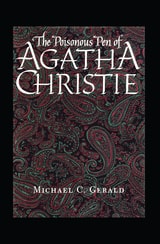
The Poisonous Pen of Agatha Christie
By Michael C. Gerald
University of Texas Press, 1993
Poisoning occurs in over half of Agatha Christie's many novels and stories. In fact, she used a larger number and broader selection of poisons and medicines, for a wider variety of purposes, with greater frequency, ingenuity, and scientific accuracy than any other detective fiction writer. Yet very little has been written on the use of drugs, poisons, and chemicals in Christie's fiction.
The Poisonous Pen of Agatha Christie entertainingly and authoritatively fills this gap. Michael Gerald explores the use of poisons and drugs in Christie's fiction not only to commit murder and suicide but also to incapacitate a victim, alter behavior, treat disease, or support addiction. He also analyzes her views, as expressed in her fiction and autobiography, on drug addiction, the health professions, the value of medicines, and scientific discoveries.
Especially valuable is Gerald's exhaustive listing of all drugs, poisons, and chemicals mentioned in Christie's novels and stories, with references to the work(s) in which each appears and the ways in which each is used. Other tables list all the novels and short stories and the chemicals that are used in each. Throughout, the properties of all drugs are clearly explained so that the reader needs no special scientific or medical knowledge.
The Poisonous Pen of Agatha Christie illuminates the fictional uses Christie made of her real-life experiences as a hospital drug dispenser and as a provider of nursing care. It will be of interest to fans and scholars alike.
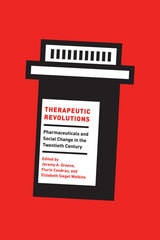
Therapeutic Revolutions
Pharmaceuticals and Social Change in the Twentieth CenturyEdited by Jeremy A. Greene, Flurin Condrau, and Elizabeth Siegel Watkins
University of Chicago Press, 2016
This collection challenges the historical accuracy of this revolutionary narrative and offers instead a more nuanced account of the process of therapeutic innovation and the relationships between the development of medicines and social change. These assembled histories and ethnographies span three continents and use the lived experiences of physicians and patients, consumers and providers, and marketers and regulators to reveal the tensions between universal claims of therapeutic knowledge and the actual ways these claims have been used and understood in specific sites, from postwar West Germany pharmacies to twenty-first century Nigerian street markets. By asking us to rethink a story we thought we knew, Therapeutic Revolutions offers invaluable insights to historians, anthropologists, and social scientists of medicine.
White Market Drugs
Big Pharma and the Hidden History of Addiction in AmericaDavid Herzberg
University of Chicago Press, 2020
These markets are widely acknowledged but no one has explained how they became so central to the medical system in a nation famous for its “drug wars”—until now. Drawing from federal, state, industry, and medical archives alongside a wealth of published sources, Herzberg re-connects America’s divided drug history, telling the whole story for the first time. He reveals that the driving question for policymakers has never been how to prohibit the use of addictive drugs, but how to ensure their availability in medical contexts, where profitability often outweighs public safety. Access to white markets was thus a double-edged sword for socially privileged consumers, even as communities of color faced exclusion and punitive drug prohibition. To counter this no-win setup, Herzberg advocates for a consumer protection approach that robustly regulates all drug markets to minimize risks while maintaining safe, reliable access (and treatment) for people with addiction.
Accomplishing this requires rethinking a drug/medicine divide born a century ago that, unlike most policies of that racially segregated era, has somehow survived relatively unscathed into the twenty-first century.
By showing how the twenty-first-century opioid crisis is only the most recent in a long history of similar crises of addiction to pharmaceuticals, Herzberg forces us to rethink our most basic ideas about drug policy and addiction itself—ideas that have been failing us catastrophically for over a century.