Results by title

8 books match the query 'Philosophy, Black'
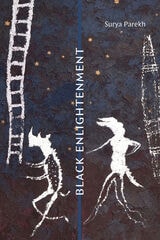
cover of Black Enlightenment

Black Enlightenment

Surya Parekh

Duke University Press, 2023
In Black Enlightenment Surya Parekh reimagines the Enlightenment from the position of the Black subject. Parekh examines the works of such Black writers as the free Jamaican Francis Williams (1697–1762), Afro-British thinker Ignatius Sancho (1729?–1780), and Afro-American poet Phillis Wheatley (1753?–1784), placing them alongside those of their white European contemporaries David Hume (1711-1776) and Immanuel Kant (1724-1804). By rethinking the Enlightenment and its canons, Parekh complicates common understandings of the Enlightenment wherein Black subjects could exist only in negation to white subjects. Black Enlightenment points to the anxiety of race in Hume, Kant, and others while showing the importance of Black Enlightenment thought. Parekh prompts us to consider the timeliness of reading Black Enlightenment authors who become “free” in a society hostile to that freedom.
[more]
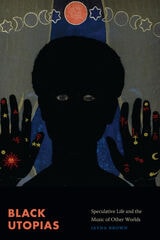
cover of Black Utopias: Speculative Life and the Music of Other Worlds

Black Utopias

Speculative Life and the Music of Other Worlds

Jayna Brown

Duke University Press, 2021
In Black Utopias Jayna Brown takes up the concept of utopia as a way of exploring alternative states of being, doing, and imagining in Black culture. Musical, literary, and mystic practices become utopian enclaves in which Black people engage in modes of creative worldmaking. Brown explores the lives and work of Black women mystics Sojourner Truth and Rebecca Cox Jackson, musicians Alice Coltrane and Sun Ra, and the work of speculative fiction writers Samuel Delany and Octavia Butler as they decenter and destabilize the human, radically refusing liberal humanist ideas of subjectivity and species. Brown demonstrates that engaging in utopian practices Black subjects imagine and manifest new genres of existence and forms of collectivity. For Brown, utopia consists of those moments in the here and now when those excluded from the category human jump into other onto-epistemological realms. Black people—untethered from the hope of rights, recognition, or redress—celebrate themselves as elements in a cosmic effluvium.
[more]
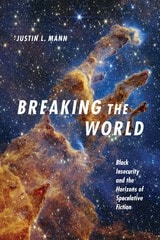
cover of Breaking the World: Black Insecurity and the Horizons of Speculative Fiction

Breaking the World

Black Insecurity and the Horizons of Speculative Fiction

Justin L. Mann

Duke University Press, 2026
In Breaking the World, Justin L. Mann argues that Black speculative fictions are an essential but overlooked archive for understanding the modern security ambitions of the United States. Foregrounding how the contemporary security state renders Black life insecure, Mann theorizes worldbreaking: speculative narrative, aesthetic, and ethical strategies that Black writers, musicians, and artists employ to unmake the processes by which state and parastate agents augment and build up the tools, techniques, and infrastructures intended to make people safer. He shows how the techniques of worldbreaking in the works of Octavia E. Butler, Colson Whitehead, N.K. Jemisin, Janelle Monáe, and the Marvel and DC Cinematic Universes chart the distinction between securitization and Black insecurity. These works illuminate the difference between the antiblackness of state security and the power of Black collectivity. Contending that speculative worldbreaking is a vital part of the Black radical imagination, Mann shows that its destructive strategies can help transform worlds of securitization to worlds of liberation.
[more]
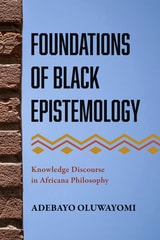
cover of Foundations of Black Epistemology: Knowledge Discourse in Africana Philosophy

Foundations of Black Epistemology

Knowledge Discourse in Africana Philosophy

Adebayo Oluwayomi

Temple University Press, 2025

Foundations of Black Epistemology is Adebayo Oluwayomi’s bold endeavor to delineate Black epistemology as a new sub-disciplinary focus in contemporary Africana or Black philosophy. He engages in a rigorous historical study of Black intellectual history to show how seminal Black thinkers have long been interested in and engaged with questions concerning the phenomenon of human knowledge, and questions around human agency, including practical considerations regarding the social and political value of knowledge.

Foundations of Black Epistemology examines writings by Phillis Wheatley, Frederick Douglass, Ida B. Wells, W.E.B. DuBois, Frantz Fanon, Steve Bantu Biko, Huey P. Newton, and Kathleen Neal Cleaver. Each chapter addresses issues of self-knowledge, self-assertion, Black consciousness, or anticolonialism and its relation to personal and political epistemologies.

Oluwayomi offers innovative perspectives on the formulation, deduction, and interrogation of epistemological themes within Black Africana philosophy. By considering the important epistemological theories and arguments in Black philosophy particularly in the last 150 to 200 years, Foundations of Black Epistemology promises to generate new discussions around this necessary field of Black Africana philosophy.
[more]
cover of I Am Because We Are: Readings in Africana Philosophy

I Am Because We Are

Readings in Africana Philosophy

Fred Lee Hord

University of Massachusetts Press, 2016

First published in 1995, I Am Because We Are has been recognized as a major, canon-defining anthology and adopted as a text in a wide variety of college and university courses. Bringing together writings by prominent Black thinkers from Africa, the Caribbean, and North America, Fred Lee Hord and Jonathan Scott Lee made the case for a tradition of “relational humanism” distinct from the philosophical preoccupations of the West.

Over the past twenty years, however, new scholarly research has uncovered other contributions to the discipline now generally known as “Africana philosophy” that were not included in the original volume. In this revised and expanded edition, Hord and Lee build on the strengths of the earlier anthology while enriching the selection of readings to bring the text into the twenty-first century. In a new introduction, the editors reflect on the key arguments of the book's central thesis, refining them in light of more recent philosophical discourse. This edition includes important new readings by Kwame Gyekye, Oyeronke Oy ewumi­, Paget Henry, Sylvia Wynter, Toni Morrison, Charles Mills, and Tommy Curry, as well as extensive suggestions for further reading.

[more]
cover of Stolen Life

Stolen Life

Fred Moten

Duke University Press, 2018

"Taken as a trilogy, consent not to be a single being is a monumental accomplishment: a brilliant theoretical intervention that might be best described as a powerful case for blackness as a category of analysis."—Brent Hayes Edwards, author of Epistrophies: Jazz and the Literary Imagination

In Stolen Life—the second volume in his landmark trilogy consent not to be a single being—Fred Moten undertakes an expansive exploration of blackness as it relates to black life and the collective refusal of social death. The essays resist categorization, moving from Moten's opening meditation on Kant, Olaudah Equiano, and the conditions of black thought through discussions of academic freedom, writing and pedagogy, non-neurotypicality, and uncritical notions of freedom. Moten also models black study as a form of social life through an engagement with Fanon, Hartman, and Spillers and plumbs the distinction between blackness and black people in readings of Du Bois and Nahum Chandler. The force and creativity of Moten's criticism resonate throughout, reminding us not only of his importance as a thinker, but of the continued necessity of interrogating blackness as a form of sociality.
[more]
cover of The Door of No Return: Being-As-Black

The Door of No Return

Being-As-Black

Michael E. Sawyer

Temple University Press, 2026

In The Door of No Return, Michael E. Sawyer presents a bold work of speculative theory and philosophy that explores how Black people bring the future into being—and what existence in that future looks like. He considers what people of African descent face and the proper response to the situation. He introduces the idea of Being-As-Black as a response and questions the overarching ethos that will be the guide to a beneficial resolution.

Using critical theory and philosophy, Sawyer decouples Black identity and Black philosophy from White and Western frames by building on Toni Morrison’s ideas of Black Thought and encouraging an understanding of Black Self-Consciousness and Black Self-Identity on Black terms. The Door of No Return uses music, literature, visual art, and a variety of physical disciplines to imagine a world that differs from one that confounds the positive formation of Black Self-Consciousness under the coercive regime of white supremacy and Anti-Black racism.
[more]
cover of The Universal Machine

The Universal Machine

Fred Moten

Duke University Press, 2018

"Taken as a trilogy, consent not to be a single being is a monumental accomplishment: a brilliant theoretical intervention that might be best described as a powerful case for blackness as a category of analysis."—Brent Hayes Edwards, author of Epistrophies: Jazz and the Literary Imagination

In The Universal Machine—the concluding volume to his landmark trilogy consent not to be a single being—Fred Moten presents a suite of three essays on Emmanuel Levinas, Hannah Arendt, and Frantz Fanon, in which he explores questions of freedom, capture, and selfhood. In trademark style, Moten considers these thinkers alongside artists and musicians such as William Kentridge and Curtis Mayfield while interrogating the relation between blackness and phenomenology. Whether using Levinas's idea of escape in unintended ways, examining Arendt's antiblackness through Mayfield's virtuosic falsetto and Anthony Braxton's musical language, or showing how Fanon's form of phenomenology enables black social life, Moten formulates blackness as a way of being in the world that evades regulation. Throughout The Universal Machine—and the trilogy as a whole—Moten's theorizations of blackness will have a lasting and profound impact.
[more]