Results by title
5 books match the query 'Philosophy, Chinese'
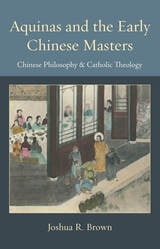
Aquinas and the Early Chinese Masters
Chinese Philosophy and Catholic TheologyJoshua Brown
Catholic University of America Press, 2025
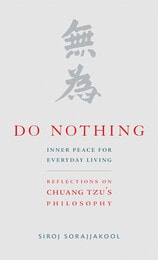
Do Nothing
Peace for Everyday Living: Reflections on Chuang Tzu's PhilosophySiroj Sorajjakool
Templeton Press, 2009
"Words," writes Chuang Tzu, "are for catching ideas; once you've caught the idea, you can forget the words." In Do Nothing, author Siroj Sorajjakool lends us some of his insightful words to help us all "catch" the provocative ideas of one of China's most important literary and philosophical giants—one who emerged at a time when China had several such giants philosophizing on Tao or "the Way."
Though his thinking dates back to the fourth century, Chuang Tzu's Tao has profound implications for our modern lives. He welcomes an existence that is radically removed from the image of normalcy that society often projects, wherein the individual must always strive for more, always seek greater productivity, and always try to better him or herself and his or her place in life. Chuang Tzu would posit that the definitions of normalcy, success, and happiness are arbitrarily assigned and that our rigid and unquestioning adherence to these so-called "norms" leads to existential restlessness and unease. Instead of striving, he would say, be still. Instead of acquiring, embrace nothingness. Instead of seeking to understand the limitlessness of the universe during your brief and extremely limited existence, enjoy the wonder of it.
Siroj Sorajjakool suggests that when we can embrace nothingness, we undergo a spiritual transformation that liberates us to see more clearly and truly find ourselves. He offers a very personal exploration of Chuang Tzu's Tao, first in its historical and literary context, and then in the context of our twenty-first century existence. What emerges is a liberating and highly readable meditation on the many lessons we can "catch" from Chuang Tzu on how we view our aspirations, our joys and sorrows, our successes and failures, and what it means to be a worthwhile person.
Human Nature, Ritual, and History
Studies in Xunzi and Chinese Philosophy (Studies in Philosophy and the History of Philosophy, Volume 43)Antonio S. Cua
Catholic University of America Press, 2005
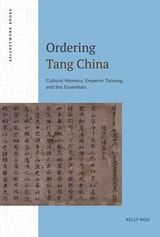
Ordering Tang China
Cultural Memory, Emperor Taizong, and the EssentialsKelly Ngo
Lever Press, 2024
By connecting the textual discourse with an analysis of its use and reception across the region, Ngo demonstrates that the Essentials was a key source of Confucian political thought and practice during the early Tang dynasty. In accounting for the place of the Essentials in political advice literature, Ngo illustrates how it drew from the ancient Confucian heritage and was still responsive to contemporaneous political concerns, suggesting that the Essentials played a part in the success of Zhenguan political practice.
Ordering Tang China also includes the first English-language translations of portions of the seventh-century anthology, with reference to partial translations published in nine languages. Utilizing the theory of cultural memory to study the Essentials not only opens a fresh approach to learning about the imperial consumption of literature, as well as the theory and practice of emperorship, but also offers a case study for how to study Chinese governance literature, including its “mirror for princes” genre.
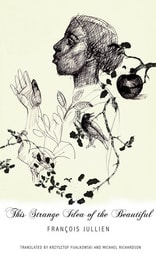
This Strange Idea of the Beautiful
François Jullien
Seagull Books, 2016
An exploration of what it means when we say something is beautiful.
Bringing together ideas of beauty from both Eastern and Western philosophy, François Jullien challenges the assumptions underlying our commonly agreed-upon definition of what is beautiful and offers a new way of beholding art. Jullien argues that the Western concept of beauty was established by Greek philosophy and became consequently embedded within the very structure of European languages. And due to its relationship to language, this concept has determined ways of thinking about beauty that often go unnoticed or unchecked in discussions of Western aesthetics. Moreover, through globalization, Western ideals of beauty have even spread to cultures whose ancient traditions are based upon radically different aesthetic foundations; yet, these cultures have adopted such views without question and without recognizing the cultural assumptions they contain.