Results by title
5 books match the query 'Philosophy, Comparative'
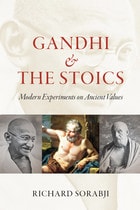
Gandhi and the Stoics
Modern Experiments on Ancient ValuesRichard Sorabji
University of Chicago Press, 2012

Oriental Philosophy
Stuart C. Hackett
University of Wisconsin Press, 1979
Students of comparative religion, eastern philosophy and civilization, and the philosophy of religion who have been trained in traditional western modes of thought often find the intuitive and aphorisic quality of eastern writing a major stumbling block to understanding. This is eastern philosophy presented to westerners by a westerner, a practical and understandable guide for students and for others who wish to expand their understanding in this important area.
The Disinterested Witness
A Fragment of Advaita Vedanta PhenomenologyBina Gupta
Northwestern University Press, 1998
The Nonsense of Kant and Lewis Carroll
Unexpected Essays on Philosophy, Art, Life, and DeathBen-Ami Scharfstein
University of Chicago Press, 2014
Scharfstein begins with essays on the nature of philosophy itself, moving from an autobiographical account of the trials of being a comparativist to philosophy’s function in the outside world to the fear of death in Kant and Hume. From there he explores an impressive array of art: from China and Japan to India and the West; from an essay on sadistic and masochistic body art to one on the epistemology of the deaf and the blind. He then returns to philosophy, writing on Machiavelli and political ruthlessness, then on the ineffable, and closes with a review of Walter Kaufmann’s multivolume look at the essence of humanity, Discovering the Mind. Altogether, these essays are a testament to adventurous thought, the kind that leaps to the furthest reaches of the possible.
Transversal Rationality and Intercultural Texts
Essays in Phenomenology and Comparative PhilosophyHwa Yol Jung
Ohio University Press, 2011
Transversality is the keyword that permeates the spirit of these thirteen essays spanning almost half a century, from 1965 to 2009. The essays are exploratory and experimental in nature and are meant to be a transversal linkage between phenomenology and East Asian philosophy.
Transversality is the concept that dispels all ethnocentrisms, including Eurocentrism. In the globalizing world of multiculturalism, Eurocentric universalism falls far short of being universal but simply parochial at the expense of the non-Western world. Transversality is intercultural, interspecific, interdisciplinary, and intersensorial. Transversal Rationality and Intercultural Texts means to transform the very way of philosophizing itself by infusing or hybridizing multiple traditions in the history of the world.
Like no other scholar, Jung bridges the gap between Asian and Western cultures. By engaging Western philosophers as diverse as Bacon, Descartes, Heidegger, Hegel, Merleau-Ponty, Derrida, Glissant, Barthes, Fenollosa, McLuhan, and Eastern philosophers such as Wang Yang-ming, Nishida Kitaro, Nishitani Keiji, Watsuji Tetsuro, Nhat Hanh, and Suzuki Daisetz Teitaro, this book marks an unparalleled contribution to comparative philosophy and the study of philosophy itself.