Results by title
210 books match the query 'Philosophy, Theory & Social Aspects' and 11 start with a
A Companion to John Dewey's "Democracy and Education"
D. C. Phillips
University of Chicago Press, 2016
Phillips bridges several critical pitfalls of Democracy and Education that often prevent contemporary readers from fully understanding it. Where Dewey sorely needs a detailed example to illustrate a point—and the times are many—Phillips steps in, presenting cases from his own classroom experiences. Where Dewey casually refers to the works of people like Hegel, Herbart, and Locke—common knowledge, apparently, in 1916—Phillips fills in the necessary background. And where Dewey gets convoluted or is even flat-out wrong, Phillips does what few other scholars would do: he takes Dewey to task. The result is a lively accompaniment that helps us celebrate and be enriched by some of the most important ideas ever offered in education.
A Curriculum of Fear
Homeland Security in U.S. Public SchoolsNicole Nguyen
University of Minnesota Press, 2016
Welcome to Milton High School, where fear is a teacher’s best tool and every student is a soldier in the war on terror. A struggling public school outside the nation’s capital, Milton sat squarely at the center of two trends: growing fear of resurgent terrorism and mounting pressure to run schools as job training sites. In response, the school established a specialized Homeland Security program.
A Curriculum of Fear takes us into Milton for a day-to-day look at how such a program works, what it means to students and staff, and what it says about the militarization of U.S. public schools and, more broadly, the state of public education in this country. Nicole Nguyen guides us through a curriculum of national security–themed classes, electives, and internships designed through public-private partnerships with major defense contractors like Northrop Grumman and federal agencies like the NSA. She introduces us to students in the process of becoming a corps of “diverse workers” for the national security industry, learning to be “vigilant” citizens; and she shows us the everyday realities of a program intended to improve the school, revitalize the community, and eliminate the achievement gap.
With reference to critical work on school militarization, neoliberal school reform, the impact of the global war on terror on everyday life, and the political uses of fear, A Curriculum of Fear maps the contexts that gave rise to Milton’s Homeland Security program and its popularity. Ultimately, as the first ethnography of such a program, the book provides a disturbing close encounter with the new normal imposed by the global war on terror—a school at once under siege and actively preparing for the siege itself.
Action versus Contemplation
Why an Ancient Debate Still MattersJennifer Summit and Blakey Vermeule
University of Chicago Press, 2018
It is truly an ancient debate: Is it better to be active or contemplative? To do or to think? To make an impact, or to understand the world more deeply? Aristotle argued for contemplation as the highest state of human flourishing. But it was through action that his student Alexander the Great conquered the known world. Which should we aim at? Centuries later, this argument underlies a surprising number of the questions we face in contemporary life. Should students study the humanities, or train for a job? Should adults work for money or for meaning? And in tumultuous times, should any of us sit on the sidelines, pondering great books, or throw ourselves into protests and petition drives?
With Action versus Contemplation, Jennifer Summit and Blakey Vermeule address the question in a refreshingly unexpected way: by refusing to take sides. Rather, they argue for a rethinking of the very opposition. The active and the contemplative can—and should—be vibrantly alive in each of us, fused rather than sundered. Writing in a personable, accessible style, Summit and Vermeule guide readers through the long history of this debate from Plato to Pixar, drawing compelling connections to the questions and problems of today. Rather than playing one against the other, they argue, we can discover how the two can nourish, invigorate, and give meaning to each other, as they have for the many writers, artists, and thinkers, past and present, whose examples give the book its rich, lively texture of interplay and reference.
This is not a self-help book. It won’t give you instructions on how to live your life. Instead, it will do something better: it will remind you of the richness of a life that embraces action and contemplation, company and solitude, living in the moment and planning for the future. Which is better? Readers of this book will discover the answer: both.
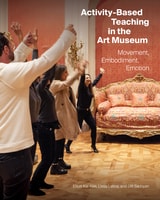
Activity-Based Teaching in the Art Museum
Movement, Embodiment, EmotionElliott Kai-Kee
J. Paul Getty Trust, The, 2020
An essential resource for museum professionals, teachers, and students, the award winning Teaching in the Art Museum (Getty Publications, 2011) set a new standard in the field of gallery education. This follow-up book blends theory and practice to help educators—from teachers and docents to curators and parents—create meaningful interpretive activities for children and adults.
Written by a team of veteran museum educators, Activity-Based Teaching in the Art Museum offers diverse perspectives on embodiment, emotions, empathy, and mindfulness to inspire imaginative, spontaneous interactions that are firmly grounded in history and theory. The authors begin by surveying the emergence of activity-based teaching in the 1960s and 1970s and move on to articulate a theory of play as the cornerstone of their innovative methodology. The volume is replete with sidebars describing activities facilitated with museum visitors of all ages.
Table of Contents
Introduction
Part I History
1 The Modern History of Presence and Meaning
A philosophical shift from a language-based understanding of the world to direct, physical interaction with it.
2 A New Age in Museum Education: The 1960s and 1970s
A brief history of some of the innovative museum education programs developed in the United States in the late 1960s and 1970s. The sudden and widespread adoption of nondiscursive gallery activities during this period, especially but not exclusively in programs designed for younger students and school groups, expressed the spirit of the times.
Part II Theory
3 Starts and Stops
Two attempts by American museum educators to articulate a theory for their new, nondiscursive programs: the first deriving from the early work of Project Zero, the Harvard Graduate School of Education program founded by the philosopher Nelson Goodman to study arts learning as a cognitive activity; the second stemming from the work of Viola Spolin, the acclaimed theater educator and coach whose teaching methods, embodied in a series of “theater games,” were detailed in her well-known book Improvisation for the Theater (1963).
4 A Theory of Play in the Museum
A theory of play that posits activities in the museum as forms of play that take place in spaces (or “playgrounds”) temporarily designated as such by educators and their adult visitors or students. Play is defined essentially as movement—both physical and imaginary (metaphorical)—toward and away from, around, and inside and outside the works of art that are foregrounded within those spaces. Gallery activities conceived in this way respond to the possibilities that the objects themselves offer for the visitor to explore and engage with them. The particular movements characterizing an activity are crucially conditioned by the object in question; they constitute a process of discovery and learning conceptually distinct from, but supportive of, traditional dialogue-based modes of museum education, which they supplement rather than supplant.
Part III Aspects of Play
5 Embodiment, Affordances
The idea of embodiment adopted here recognizes that both mind and body are joined in their interactions with things. Investigating works of art thus involves apprehending them physically as well as intellectually—in the sense of responding to the ways in which a particular work allows and even solicits the viewer’s physical grasp of it.
6 Skills
Ways in which objects present themselves to us, as viewers, and what we might do in response as they fit with the bodily skills we have developed over the course of our lives. Such skills might be as simple as getting dressed, washing, or eating; or as specialized as doing one’s hair, dancing, playing an instrument, or acting—all of which may allow us to “grasp” and even feel that we inhabit particular works of art.
7 Movement
Embodied looking is always looking from somewhere. We apprehend objects as we physically move around and in front of them; they reveal themselves differently as we approach them from different viewpoints. Viewers orient themselves spatially to both the surfaces of objects and to the things and spaces depicte4d in or suggested by representational works of art. Activity-based teaching gets visitors and students to move among the objects—away from them, close to them, and even into them.
8 The Senses
Both adult visitors and younger students come to the museum expecting to use their eyes, yet “visual” art appeals to several of the senses at once, though rarely to the same degree. Sculpture, for example, almost always appeals to touch (whether or not that is actually possible or allowed) as well as sight. A painting depicting a scene in which people appear to be talking may induce viewers to not only look but also “listen” to what the figures might be saying.
9 Drawing in the Museum
Looking at art with a pencil in hand amplifies viewers’ ability to imaginatively touch and feel their way across and around an artwork. Contour drawing by its nature requires participants to imagine that they are touching the contours of an object beneath the tips of their pencils. Other types of drawing allow viewers to feel their way around objects through observation and movement.
10 Emotion
Visitors’ emotional responses to art represent a complex process with many components, from physiological to cognitive, and a particular work of art may elicit a wide range of emotional reactions. This chapter describes specific ways in which museum educators can go well beyond merely asking visitors how a work of art makes them feel.
11 Empathy and Intersubjectivity
One aspect of viewers’ emotional responses to art that is often taken for granted, if not neglected altogether: the empathetic connections that human beings make to images of other people. This chapter advocates an approach that prompts viewers to physically engage with the representations of people they see.
12 Mindful Looking
Mindfulness involves awareness and attention, both as a conscious practice and as an attitude that gallery teachers can encourage in museum visitors. This is not solely a matter of cultivating the mind, however; it is also a matter of cultivating the body, since mindfulness is only possible when mind and body are in a state of harmonious, relaxed attentiveness. Mindfulness practice in the art museum actively directs the viewer’s focus on the object itself and insists on returning to it over and over; yet it also balances activity with conscious stillness.
Afterword
Acknowledgments
Algorithms of Education
How Datafication and Artificial Intelligence Shape PolicyKalervo N. Gulson
University of Minnesota Press, 2022
A critique of what lies behind the use of data in contemporary education policy
While the science fiction tales of artificial intelligence eclipsing humanity are still very much fantasies, in Algorithms of Education the authors tell real stories of how algorithms and machines are transforming education governance, providing a fascinating discussion and critique of data and its role in education policy.
Algorithms of Education explores how, for policy makers, today’s ever-growing amount of data creates the illusion of greater control over the educational futures of students and the work of school leaders and teachers. In fact, the increased datafication of education, the authors argue, offers less and less control, as algorithms and artificial intelligence further abstract the educational experience and distance policy makers from teaching and learning. Focusing on the changing conditions for education policy and governance, Algorithms of Education proposes that schools and governments are increasingly turning to “synthetic governance”—a governance where what is human and machine becomes less clear—as a strategy for optimizing education.
Exploring case studies of data infrastructures, facial recognition, and the growing use of data science in education, Algorithms of Education draws on a wide variety of fields—from critical theory and media studies to science and technology studies and education policy studies—mapping the political and methodological directions for engaging with datafication and artificial intelligence in education governance. According to the authors, we must go beyond the debates that separate humans and machines in order to develop new strategies for, and a new politics of, education.
All through the Town
The School Bus as Educational TechnologyAntero Garcia
University of Minnesota Press, 2023
The role of the humble school bus in transforming education in America
Everyone knows the yellow school bus. It’s been invisible and also omnipresent for a century. Antero Garcia shows how the U.S. school bus, its form unaltered for decades, is the most substantial piece of educational technology to ever shape how schools operate. As it noisily moves young people across the country every day, the bus offers the opportunity for a necessary reexamination of what “counts” as educational technology. Particularly in light of these buses being idled in pandemic times, All through the Town questions what we take for granted and what we overlook in public schooling in America, pushing for liberatory approaches to education that extend beyond notions of school equity.
Forerunners: Ideas First is a thought-in-process series of breakthrough digital publications. Written between fresh ideas and finished books, Forerunners draws on scholarly work initiated in notable blogs, social media, conference plenaries, journal articles, and the synergy of academic exchange. This is gray literature publishing: where intense thinking, change, and speculation take place in scholarship.
American Kindergarten
Dispatches from the First Year of SchoolSusan Engel
University of Chicago Press, 2026
When we think of kindergarten, many might imagine joyous free play, and a tangle of trucks, dress-up clothes, and blocks, as five-year-olds explore their vivid imaginations and budding social skills. Others might envision a quiet group sitting cross-legged in a circle during story time. Neither of these scenes would be an inaccurate representation of the pivotal year of entry into traditional education in this country. However, neither offers a complete picture of what children do every day in those seemingly transparent, yet actually mysterious, classrooms. What can or should we expect during the first year of school? How are children learning and growing during those hours spent away from their homes?
Susan Engel embarked on finding these answers in American Kindergarten: Dispatches from the First Year of School. Engel toured twenty-nine classrooms across fourteen states, observing each closely, with a special eye toward the ways each classroom’s goals reflect its community. As she made her way across the country, Engel found that on the surface, kindergarten students are similar: good-natured, eager to learn, and deeply affectionate. Their classrooms, too, feature many of the same expectations, routines, and activities. But the differences between the classrooms were striking and often surprising. Over the two years of her classroom visits, Engel identified five promises that teachers and their classrooms make to their students: reading, order, thinking, identity, and love. Engel found that schools differ in how they prioritize and keep the promises they make; some make all five promises, while others emphasize only one or two. The five promises capture a set of values, aspirations, and goals that drive everything that happens in a classroom.
Engaging and incisive, American Kindergarten is the story of the promises our country’s schools make to five-year-old children, and how those promises are kept and sometimes broken.

American Kindergarten
Dispatches from the First Year of SchoolSusan Engel
University of Chicago Press, 2026
An unexpected portrait of the first year of school for America’s youngest learners.
When we think of kindergarten, many might imagine joyous free play, and a tangle of trucks, dress-up clothes, and blocks, as five-year-olds explore their vivid imaginations and budding social skills. Others might envision a quiet group sitting cross-legged in a circle during story time. Neither of these scenes would be an inaccurate representation of the pivotal year of entry into traditional education in this country. However, neither offers a complete picture of what children do every day in those seemingly transparent, yet actually mysterious, classrooms. What can or should we expect during the first year of school? How are children learning and growing during those hours spent away from their homes?
Susan Engel embarked on finding these answers in American Kindergarten: Dispatches from the First Year of School. Engel toured twenty-nine classrooms across fourteen states, observing each closely, with a special eye toward the ways each classroom’s goals reflect its community. As she made her way across the country, Engel found that on the surface, kindergarten students are similar: good-natured, eager to learn, and deeply affectionate. Their classrooms, too, feature many of the same expectations, routines, and activities. But the differences between the classrooms were striking and often surprising. Over the two years of her classroom visits, Engel identified five promises that teachers and their classrooms make to their students: reading, order, thinking, identity, and love. Engel found that schools differ in how they prioritize and keep the promises they make; some make all five promises, while others emphasize only one or two. The five promises capture a set of values, aspirations, and goals that drive everything that happens in a classroom.
Engaging and incisive, American Kindergarten is the story of the promises our country’s schools make to five-year-old children, and how those promises are kept and sometimes broken.

American by Paper
How Documents Matter in Immigrant LiteracyKate Vieira
University of Minnesota Press, 2016
American by Paper reveals how two groups of immigrants who share a primary language nevertheless have very different experiences of literacy in the United States. It describes the social realities facing documented and undocumented immigrants who use everyday acts of writing to negotiate papers—the visas, green cards, and passports that promise access to the American Dream. It is both an ethnography, filled with illuminating details about contemporary immigrant lives, and a critical intervention into two leading—and conflicting—scholarly ideas of literacy and its social role.
Although popular thinking and scholarship have viewed literacy as a method of culturally assimilating immigrants into the nation, Kate Vieira finds that upward mobility and social inclusion in the United States are tied to literacy in complex ways. She draws from extensive interviews with Portuguese-speaking migrants who live and work together in a former mill town in Massachusetts that she calls South Mills: one group from the Azores, who are usually documented, and another from Brazil, who are usually undocumented. She explains how these migrants experience literacy not as a vehicle for assimilation (as educational policy makers often assert) nor as a means of resisting oppression (as literacy scholars often hope) but instead as tied up in papers, particularly in the papers that confer legal status. Papers and literacy are inextricably bound together, both promoting and constraining opportunities, and they shape why and how migrants read and write.
Vieira builds on insights from literacy theories that have long been in opposition to each other in order to develop a new sociomaterial theory of literacy, one that takes into account its inseparable link to paper, forms, and documentation. This point of view leads to a deeper understanding of how literacy actually accrues meaning by circulating, and recirculating, through institutions and the lives of individuals.
And Who Will Witness Us?
A Histofuturist Account of Black Literacies on the Rust BeltS. R. Toliver
University of Chicago Press, 2027
An imaginative exploration of the historical narratives that shape Black life today, showing how the past is never truly left behind, but is always alive in the present, shaping the future.
Most people have probably never heard of New Castle, a Rust Belt city in western Pennsylvania. Education scholar S. R. Toliver describes it as “a stop on the road to elsewhere. But as a former resident, New Castle remains the endpoint of my journey, the highway exit I take, the place I go when I say I’m headed home.” Combining an autoethnography of growing up and being educated in New Castle with a remarkable study of Histofuturism, Toliver’s And Who Will Witness Us? reveals the historical erasure of Black people and their literary practices.
First, Toliver turns to the past, presenting a multifaceted portrayal of Black life in New Castle. She draws from personal insights, archival data, and oral histories to uncover historical disinvestment and the violence of anti-Blackness and anti-Indigeneity sown into the soil and soul of a city. At the same time, she highlights how, despite systemic neglect, Black people have used their stories to author themselves into existence, creating counter histories that reflect the richness and depth of Black lives. Toliver explains how these acts of creation, in turn, shape the future, allowing Black people to resist imposed narratives and envision possibilities beyond the limits of traditional ways of thinking, knowing, and doing.
Innovative in both form and style, And Who Will Witness Us? shares how research opens space for Black people to relearn themselves and their communities. It is a reckoning with what it means to call a place, a city, a people, home.
Anti-Public
How Elite Discourse Harms Public Education (and What We Can Do About It)Ronald E. Chennault
Rutgers University Press, 2026
Consider this: Restrictions placed by state legislatures on what schools can teach about America's history of conquest and enslavement. Broad bans enacted by local school boards that remove meaningful books from school curricula and the shelves of libraries. Court rulings that muddy the distinction between what counts as private versus public expressions of religion in public school settings and that open the door to publicly funded religious education. All of these recent actions chip away at the foundation of public education in America. But how did we get here? Decades of elite public discourse (talk and text) about public education helped to bring us to this point. Much of this conversation is anti-public. It includes statements by major elected officials, education advocacy organizations, journalists in mainstream press outlets, and other influential actors. Chennault casts light on the cultural and political processes at work and challenges the unquestioned assumptions beneath the surface of this discourse, with the hopes that we can transform and strengthen public education.