Results by title
4 books match the query 'Philosophy and civilization'
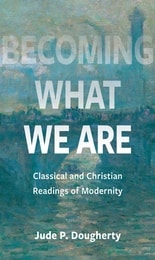
Becoming What We Are
Classical and Christian Readings of ModernityJude P. Dougherty
Catholic University of America Press, 2023
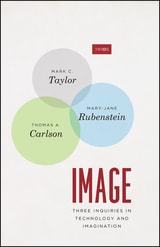
Image
Three Inquiries in Technology and ImaginationMark C. Taylor, Mary-Jane Rubenstein, and Thomas A. Carlson
University of Chicago Press, 2021
Modern life is steeped in images, image-making, and attempts to control the world through vision. Mastery of images has been advanced by technologies that expand and reshape vision and enable us to create, store, transmit, and display images. The three essays in Image, written by leading philosophers of religion Mark C. Taylor, Mary-Jane Rubenstein, and Thomas A. Carlson, explore the power of the visual at the intersection of the human and the technological. Building on Heidegger’s notion that modern humanity aims to master the world by picturing or representing the real, they investigate the contemporary culture of the image in its philosophical, religious, economic, political, imperial, and military dimensions, challenging the abstraction, anonymity, and dangerous disconnection of contemporary images.
Taylor traces a history of capitalism, focusing on its lack of humility, particularly in the face of mortality, and he considers art as a possible way to reconnect us to the earth. Through a genealogy of iconic views from space, Rubenstein exposes the delusions of conquest associated with extraterrestrial travel. Starting with the pressing issues of surveillance capitalism and facial recognition technology, Carlson extends Heidegger’s analysis through a meditation on the telematic elimination of the individual brought about by totalizing technologies. Together, these essays call for a consideration of how we can act responsibly toward the past in a way that preserves the earth for future generations. Attending to the fragility of material things and to our own mortality, they propose new practices of imagination grounded in love and humility.
Magical Criticism
The Recourse of Savage PhilosophyChristopher Bracken
University of Chicago Press, 2007
Christopher Bracken’s Magical Criticism brings the unacknowledged history of this racialization to light and shows how, even as we have rejected ethnocentric notions of “the savage,” they remain active today in everything from attacks on postmodernism to Native American land disputes. Here Bracken reveals that many of the most influential Western thinkers dabbled in savage philosophy, from Marx, Nietzsche, and Proust, to Freud, C. S. Peirce, and Walter Benjamin. For Bracken, this recourse to savage philosophy presents an opportunity to reclaim a magical criticism that can explain the very real effects created by the discourse of historians, anthropologists, philosophers, the media, and governments.
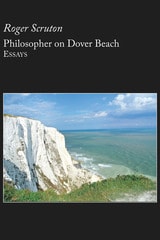
Philosopher On Dover Beach
Roger Scruton
St. Augustine's Press, 2017
“It is a great pity that we in the United States do not have our own Roger Scruton. As his . . . collection of essays reminds us, he is an accomplished philosopher who writes trenchantly about many important political, social and religious issues, who cares passionately about art and culture and who is also a brilliant conservative polemicist. . . .
“Mr. Scruton has two great virtues as a critic. One is his ability to combine a delicate appreciation of culture with the robust analytical skills of a trained philosopher. . . .
“Mr. Scruton’s other great virtue is his habit of assessing things from the inside, taking them on their own terms. If his judgments are often harsh, one nevertheless comes away feeling that he has made the best case possible for his subject. This makes his criticism more devastating yet also more generous than the criticism of most other commentator.” – Roger Kimball, New York Times Book Review
“Each essay has been constructed with considerable care, and the positions taken are clearly stated and soundly argued. . . . He shows . . . that the philosopher-critic is alive and well. . . . Recommended for all academic libraries.” – Library Journal
“[Scruton] writes eloquently of the way in which social bonds, if refashioned in contractual form. ‘become profane, a system of façade, a Disneyland version of what was formerly dignified and monumental.’” – Peter Clarke, London Review of Books