Results by title
44 books match the query 'Photography, Artistic'
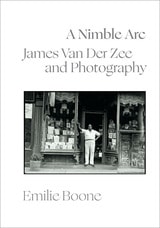
A Nimble Arc
James Van Der Zee and PhotographyEmilie Boone
Duke University Press, 2023
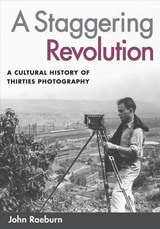
A Staggering Revolution
A Cultural History of Thirties PhotographyJohn Raeburn
University of Illinois Press, 2006
While other studies of thirties photography have concentrated on the documentary work of the Farm Security Administration (FSA), no previous book has considered it alongside so many of the decade's other important photographic projects. A Staggering Revolution includes individual chapters on Edward Steichen's celebrity portraiture; Berenice Abbott's Changing New York project; the Photo League's ethnography of Harlem; and Edward Weston's western landscapes, made under the auspices of the first Guggenheim Fellowship awarded to a photographer. It also examines Margaret Bourke-White's industrial and documentary pictures, the collective undertakings by California's Group f.64, and the fashion magazine specialists, as well as the activities of the FSA and the Photo League.
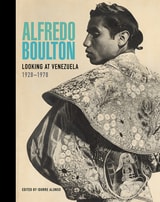
Alfredo Boulton
Looking at Venezuela, 1928–1978Idurre Alonso
J. Paul Getty Trust, The, 0
Alfredo Boulton (1908–1995) is considered one of the most important champions of modern art in Venezuela and a key intellectual of twentieth-century modernism. He was a pioneer of modern photography, an art critic, a researcher and historian of Venezuelan art, a friend to many of the great artists and architects of the twentieth century, and an expert on the imagery of the heroes of his country’s independence.
Yet, Boulton is shockingly underrecognized outside of his native land. The few exhibitions related to his work have focused exclusively on his photographic production; never has there been a project that looks at the full range of Boulton’s efforts, foregrounding his influence on the shaping of Venezuelan art. This volume addresses these lacunae by analyzing Boulton’s groundbreaking photographic practice, his central role in the construction of a modern national artistic canon, and his influence in formalizing and developing art history and criticism in Venezuela. Based on the extensive materials held in Boulton’s archive at the Getty Research Institute, Alfredo Boulton brings together essays by leading scholars in the field to offer a commanding, original perspective on his contributions to the formation of a distinctive modernity at home and beyond.
This volume is published to accompany an exhibition on view at the Getty Research Institute at the Getty Center from August 29, 2023, to January 21, 2024.
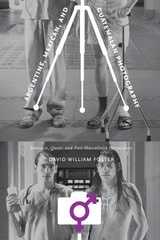
Argentine, Mexican, and Guatemalan Photography
Feminist, Queer, and Post-Masculinist PerspectivesBy David William Foster
University of Texas Press, 2014
One of the important cultural responses to political and sociohistorical events in Latin America is a resurgence of urban photography, which typically blends high art and social documentary. But unlike other forms of cultural production in Latin America, photography has received relatively little sustained critical analysis. This pioneering book offers one of the first in-depth investigations of the complex and extensive history of gendered perspectives in Latin American photography through studies of works from Argentina, Mexico, and Guatemala.
David William Foster examines the work of photographers ranging from the internationally acclaimed artists Graciela Iturbide, Pedro Meyer, and Marcos López to significant photographers whose work is largely unknown to English-speaking audiences. He grounds his essays in four interlocking areas of research: the experience of human life in urban environments, the feminist matrix and gendered cultural production, Jewish cultural production, and the ideological principles of cultural works and the connections between the works and the sociopolitical and historical contexts in which they were created. Foster reveals how gender-marked photography has contributed to the discourse surrounding the project of redemocratization in Argentina and Guatemala, as well as how it has illuminated human rights abuses in both countries. He also traces photography’s contributions to the evolution away from the masculinist-dominated post–1910 Revolution ideology in Mexico. This research convincingly demonstrates that Latin American photography merits the high level of respect that is routinely accorded to more canonical forms of cultural production.
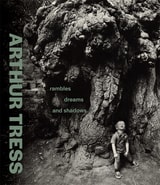
Arthur Tress
Rambles, Dreams, and ShadowsJames A. Ganz
J. Paul Getty Trust, The, 2023
Arthur Tress (b. 1940) is a singular figure in the landscape of postwar American photography. His seminal series, The Dream Collector, depicts Tress’s interests in dreams, nightmares, fantasies, and the unconscious and established him as one of the foremost proponents of magical realism at a time when few others were doing staged photography.
This volume presents the first critical look at Tress’s early career, contextualizing the highly imaginative, fantastic work he became known for while also examining his other interrelated series: Appalachia: People and Places; Open Space in the Inner City; Shadow; and Theater of the Mind. James A. Ganz, Mazie M. Harris, and Paul Martineau plumb Tress’s work and archives, studying ephemera, personal correspondence, unpublished notes, diaries, contact sheets, and more to uncover how he went from earning his living as a social documentarian in Appalachia to producing surreal work of “imaginative fiction.” This abundantly illustrated volume imparts a fuller understanding of Tress’s career and the New York photographic scene of the 1960s and 1970s.
This volume is published to accompany an exhibition on view at the J. Paul Getty Museum at the Getty Center from October 31, 2023, to February 18, 2024.
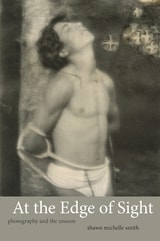
At the Edge of Sight
Photography and the UnseenShawn Michelle Smith
Duke University Press, 2013
Blue Notes in Black and White
Photography and JazzBenjamin Cawthra
University of Chicago Press, 2011
Borrowed Time
Photographs by Caroline VaughanCaroline Vaughan
Duke University Press, 1996

Daguerreotypes
Fugitive Subjects, Contemporary ObjectsLisa Saltzman
University of Chicago Press, 2015
By examining this idea of photography as articulated in literature, film, and the graphic novel, Daguerreotypes demonstrates how photography secures identity for figures with an otherwise unstable sense of self. Lisa Saltzman argues that in many modern works, the photograph asserts itself as a guarantor of identity, whether genuine or fabricated. From Roland Barthes’s Camera Lucida to Ridley Scott’s Blade Runner, W. G. Sebald’s Austerlitz to Alison Bechdel’s Fun Home—we find traces of photography’s “fugitive subjects” throughout contemporary culture. Ultimately, Daguerreotypes reveals how the photograph, at once personal memento and material witness, has inspired a range of modern artistic and critical practices.
Diary/Landscape
James Welling
University of Chicago Press, 2014
In July 1977, Welling began photographing a two-volume travel diary kept by his great-grandmother Elizabeth C. Dixon, as well as landscapes in southern Connecticut. In one closely cropped image, lines of tight cursive share the page with a single ivy leaf preserved in the diary. In another snowy image, a stand of leafless trees occludes the gleaming Long Island sound. In subject and form, Welling emulated the great American modernists Alfred Stieglitz, Paul Strand, and Walker Evans—a bold move for an artist associated with radical postmodernism. At the same time, Welling’s close-ups of handwriting push to the fore the postmodernist themes of copying and reproduction.
A beautiful and moving meditation on family, history, memory, and place, Diary/Landscape reintroduced history and private emotion as subjects in high art, while also helping to usher in the centrality of photography and theoretical questions about originality that mark the epochal Pictures Generation. The book is published to accompany the first-ever complete exhibition of this series of pivotal photographs, now owned by the Art Institute of Chicago.
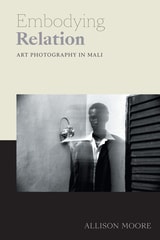
Embodying Relation
Art Photography in MaliAllison Moore
Duke University Press, 2020
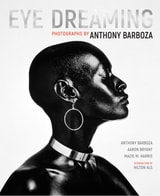
Eye Dreaming
Photographs by Anthony BarbozaAnthony Barboza
J. Paul Getty Trust, The, 2022
Anthony Barboza (b. 1944) is a celebrated artist and writer who has made thousands of photographs in the studio and on the street since 1963. A member of the Kamoinge collective of photographers in New York, Barboza is largely self-taught and has an inimitable, highly intuitive vision that he refers to as “eye dreaming,” or “a state of mind that’s almost like meditation.” Throughout the years he has made countless commercial images, including celebrity portraits, advertisements, and album covers. His personal photographic projects illuminate his deep investment in the art and concerns of Black communities, not only in the United States but also around the globe.
This lavishly illustrated volume follows Barboza’s prolific career from his youth in New Bedford, Massachusetts, to his formative years in New York in the 1960s, to the present day. An introduction by renowned author and critic Hilton Als underscores Barboza’s importance and impact. An essay by curator Aaron Bryant contextualizes Barboza’s life and career as they map against major civil rights events in the United States. In an intimate interview between the artist and curator Mazie M. Harris, Barboza offers astute, humorous, and intimate musings on his long career, foundational influences, and artistic legacy. This monograph, the first on the artist, will appeal to aficionados of photography and Black art and culture.
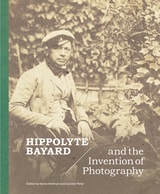
Hippolyte Bayard and the Invention of Photography
Karen Hellman
J. Paul Getty Trust, The, 2024
Hippolyte Bayard (1801–1887) is often characterized as an underdog in the early history of photography. From the outset, his contribution to the invention of the medium was eclipsed by others such as Louis-Jacques-Mandé Daguerre (1787–1851) and William Henry Fox Talbot (1800–1877). However, Bayard had an undeniable role in the birth of photography and its subsequent evolution into a form of art. He was a pioneer in artistic style, innovator in terms of practice, and teacher of the next generation of photographers.
Alongside an exploration of Bayard’s decades-long career and lasting impact, this volume presents—for the first time in print—some of the earliest photographs in existence. An album containing nearly 200 images, 145 of those by or attributed to Bayard, is among the Getty Museum’s rarest and most treasured photographic holdings. Few prints have ever been seen in person due to the extreme light sensitivity of Bayard’s experimental processes, making this an essential reference for scholars and enthusiasts of the very beginning of photography.
This volume is published to accompany an exhibition on view at the J. Paul Getty Museum at the Getty Center from April 9 to July 7, 2024.

In a Rugged Land
Ansel Adams, Dorothea Lange, and the Three Mormon Towns Collaboration, 1953–1954James Swensen
University of Utah Press, 2018
In a Rugged Land examines the history and content of the two photographers’ forgotten collaboration Three Mormon Towns. Looking at Adams’s and Lange’s photographs, extant letters, and personal memories, the book provides a window into an important moment in their careers and seeks to understand why a project that once held such promise ended in disillusionment and is now little more than a footnote in their illustrative biographies. Swensen’s in-depth research and interpretation help make sense of what they did and place them alongside others who were also exploring the particular qualities of the Mormon village at that time.
Winner of the Joan Paterson Kerr Book Award for best illustrated book on the history of the American West from the Western History Association.
Winner of the Best Book Award from the Utah State Historical Society.
Winner of the 15 Bytes Book Award for Art Book.
Honorable mention for Best Book from the Mormon History Association.
Interview with Tom Williams at Access Utah
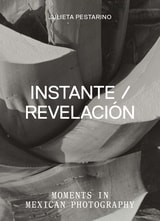
Instante/revelacion
Moments in Mexican PhotographyJulieta Pestarino
J. Paul Getty Trust, The, 2026
Presenting nearly 150 pictures made between 1920 and 2017, Instante/revelación highlights the work of thirteen renowned photographers who feature prominently in the history of the medium in Mexico, including Lola and Manuel Álvarez Bravo, Graciela Iturbide, and Pablo Ortiz Monasterio.
Through a dynamic selection of images, the publication explores some of the intertwined sociocultural forces that shape life and art in Mexico. Among the photographs are stunning presentations of landscapes, architecture, and flora and fauna from across the country; depictions of daily life; and portraits of esteemed Mexican artists and writers such as Diego Rivera, Frida Kahlo, and Octavio Paz. An illustrated essay examines the significant role photobooks and periodicals played in disseminating these images.
The photographers featured in this volume are linked by friendship, influence, and collaboration. Their works, when viewed together as a collective narrative, reveal the spirit of fruitful exchange that characterizes this exciting chapter in Mexico's photographic history.
This volume is published to accompany an exhibition on view at the J. Paul Getty Museum at the Getty Center from September 1, 2026, to January 3, 2027.
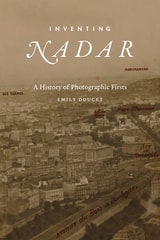
Inventing Nadar
A History of Photographic FirstsEmily Doucet
Duke University Press, 2025
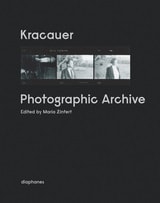
Kracauer. Photographic Archive
Edited by Maria Zinfert
Diaphanes, 2014
Kracauer.Photographic Archive, a companion volume to The Past’s Threshold: Essays on Photography, collects previously unpublished photographs by Siegfried and Elisabeth, “Lili,” Kracauer. With its remarkably rich material, the book tells the story of the Kracauer’s close working relationship, from their marriage in Germany to their escape to Paris and the war and postwar years in the United States. While neither Kracauer nor his wife trained in photography, their portraits, city views, and landscapes evince impressive aesthetic and technical skill, while simultaneously shedding light on their lives marked by exile and flight.
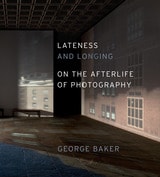
Lateness and Longing
On the Afterlife of PhotographyGeorge Baker
University of Chicago Press, 2023
Beginning in the 1990s, a series of major artists imagined the expansion of photography, intensifying its ideas and effects while abandoning many of its former medium constraints. Simultaneous with this development in contemporary art, however, photography was moving toward total digitalization.
Lateness and Longing presents the first account of a generation of artists—focused on the work of Zoe Leonard, Tacita Dean, Sharon Lockhart, and Moyra Davey—who have collectively transformed the practice of photography, using analogue technologies in a dissident way and radicalizing signifiers of older models of feminist art. All these artists have resisted the transition to the digital in their work. Instead—in what amounts to a series of feminist polemics—they return to earlier, incomplete, or unrealized moments in photography’s history, gravitating toward the analogue basis of photographic mediums. Their work announces that photography has become—not obsolete—but “late,” opened up by the potentially critical forces of anachronism.
Through a strategy of return—of refusing to let go—the work of these artists proposes an afterlife and survival of the photographic in contemporary art, a formal lateness wherein photography finds its way forward through resistance to the contemporary itself.
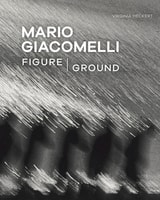
Mario Giacomelli
Figure/GroundVirginia Heckert
J. Paul Getty Trust, The, 2021
Mario Giacomelli (1925–2000) was born into poverty and lived his entire life in Senigallia, a seaside town along the Adriatic coast in Italy’s Marche region. He purchased his first camera in 1953 and quickly gained recognition for the raw expressiveness of his images. His preference for grainy, high-contrast film and paper produced bold, geometric compositions with glowing whites and deep blacks. Giacomelli most frequently focused his camera on the people, landscapes, and seascapes of the Marche, and he often spent several years expanding and reinterpreting a single body of work or repurposing an image made for one series for inclusion in another. By applying titles derived from poetry and literature to his photographs, he transformed ordinary subjects into meditations on time, memory, and existence.
Spanning the photographer’s earliest pictures to those made in the final years of his life, this publication celebrates the J. Paul Getty Museum’s extensive Giacomelli holdings, formed in large part through a significant gift from Daniel Greenberg and Susan Steinhauser.
This volume is published to accompany an exhibition on view at the J. Paul Getty Museum at the Getty Center from June 29 to October 10, 2021.
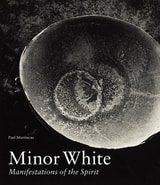
Minor White
Manifestations of the SpiritPaul Martineau
J. Paul Getty Trust, The, 2014
Controversial, misunderstood, and sometimes overlooked, Minor White (1908–1976) is one of the great photographers of the twentieth century, whose ideas exerted a powerful influence on a generation of photographers and still resonate today. His photographic career began in 1938 in Portland, Oregon, with assignments for the WPA (Works Progress Administration). After serving in World War II and studying art history at Columbia University, White’s focus shifted toward the metaphorical. He began creating images charged with symbolism and a critical aspect called equivalency, referring to the invisible spiritual energy present in a photograph made visible to the viewer.
This book brings together White’s key biographical information—his evolution as a photographer, teacher of photography, and editor of Aperture, as well as particularly insightful quotations from his journals, which he kept for more than forty years. The result is an engaging narrative that weaves through the main threads of White’s life, his growth as an artist, as well as his spiritual search and ongoing struggle with his own sexuality and self-doubt. He sought comfort in a variety of religious practices that influenced his continually metamorphosing artistic philosophy.
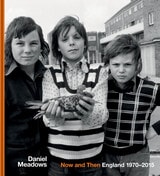
Now and Then
England 1970-2015Daniel Meadows
Bodleian Library Publishing, 2019
This book includes important work from Meadows’s groundbreaking projects, drawing on the archives now held at the Bodleian Library. It follows the maverick documentarian as he ran a free portrait studio in Manchester’s Moss Side in 1972 and then traveled 10,000 miles to make a national portrait from his converted double-decker, the Free Photographic Omnibus, a project he revisited a quarter-of-a-century later. The book goes on to show how, at the turn of the millennium, Meadows adopted new “kitchen table” technologies to make digital stories, which he dubbed “multimedia sonnets from the people.” Through the unique voices of his subjects, Meadows has made and continues to make moving and insightful commentaries on life in Britain.
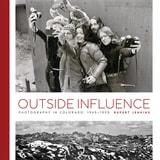
Outside Influence
Photography in Colorado, 1945–1995Rupert Jenkins
University Press of Colorado, 2025
Outside Influence: Photography in Colorado, 1945–1995 is the first detailed account of the state’s history of post–World War II expressive photography. The title “Outside Influence” alludes to the historic presence of the natural landscape as subject and to the transformative impact of out-of-state artists and educators. Their arrival in Colorado beginning in the 1960s galvanized interpretive photography by introducing innovative concepts, nontraditional materials, and emergent digital technologies to students, peers, and their audience-at-large.
Throughout the book’s nine chapters, Rupert Jenkins contextualizes Colorado photography’s postwar development with a social, political, and cultural abstract that encompasses national events and trends, the emerging presence of women and photographers of color, and institutional leadership. Drawing from more than 120 personal interviews, he identifies the medium’s principal in-state creators, mentors, and advocates from the modernist era of film processing to the emergence of interdisciplinary digital practice. Jenkins answers fundamental questions about the people and work of this era: Who generated this significant body of innovative, noncommercial photographic work? Where did they come from? Who inspired them, and who in turn did they inspire?
As Eric Paddock, curator of photography at the Denver Art Museum, discusses in his foreword, by looking at the schools, workshops, galleries, and museums that supported these artists, Jenkins stresses the importance of collaboration and community to any successful venture. Crucially, in examining the lives and careers of photographers like Robert Adams, Walter Chappell, Albert Chong, Cherie Hiser, Barbara Houghton, Winter Prather, Mark Sink, Melanie Walker, Myron Wood, and numerous others, Outside Influence seeks to affirm the medium’s legacy within Colorado’s fine arts canon.

Phantom Skies and Shifting Ground
Landscape, Culture, and Rephotography in Eadweard Muybridge's Illustrations of Central AmericaByron Wolfe and Scott Brady
Temple University Press, 2017
In 1875, after being acquitted for the murder of his wife’s lover, Eadweard Muybridge spent a year photographing along the Central American Pacific Coast, particularly in Guatemala and Panamá. Upon his return to California in 1876, he published a very limited number of albums of the photographs (11 are known), each of which was unique in size and scope. In 2007, photographer Byron Wolfe (born 1967) tracked down and cataloged every known Muybridge Central American photograph. Then, with cultural geographer Scott Brady, he traveled to many of Muybridge’s sites to rephotograph them. Through photographic collage, interpretive rephotography, illustrations and essays, this book examines an exceptionally rare series by Muybridge. Also included is a catalogue of every known Muybridge Central American picture.
Photo-Fiction, a Non-Standard Aesthetics
François Laruelle
University of Minnesota Press, 2012
Twenty years after cultivating a new orientation for aesthetics via the concept of non-photography, François Laruelle returns, having further developed his notion of a non-standard aesthetics. Published for the first time in a bilingual edition, Photo-Fiction, a Non-Standard Aesthetics expounds on Laruelle’s current explorations into a photographic thinking as an alternative to the worn-out notions of aesthetics based on an assumed domination of philosophy over art. He proposes a new philosophical photo-fictional apparatus, or philo-fiction, that strives for a discursive mimesis of the photographic apparatus and the flash of the Real entailed in its process of image making. “A bit like if an artisan, to use a Socratic example, instead of making a camera based off of diagrams found in manuals, on the contrary had as his or her project the designing of a completely new apparatus of philo-fiction, thus capable of producing not simply photos, but photo-fictions.” One must enter into a space for seeing the vectorial and the imaginary number. Laruelle’s philo-fictions become not art installations, but “theoretical installations” calling for the consideration of the possibility of a non-standard aesthetics being of an equal or superior power to art and philosophy, an aesthetics in-the-last-instance that is itself an inventive and creative act of the most contemporary kind.
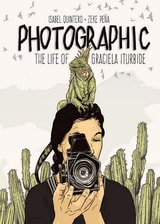
Photographic
The Life of Graciela IturbideIsabel Quintero
J. Paul Getty Trust, The, 2021
Renowned Mexican photographer Graciela Iturbide was born in Mexico City in 1942, the oldest of thirteen children. When tragedy strikes Graciela as a young mother, she turns to photography for solace and understanding.
From then on Graciela embarks on a photographic journey that takes her throughout her native Mexico, from the Sonora Desert to Juchitán to Frida Kahlo’s bathroom, and then to the United States, India, and beyond.
Photographic is a symbolic, poetic, and deeply personal graphic biography of this iconic photographer. Graciela’s journey will excite young adults and budding photographers, who will be inspired by her resolve, talent, and curiosity.
Ages twelve and up
Photography At The Dock
Essays on Photographic History, Institutions, and PracticesAbigail Solomon-Godeau
University of Minnesota Press, 1994
Photography after Photography
Gender, Genre, HistoryAbigail Solomon-Godeau
Duke University Press, 2017
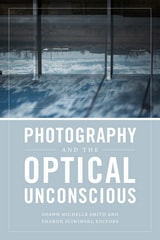
Photography and the Optical Unconscious
Shawn Michelle Smith and Sharon Sliwinski, editors
Duke University Press, 2017
Contributors. Mary Bergstein, Jonathan Fardy, Kristan Horton, Terri Kapsalis, Sarah Kofman, Elisabeth Lebovici, Zoe Leonard, Gabrielle Moser, Mignon Nixon, Thy Phu, Mark Reinhardt, Shawn Michelle Smith, Sharon Sliwinski, Laura Wexler, Kelly Wood, Andrés Mario Zervigón

Photography, Cinema, Memory
The Crystal Image of TimeDamian Sutton
University of Minnesota Press, 2009
A philosophical investigation into the differing sensations of time in cinema and photography
Cinema and photography are both intimately associated with time—cinema with time in passing, the photograph with the lost moment. In Photography, Cinema, Memory, Damian Sutton explores time in both media to present a radical new understanding of the photographic image as always coming into being.
Drawing on Gilles Deleuze’s concept of the crystal image to move beyond the tropes of immobility, stasis, and death, Sutton’s analysis reveals the open-endedness of time expressed in the photograph, either as a potential for an abundant future or as a depth of meandering remembrance. He presents an innovative taxonomy of time in the photograph, considering particular representations of time in the work of Nan Goldin, Eugène Atget, Andy Warhol, and others. He contrasts this taxonomy with representations of time in cinema since 1895, offering fresh readings of the films of the Lumière brothers and Mitchell & Kenyon, as well as more recent works, including Eternal Sunshine of the Spotless Mind, Amélie, and A Matter of Life and Death. Throughout this work, Sutton connects and grounds cinema and photography as starting points to comprehend how we come to terms, ultimately, with time itself as pure, immanent change.
Proof
Photographs from Four Generations of a Texas FamilyByrd M. Williams IV
University of North Texas Press, 2016
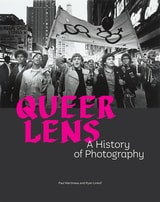
Queer Lens
A History of PhotographyPaul Martineau
J. Paul Getty Trust, The, 2025
Copiously illustrated, Queer Lens explores the transformative role of photography in LGBTQ+ communities from the nineteenth century to the present day.
Winner of the 2026 Lambda Literary Award for LGBTQ+ Anthology
“An outstanding addition to the growing body of scholarship around queer imagery.”
—Jim Van Buskirk, The Bay Area Reporter
“A tour de force. . . . A profound collective story of creativity, joy and resistance.”
—Emma Jacob, Aesthetica Magazine
“Potent and inspiring. . . . An empowering photography retrospective that reflects American queer communities.”
—Aleena Ortiz, Foreword Reviews
“A deeply significant and beautifully produced volume."
—All About Photo.com
“Eye-catching."
—Matthew Wexler, Queerty.com
Photography’s power to capture a subject—representing reality, or a close approximation—has inherently been linked with the construction and practice of identity. Since the camera’s invention in 1839, and despite periods of severe homophobia, the photographic art form has been used by and for individuals belonging to dynamic LGBTQ+ communities, helping shape and affirm queer culture and identity across its many intersections.
Queer Lens explores this transformative force of photography, which has played a pivotal role in increasing queer visibility. Lively essays by scholars and artists explore myriad manifestations of queer culture, both celebrating complex interpretations of people and relationships and resisting rigid definitions. Featuring a rich selection of images—including portraits of queer individuals, visual records of queer kinship, and documentary photographs of early queer groups and protests—this volume investigates the medium’s profound role in illuminating the vibrant tapestry of LGBTQ+ communities.
This volume is published to accompany an exhibition on view at the J. Paul Getty Museum at the Getty Center from June 17 to September 28, 2025.
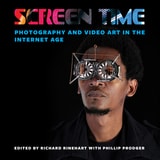
Screen Time
Photography and Video Art in the Internet AgeRichard Rinehart
Bucknell University Press, 2022
Published by Bucknell University Press for the Samek Art Museum.
Distributed worldwide by Rutgers University Press.
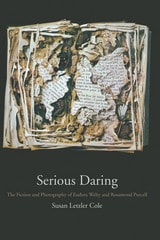
Serious Daring
The Fiction and Photography of Eudora Welty and Rosamond PurcellSusan Letzler Cole
University of Arkansas Press, 2016
Serious Daring is the story of the complementary journeys of two American women artists, celebrated fiction writer Eudora Welty and internationally acclaimed photographer Rosamond Purcell, each of whom initially practiced, but then turned from, the art form ultimately pursued by the other.
For both Welty and Purcell, the art realized is full of the art seemingly abandoned. Welty’s short stories and novels use images of photographs, photographers, and photography. Purcell photographed books, texts, and writing.
Both women make compelling art out of the seeming tension between literary and visual cultures. Purcell wrote a memoir in which photographs became endnotes. Welty re-emerged as a photographer through the publication of four volumes of what she called her “snapshots,” magnificent black-and-white photographs of small-town Mississippi and New York City life.
Serious Daring is a fascinating look at how the road not taken can stubbornly accompany the chosen path, how what is seemingly left behind can become a haunting and vital presence in life and art.

Taken by Design
Photographs from the Institute of Design, 1937-1971Edited by David Travis and Elizabeth Siegel
University of Chicago Press, 2002
With nearly 300 illustrations, including many never-before published photographs, Taken by Design examines the changing nature of photography over this critical period in America's midcentury. It starts by documenting the experimental nature of Moholy's Bauhaus approach and photography's new and enhanced role in training the "complete designer." Next it traces the formal and abstract camera experiments under Harry Callahan and Aaron Siskind, which aimed at achieving a new kind of photographic subjectivity. Finally, it highlights the ID's focus on conscious references to the processes of the photographic medium itself. In addition to photographs by Moholy, Callahan, and Siskind, the book showcases works by Barbara Crane, Yasuhiro Ishimoto, Joseph Jachna, Kenneth Josephson, Gyorgy Kepes, Nathan Lerner, Ray K. Metzker, Richard Nickel, Arthur Siegel, Art Sinsabaugh, and many others. Major essays from experts in the field, biographies, a chronology, and reprints of critical essays are also included, making Taken by Design an essential work for anyone interested in the history of American photography.
Contributors include:
Keith Davis, Lloyd Engelbrecht, John Grimes, Nathan Lyons, Hattula Moholy-Nagy, Elizabeth Siegel, David Travis, Larry Viskochil, James N. Wood
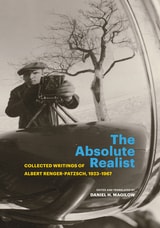
The Absolute Realist
Collected Writings of Albert Renger-Patzsch, 1923–1967Albert Renger-Patzsch
J. Paul Getty Trust, The, 2022
A towering figure in the history of photography, Albert Renger-Patzsch (1897–1966) has come to epitomize New Objectivity, the neorealist movement in modernist literature, film, and the visual arts recognized as the signature artistic style of Germany’s Weimar Republic. Today, his images are regularly exhibited and widely considered key influences on contemporary photographers. Whether they capture geometrically intricate cacti, flooded tidal landscapes, stacks of raw materials, or imposing blast furnace towers, Renger-Patzsch’s photographs embody what his peer Hugo Sieker termed “absolute realism,” an approach predicated upon the idea that photographers have one task: to exploit the camera’s unique capacity to document with uncompromising detail.
Not only a photographer, Renger-Patzsch was also an influential and lucid writer who advocated his unique brand of uncompromising realism in almost a half century’s worth of articles, essays, lectures, brochures, and unpublished manuscripts addressing photography, technology, and modernity. Drawing on his papers at the Getty Research Institute and other archives, The Absolute Realist unites in one volume this skillful photographer’s ideas about the defining visual medium of modernity.
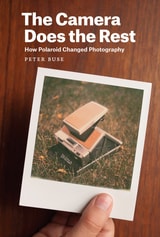
The Camera Does the Rest
How Polaroid Changed PhotographyPeter Buse
University of Chicago Press, 2016
Polaroid was often dismissed as a toy, but Buse takes it seriously, showing how it encouraged photographic play as well as new forms of artistic practice. Drawing on unprecedented access to the archives of the Polaroid Corporation, Buse reveals Polaroid as photography at its most intimate, where the photographer, photograph, and subject sit in close proximity in both time and space—making Polaroid not only the perfect party camera but also the tool for frankly salacious pictures taking.
Along the way, Buse tells the story of the Polaroid Corporation and its ultimately doomed hard-copy wager against the rising tide of digital imaging technology. He explores the continuities and the differences between Polaroid and digital, reflecting on what Polaroid can tell us about how we snap photos today. Richly illustrated, The Camera Does the Rest will delight historians, art critics, analog fanatics, photographers, and all those who miss the thrill of waiting to see what develops.
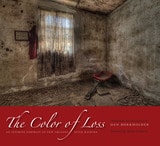
The Color of Loss
An Intimate Portrait of New Orleans after KatrinaPhotographs and introduction by Dan Burkholder
University of Texas Press, 2008
The devastation of New Orleans after Hurricane Katrina has been imprinted in our collective visual memory by thousands of images in the media and books of dramatic photographs by Robert Polidori, Larry Towell, Chris Jordan, Debbie Fleming Caffrey, and others. New Orleanians want the world to see and respond to the destruction of their city and the suffering of its people—and yet so many images of so much destruction threaten a visual and emotional overload that would tempt us to avert our eyes and become numb.
In The Color of Loss, Dan Burkholder presents a powerful new way of seeing the ravaged homes, churches, schools, and businesses of New Orleans. Using an innovative digital photographic technology called high dynamic range (HDR) imaging, in which multiple exposures are artistically blended to bring out details in the shadows and highlights that would be hidden in conventional photographs, he creates images that are almost like paintings in their richness of color and profusion of detail. Far more intense and poetic than purely documentary photographs, Burkholder's images lure viewers to linger over the artifacts of people's lives—a child's red wagon abandoned in a mud-caked room, a molding picture of Jesus—to fully understand the havoc thrust upon the people of New Orleans.
In the deserted, sinisterly beautiful rooms of The Color of Loss, we see how much of the splendor and texture of New Orleans washed away in the flood. This is the hidden truth of Katrina that Dan Burkholder has revealed.
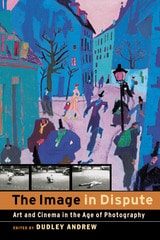
The Image in Dispute
Art and Cinema in the Age of PhotographyEdited by Dudley Andrew
University of Texas Press, 1997
Photography, cinema, and video have irrevocably changed the ways in which we view and interpret images. Indeed, the mechanical reproduction of images was a central preoccupation of twentieth-century philosopher Walter Benjamin, who recognized that film would become a vehicle not only for the entertainment of the masses but also for consumerism and even communism and fascism.
In this volume, experts in film studies and art history take up the debate, begun by Benjamin, about the power and scope of the image in a secular age. Part I aims to bring Benjamin's concerns to life in essays that evoke specific aspects and moments of the visual culture he would have known. Part II focuses on precise instances of friction within the traditional arts brought on by this century's changes in the value and mission of images. Part III goes straight to the image technologies themselves—photography, cinema, and video—to isolate distinctive features of the visual cultures they help constitute.
As we advance into the postmodern era, in which images play an ever more central role in conveying perceptions and information, this anthology provides a crucial context for understanding the apparently irreversible shift from words to images that characterized the modernist period. It will be important reading for everyone in cultural studies, film and media studies, and art history.
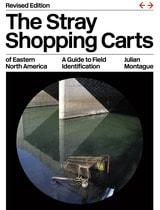
The Stray Shopping Carts of Eastern North America
A Guide to Field IdentificationJulian Montague
University of Chicago Press, 2023
Abandoned shopping carts are everywhere, and yet we know so little about them. Where do they come from? Why are they there? Their complexity and history baffle even the most careful urban explorer.
Thankfully, artist Julian Montague has created a comprehensive and well-documented taxonomy with The Stray Shopping Carts of Eastern North America. Spanning thirty-three categories from damaged, fragment, and plow crush to plaza drift and bus stop discard, it is a tonic for times defined increasingly by rhetoric and media and less by the plain objects and facts of the real world. Montague’s incomparable documentation of this common feature of the urban landscape helps us see the natural and man-made worlds—and perhaps even ourselves—anew.
First published in 2006 to great perplexity and acclaim alike, Montague’s book now appears in refreshed and expanded form. Told in an exceedingly dry voice, with full-color illustrations and photographs throughout, it is both rigorous and absurd, offering a strangely compelling vision of how we approach, classify, and understand the environments around us. A new afterword sheds light on the origins of the project.
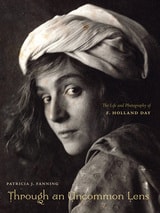
Through an Uncommon Lens
The Life and Photography of F. Holland DayPatricia J. Fanning
University of Massachusetts Press, 2008
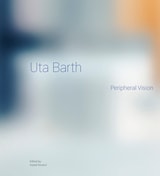
Uta Barth
Peripheral VisionArpad Kovacs
J. Paul Getty Trust, The, 2023
Los Angeles–based contemporary artist Uta Barth (b. 1958) has spent her decades-long career exploring the complexities and limits of human and mechanical vision. At first, her photographs appear to be deceptively simple depictions of everyday objects—light filtering through a window, tree branches bereft of leaves, a sparsely appointed domestic interior—but these images, visually spare yet conceptually rigorous, emerge from her investigation of sight, perception, light, and time.
In this richly illustrated monograph, curator Arpad Kovacs and contributors Lucy Gallun and Jeremy Gilbert-Rolfe chart Barth’s career path and discuss her most significant series, revealing how she has rejected the primacy of a traditional photographic subject and instead called attention to what is on the periphery. The book includes previously unpublished bodies of work made early in her career that add much to our understanding of this important artist. Also included is Barth’s most recent work, ...from dawn to dusk, an ambitious commission marking the twenty-fifth anniversary of the Getty Center.
Wake Up, This Is Joburg
Words by Tanya Zack, Photographs by Mark Lewis
Duke University Press, 2022

Walker Evans
No PoliticsBy Stephanie Schwartz
University of Texas Press, 2020
“NO POLITICS whatever.” Walker Evans made this emphatic declaration in 1935, the year he began work for FDR’s Resettlement Administration. Evans insisted that his photographs of tenant farmers and their homes, breadlines, and the unemployed should be treated as “pure record.” The American photographer’s statements have often been dismissed. In Walker Evans: No Politics, Stephanie Schwartz challenges us to engage with what it might mean, in the 1930s and at the height of the Great Depression, to refuse to work politically.
Offering close readings of Evans’s numerous commissions, including his contribution to Carleton Beals’s anti-imperialist tract, The Crime of Cuba (1933), this book is a major departure from the standard accounts of Evans’s work and American documentary. Documentary, Schwartz reveals, is not a means of being present—or being “political.” It is a practice of record making designed to distance its maker from the “scene of the crime.” That crime, Schwartz argues, is not just the Depression; it is the processes of Americanization reshaping both photography and politics in the 1930s. Historicizing documentary, this book reimagines Evans and his legacy—the complexities of claiming “no politics.”
When Home Is a Photograph
Blackness and Belonging in the WorldLeigh Raiford
Duke University Press, 2026