Results by title
44 books match the query 'Photojournalism'
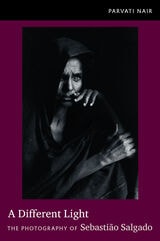
A Different Light
The Photography of Sebastião SalgadoParvati Nair
Duke University Press, 2012
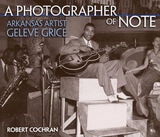
A Photographer of Note
Arkansas Artist Geleve GriceGeleve Grice
University of Arkansas Press, 2003
In a selection of more than one hundred black and white images taken over a period of sixty years, this book bears witness to the life of a remarkable photographer and to small-town African American life in the middle of the twentieth century. Geleve Grice was born and raised near Pine Bluff, and he has documented the ordinary life of his community: parades, graduations, weddings, club events, and whatever else brought people together. In the process he has created a remarkable historical portrait of an African American community. Through his lens we glimpse the daily patterns of segregated Pine Bluff, and we also participate in the excitement of greeting extraordinary visitors. Martin Luther King Jr., Mary McLeod Bethune, Harry S. Truman, and others all came through town.
Folklorist Robert Cochran worked with Grice to select these photographs from the thousands he has taken across a lifetime. They organized the work chronologically, reflecting Grice’s early years in small-town Arkansas, his travel as a serviceman in World War II, and his long career in Pine Bluff. Cochran’s accompanying chapters link Grice to the great tradition of American community photographers. He also shows how work for pay-at the Arkansas Agricultural, Mechanical and Normal College in Pine Bluff; at the Arkansas State Press daily newspaper; through his own studio-shaped Grice’s work. Cochran shows that Grice not only made his living taking photographs for jobs, but that he also made his own life by making photographs for himself-and now for history.
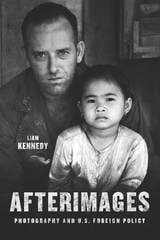
Afterimages
Photography and U.S. Foreign PolicyLiam Kennedy
University of Chicago Press, 2016
Liam Kennedy here maps the evolving relations between the American way of war and photographic coverage of it. Organized in its first section around key US military actions over the last fifty years, the book then moves on to examine how photographers engaged with these conflicts on wider ethical and political grounds, and finally on to the genre of photojournalism itself. Illustrated throughout with examples of the photographs being considered, Afterimages argues that photographs are important means for critical reflection on war, violence, and human rights. It goes on to analyze the high ethical, sociopolitical, and legalistic value we place on the still image’s ability to bear witness and stimulate action.
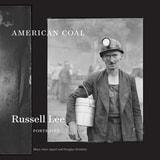
American Coal
Russell Lee PortraitsMary Jane Appel and Douglas Brinkley
University of Texas Press, 2024
More than 100 powerful images by noted photographer Russell Lee that document the working conditions and lives of coal mining communities in the postwar United States; publication coincides with an exhibition at the National Archives in Washington, DC.
In 1946 the Truman administration made a promise to striking coal miners: as part of a deal to resume work, the government would sponsor a nationwide survey of health and labor conditions in mining camps. One instrumental member of the survey team was photographer Russell Lee. Lee had made his name during the Depression, when, alongside Dorothea Lange and Walker Evans, he used his camera to document agrarian life for the Farm Security Administration (FSA). Now he trained his lens on miners and their families to show their difficult circumstances despite their essential contributions to the nation's first wave of postwar growth.
American Coal draws from the thousands of photographs that Lee made for the survey—also on view in the US National Archives and Records Administration’s exhibition Power & Light—and includes his original, detailed captions as well as an essay by biographer Mary Jane Appel and historian Douglas Brinkley. They place his work in context and illuminate how Lee helped win improved conditions for his subjects through vivid images that captured an array of miners and their communities at work and at play, at church and in school, in moments of joy and struggle, ultimately revealing to their fellow Americans the humanity and resilience of these underrecognized workers.
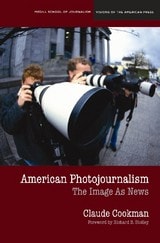
American Photojournalism
Motivations and MeaningsClaude Cookman
Northwestern University Press, 2009
Photojournalism has long been the medium of urgency and social change. It has profoundly affected American public opinion, going back at least to Mathew Brady's images from the Civil War. In American Photojournalism: Motivations and Meanings, Claude Cookman explores the history and future of the medium through the work of such exemplary photojournalists as Jacob Riis, Dorothea Lange, Weegee, Margaret Bourke-White, W. Eugene Smith, Gordon Parks, Rich Clarkson, and Carol Guzy, among others. The traditional approach to studying American photojournalism explains the what and who of photojournalism--what events and developments occurred, what notable images were taken, and who took them. Without neglecting these concerns, American Photojournalism emphasizes the why. Cookman argues convincingly that contemporary photojournalism is grounded in the desire to witness and record history, and the embrace of a universal humanism. Unafraid to engage questions of truth and intentionality, American Photojournalism will only become more relevant as the medium evolves.
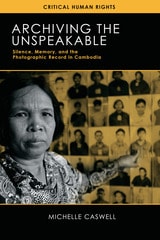
Archiving the Unspeakable
Silence, Memory, and the Photographic Record in CambodiaMichelle Caswell
University of Wisconsin Press, 2014
Winner, Waldo Gifford Leland Award, Society of American Archivists
Longlist, ICAS Book Prize, International Convention of Asia Scholars
Bedrooms of the Fallen
Ashley Gilbertson
University of Chicago Press, 2014
The book’s wide-format black-and-white images depict the bedrooms of forty fallen soldiers—the equivalent of a single platoon—from the United States, Canada, and several European nations. Left intact by families of the deceased, the bedrooms are a heartbreaking reminder of lives cut short: we see high school diplomas and pictures from prom, sports medals and souvenirs, and markers of the idealism that carried them to war, like images of the Twin Towers and Osama Bin Laden. A moving essay by Gilbertson describes his encounters with the families who preserve these private memorials to their loved ones, and shares what he has learned from them about war and loss.
Bedrooms of the Fallen is a masterpiece of documentary photography, and an unforgettable reckoning with the human cost of war.
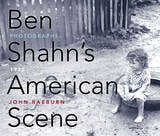
Ben Shahn's American Scene
Photographs, 1938John Raeburn
University of Illinois Press, 2010
The paintings, murals, and graphics of Ben Shahn (1898-1969) have made him one of the most heralded American artists of the twentieth century, but during the 1930s he was also among the nation's premier photographers. Much of his photographic work was sponsored by the New Deal's Farm Security Administration, where his colleagues included Dorothea Lange and Walker Evans.
Ben Shahn's American Scene: Photographs, 1938 presents one hundred superb photographs from his most ambitious FSA project, a survey of small-town life in the Depression. John Raeburn's accompanying text illuminates the thematic and formal significance of individual photographs and reveals how, taken together, they address key cultural and political issues of the years leading up to World War II. Shahn's photographs highlight conflicts between traditional values and the newer ones introduced by modernity as represented by the movies, chain stores, and the tantalizing allure of consumer goods, and they are particularly rich in observation about the changes brought about by Americans' universal reliance on the automobile. They also explore the small town's standing as the nation's symbol of democratic community and expose the discriminatory social and racial practices that subverted this ideal in 1930s America.
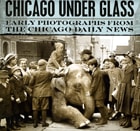
Chicago under Glass
Early Photographs from the Chicago Daily NewsMark Jacob and Richard Cahan in association with the Chicago History Museum
University of Chicago Press, 2007
These cameramen helped sell papers, but, as Mark Jacob and Richard Cahan reveal, they also made art. Chicago under Glass: Early Photographs from the Chicago Daily News is the first collection of images from the photo staff’s early years, 1901 to 1930. Jacob and Cahan, seasoned journalists themselves, have selected more than 250 images—many of which have never before been published—from the nearly 57,000 glass negatives housed at the Chicago History Museum. They include rare photographs of a young Buster Keaton with his wife and child, waiting to board a train and the notorious Al Capone outside a courtroom, smoking a cigar and consulting with his lawyer. Each thematic section begins with a fascinating introduction by the authors, and each image is accompanied by insightful historical commentary.
These fragile glass records are a remarkable piece of American history. Together, they capture a time of massive change and stark contrasts, the defining years in a place Nelson Algren called “Hustlertown.” From candid shots of the Eastland steamer disaster to the glittering electric lights of the White City amusement park and the grim aftermath of the Saint Valentine’s Day Massacre, the history these images reveal is not simply the story of Chicago, but the history of the modern American city.
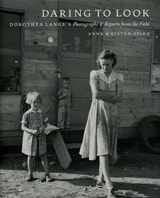
Daring to Look
Dorothea Lange's Photographs and Reports from the FieldAnne Whiston Spirn
University of Chicago Press, 2009
Daring to Look presents never-before-published photos and captions from Dorothea Lange’s fieldwork in California, the Pacific Northwest, and North Carolina during 1939. Lange’s images of squatter camps, benighted farmers, and stark landscapes are stunning, and her captions—which range from simple explanations of settings to historical notes and biographical sketches—add unexpected depth, bringing her subjects and their struggles unforgettably to life, often in their own words.
When Lange was dismissed from the Farm Security Administration at the end of 1939, these photos and field notes were consigned to archives, where they languished, rarely seen. With Daring to Look, Anne Whiston Spirn not only returns them to the public eye, but sets them in the context of Lange’s pioneering life, work, and struggle for critical recognition—firmly placing Lange in her rightful position at the forefront of American photography.
“A thoughtful and meticulously researched account of Lange’s career. . . . Spirn, a photographer herself, traces Lange’s path, visiting her locations and subjects in a fascinating series of ‘then and now’ shots.”—Publishers Weekly
“Dorothea Lange has long been regarded as one of the most brilliant photographic witnesses we have ever had to the peoples and landscapes of America, but until now no one has fully appreciated the richness with which she wove images together with words to convey her insights about this nation. We are lucky indeed that Anne Whiston Spirn, herself a gifted photographer and writer, has now recovered Lange’s field notes and woven them into a rich tapestry of texts and images to help us reflect anew on Lange’s extraordinary body of work.”—William Cronon, author of Nature’s Metropolis
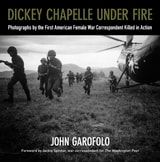
Dickey Chapelle Under Fire
Photographs by the First American Female War Correspondent Killed in ActionJohn Garofolo
Wisconsin Historical Society Press, 2026
Striking photographs and stories from more than two decades on the frontlines by a groundbreaking photojournalist—and the first female American war correspondent to be killed in action.
In 1941, twenty-two-year-old Georgette "Dickey" Chapelle sold her first photo essay to Look magazine. A year later, with World War II underway, she was photographing American soldiers in combat training in Panama. By the end of the war, she had captured the devastation at Iwo Jima and Okinawa, and in the ensuing decades, Dickey and her camera were on the scene at many of the world’s hotspots—from Cuba and the Dominican Republic to Algeria and Lebanon to Vietnam and Laos. Dickey Chapelle Under Fire exposes her remarkable story and shares over 150 stunning images from her extraordinary career as a photojournalist.
In the male-dominated world of war journalism, Chapelle fought to be taken seriously. She eventually earned the respect of many of her male colleagues and broke down barriers for future generations of female journalists. She embedded herself with military units on frontlines around the globe, capturing not only the horrors of war but also the camaraderie and everyday routines of service men and women.
Always one to follow the action, Chapelle traveled with Algerian rebels across the North African desert and with Fidel Castro through the jungles of Cuba. She spent two months in a Hungarian prison after being caught smuggling aid to refugees fleeing a Soviet invasion. Beginning in 1961, Chapelle set her lens and viewfinder on Southeast Asia, capturing the growing conflict there, until she was killed while on patrol with marines in Vietnam in April 1965—making her the first female American war correspondent to be killed in action.
For twenty-five years, Chapelle's photographs graced the pages of National Geographic, the National Observer, Life, and other major publications. Despite her tragic end, Chapelle’s tenacity, courage, and compassion shine throughout her work, highlighting the human impact of war while revealing the larger stories beyond the battlefield. Her legacy lives on through this powerful collection.
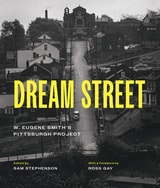
Dream Street
W. Eugene Smith's Pittsburgh ProjectW. Eugene Smith
University of Chicago Press, 2023
In 1955, having just resigned from his high-profile but stormy career with Life Magazine, W. Eugene Smith was commissioned to spend three weeks in Pittsburgh and produce one hundred photographs for noted journalist and author Stefan Lorant’s book commemorating the city’s bicentennial. Smith ended up staying a year, compiling twenty thousand images for what would be the most ambitious photographic essay of his life. But only a fragment of this work was ever seen, despite Smith's lifelong conviction that it was his greatest collection of photographs.
In 2001, Sam Stephenson published for the first time an assemblage of the core images from this project, selections that Smith asserted were the “synthesis of the whole,” presenting not only a portrayal of Pittsburgh but of postwar America. This new edition, updated with a foreword by the poet Ross Gay, offers a fresh vision of Smith's masterpiece.
Evidence of My Existence
Jim Lo Scalzo
Ohio University Press, 2007
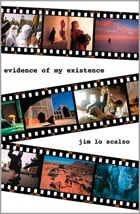
From a leper colony in India to an American research station on the Antarctic Peninsula, from the back rooms of the White House to the battlefields of Iraq and Afghanistan, Evidence of My Existence tells a unique and riveting story of seventeen years spent racing from one photo assignment to the next. It is also a story of photojournalism and theconsequences of obsessive wanderlust.
When the book opens, Jim Lo Scalzo is a blur to his wife, her remarkable tolerance wearing thin. She is heading to the hospital with her second miscarriage, and Jim is heading to Baghdad to cover the American invasion of Iraq. He hates himself for this—for not giving her a child, for deserting her when she soobviously needs him, for being consumed by his job—but how to stop moving? Sure, there have been some tough trips. He’s been spit on by Mennonites in Missouri, by heroin addicts in Pakistan, and by the KKK in South Carolina. He’s contracted hepatitis on the Navajo Nation, endured two bouts of amoebic dysentery in India and Burma and four cases of giardia in Nepal, Peru, Afghanistan, and Cuba. He’s been shot with rubber bullets in Seattle, knocked to the ground by a water cannon in Quebec, and sprayed with more teargas than he cares to recall. But photojournalism is his career, and travel is his compulsivecraving.
We follow Lo Scalzo through the maze of airports and crowds and countries as he chases the career he has always wanted, struggles with his family problems, and reveals the pleasures of a life singularly focused. For him, as for so many photojournalists, it is always about the going.
Filtering Histories
The Photographic Bureaucracy in Mozambique, 1960 to Recent TimesDrew A. Thompson
University of Michigan Press, 2021
Photographers and their images were critical to the making of Mozambique, first as a colony of Portugal and then as independent nation at war with apartheid in South Africa. When the Mozambique Liberation Front came to power, it invested substantial human and financial resources in institutional structures involving photography, and used them to insert the nation into global debates over photography's use. The materiality of the photographs created had effects that neither the colonial nor postcolonial state could have imagined.
Filtering Histories: The Photographic Bureaucracy in Mozambique, 1960 to Recent Times tells a history of photography alongside state formation to understand the process of decolonization and state development after colonial rule. At the center of analysis are an array of photographic and illustrated materials from Mozambique, South Africa, Portugal, and Italy. Thompson recreates through oral histories and archival research the procedures and regulations that engulfed the practice and circulation of photography. If photographers and media bureaucracy were proactive in placing images of Mozambique in international news, Mozambicans were agents of self-representation, especially when it came to appearing or disappearing before the camera lens. Drawing attention to the multiple images that one published photograph may conceal, Filtering Histories introduces the popular and material formations of portraiture and photojournalism that informed photography's production, circulation, and archiving in a place like Mozambique. The book reveals how the use of photography by the colonial state and the liberation movement overlapped, and the role that photography played in the transition of power from colonialism to independence.

From Palestine to Israel
A Photographic Record of Destruction and State Formation, 1947-1950Ariella Azoulay
Pluto Press, 2011
In this carefully curated and beautifully presented photobook, Ariella Azoulay offers a new perspective on four crucial years in the history of Palestine/Israel.
The book reconstructs the processes by which the Palestinian majority in Mandatory Palestine became a minority in Israel, while the Jewish minority established a new political entity in which it became a majority ruling a minority Palestinian population. By reading over 200 photographs from that period, most of which were previously confined to Israeli state archives, Azoulay recounts the events and the stories that for years have been ignored or only partially acknowledged in Israel and the West.
Including substantial analytical text, this book will give activists, scholars and journalists a new perspective on the origins of the Palestine-Israel conflict.
Get the Picture
A Personal History of PhotojournalismJohn G. Morris
University of Chicago Press, 2002
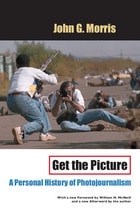
Find out in Get the Picture, a personal history of fifty years of photojournalism by one of the top journalists of the twentieth century. John G. Morris brought us many of the images that defined our era, from photos of the London air raids and the D-Day landing during World War II to the assassination of Robert Kennedy. He tells us the inside stories behind dozens of famous pictures like these, which are reproduced in this book, and provides intimate and revealing portraits of the men and women who shot them, including Robert Capa, Henri Cartier-Bresson, and W. Eugene Smith. A firm believer in the power of images to educate and persuade, Morris nevertheless warns of the tremendous threats posed to photojournalists today by increasingly chaotic wars and the growing commercialism in publishing, the siren song of money that leads editors to seek pictures that sell copies rather than those that can change the way we see the world.
Humane Insight
Looking at Images of African American Suffering and DeathCourtney Baker
University of Illinois Press, 2017
Image Ethics In The Digital Age
Larry Gross
University of Minnesota Press, 2003
Over the past quarter century, dramatic technological advances in the production, manipulation, and dissemination of images have transformed the practices of journalism, entertainment, and advertising as well as the visual environment itself. From digital retouching to wholesale deception, the media world is now beset by an unprecedented range of moral, ethical, legal, and professional challenges. Image Ethics in the Digital Age brings together leading experts in the fields of journalism, media studies, and law to address these challenges and assess their implications for personal and societal values and behavior.
Among the issues raised are the threat to journalistic integrity posed by visual editing software; the monopolization of image archives by a handful of corporations and its impact on copyright and fair use laws; the instantaneous electronic distribution of images of dubious provenance around the world; the erosion of privacy and civility under the onslaught of sensationalistic twenty-four-hour television news coverage and entertainment programming; and the increasingly widespread use of surveillance cameras in public spaces. This volume of original essays is vital reading for anyone concerned with the influence of the mass media in the digital age.
Contributors: Howard S. Becker; Derek Bousé, Eastern Mediterranean U, Cyprus; Hart Cohen, U of Western Sydney; Jessica M. Fishman; Paul Frosh, Hebrew U of Jerusalem; Faye Ginsburg, New York U; Laura Grindstaff, U of California, Davis; Dianne Hagaman; Sheldon W. Halpern, Ohio State U; Darrell Y. Hamamoto, U of California, Davis; Marguerite Moritz, U of Colorado, Boulder; David D. Perlmutter, Louisiana State U; Dona Schwartz, U of Minnesota; Matthew Soar, Concordia University; Stephen E. Weil, Smithsonian Institution’s Center for Education and Museum Studies.
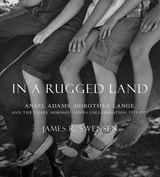
In a Rugged Land
Ansel Adams, Dorothea Lange, and the Three Mormon Towns Collaboration, 1953–1954James Swensen
University of Utah Press, 2018
In a Rugged Land examines the history and content of the two photographers’ forgotten collaboration Three Mormon Towns. Looking at Adams’s and Lange’s photographs, extant letters, and personal memories, the book provides a window into an important moment in their careers and seeks to understand why a project that once held such promise ended in disillusionment and is now little more than a footnote in their illustrative biographies. Swensen’s in-depth research and interpretation help make sense of what they did and place them alongside others who were also exploring the particular qualities of the Mormon village at that time.
Winner of the Joan Paterson Kerr Book Award for best illustrated book on the history of the American West from the Western History Association.
Winner of the Best Book Award from the Utah State Historical Society.
Winner of the 15 Bytes Book Award for Art Book.
Honorable mention for Best Book from the Mormon History Association.
Interview with Tom Williams at Access Utah

It Was Always About the Work
A Photojournalist's MemoirMelvin Grier
Ohio University Press, 2023
Over the last six decades, Melvin Grier’s work has vividly portrayed community, humanity, irony, fear, war, elegance, art, and, most notably, the unexpected. It Was Always About the Work includes nearly one hundred black-and-white and color photographs, including photographs from Grier’s most famous exhibitions and news stories. Whether covering local events, Cincinnati life, impoverished villages overseas, young future Marines on their way to their first post, or high fashion, Grier's photos are unmistakable and evocative.
Starting with his early years as a boy growing up in Cincinnati, this book tells the story of a young man who won his first photo contest while in the Air Force. He came home determined to make a career as a photographer, and, despite his lack of formal training and experience, he secured a job as a photographer for the Cincinnati Post. After the closure of the Cincinnati Post in 2007, Grier continued his career as an independent artist, featuring work in exhibitions such as “White People: A Retrospective” and “Clothes Encounters.” In collaboration with one of his journalist partners, reporter Molly Kavanaugh, Grier shares why it was always about the work.
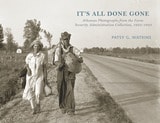
It's All Done Gone
Arkansas Photographs from the Farm Security Administration Collection, 1935-1943Patsy Watkins
University of Arkansas Press, 2018
Of the roughly one thousand FSA photographs taken in Arkansas, approximately two hundred have been selected for inclusion in this volume. Portraying workers picking cotton for five cents an hour, families evicted from homes for their connection with the Southern Tenant Farmers Union, and the effects of flood and drought that cruelly exacerbated the impact of economic disaster, these remarkable black-and-white images from Ben Shahn, Arthur Rothstein, Dorothea Lange, Walker Evans, Russell Lee, and other acclaimed photographers illustrate the extreme hardships that so many Arkansans endured throughout this era.
These powerful photographs continue to resonate, providing a glimpse of life in Arkansas that will captivate readers as they connect to a shared past.
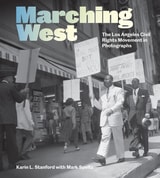
Marching West
The Los Angeles Civil Rights Movement in PhotographsKarin L. Stanford
J. Paul Getty Trust, The, 2026
This volume presents the first visual history of the people and organizations that led the fight for change during the civil rights era in Los Angeles.
During a 1963 speech to a crowd of nearly forty thousand at Wrigley Field in Los Angeles, Dr. Martin Luther King Jr. addressed the question of how Angelenos could contribute to the civil rights movement: “The most important thing that you can do is to set Los Angeles free, because you have segregation and discrimination here, and police brutality.”
Marching West illuminates the dynamic history of civil rights activism in Los Angeles and explores how the medium of photography both witnessed and advanced the fight for Black equality. Over one hundred images, some of which have never been previously published, reveal connections between the local and national movements and document the actions of Western coalitions, religious leaders, Hollywood stars, and concerned citizens. Drawn from the Tom & Ethel Bradley Center at California State University, Northridge (CSUN), the Getty Research Institute, and other Southern California collections—including prints by Harry Adams, Howard Bingham, Charles Brittin, Joe Flowers, Vera Jackson, and Charles Williams—this unprecedented volume presents less familiar but essential stories about American progress toward social justice.
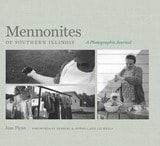
Mennonites of Southern Illinois
A Photographic JournalJane Flynn, with forewords by Herbert K. Russell and Liz Wells
Southern Illinois University Press, 2024
WINNER, Certificate of Excellence in “Publications – Other” from the Illinois State Historical Society’s 2025 Best of Illinois History Awards!
“In the World But Not of It”
Offering a glimpse into a world largely misunderstood by mainstream society, this book documents the period of eight years that Jane Flynn practiced with Mennonites in two different Southern Illinois communities: Stonefort, and Mount Pleasant in Anna. Despite her status as an outsider, Flynn was welcomed and allowed to photograph the Mennonites in their homes, making applesauce, farming, and beekeeping.
Escaping persecution from the Catholic Church in Europe, the Mennonites arrived in America in 1683, settling in what is now Pennsylvania. Today, they live in almost all 50 states, Canada, and South America. To reflect the Mennonites’ manual-labor lifestyle, Flynn processed her black-and-white photographs by hand and hand-printed them in a dark room. The imagery explores the Mennonites’ labors, leisure, and faith by documenting their homes, places of work and worship, and the Illinois Ozark landscape they inhabit.
Similar to the Amish and the Quakers, Mennonites consider the Bible the supreme authority and insist on a separation between church and state. To enact that separation, they distinguish themselves from society in speech, dress, business, recreation, education, pacifism, and by refusing to participate in politics. They believe in nonconformity to the world, discipleship, and being born again through adult baptism. With Mennonites of Southern Illinois, Jane Flynn provides representation for these closed communities and illustrates the Mennonites’ struggle to find and maintain balance between rustic and modern life while remaining faithful to their religious beliefs.
Nacho Lopez, Mexican Photographer
John Mraz
University of Minnesota Press, 2003
Reveals the career of an influential but under-appreciated photojournalist
Photographer Nacho López was Mexico’s Eugene Smith, fusing social commitment with searing imagery to dramatize the plight of the helpless, the poor, and the marginalized in the pages of glossy illustrated magazines. Even today, López’s photographs forcefully belie the picturesque exoticism that is invariably presented as the essence of Mexico.
In Nacho López, Mexican Photographer, John Mraz offers the first full-length study in English of this influential photojournalist and provides a close visual analysis of more than fifty of López’s most important photographs. Mraz first sets López’s work in the historical and cultural context of the authoritarian presidentialism that characterized Mexican politics in the 1950s, the cult of wealth and celebrity promoted by Mexico’s professional photographers, and the government’s attempts to modernize and industrialize Mexico at almost any cost. Mraz skillfully explores the implications of López's imagery in this setting: the extent to which his photographs might constitute further victimization of his downtrodden subjects, the relationship between them and the middle-class readers of the magazines for which López worked, and the success with which his photographs challenged Mexico's economic and political structures. Mraz contrasts the photos López took with those that were selected by his editors for publication. He also compares López’s images with his theories about documentary photography, and considers López’s photographs alongside the work of Robert Capa, Dorothea Lange, Henri Cartier-Bresson, and Sebastião Salgado. López’s imagery is further analyzed in relation to the Mexican Golden Age cinema inspired by Sergei Eisenstein, the pioneering digital imagery of Pedro Meyer, and the work of Manuel Álvarez Bravo, who Mraz provocatively argues was the first Mexican photographer to take an anti-picturesque stance. The definitive English-language assessment of Nacho López’s career, this volume also explores such broader topics as the nature of the photographic essay and the role of the media in effecting social change.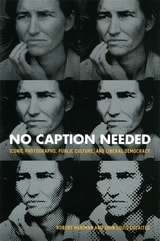
No Caption Needed
Iconic Photographs, Public Culture, and Liberal DemocracyRobert Hariman and John Louis Lucaites
University of Chicago Press, 2007
In No Caption Needed, Robert Hariman and John Louis Lucaites provide the definitive study of the iconic photograph as a dynamic form of public art. Their critical analyses of nine individual icons explore the photographs themselves and their subsequent circulation through an astonishing array of media, including stamps, posters, billboards, editorial cartoons, TV shows, Web pages, tattoos, and more. Iconic images are revealed as models of visual eloquence, signposts for collective memory, means of persuasion across the political spectrum, and a crucial resource for critical reflection.
Arguing against the conventional belief that visual images short-circuit rational deliberation and radical critique, Hariman and Lucaites make a bold case for the value of visual imagery in a liberal-democratic society. No Caption Needed is a compelling demonstration of photojournalism’s vital contribution to public life.
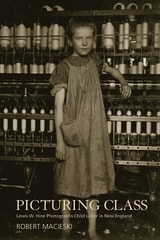
Picturing Class
Lewis W. Hine Photographs Child Labor in New EnglandRobert Macieski
University of Massachusetts Press, 2015
In this richly illustrated book, Robert Macieski examines Lewis W. Hine's art and advocacy on behalf of child laborers as part of the National Child Labor Committee (NCLC) between 1909 and 1917. A “social photographer”—as he called himself—Hine created images that documented children at work throughout New England, revealing their exploitation in the North as he had for rural working children in the South. Hine staged his images, highlighting particular types of labor in specific places: the “newsies” in Connecticut cities; sardine canners in Eastport, Maine; cranberry pickers in Cape Cod bogs; industrial homeworkers in Boston and Providence; and cotton textile workers throughout the region. His association with the NCLC connected him to a network of local and national reformers, social workers, and child welfare professionals, a broad coalition he supported in their fight to end this unethical labor practice. Macieski also chronicles Hine's efforts to mount major exhibitions that would help move public opinion against child labor.
In Picturing Class, Macieski explores the historical context of Hine's photographs and the social worlds of his subjects. He offers a detailed analysis of many of the images, unearthing the stories behind the creation of these photographs and the lives of their subjects. In telling the story of these photographs, their creation, and their reception, Macieski demonstrates how Hine worked to advance an unvarnished picture of a rapidly changing region and the young workers at the center of this important shift.

Picturing Immigration
Photojournalistic Representation of Immigrants in Greek and Spanish PressAthanasia Batziou
Intellect Books, 2011
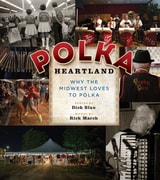
Polka Heartland
Why the Midwest Loves to PolkaRick March
Wisconsin Historical Society Press, 2015
"Polka Heartland" captures the beat that pulses in the heart of Midwestern culture--the polka--and offers up the fascinating history of how "oompah-pah" came to be the sound of middle America. From the crowded dance tent at Pulaski Polka Days to an off-the-grid Mexican polka dance in small-town Wisconsin, "Polka Heartland" explores the people, places, and history behind the Midwest's favorite music.
From polka's surprising origin story as a cutting-edge European fad to an exploration of the modern-day polka scene, author Rick March and photographer Dick Blau take readers on a joyful romp through this beloved, unique, and richly storied genre. "Polka Heartland" describes the artists, venues, instruments, and music-makers who have been pivotal to polka's popularity across the Midwest and offers six full-color photo galleries to immerse readers in today's vibrant polka scene.
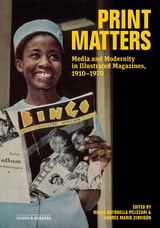
Print Matters
Media and Modernity in Illustrated Magazines, 1910–1970Maria Antonella Pelizzari
J. Paul Getty Trust, The, 2025
In the early to mid-twentieth century, the vast majority of printed photographs appeared in the pages of illustrated magazines. Publications such as Life, China Pictorial, Drum, Picture Post, and Ebony did more than showcase photographs; they crafted visual narratives by combining images, text, and graphics into influential cultural artifacts. These periodicals shaped public perception and mass media consensus like the Internet does today, bringing a shared visual experience to homes and newsstands around the world.
The essays in this volume delve into the technologies and visual strategies behind these publications, showing how their layouts were affected by political, commercial, editorial, and artistic factors leading up to World War II. The commentaries also explore how democracy, dictatorships, colonization, and modernity at large gave rise to experimental magazine designs, turning avant-garde art and lifestyle reporting into popular formats. Featuring over 150 images, Print Matters traces how illustrated magazines evolved across countries and continents, offering new insights into their history and enduring impact on culture and society.
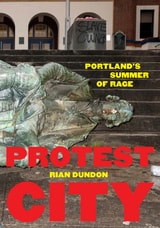
Protest City
Portland's Summer of RageRian Dundon
Oregon State University Press, 2023
In the months leading up to the 2020 presidential election, Portland made national news with nightly social justice protests, often met with violent response by counter protestors and law enforcement. Though frequently regarded as a progressive hub, Portland has a long history of racial inequality and oppression, and the city’s entrenched divisions gained new attention during the Trump years. The photos in Protest City present a visceral visual record of this significant moment in Portland’s history.
Rian Dundon, who has been photographing the rise of extreme politics on the West Coast since 2016, lived only a short walk from the protests that erupted after the murder of George Floyd. For one hundred days, Dundon enmeshed himself in the demonstrations with an unobtrusive point-and-shoot camera. The result is a graphic portrayal of how social movements become politicized, how spectacle serves as a subtext to change in the digital age, and how modern protests blur distinctions among performance, ritual, and surveillance. As he follows the progress of Portland’s conflicts, Dundon draws connections to Oregon’s legacy as a stronghold of white supremacist extremism and interrogates the role of whiteness in racial justice movements.
Most of the photographs in the book were taken between May and October 2020, but the collection also includes photos from protests in late 2020 and 2021 around various related issues, including the Red House eviction blockade, rightwing demonstrations on January 6 and 17, and the one-year anniversary of George Floyd’s murder. Dundon’s striking photos recreate the immediacy and impact of the protests, while essays by historian Carmen Thompson and journalist Donnell Alexander contextualize the uprising’s sociopolitical background. A chronology and author’s note are also featured.
The publisher and author would like to thank the Magnum Foundation, Documentary Arts, and the Economic Hardship Reporting Project for their generous support of this publication. Additional funding has been provided by Furthermore: a program of the J. M. Kaplan Fund.
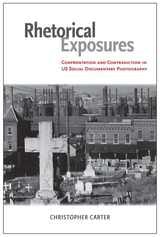
Rhetorical Exposures
Confrontation and Contradiction in US Social Documentary PhotographyChristopher Carter
University of Alabama Press, 2015
Exposing the politics of seeing: how documentary photographs confront inequality and reshape public understanding.
In Rhetorical Exposures, Christopher Carter explores social documentary photography from the nineteenth century to the present in order to illuminate the political dimensions and consequences of photographs taken and selected to highlight social injustice. Documentary photography aims to capture the material reality of life. Carter demonstrates how the creation and display of documentary photographs—often now called “imagetexts”—both invite analysis and raise persistent questions about the political and social causes for the bleak scenes of poverty and distress captured on film.
Carter’s carefully reasoned monograph examines both formal qualities of composition and the historical contexts of the production and display of documentary photographs. In Rhetorical Exposures, Carter explores Jacob Riis’s heartrending photos of Manhattan’s poor in late nineteenth-century New York, Walker Evans’s iconic images of tenant farmers in west Alabama, Ted Streshinsky’s images of 1960s social movements, Camilo José Vergara’s photographic landscapes of urban dereliction in the 1970s, and Chandra McCormick’s portraits of New Orleans’s Ninth Ward scarred by Hurricane Katrina.
While not ascribing specifically political or Marxist intentions to the photographers discussed, Carter frames his arguments in a class-based dialectic that addresses material want as an ineluctable result of social inequality. Carter argues that social documentary photography has the powerful capacity to disrupt complacent habits of viewing and to prompt viewers to confront injustice. Though photography may induce socially disruptive experiences, it remains vulnerable to the same power dynamics it subverts. Therefore, Carter offers a “rhetoric of exposure” that outlines how such social documentary images can be treated as highly tensioned rhetorical objects. His framework enables the analysis of photographs as heterogeneous records of the interaction of social classes and expressions of specific built environments. Rhetorical Exposures also discusses how photographs interact with oral and print media and relate to creations as diverse as public memorials, murals, and graphic novels.
As the creation and dissemination of new media continues to evolve in an environment of increasing anxiety about growing financial inequality, Rhetorical Exposures offers a very apt and timely discussion of the ways social documentary photography is created, employed, and understood.
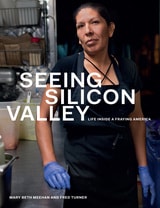
Seeing Silicon Valley
Life inside a Fraying AmericaMary Beth Meehan and Fred Turner
University of Chicago Press, 2021
It’s hard to imagine a place more central to American mythology today than Silicon Valley. To outsiders, the region glitters with the promise of extraordinary wealth and innovation. But behind this image lies another Silicon Valley, one segregated by race, class, and nationality in complex and contradictory ways. Its beautiful landscape lies atop underground streams of pollutants left behind by decades of technological innovation, and while its billionaires live in compounds, surrounded by redwood trees and security fences, its service workers live in their cars.
With arresting photography and intimate stories, Seeing Silicon Valley makes this hidden world visible. Instead of young entrepreneurs striving for efficiency in minimalist corporate campuses, we see portraits of struggle—families displaced by an impossible real estate market, workers striving for a living wage, and communities harmed by environmental degradation. If the fate of Silicon Valley is the fate of America—as so many of its boosters claim—then this book gives us an unvarnished look into the future.
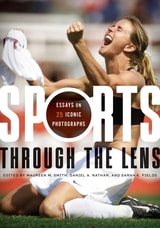
Sports through the Lens
Essays on 25 Iconic PhotographsEdited by Maureen M. Smith, Daniel A. Nathan, and Sarah K. Fields
University of Texas Press, 2024
2025 Anthology Award, North American Society for Sport History
The stories behind and legacies of important sports photos from the last 130 years.
Ever since photography and professional sports originated in the nineteenth century, photographers have shaped how we perceive sports. Sports through the Lens collects essays by twenty-five historians that consider what it means to capture and revisit a moment of cultural significance in sports, looking at each photo’s creation, its contexts, and how its meaning has shifted over time. Some essays provide fresh perspectives on such iconic images as Muhammad Ali standing over Sonny Liston at their 1965 rematch and Michael Jordan soaring at the 1988 NBA All-Star Game slam dunk competition; others introduce readers to the lesser-known stories of the first woman to officially run the Boston Marathon or the inaugural World Indigenous Games. The authors examine the photos' legacies alongside the artistry of both the athletes and the photographers. Reflecting on images of athletes from around the world engaged in sports from baseball to horse-racing to hockey, Sports through the Lens provides a wide-ranging meditation on the visual, historical, and cultural meaning of sports photographs.
Stanley Kubrick at Look Magazine
Authorship and Genre in Photojournalism and FilmPhilippe D. Mather
Intellect Books, 2013
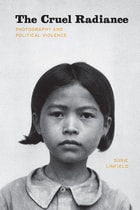
The Cruel Radiance
Photography and Political ViolenceSusie Linfield
University of Chicago Press, 2010

The Fifty-Year Texas Road Trip
On Assignment from Earth to UncertainRandy Mallory
University of North Texas Press, 2025
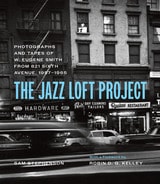
The Jazz Loft Project
Photographs and Tapes of W. Eugene Smith from 821 Sixth Avenue, 1957–1965W. Eugene Smith and Sam Stephenson
University of Chicago Press, 2023
In 1957, Eugene Smith walked away from his longtime job at Life and the home he shared with his wife and four children to move into a dilapidated, five-story loft building at 821 Sixth Avenue in New York City’s wholesale flower district. The loft was the late-night haunt of musicians, including some of the biggest names in jazz—Charles Mingus, Zoot Sims, Bill Evans, and Thelonious Monk among them. Here, from 1957 to 1965, he made nearly 40,000 photographs and approximately 4,000 hours of recordings of musicians. Smith found solace in the chaotic, somnambulistic world of the loft and its artists, and he turned his documentary impulses away from work on his major Pittsburg photo essay and toward his new surroundings.
Smith’s Jazz Loft Project has been legendary in the worlds of art, photography, and music for more than forty years, but until the publication of this book, no one had seen his extraordinary photographs or read any of the firsthand accounts of those who were there and lived to tell the tales.
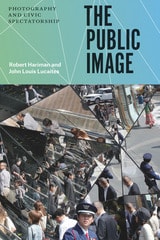
The Public Image
Photography and Civic SpectatorshipRobert Hariman and John Louis Lucaites
University of Chicago Press, 2016
By confronting these conflicted reactions to photography, Robert Hariman and John Louis Lucaites make the case for a fundamental shift in understanding photography and public culture. In place of suspicions about the medium’s capacity for distraction, deception, and manipulation, they suggest how it can provide resources for democratic communication and thoughtful reflection about contemporary social problems.
The key to living well in the image world is to unlock photography from viewing habits that inhibit robust civic spectatorship. Through insightful interpretations of dozens of news images, The Public Image reveals how the artistry of the still image can inform, challenge, and guide reflection regarding endemic violence, environmental degradation, income inequity, and other chronic problems that will define the twenty-first century.
By shifting from conventional suspicions to a renewed encounter with the image, we are challenged to see more deeply on behalf of a richer life for all, and to acknowledge our obligations as spectators who are, crucially, also citizens.
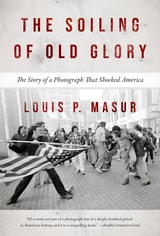
The Soiling of Old Glory
The Story of a Photograph That Shocked AmericaLouis P. Masur
Brandeis University Press, 2024
In 1976, Boston was bitterly divided over a court order to desegregate its public schools. Plans to bus students between predominantly white and Black neighborhoods stoked backlash and heated protests. Photojournalist Stanley Forman was covering one such demonstration at City Hall when he captured an indelible image: a white protester attacking a Black attorney with the American flag. A second white man grabs at the victim, appearing to assist the assailant.
The photo appeared in newspapers across the nation and went on to win the Pulitzer Prize. In The Soiling of Old Glory, esteemed historian Louis P. Masur reveals what happened the day of the assault and the ways these events reverberated long afterward. He interviews the men involved: Forman, who took the photo; Ted Landsmark, a Black, Yale-educated attorney and an activist; Joseph Rakes, the white protester lunging with the flag, a disaffected student; and Jim Kelly, a local politician who opposed busing, but who helped Landsmark to his feet after protesters knocked him to the ground. The photo, Masur discovers, holds more complexities than initially meet the eye. The flag never made contact with the victim, for example, and Kelly was attempting to protect Landsmark, not hurt him.
Masur delves into the history behind Boston’s efforts to desegregate the schools and the anti-busing protests that shook the city. He examines photography’s power to move, inform, and persuade us, as well as the assumptions we each bring to an image as viewers. And he delves into the flag, to explore how other artists and photographers have shaped, bolstered, or challenged its patriotic significance.
Gripping and deeply researched, The Soiling of Old Glory shows how a disturbing event, frozen on a film, impacted Boston and the nation. In an age of renewed calls for visual literacy and disagreements about the flag’s meaning, Masur’s history, now updated with a new foreword by Ted Landsmark and a new preface by the author, is as relevant as ever.

Trinity
An Illustrated History of the World's First Atomic TestEmily Seyl
University of Chicago Press, 2026
Explore the scientific crescendo of the Manhattan Project through newly contextualized and never-before-seen photographs from Los Alamos National Laboratory’s legacy collections—some just declassified.
Twenty-one days before the world learned of the atomic bomb through its wartime use against Japan, a team of scientists led by J. Robert Oppenheimer detonated the first nuclear device on a remote stretch of New Mexico desert, in an operation codenamed Trinity. Both a military proof test and an elaborate, well-documented scientific experiment, the Trinity shot on July 16, 1945, brought under the control of humankind a new fire: the energy of the atom.
In this expertly curated journey through the beginning of the atomic age, hundreds of carefully restored photographs, still frames, and once-secret documents bring new and vivid focus to a watershed moment in science and history. Written for all to understand, Trinity weaves steadily through subplots and surprises set against the evolving, looming backdrop of a world at war. It shadows the humans and hardware at work in the rugged landscape of the test operation; dissects a fiery mushroom cloud unfurling frame by frame, frozen in time; and follows soldiers, scientists, and two atomic bombs across the Pacific Ocean to Tinian Island, onto the strike planes Enola Gay and Bockscar, and to Hiroshima and Nagasaki, the two Japanese cities devastated on August 6 and 9, 1945.
Inviting readers into the clandestine spaces where a new era began—behind the cameras, the bunker doors, the gates and guard posts—Trinity strives, grieves, celebrates, and ponders. It artfully captures that extraordinary summer when scientists invented urgently in the waning months of the “before”—and the tension between violence and progress, hope and fear, that persists into the after.
Truth Needs No Ally
Inside PhotojournalismHoward Chapnick
University of Missouri Press, 1994
The man called "Mr. Photojournalism" by the Washington Post here offers the most comprehensive book available on documentary photography, covering the history and ethics of the craft as well as practical issues for anyone with a serious interest in photography.
Walker Evans
No PoliticsBy Stephanie Schwartz
University of Texas Press, 2020
“NO POLITICS whatever.” Walker Evans made this emphatic declaration in 1935, the year he began work for FDR’s Resettlement Administration. Evans insisted that his photographs of tenant farmers and their homes, breadlines, and the unemployed should be treated as “pure record.” The American photographer’s statements have often been dismissed. In Walker Evans: No Politics, Stephanie Schwartz challenges us to engage with what it might mean, in the 1930s and at the height of the Great Depression, to refuse to work politically.
Offering close readings of Evans’s numerous commissions, including his contribution to Carleton Beals’s anti-imperialist tract, The Crime of Cuba (1933), this book is a major departure from the standard accounts of Evans’s work and American documentary. Documentary, Schwartz reveals, is not a means of being present—or being “political.” It is a practice of record making designed to distance its maker from the “scene of the crime.” That crime, Schwartz argues, is not just the Depression; it is the processes of Americanization reshaping both photography and politics in the 1930s. Historicizing documentary, this book reimagines Evans and his legacy—the complexities of claiming “no politics.”
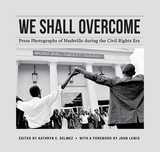
We Shall Overcome
Press Photographs of Nashville during the Civil Rights EraKathryn E. Delmez
Vanderbilt University Press, 2023
Fifty years after Martin Luther King Jr.'s death—and at a time when race relations and social justice are again at the forefront of our country's consciousness—this book expands on a Frist Art Museum exhibition to present a selection of approximately one hundred photographs that document an important period in Nashville's struggle for racial equality. The images were taken between 1957, the year that desegregation in public schools began, and 1968, when the National Guard was called in to surround the state capitol in the wake of the civil rights leader's assassination in Memphis.
Of central significance are photographs of lunch counter sit-ins in early 1960, led by a group of students, including John Lewis (who contributed the book's foreword) and Diane Nash, from local historically black colleges and universities. The demonstrations were so successful that King stated just a few weeks later at Fisk University: "I did not come to Nashville to bring inspiration but to gain inspiration from the great movement that has taken place in this community." The role that Nashville played in the national civil rights movement as a hub for training students in nonviolent protest and as the first Southern city to integrate places of business is a story that warrants reexamination.
The book also provides an opportunity to consider the role of images and the media in shaping public opinion, a relevant subject in today's news-saturated climate. Photographs from the archives of both daily newspapers are included: the Tennessean, which was the more liberal publication, and the Nashville Banner, a conservative paper whose leadership seemed less interested in covering events related to racial issues. Some of the photographs in the exhibition had been selected to be published in the papers, but many were not, and their disclosure reveals insight into the editorial process. In several images, other photojournalists and news crews are visible, serving as a reminder of the almost constant presence of the camera during these historic times.
Essays by Linda Wynn of Fisk University and the Tennessee Historical Commission and Susan H. Edwards, executive director of the Frist Art Museum, offer historical context on Nashville during the civil rights era and on photojournalism, respectively. Congressman John Lewis's foreword recounts memories of his time in Nashville and reminds us that there is still work to be done to build King's Beloved Community.
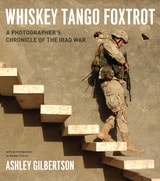
Whiskey Tango Foxtrot
A Photographer's Chronicle of the Iraq WarAshley Gilbertson
University of Chicago Press, 2007
Whiskey Tango Foxtrot gathers the best of Gilbertson’s photographs, chronicling America’s early battles in Iraq, the initial occupation of Baghdad, the insurgency that erupted shortly afterward, the dramatic battle to overtake Falluja, and ultimately, the country’s first national elections. No Western photojournalist has done as much sustained work in occupied Iraq as Gilbertson, and this wide-ranging treatment of the war from the viewpoint of a photographer is the first of its kind. Accompanying each section of the book is a personal account of Gilbertson’s experiences covering the conflict. Throughout, he conveys the exhilaration and terror of photographing war, as well as the challenges of photojournalism in our age of embedded reporting. But ultimately, and just as importantly, Whiskey Tango Foxtrot tells the story of Gilbertson’s own journey from hard-drinking bravado to the grave realism of a scarred survivor. Here he struggles with guilt over the death of a marine escort, tells candidly of his own experience with post-traumatic stress, and grapples with the reality that Iraq—despite the sacrifice in Iraqi and American lives—has descended into a civil war with no end in sight.
A searing account of the American experience in Iraq, Whiskey Tango Foxtrot is sure to become one of the classic war photography books of our time.