Results by title
12 books match the query 'Picture-writing'
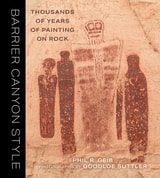
Barrier Canyon Style
Thousands of Years of Painting on RockPhil R. Geib and Goodloe Suttler
University of Utah Press, 2024
Barrier Canyon Style begins with a vicarious tour of twenty of the most important BCS sites. High-quality photographs by Goodloe Suttler accompany text by Phil R. Geib, an expert in rock imagery and archaic time-period archaeology. The volume provides explanations of motif classifications and their meanings, as well as details on the chronology of human occupation in the area, the array of techniques used by Native people to leave marks upon rock surfaces, and a consideration of styles and subject matter observable in these artworks.
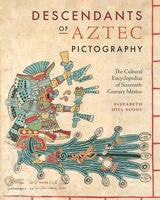
Descendants of Aztec Pictography
The Cultural Encyclopedias of Sixteenth-Century MexicoBy Elizabeth Hill Boone
University of Texas Press, 2021
In the aftermath of the sixteenth-century Spanish conquest of Mexico, Spanish friars and authorities partnered with indigenous rulers and savants to gather detailed information on Aztec history, religious beliefs, and culture. The pictorial books they created served the Spanish as aids to evangelization and governance, but their content came from the native intellectuals, painters, and writers who helped to create them. Examining the nine major surviving texts, preeminent Latin American art historian Elizabeth Hill Boone explores how indigenous artists and writers documented their ancestral culture.
Analyzing the texts as one distinct corpus, Boone shows how they combined European and indigenous traditions of documentation and considers questions of motive, authorship, and audience. For Spanish authorities, she shows, the books revealed Aztec ideology and practice, while for the indigenous community, they preserved venerated ways of pictorial expression as well as rhetorical and linguistic features of ancient discourses. The first comparative analysis of these encyclopedias, Descendants of Aztec Pictography analyzes how the painted compilations embraced artistic traditions from both sides of the Atlantic.
Discovering North American Rock Art
Edited by Lawrence L. Loendorf, Christopher Chippindale, and David S. Whitley
University of Arizona Press, 2005
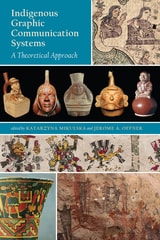
Indigenous Graphic Communication Systems
A Theoretical ApproachKatarzyna Mikulksa
University Press of Colorado, 2025
By examining case studies from across the Americas, the authors pursue an enhanced understanding of Native American graphic communication systems and how the study of graphic expression can provide insight into ancient cultures and societies, expressed in indigenous words. Focusing on examples from Central Mexico and the Andes, the authors explore the overlap among writing, graphic expression, and orality in indigenous societies, inviting reevaluation of the Western notion that writing exists only to record language (the spoken chain of speech) as well as accepted beliefs of Western alphabetized societies about the accuracy, durability, and unambiguous nature of their own alphabetized texts. The volume also addresses the rapidly growing field of semasiography and relocates it more productively as one of several underlying operating principles in graphic communication systems.
Indigenous Graphic Communication Systems reports new results and insights into the meaning of the rich and varied content of indigenous American graphic expression and culture as well as into the societies and cultures that produce them. It will be of great interest to Mesoamericanists, students, and scholars of anthropology, archaeology, art history, ancient writing systems, and comparative world history.
The research for and publication of this book have been supported in part by the National Science Centre of Poland (decision no. NCN-KR-0011/122/13) and the Houston Museum of Natural Science.
Contributors:
Angélica Baena Ramírez, Christiane Clados, Danièle Dehouve, Stanisław Iwaniszewski, Michel R. Oudijk, Katarzyna Szoblik, Loïc Vauzelle, Gordon Whittaker, Janusz Z. Wołoszyn, David Charles Wright-Carr
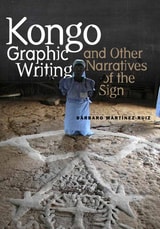
Kongo Graphic Writing and Other Narratives of the Sign
Barbaro Martinez-Ruiz
Temple University Press, 2013
Author Bárbaro Martínez-Ruiz, a practitioner of the Palo Monte devotional arts, illustrates with graphics and rock art how the Bakongo’s ideographic and pictographic signs are used to organize daily life, enable interactions between humans and the natural and spiritual worlds, and preserve and transmit cosmological and cosmogonical belief systems.
Exploring cultural diffusion and exchange, collective memory and identity, Kongo Graphic Writing and Other Narratives of the Sign artfully brings together analyses of the complex interconnections among Kongo traditions of religion, philosophy and visual/gestural communication on both sides of the African Atlantic world.
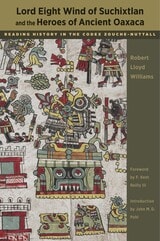
Lord Eight Wind of Suchixtlan and the Heroes of Ancient Oaxaca
Reading History in the Codex Zouche-NuttallBy Robert Lloyd Williams
University of Texas Press, 2009
In the pre-Hispanic Mesoamerican world, histories and collections of ritual knowledge were often presented in the form of painted and folded books now known as codices, and the knowledge itself was encoded into pictographs. Eight codices have survived from the Mixtec peoples of ancient Oaxaca, Mexico; a part of one of them, the Codex Zouche-Nuttall, is the subject of this book. As a group, the Mixtec codices contain the longest detailed histories and royal genealogies known for any indigenous people in the western hemisphere. The Codex Zouche-Nuttall offers a unique window into how the Mixtecs themselves viewed their social and political cosmos without the bias of western European interpretation. At the same time, however, the complex calendrical information recorded in the Zouche-Nuttall has made it resistant to historical, chronological analysis, thereby rendering its narrative obscure.
In this pathfinding work, Robert Lloyd Williams presents a methodology for reading the Codex Zouche-Nuttall that unlocks its essentially linear historical chronology. Recognizing that the codex is a combination of history in the European sense and the timelessness of myth in the Native American sense, he brings to vivid life the history of Lord Eight Wind of Suchixtlan (AD 935–1027), a ruler with the attributes of both man and deity, as well as other heroic Oaxacan figures. Williams also provides context for the history of Lord Eight Wind through essays dealing with Mixtec ceremonial rites and social structure, drawn from information in five surviving Mixtec codices.
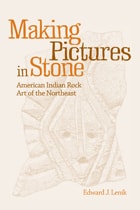
Making Pictures in Stone
American Indian Rock Art of the NortheastEdward J. Lenik
University of Alabama Press, 2008
A full range of rock art appearances, including dendroglyphs, pictographs, and a selection of portable rock objects
The Indians of northeastern North America are known to us primarily through reports and descriptions written by European explorers, clergy, and settlers, and through archaeological evidence. An additional invaluable source of information is the interpretation of rock art images and their relationship to native peoples for recording practical matters or information, as expressions of their legends and spiritual traditions, or as simple doodling or graffiti. The images in this book connect us directly to the Indian peoples of the Northeast, mainly Algonkian tribes inhabiting eastern Pennsylvania, Maryland and the lower Potomac River Valley, New York, New Jersey, the six New EnglandStates, and Atlantic Canada. Lenik provides a full range of rock art appearances in the study area, including some dendroglyphs, pictographs, and a selection of portable rock objects. By providing a full analysis and synthesis of the data, including the types and distribution of the glyphs, and interpretations of their meaning to the native peoples, Lenik reveals a wealth of new information on the culture and lifeways of the Indians of the Northeast.
Opera and its Voices in Utah
Walter Rudolph
Utah State University Press, 2018
The Arrington Lecture series, established by one of the twentieth-century West's most distinguished historians, Leonard Arrington, has become a leading forum for prominent historians to address topics related to Mormon history. Utah State University hosts the Leonard J. Arrington Mormon History Lecture Series through the Merrill-Cazier Library Special Collections and Archives department.
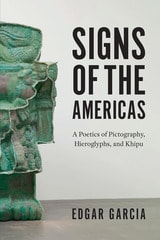
Signs of the Americas
A Poetics of Pictography, Hieroglyphs, and KhipuEdgar Garcia
University of Chicago Press, 2020
Garcia tells the story of the present life of these sign-systems, examining the contemporary impact they have had on poetry, prose, visual art, legal philosophy, political activism, and environmental thinking. In doing so, he brings together a wide range of indigenous and non-indigenous authors and artists of the Americas, from Aztec priests and Amazonian shamans to Simon Ortiz, Gerald Vizenor, Jaime de Angulo, Charles Olson, Cy Twombly, Gloria Anzaldúa, William Burroughs, Louise Erdrich, Cecilia Vicuña, and many others. From these sources, Garcia depicts the culture of a modern, interconnected hemisphere, revealing that while these “signs of the Americas” have suffered expropriation, misuse, and mistranslation, they have also created their own systems of knowing and being. These indigenous systems help us to rethink categories of race, gender, nationalism, and history. Producing a new way of thinking about our interconnected hemisphere, this ambitious, energizing book redefines what constitutes a “world” in world literature.
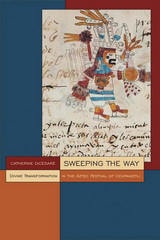
Sweeping the Way
Divine Transformation in the Aztec Festival of OchpaniztliCatherine DiCesare
University Press of Colorado, 2022
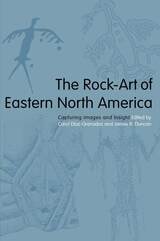
The Rock-Art of Eastern North America
Capturing Images and InsightEdited by Carol Diaz-Granados and James R. Duncan
University of Alabama Press, 2004
Showcases the wealth of new research on sacred imagery found in twelve states and four Canadian provinces
In archaeology, rock-art—any long-lasting marking made on a natural surface—is similar to material culture (pottery and tools) because it provides a record of human activity and ideology at that site. Petroglyphs, pictographs, and dendroglyphs (tree carvings) have been discovered and recorded throughout the eastern woodlands of North America on boulders, bluffs, and trees, in caves and in rock shelters. These cultural remnants scattered on the landscape can tell us much about the belief systems of the inhabitants that left them behind.
The Rock-Art of Eastern North America brings together 20 papers from recent research at sites in eastern North America, where humidity and the actions of weather, including acid rain, can be very damaging over time. Contributors to this volume range from professional archaeologists and art historians to avocational archaeologists, including a surgeon, a lawyer, two photographers, and an aerospace engineer. They present information, drawings, and photographs of sites ranging from the Seven Sacred Stones in Iowa to the Bald Friar Petroglyphs of Maryland and from the Lincoln Rise Site in Tennessee to the Nisula Site in Quebec.
Discussions of the significance of artist gender, the relationship of rock-art to mortuary caves, and the suggestive link to the peopling of the continent are particularly notable contributions. Discussions include the history, ethnography, recording methods, dating, and analysis of the subject sites and integrate these with the known archaeological data.
Writing Their Bodies
Restoring Rhetorical Relations at the Carlisle Indian SchoolSarah Klotz
Utah State University Press, 2020
This approach tracks the relationship between curriculum and resistance and enumerates an anti-assimilationist methodology for teachers and scholars of writing in contemporary classrooms. From the Carlisle archive emerges the concept of a rhetoric of relations, a set of Native American communicative practices that circulates in processes of intercultural interpretation and world-making. Klotz explores how embodied and material practices allowed Indigenous rhetors to maintain their cultural identities in the off-reservation boarding school system and critiques the settler fantasy of benevolence that propels assimilationist models of English education.
Writing Their Bodies moves beyond language and literacy education where educators standardize and limit their students’ means of communication and describes the extraordinary expressive repositories that Indigenous rhetors draw upon to survive, persist, and build futures in colonial institutions of education.