Results by title
5 books match the query 'Pierce, Jessica'
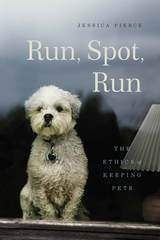
Run, Spot, Run
The Ethics of Keeping PetsJessica Pierce
University of Chicago Press, 2016
That’s the question that animates Jessica Pierce’s powerful Run, Spot, Run. A lover of pets herself (including, over the years, dogs, cats, fish, rats, hermit crabs, and more), Pierce understands the joys that pets bring us. But she also refuses to deny the ambiguous ethics at the heart of the relationship, and through a mix of personal stories, philosophical reflections, and scientifically informed analyses of animal behavior and natural history, she puts pet-keeping to the test. Is it ethical to keep pets at all? Are some species more suited to the relationship than others? Are there species one should never attempt to own? And are there ways that we can improve our pets’ lives, so that we can be confident that we are giving them as much as they give us?
Deeply empathetic, yet rigorous and unflinching in her thinking, Pierce has written a book that is sure to help any pet owner, unsettling assumptions but also giving them the knowledge to build deeper, better relationships with the animals with whom they’ve chosen to share their lives.

The Last Walk
Reflections on Our Pets at the End of Their LivesJessica Pierce
University of Chicago Press, 2012
The product of a lifetime of loving pets, studying philosophy, and collaborating with scientists at the forefront of the study of animal behavior and cognition, The Last Walk asks—and answers—the toughest questions pet owners face. The result is informative, moving, and consoling in equal parts; no pet lover should miss it.

Who's a Good Dog?
And How to Be a Better HumanJessica Pierce
University of Chicago Press, 2023
A guide to cultivating a shared life of joy and respect with our dogs.
Who’s a Good Dog? is an invitation to nurture more thoughtful and balanced relationships with our canine companions. By deepening our curiosity about what our dogs are experiencing, and by working together with them in a spirit of collaboration, we can become more effective and compassionate caregivers.
With sympathy for the challenges met by both dogs and their humans, bioethicist Jessica Pierce explores common practices of caring for dogs, including how we provide exercise, what we feed, how and why we socialize and train, and how we employ tools such as collars and leashes. She helps us both to identify potential sources of fear and anxiety in our dogs’ lives and to expand practices that provide physical and emotional nourishment. Who’s a Good Dog? also encourages us to think more critically about what we expect of our dogs and how these expectations can set everyone up for success or failure. Pierce offers resources to help us cultivate attentiveness and kindness, inspiring us to practice the art of noticing, of astonishment, of looking with fresh eyes at these beings we think we know so well. And more than this, she makes her findings relatable by examining facets of her relationship with Bella, the dog in her life. As Bella shows throughout, all dogs are good dogs, and we, as humans and dog guardians, could be doing a little bit better to get along with them and give them what they need.
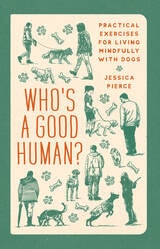
Who's a Good Human?
Practical Exercises for Living Mindfully with DogsJessica Pierce
University of Chicago Press, 2026
Most dog books focus on how to change our companion’s behavior; very few ask how we might change our own.
This workbook and journal, created by ethicist, celebrated author, and dog guardian Jessica Pierce, helps readers learn to live more mindfully with their dogs. Across ten chapters filled with exercises grounded in behavioral science and contemplative practice, Pierce invites readers to mirror their dog’s movements, savor shared silence, examine the impulse to command, reflect on past relationships with dogs, and prepare for the inevitabilities of aging and loss. She teaches readers how to view their dogs with the care of a field biologist—keeping notes, mapping relationships, and generally observing to better understand the dog’s world. She also challenges long-held assumptions about traditional dog training and asks whether our methods truly serve our dogs or simply reassure us as humans.
Many readers of Pierce’s acclaimed earlier books asked for a practical guide to help them put ideas into daily practice. For both those readers and those new to her work, this workbook is her response: a human-training manual informed by science, ethics, and lived experience. Each chapter begins with a short introduction to orient the reader, followed by self-directed exercises, reflection prompts, and shared experiences from living with her dog, Bella. Annotated further-reading sections point to both accessible books and peer-reviewed research. With its blend of gentle guidance and intellectual rigor, this workbook helps readers cultivate a more curious, collaborative, and compassionate relationship with the dogs they love.

Wild Justice
The Moral Lives of AnimalsMarc Bekoff and Jessica Pierce
University of Chicago Press, 2009
Scientists have long counseled against interpreting animal behavior in terms of human emotions, warning that such anthropomorphizing limits our ability to understand animals as they really are. Yet what are we to make of a female gorilla in a German zoo who spent days mourning the death of her baby? Or a wild female elephant who cared for a younger one after she was injured by a rambunctious teenage male? Or a rat who refused to push a lever for food when he saw that doing so caused another rat to be shocked? Aren’t these clear signs that animals have recognizable emotions and moral intelligence? With Wild Justice Marc Bekoff and Jessica Pierce unequivocally answer yes.
Marrying years of behavioral and cognitive research with compelling and moving anecdotes, Bekoff and Pierce reveal that animals exhibit a broad repertoire of moral behaviors, including fairness, empathy, trust, and reciprocity. Underlying these behaviors is a complex and nuanced range of emotions, backed by a high degree of intelligence and surprising behavioral flexibility. Animals, in short, are incredibly adept social beings, relying on rules of conduct to navigate intricate social networks that are essential to their survival. Ultimately, Bekoff and Pierce draw the astonishing conclusion that there is no moral gap between humans and other species: morality is an evolved trait that we unquestionably share with other social mammals.
Sure to be controversial, Wild Justice offers not just cutting-edge science, but a provocative call to rethink our relationship with—and our responsibilities toward—our fellow animals.