Results by title
16 books match the query 'Pittsburgh'
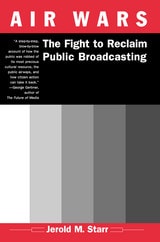
Air Wars
Fight To Reclaim Public BroadcastingJerold Starr
Temple University Press, 2001
These citizens believed strongly in public television's unique mission to serve the diverse social and cultural needs of local communities. When their own station neglected this mission in the search for national prestige and bigger revenues, they felt profoundly betrayed.
Jerold Starr exposes the political and commercial pressures that made strange bedfellows of the top officials of public broadcasting, the Democratic Party establishment, Pat Robertson and the Christian Coalition, home-shopping and "infomall" king Lowell "Bud" Paxson, and billionaire right-wing publisher/philanthropist Richard Mellon Scaife.
What began as a bitterly contested local struggle that disturbed the serenity of Mister Rogers' Neighborhood later became front-page national news with revelations of presidential candidate John McCain's influence-peddling scandal on behalf of media mogul Paxson. This was followed by congressional resolutions attacking the FCC's authority to regulate noncommercial educational broadcast licenses. The "Pittsburgh case" promises to be in the news for some time to come.
Far beyond Pittsburgh, Starr looks at how the reform movement has spread to major cities like Chicago, Phoenix, Jacksonville, and San Francisco, where citizen activists have successfully challenged public stations to be more community responsive.
Finally, he outlines an innovative plan for restructuring the public broadcasting service as an independently funded public trust. Joining this vision with a practical strategy, Starr describes the formation of Citizens for Independent Public Broadcasting, a national membership organization with a grassroots approach to putting the public back into public broadcasting.
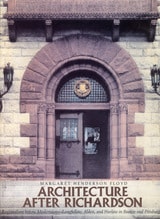
Architecture after Richardson
Regionalism before Modernism--Longfellow, Alden, and Harlow in Boston and PittsburghMargaret Henderson Floyd
University of Chicago Press, 1994
Floyd critically' assesses the careers, works, and patronage of Alexander Wadsworth Longfellow, Frank Ellis Alden, and Alfred Branch Harlow. Longfellow and Alden were senior draftsmen in H. H. Richardson's office, and Harlow worked with McKim, Mead & White in New York, Newport, and Boston. After Richardson's death, the three set up their own practice with offices in Boston and Pittsburgh, and these offices eventually became two separate practices. Over the years, their commissions included scores of city and country residences for the elite of both regions as well as major institutional and business buildings such as those at Harvard and Radcliffe, the Cambridge City Hall, and Pittsburgh's Duquesne Club and Carnegie Institute.
Placing these architects in a broader context of American architectural and landscape history, Floyd uncovers a strong cultural affinity between turn-of-the-century Boston and Pittsburgh. She also reveals an unsuspected link between the path of modernism from Richardson to Wright and the evolution of anti-modern imagery manifested in regionalism. Floyd thus combines her analysis of the work of Longfellow, Alden, and Harlow with a critique of mid-twentieth-century historiography to expose connections between New England regionalism, the arts and crafts movement, and such innovators as Frank Lloyd Wright and Buckminster Fuller.
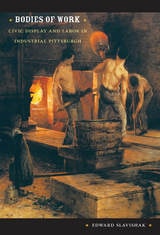
Bodies of Work
Civic Display and Labor in Industrial PittsburghEdward Slavishak
Duke University Press, 2008
Slavishak focuses on the workers whose bodies came to epitomize Pittsburgh, the men engaged in the arduous physical labor demanded by the city’s metals, glass, and coal industries. At the same time, he emphasizes how conceptions of Pittsburgh as quintessentially male limited representations of women in the industrial workplace. The threat of injury or violence loomed large for industrial workers at the turn of the twentieth century, and it recurs throughout Bodies of Work: in the marketing of artificial limbs, statistical assessments of the physical toll of industrial capitalism, clashes between labor and management, the introduction of workplace safety procedures, and the development of a statewide workmen’s compensation system.
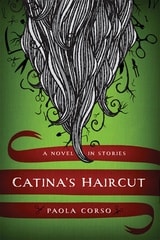
Catina’s Haircut
A Novel in StoriesPaola Corso
University of Wisconsin Press, 2010
Catina’s Haircut: A Novel in Stories spans four generations of a peasant family in the brutal poverty of post-Unification southern Italy and in an immigrant’s United States. The women in these tales dare to cross boundaries by discovering magical leaps inherent in the landscape, in themselves, and in the stories they tell and retell of family tragedy at a time of political unrest. Through an oral tradition embedded in the stone of memory and the flow of its reinvention, their passionate tale of resistance and transformation courses forward into new generations in a new world.
A woman threatens to join the land reform struggle in her Calabrian hill town, against her husband’s will, during a call for revolution in 1919. A brother and sister turn to the village sorceress in Fascist Italy to bring rain to their father’s drought-stricken farm. In Pittsburgh, new immigrants witness a miraculous rescue during the Great Flood of 1936. A young girl courageously dives into the Allegheny River to save her grandfather’s only memento of the old country. With only broken English to guide her, a widow hops a bus in search of live chickens to cook for Easter dinner in her husband’s memory. An aging woman in the title story is on a quest to cut the ankle-length hair as hard as the rocky soil of Calabria in a drought. A lonely woman who survived World War II bombings in her close-knit village, struggles to find community as a recent immigrant. A daughter visits her mother’s hill town to try and fulfill a wish for her to see the Fata Morgana. These haunting images permeate Corso’s linked stories of loss, hope, struggle, and freedom.
An official selection of The Sons of Italy® Book Club
Best Books for General Audiences, selected by the Public Library Association
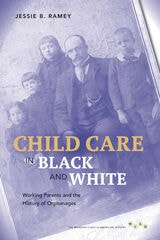
Child Care in Black and White
Working Parents and the History of OrphanagesJessie B. Ramey
University of Illinois Press, 2013
City of Clans
Geoff Peck
University of Iowa Press, 2025
Jeremy begins a journey of healing and self-reflection that carries him back to his family and his one true friend, Katrina Kovacs, a photography major who opens his eyes to societal issues he’s always ignored. A story of redemption, City of Clans captures the resiliency of the human spirit and explores hidden truths of masculinity, sexuality, and self.
Community Literacy and the Rhetoric of Public Engagement
Linda Flower
Southern Illinois University Press, 2008
Community Literacy and the Rhetoric of Public Engagement explores the critical practice of intercultural inquiry and rhetorical problem-solving that encourages urban writers and college mentors alike to take literate action. Author Linda Flower documents an innovative experiment in community literacy, the Community Literacy Center in Pittsburgh, and posits a powerful and distinctively rhetorical model of community engagement and pedagogy for both marginalized and privileged writers and speakers. In addition, she articulates a theory of local publics and explores the transformative potential of alternative discourses and counter-public performances.
In presenting a comprehensive pedagogy for literate action, the volume offers strategies for talking and collaborating across difference, forconducting an intercultural inquiry that draws out situated knowledge and rival interpretations of shared problems, and for writing and speaking to advocate for personal and public transformation. Flower describes the competing scripts for social engagement, empowerment, public deliberation, and agency that characterize the interdisciplinary debate over models of social engagement.
Extending the Community Literacy Center’s initial vision of community literacy first published a decade ago, Community Literacy and the Rhetoric of Public Engagement makes an important contribution to theoretical conversations about the nature of the public sphere while providing practical instruction in how all people can speak publicly for values and visions of change.
Winner, 2009 Rhetoric Society of America Book Award

Death by Cyanide
The Murder of Dr. Autumn KleinPaula Reed Ward
Dartmouth College Press, 2016
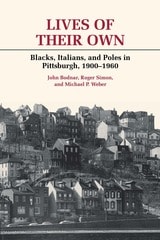
Lives of Their Own
Blacks, Italians, and Poles in Pittsburgh, 1900-1960John Bodnar, Roger Simon, and Michael P. Weber
University of Illinois Press, 1982

MAKING IRON STEEL
INDEPENDENT MILLS IN PITTSBURGH, 1820-19JOHN N. INGHAM
The Ohio State University Press, 1991

Making Their Own Way
Southern Blacks' Migration to Pittsburgh, 1916-30Peter Gottlieb
University of Illinois Press, 1987
on that momentous movement historians know as the Great Migration. Peter
Gottlieb shatters the received portrait of southern migrants as bewildered,
premodern folk, 'utterly unprepared' for the complexities of urban life.
African Americans in his account emerge as complex, creative agents, exploiting
old solidarities and building new ones, transforming the urban landscape
even as it transformed them." -- James Campbell, Northwestern University
"Engagingly written and well organized. . . . A major addition to
the fields of Afro-American, urban, and working-class history." --
Howard N. Rabinowitz, Georgia Historical Quarterly
"Gottlieb uses oral histories, corporate records, and primary and
secondary scholarship to present a useful picture of an important part
of the Great Migration that followed World War I." -- George Lipsitz,
Choice
"Sensitive and yet also incisive. . . . clear and often compelling.
An outstanding study." -- James R. Barrett, Journal of American
Ethnic History
Publication of this work was supported in part by a grant from the
Andrew W. Mellon Foundation.
Nothing to Read
Newspapers and Elections in a Social ExperimentJeffery J. Mondak
University of Michigan Press, 1995
Nothing to Read compares the information gathering and voting behavior of residents in Pittsburgh and Cleveland during the 1992 campaign season. Comparable in demographics and political behavior, the only significant difference between the two cities was the availability of local newspapers. Using a research design that combines elements of the opinion survey and the laboratory experiment, the author exploited this situation to produce an unusually sound and thorough examination of media effects on voters.
The results are startling. First and foremost, Nothing to Read reasserts the role of the newspaper in the dissemination of information acquisition. It is the only media source that can rival television in the electoral arena, and it is often more important to voters as a source for local information, including information about U.S. House races. Nothing to Read also shows that voters are more active in seeking out information than typically postulated. Indeed, many voters even differentiate between media sources for information about Senate and House contests and sources for the presidential campaign. Within limits, the electorate is clearly not a passive news audience. Nothing to Read provides a wealth of information on such related topics as the relationship between partisanship and media influence, the interplay between media exposure and interpersonal political conversations and other social interaction, and newspapers' effect on coattail voting. A unique book, Mondak's important study lays a solid foundation for all future work on the relationship between American media and politics.
Jeffery J. Mondak is Associate Professor of Political Science, University of Pittsburgh.
Nuclear Suburbs
Cold War Technoscience and the Pittsburgh RenaissancePatrick Vitale
University of Minnesota Press, 2021
From submarines to the suburbs—the remaking of Pittsburgh during the Cold War
During the early Cold War, research facilities became ubiquitous features of suburbs across the United States. Pittsburgh’s eastern and southern suburbs hosted a constellation of such facilities that became the world’s leading center for the development of nuclear reactors for naval vessels and power plants. The segregated communities that surrounded these laboratories housed one of the largest concentrations of nuclear engineers and scientists on earth. In Nuclear Suburbs, Patrick Vitale uncovers how the suburbs shaped the everyday lives of these technology workers.
Using oral histories, Vitale follows nuclear engineers and scientists throughout and beyond the Pittsburgh region to understand how the politics of technoscience and the Cold War were embedded in daily life. At the same time that research facilities moved to Pittsburgh’s suburbs, a coalition of business and political elites began an aggressive effort, called the Pittsburgh Renaissance, to renew the region. For Pittsburgh’s elite, laboratories and researchers became important symbols of the new Pittsburgh and its postindustrial economy. Nuclear Suburbs exposes how this coalition enrolled technology workers as allies in their remaking of the city.
Offering lessons for the present day, Nuclear Suburbs shows how race, class, gender, and the production of urban and suburban space are fundamental to technoscientific networks, and explains how the “renewal” of industrial regions into centers of the tech economy is rooted in violence and injustice.
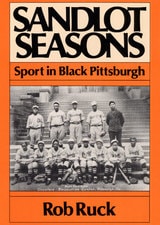
Sandlot Seasons
SPORT IN BLACK PITTSBURGHRob Ruck
University of Illinois Press, 1987

She Devils at the Door
Eliza Smith Brown
Carnegie Mellon University Press, 2023
Sometimes troublemakers emerge from the most unlikely of places. This true story follows the lives of two daughters of the Gilded Age—Lucy and Eliza Kennedy—who were educated at Vassar College and became leaders of the suffrage movement. Then, after the Nineteenth Amendment was passed in 1920, they spent the next forty years fighting corruption in politics and government.
Tenacious, smart, and witty, they captivated crowds, disarmed their opponents, and instilled particular dread among the corrupt politicians who were the unfortunate targets of their nonpartisan crusade. Their entry across the threshold of Pittsburgh’s City-County Building would reportedly invoke a flurry of hushed warnings through the halls: “The She Devils are at the door!” Together, Lucy and Eliza fought for the vote, empowered women to use it wisely, forced a mayor out of office in disgrace, took control of the city budget, exposed a series of scandals, spearheaded police reform, and launched a campaign that would eventually clear Pittsburgh of its smoky veil.
Featuring the true story of two powerful women, this book comes at a propitious time, reminding us how far women have come and how vigilant we must remain.
The Paris of Appalachia
Pittsburgh in the Twenty-First CenturyBrian O'Neill
Carnegie Mellon University Press, 2026
Maybe you never wondered if any metro area nearly straddles the borders of three major regions of the country, but The Paris of Appalachia: Pittsburgh in the Twenty-First Century tells us why this city is a place apart. It’s not East Coast, Midwest, or Southern, but the rest of America can fret about how to label Pittsburgh. It’s just fine being a walkable town that plays a big city on TV. Brian O'Neill, who walked its streets for more than three decades as a newspaper columnist, fell in love with the place from the moment he arrived. And when you read what he found, odds are better than even that you will, too. This reissue of the book includes a new introduction.