Results by title
3 books match the query 'Place - Making'
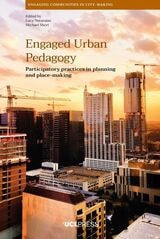
Engaged Urban Pedagogy
Participatory Practices in Planning and Place-MakingEdited by Lucy Natarajan and Michael Short
University College London, 2023
Engaged Urban Pedagogy presents a participatory approach to teaching about the built environment by exploring twelve examples of real-world engagement in urban planning involving people within, and beyond, the university. Starting with curriculum review, course content is analyzed in light of urban pasts, race, queer identity, lived experiences, and the concerns of urban professionals. Case studies then shift to focus on techniques for participatory critical pedagogy, including expanding the classroom with links to live place-making processes, connections made through digital co-design exercises, and student-led podcasting assignments. Finally, the book turns to activities beyond formal university teaching, such as those where school-age children learn about their own participation in urban processes together alongside university students and researchers. Drawing on foundational works of critical pedagogy, the contributors present a distinctly urban praxis that will help those in universities respond to the built environment challenges of today.
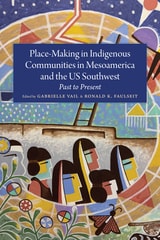
Place-Making in Indigenous Communities in Mesoamerica and the US Southwest
Past to PresentGabrielle Vail
University Press of Colorado, 2027
Place-Making in Indigenous Communities in Mesoamerica and the US Southwest explores shared Indigenous place-making concepts and practices across culturally diverse regions of Mesoamerica and the US Southwest from both historical and contemporary perspectives. Drawing on multidisciplinary research approaches, the volume demonstrates how Indigenous communities create and maintain deep connections to landscapes through stories, rituals, and reciprocal relationships, stressing the dynamic nature of the place-making process.
Contributors emphasize themes that crosscut Mesoamerican and Southwestern Indigenous cultures, including place-making through the (re)activation of primordial time, how people and spiritual energies embodied in geographical features of the land co-define time and space, the role of nonlocal materials and beings in establishing new—and often prestigious—place-based connections, and the impact of colonialism and neocolonialism on place-making and identity. Integrating archaeological evidence with contemporary ethnographic work, contributors explore the significance of places like Chichen Itzá's Balankanche cave as manifestations of primordial emergence sites. They also examine Hopi pilgrimages to ancestral shrines and how places such as Mirador Mountain in Chiapas, Cerro Danush in Oaxaca, and Black Mesa near San Ildefonso Pueblo continue to serve as focal points for ritual processions and community belonging.
Organized into sections emphasizing deep-time perspectives and contemporary heritage issues, Place-Making in Indigenous Communities in Mesoamerica and the US Southwest advocates for collaborative research approaches that center Indigenous voices and knowledge systems. By highlighting the deep connections between Indigenous communities and their sacred landscapes, this work brings a new perspective to ongoing conversations centered on land—one that urges engagement with Indigenous communities in a spirit of openness, collaboration, and respect.
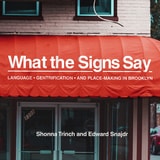
What the Signs Say
Language, Gentrification, and Place-Making in BrooklynShonna Trinch
Vanderbilt University Press, 2020
Shonna Trinch and Edward Snajdr, a sociolinguist and an anthropologist respectively, show how the beliefs and ideas that people take as truths about language and its speakers are deployed in these different sign types. They also present in-depth ethnographic case studies that reveal how gentrification and corporate redevelopment in Brooklyn are intimately connected to public communication, literacy practices, the transformation of motherhood and gender roles, notions of historical preservation, urban planning, and systems of privilege. Far from peripheral or irrelevant, shop signs say loud and clear that language displayed in public always matters.
This book is the recipient of the 2021 Norman L. and Roselea J. Goldberg Prize from Vanderbilt University Press for the best book in the area of art or medicine.