Results by title
6 books match the query 'Plain'
Mountain and Plain
From the Lycian Coast to the Phrygian Plateau in the Late Roman and Early Byzantine PeriodMartin Harrison
University of Michigan Press, 2001
The present study is the fruit of years of excavation and research by the author. The manuscript was largely sketched out when Martin Harrison unexpectedly passed away, and the volume has been finished and prepared for press by his long-time assistant Wendy Young, with further guidance from friends and colleagues with whom he had discussed the project.
The resulting volume explores Martin Harrison's belief that the coastal cities of Lycia declined after the fifth century C.E., and that smaller settlements (monasteries, villages, and towns) appeared in the mountains and further inland. In addition he considered that there was a demographic shift of masons and sculptors from the cities to serve these new settlements. This beautifully illustrated study provides convincing evidence from architecture, sculpture, and inscriptional sources to support this theory. It also contains a description of Amorium in Phrygia, as revealed in survey and excavation seasons from 1987 until the author's untimely death half a dozen years later. The volume includes a preface by Stephen Hill and an appendix by Michael Ballance and Charlotte Roueché on three special inscriptions from Ovacik.
The volume will be of interest to historians of the Near East and classical antiquity, to archaeologists, and to students of architectural history.
Martin Harrison was Professor of Archaeology, University of Oxford. Wendy Young was Research Assistant to the author until his death.
Plain and Ugly Janes
The Rise of the Ugly Woman in Contemporary American FictionWright, Charlotte M.
University of Iowa Press, 2000
“If beauty is truth, is ugliness falsehood and deception? If all art need concern itself with is beauty, what need have we to explore in our literature the nature and consequences of ugliness?” In Plain and Ugly Janes, originally published in hardcover in 2000 by Garland, Charlotte Wright defines and explores the ramifications of a new character type in twentieth-century American literature, the “ugly woman,” whose roots can be traced to the old maid/spinster character of the nineteenth century.
During the 1970s, stories began to appear in which the ugly woman is a figure of power—heroic not in the traditional old maid's way of quiet, passive acceptance but in a way more in keeping with the active, masculine definition of heroic behavior. Wright uses these stories to discuss the nature and definitions of ugliness and the effects of female ugliness on both male and female literary characters in the works of a range of American authors, including Sherwood Anderson, Russell Banks, Djuna Barnes, Peter S. Beagle, Sarah Bird, Ray Bradbury, Katherine Dunn, Louise Erdrich, William Faulkner, Tess Gallagher, Barry Hannah, Ernest Hemingway, Zora Neale Hurston, Alison Lurie, Lorrie Moore, Joyce Carol Oates, Flannery O'Connor, Katherine Anne Porter, Leon Rooke, Anne Tyler, Alice Walker, and Eudora Welty. Wright concludes that the ugly woman character allows American authors to explore the ironies and inequalities inherent in the beauty system.
Plain of Jars
and Other StoriesGeary Hobson
Michigan State University Press, 2011
In the opening story of Geary Hobson’s riveting new collection, Plain of Jars, a young private confides to his friend that he’s trying to leave the Marine Corps. “I am not doing this just because I find the Marine Corps too tough,” Warren Needham says, but because violence is contradictory to his faith. The story’s surprising climax, however, reveals a different side of Needham’s contradictory nature. It’s this acute understanding of conflict that characterizes Plain of Jars, a book populated by bullies, men in combat, abusive spouses, and Native Americans seeking a sense of personal identity in an environment where conformity is law. The U.S. Marine Corps sets the stage for a number of these stories, whose protagonists combat racism, post-traumatic stress syndrome, and the looming reality of the Vietnam War. With pitch perfect dialogue and a sense of the unexpected, Plain of Jars tests the depths of complex lives.
Plain
A Memoir of Mennonite GirlhoodMary Alice Hostetter
University of Wisconsin Press, 2022
This quietly powerful memoir of longing and acceptance casts a humanizing eye on a little-understood American religious tradition and a woman’s striving to grow within and beyond it.
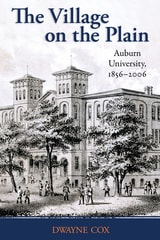
The Village on the Plain
Auburn University, 1856–2006Dwayne Cox
University of Alabama Press, 2016
The Village on the Plain tells the story of the founding of Auburn University as a small private college and the tumultuous history of its growth and transformation into the complex institution it is today.
Auburn University possesses a rich and storied past as well as an esprit de corps that is the envy of its rivals. Dwayne Cox’s The Village on the Plain traces the school’s history in fascinating detail from its origins as a private college through its emergence as a nationally recognized land-grant university.
Founded before the Civil War to provide a classical education, Auburn became the state’s land-grant college after the cessation of hostilities. This infused the school with a vision of the reborn South as a commercial and industrial power. By the 1880s, the applied sciences were at the core of Auburn’s growth and strength. Like most southern universities, Auburn never enjoyed financial abundance, and scarcity intensified internal debates over investments in liberal arts or science. Modest state funding for higher education also complicated Auburn’s rise. It became a source of competition with the University of Alabama. This rivalry was most intense between 1908 and 1948. The two schools did not meet on the gridiron but blocked and tackled one another in the legislature over the division of state funds.
On the idyllic plains of Lee County, Alabama, Auburn developed a unique, sometimes introspective culture, which is true of many universities founded far from urban centers. Long Auburn’s head archivist, Cox describes this culture with an insider’s insights and shows how it shaped the school's history and community.
Auburn University’s history is that of a small private college that rose to the challenges of convulsive state and national events, not only to survive but to emerge more vibrant and thriving. Offering much to students of higher education and Alabama history, as well as readers affiliated with Auburn University, The Village on the Plain tells the story of this complex and fascinating institution.

Voices from the Plain of Jars
Life under an Air WarEdited by Fred Branfman with essays and drawings by Laotian villagers; Foreword by Alfred W. McCoy
University of Wisconsin Press, 2013
When first published in 1972, this book was instrumental in exposing the bombing. In this expanded edition, Branfman follows the story forward in time, describing the hardships that Laotians faced after the war when they returned to find their farm fields littered with cluster munitions—explosives that continue to maim and kill today.