Results by title
4 books match the query 'Plant Life'
Aboriginal Relationships between Culture and Plant Life in the Upper Great Lakes Region
Richard Asa Yarnell
University of Michigan Press, 1964
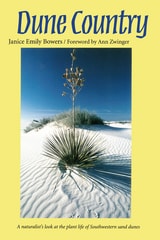
Dune Country
A Naturalist's Look at the Plant Life of Southwestern Sand DunesJanice Emily Bowers
University of Arizona Press, 1998
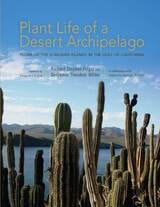
Plant Life of a Desert Archipelago
Flora of the Sonoran Islands in the Gulf of CaliforniaRichard Stephen Felger and Benjamin Theodore Wilder, in collaboration with Humberto Romero-Morales; Foreword by Exequiel Ezcurra
University of Arizona Press, 2012
The desert islands of the Gulf of California are among the world's best-preserved archipelagos. The diverse and unique flora, from the cardón forests of Cholludo to the agave-dominated slopes of San Esteban remain much as they were centuries ago, when the Comcaac (Seri people) were the only human presence in the region. Almost 400 plant species exist here, with each island manifesting a unique composition of vegetation and flora. For thousands of years, climatic and biological forces have sculpted a set of unparalleled desert worlds.
Plant Life of a Desert Archipelago is the first in-depth coverage of the plants on islands in the Gulf of California found in between the coasts of Baja California and Sonora. The work is the culmination of decades of study by botanist Richard Felger and recent investigations by Benjamin Wilder, in collaboration with Sr. Humberto Romero-Morales, one of the most knowledgeable Seris concerning the region's flora. Their collective effort weaves together careful and accurate botanical science with the rich cultural and stunning physical setting of this island realm.
The researchers surveyed, collected, and studied thousands of plants—seen here in meticulous illustrations and stunning color photographs—providing the most precise species accounts of the islands ever made. To access remote parts of the islands the authors worked directly with the Comcaac, an indigenous community who have lived off marine and terrestrial life in this coastal desert region for centuries. Invaluable information regarding indigenous names and distributions are an intrinsic part of this work.
The flora descriptions are extraordinarily detailed and painstakingly crafted for field biologists. Conservationists, students, and others who are interested in learning about the natural wealth of the Gulf of California, desert regions, or islands in general are sure to be captivated by this rich and fascinating volume.
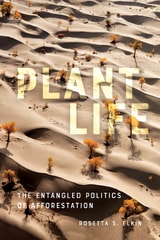
Plant Life
The Entangled Politics of AfforestationRosetta S. Elkin
University of Minnesota Press, 2022
How afforestation reveals the often-concealed politics between humans and plants
In Plant Life, Rosetta S. Elkin explores the procedures of afforestation, the large-scale planting of trees in otherwise treeless environments, including grasslands, prairies, and drylands. Elkin reveals that planting a tree can either be one of the ultimate offerings to thriving on this planet, or one of the most extreme perversions of human agency over it.
Using three supracontinental case studies—scientific forestry in the American prairies, colonial control in Africa’s Sahelian grasslands, and Chinese efforts to control and administer territory—Elkin explores the political implications of plant life as a tool of environmentalism. By exposing the human tendency to fix or solve environmental matters by exploiting other organisms, this work exposes the relationship between human and plant life, revealing that afforestation is not an ecological act: rather, it is deliberately political and distressingly social.
Plant Life ultimately reveals that afforestation cannot offset deforestation, an important distinction that sheds light on current environmental trends that suggest we can plant our way out of climate change. By radicalizing what conservation protects and by framing plants in their total aliveness, Elkin shows that there are many kinds of life—not just our own—to consider when advancing environmental policy.