Results by title
4 books match the query 'Plantation workers'
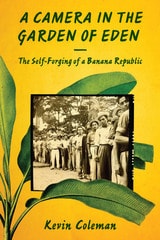
A Camera in the Garden of Eden
The Self-Forging of a Banana RepublicBy Kevin Coleman
University of Texas Press, 2016
In the early twentieth century, the Boston-based United Fruit Company controlled the production, distribution, and marketing of bananas, the most widely consumed fresh fruit in North America. So great was the company’s power that it challenged the sovereignty of the Latin American and Caribbean countries in which it operated, giving rise to the notion of company-dominated “banana republics.”
In A Camera in the Garden of Eden, Kevin Coleman argues that the “banana republic” was an imperial constellation of images and practices that was checked and contested by ordinary Central Americans. Drawing on a trove of images from four enormous visual archives and a wealth of internal company memos, literary works, immigration records, and declassified US government telegrams, Coleman explores how banana plantation workers, women, and peasants used photography to forge new ways of being while also visually asserting their rights as citizens. He tells a dramatic story of the founding of the Honduran town of El Progreso, where the United Fruit Company had one of its main divisional offices, the rise of the company now known as Chiquita, and a sixty-nine day strike in which banana workers declared their independence from neocolonial domination. In telling this story, Coleman develops a new set of conceptual tools and methods for using images to open up fresh understandings of the past, offering a model that is applicable far beyond this pathfinding study.
In the Shadow of the Palms
More-Than-Human Becomings in West PapuaSophie Chao
Duke University Press, 2022
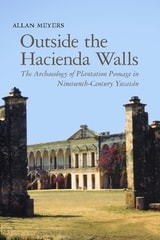
Outside the Hacienda Walls
The Archaeology of Plantation Peonage in Nineteenth-Century YucatánAllan Meyers
University of Arizona Press, 2012
Drawing on a dozen years of archaeological and historical investigation, Allan Meyers breaks new ground in the study of Yucatán haciendas. He explores a plantation village called San Juan Bautista Tabi, which once stood at the heart of a vast sugar estate. Occupied for only a few generations, the village was abandoned during the revolutionary upheaval. Its ruins now lie within a state-owned ecological reserve.
Through oral histories, archival records, and physical remains, Meyers examines various facets of the plantation landscape. He presents original data and fresh interpretations on settlement organization, social stratification, and spatial relationships. His systematic approach to "things underfoot," small everyday objects that are now buried in the tropical forest, offers views of the hacienda experience that are often missing in official written sources. In this way, he raises the voices of rural, mostly illiterate Maya speakers who toiled as laborers. What emerges is a portrait of hacienda social life that transcends depictions gleaned from historical methods alone.
Students, researchers, and travelers to Mexico will all find something of interest in Meyers's lively presentation. Readers will see the old haciendas—once forsaken but now experiencing a rebirth as tourist destinations—in a new light. These heritage sites not only testify to social conditions that prevailed before the Mexican Revolution, but also remind us that the human geography of modern Yucatán is as much a product of plantation times as it is of more ancient periods.
Plantation Life
Corporate Occupation in Indonesia's Oil Palm ZoneTania Murray Li and Pujo Semedi
Duke University Press, 2021