Results by title
314 books match the query 'Plants' and 25 start with a
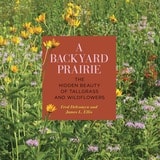
A Backyard Prairie
The Hidden Beauty of Tallgrass and WildflowersFred Delcomyn and James L. Ellis
Southern Illinois University Press, 2021
In 2003 Fred Delcomyn imagined his backyard of two and a half acres, farmed for corn and soybeans for generations, restored to tallgrass prairie. Over the next seventeen years, Delcomyn, with help from his friend James L. Ellis scored, seeded, monitored, reseeded, and burned these acres into prairie. In A Backyard Prairie, they document their journey and reveal the incredible potential of a backyard to travel back to a time before the wild prairie was put into plow rows. It has been said, “Anyone can love the mountains, but it takes a soul to love the prairie.” This book shows us how.
The first book to celebrate a smaller, more private restoration, A Backyard Prairie offers a vivid portrait of what makes a prairie. Delcomyn and Ellis describe selecting and planting seeds, recount the management of a prescribed fire, and capture the prairie’s seasonal parades of colorful flowers in concert with an ever-growing variety of animals, from the minute eastern tailed-blue butterfly to the imperious red-winged blackbird and the reclusive coyote.
This book offers a unique account of their work and their discovery of a real backyard, an inviting island of grass and flowers uncovered and revealed. We often travel miles and miles to find nature larger than ourselves. In this rich account of small prairie restoration, Delcomyn and Ellis encourage the revival of original prairie in our backyards and the patient, beauty-seeking soul sleeping within ourselves.

A Flora of Northeastern Minnesota
Olga Lakela
University of Minnesota Press, 1965
A Flora of Northeastern Minnesota was first published in 1965. Minnesota Archive Editions uses digital technology to make long-unavailable books once again accessible, and are published unaltered from the original University of Minnesota Press editions.
A manual for the identification of the ferns, fern allies, flowering plants, trees, shrubs, and herbs of Minnesota's Arrowhead region, this volume lists 113 botanic families and describes 1,300 species, with keys for identification. There are 80 line drawings of plant species and 419 maps showing distribution.
A Flora of Southern Illinois
Robert H. Mohlenbrock
Southern Illinois University Press, 1974
This book will be of particular interest to those interested in applied fields of biology, such as conservation, forestry, and wild life. The southern twelve counties of Illinois, a total of 4,355square miles, comprise the area covered in this book. It is an area in which both northern and southern flora specimens abound. A wide variety of plant species grow in this area, and nearly 200 new plants not formerly identified with this area have been included in the listings.
Especially valuable to amateur botanists, the book is an important manual in identifying the plants that make up the native scenery of this region. Seventy-seven illustrations aid in identifying and understanding the plant communities.
A Garden Of Bristlecones
Tales Of Change In The Great BasinMichael P. Cohen
University of Nevada Press, 1998
An engaging, well-illustrated natural and cultural history of the oldest living organism—the bristlecone pine. Since Edmund Schulman discovered in 1958 that individual bristlecones live nearly 5,000 years, the trees have been investigated primarily for the elaborate record their rings contain. The trees have been "read' closely, with major consequences for natural and human history. Historians have read local and global environmental change. Archaeologists have rewritten the history of civilization. Writers have transformed them into figures pertinent to the human dilemmas of time and eternity. A Garden of Bristlecones investigates professional and popular conceptions as a set of narratives drawn from the outside and inside of the trees. It reveals the premises of the investigators, the nature of their inquiry, and the extent of their knowledge, while also revealing the Great Basin bristlecone itself. Illustrations by Valerie Cohen.
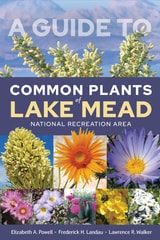
A Guide to Common Plants of Lake Mead National Recreation Area
Elizabeth A. Powell
University of Nevada Press, 2023
A Guide to Common Plants of Lake Mead National Recreation Area is the definitive book for weekend explorers and botanists alike who venture into LMNRA ready to discover the many wonders of the local flora. The authors highlight 183 plants that hikers are most likely to encounter along popular trails, washes, and surrounding hot springs, helping the area’s millions of annual visitors identify and enjoy these common plants. This guide includes photos and descriptions of each plant, along with a map of LMNRA.
The authors also provide a primer on plant ecology, including a guide to plant structures, desert adaptations and life forms, plant-to-plant interactions, and plant-animal interactions. Plants are grouped by life forms, such as tree, shrub, cactus, or grass, and by flower color within the wildflower section. The guide will encourage readers to pause and look carefully at each plant they encounter, giving them an enriched experience during their exploration.
A Guide to Native Plants of the New York City Region
Gargiullo, Margaret B
Rutgers University Press, 2010
One of the most serious threats to indigenous plants is the introduction of invasive non-native species by landscapers after new developments are built. In this unique guide, ecologist Margaret B. Gargiullo presents a detailed look at the full scope of flora that is native to this region and available for propagation. Geared specifically for landscape architects, designers, land managers, and restorationists, this book offers practical advice on how to increase the amount of indigenous flora growing in the mepolitan area, and in some cases, to reintroduce plants that have completely disappeared.
More than one hundred line drawings of plants and their specific habitats, ranging from forests to beaches, help readers visualize the full potential for landscaping in the area. A separate entry for each plant also provides detailed information on size, flower color, blooming time, and its possible uses in wetland mitigation, erosion control, and natural area restoration. Some plants are also highlighted for their ability to thrive in areas that are typically considered inhospitable to greenery.
Easily searchable by plant type or habitat, this guide is an essential reference for everyone concerned with the region's natural plant life. Since most of the plants can also be grown well beyond the New York City metropolitan area, this book will also be useful for project managers doing restoration work in most of southern New England and the mid-Atlantic region, including Pennsylvania, Delaware, and Maryland.
A History of the Garden in Fifty Tools
Bill Laws
University of Chicago Press, 2014
As Laws reveals, gardening tools have coevolved with human society, and the story of these fifty individual tools presents an innovative history of humans and the garden over time. Laws takes us back to the Neolithic age, when the microlith, the first “all-in-one” tool was invented. Consisting of a small sharp stone blade that was set into a handle made of wood, bone, or antler, it was a small spade that could be used to dig, clip, and cut plant material. We find out that wheelbarrows originated in China in the second century BC, and their basic form has not changed much since. He also describes how early images of a pruning knife appear in Roman art, in the form of a scythe that could cut through herbs, vegetables, fruits, and nuts and was believed to be able to tell the gardener when and what to harvest.
Organized into five thematic chapters relating to different types of gardens: the flower garden, the kitchen garden, the orchard, the lawn, and ornamental gardens, the book includes a mix of horticulture and history, in addition to stories featuring well-known characters—we learn about Henry David Thoreau’s favorite hoe, for example. A History of the Garden in Fifty Tools will be a beautiful gift for any home gardener and a reassuring reminder that gardeners have always struggled with the same quandaries.
A Natural History of the New World
The Ecology and Evolution of Plants in the AmericasAlan Graham
University of Chicago Press, 2010
The paleoecological history of the Americas is as complex as the region is broad: stretching from the Arctic Circle to Tierra del Fuego, the New World features some of the most extraordinary vegetation on the planet. But until now it has lacked a complete natural history. Alan Graham remedies that with A Natural History of the New World. With plants as his scientific muse, Graham traces the evolution of ecosystems, beginning in the Late Cretaceous period (about 100 million years ago) and ending in the present, charting their responses to changes in geology and climate.
By highlighting plant communities’ roles in the environmental history of the Americas, Graham offers an overdue balance to natural histories that focus exclusively on animals. Plants are important in evolution’s splendid drama. Not only are they conspicuous and conveniently stationary components of the Earth’s ecosystems, but their extensive fossil record allows for a thorough reconstruction of the planet’s paleoenvironments. What’s more, plants provide oxygen, function as food and fuel, and provide habitat and shelter; in short, theirs is a history that can speak to many other areas of evolution.
A Natural History of the New World is an ambitious and unprecedented synthesis written by one of the world’s leading scholars of botany and geology.
A Pompeian Herbal
Ancient and Modern Medicinal PlantsBy Wilhelmina Feemster Jashemski,
University of Texas Press, 1999
When workmen excavating the ruins of Pompeii eagerly gathered the native medicinal plants growing there, Wilhelmina Jashemski discovered that this was another example of the continuity of life in the shadow of Vesuvius. Many of the plants used for herbal medicine around Pompeii today are the same ones that ancient authorities such as Pliny the Elder and Dioscorides recommended for treating the same types of disorders.
In this book, Jashemski presents an herbal of thirty-six medicinal plants, most of them known to the ancients and still employed today. She describes each plant's contemporary medicinal uses and compares them to ancient practices as recorded in literary sources. Scientific, English, and Italian names and the plant's mythological associations complete the entries, while elegant, full-page portraits depict each plant visually.
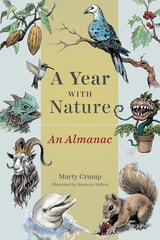
A Year with Nature
An AlmanacMarty Crump
University of Chicago Press, 2018
With Crump, we mark the publication of classics like Carson’s Silent Spring and White’s Charlotte’s Web, and even the musical premiere of Tchaikovsky’s Swan Lake. We note the discovery of the structure of DNA and the mountain gorilla, the rise of citizen science projects, and the work of people who’ve shaped how we view and protect nature—from Aristotle to E. O. Wilson. Some days feature US celebrations, like National Poinsettia Day and National Cat Day; others highlight country-specific celebrations, like Australia’s Wombat Day and Thailand’s Monkey Buffet Festival, during which thousands of macaques feast on an ornately arranged spread of fruits and vegetables. Crump also highlights celebrations that span borders, from World Wildlife Conservation Day to International Mountain Day and global festivities for snakes, sea turtles, and chocolate. Interweaving fascinating facts on everything from jellyfish bodies to monthly birth flowers with folkloric entries featuring the Loch Ness Monster, unicorns, and ancient Greek, Roman, and Egyptian mythology, the almanac is as exhaustive as it is enchanting.
A Year with Nature celebrates the wonder and beauty of our natural world as we have expressed it in visual arts, music, literature, science, natural history, and everyday experience. But more than this, the almanac’s vignettes encourage us to contemplate how we can help ensure that future generations will be able to enjoy the landscapes and rich biodiversity we so deeply cherish.
Acanthaceae to Myricaceae
Water Willows to Wax MyrtlesRobert H. Mohlenbrock
Southern Illinois University Press, 2008
Veteran botanist, scientific author, and professor Robert H. Mohlenbrock brings the full depth of his expertise and scholarship to his latest book, Acanthaceae to Myricaceae: Water Willows to Wax Myrtles, the third of four volumes in the Aquatic and Standing Water Plants of the Central Midwest series. This easy-to-use illustrated reference guide covers aquatic and standing water plants for the states of Iowa, Illinois, Indiana, Ohio, Kansas, Missouri, Nebraska, and Kentucky (excluding the biologically distinct Cumberland Mountain region of eastern Kentucky), from spearmint to wintergreen, from aster to waterwort.
The volume identifies, describes, and organizes species in three groups, including truly aquatic plants, which spend their entire life with their vegetative parts either completely submerged or floating on the water’s surface; emergents, which are usually rooted under water with their vegetative parts standing above the water’s surface; and wetland plants, which live most or all of their lives out of water, but which can live at least three months in water.
Mohlenbrock lists the taxa alphabetically, and within each taxon, he describes the species with the scientific names he deems most appropriate (indicating if his opinion differs from that of the U.S. Fish and Wildlife Service), common names, identification criteria, line drawings, geographical distribution, habitat description, and official U.S. Fish and Wildlife Service wetlands designation as described by the National Wetland Inventory Section in 1988.
Acanthaceae to Myricaceae is an essential reference for state and federal employees who deal with environmental conservation and mitigation issues in aquatic and wetland plants. It is also a useful guide for students and instructors in college and university courses focusing on the identification of aquatic and wetland plants.
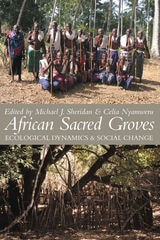
African Sacred Groves
Ecological Dynamics and Social ChangeMichael J. Sheridan
Ohio University Press, 2007
book by an international group of scholars and conservation practitioners provides a methodological framework for understanding these forests by examining their ecological characteristics, delineating how they relate to social dynamics and historical contexts, exploring their ideological aspects, and evaluating their strengths and weaknesses as sites for community-based resource management and the conservation of cultural and biological diversity.
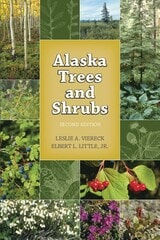
Alaska Trees and Shrubs
Les Viereck
University of Alaska Press, 2007
Amber Waves
The Extraordinary Biography of Wheat, from Wild Grass to World MegacropCatherine Zabinski
University of Chicago Press, 2020
At breakfast tables and bakeries, we take for granted a grain that has made human civilization possible, a cereal whose humble origins belie its world-shaping power: wheat. Amber Waves tells the story of a group of grass species that first grew in scattered stands in the foothills of the Middle East until our ancestors discovered their value as a source of food. Over thousands of years, we moved their seeds to all but the polar regions of Earth, slowly cultivating what we now know as wheat, and in the process creating a world of cuisines that uses wheat seeds as a staple food. Wheat spread across the globe, but as ecologist Catherine Zabinski shows us, a biography of wheat is not only the story of how plants ensure their own success: from the earliest bread to the most mouthwatering pasta, it is also a story of human ingenuity in producing enough food for ourselves and our communities.
Since the first harvest of the ancient grain, we have perfected our farming systems to grow massive quantities of food, producing one of our species’ global mega crops—but at a great cost to ecological systems. And despite our vast capacity to grow food, we face problems with undernourishment both close to home and around the world. Weaving together history, evolution, and ecology, Zabinski’s tale explores much more than the wild roots and rise of a now-ubiquitous grain: it illuminates our complex relationship with our crops, both how we have transformed the plant species we use as food, and how our society—our culture—has changed in response to the need to secure food sources. From the origins of agriculture to gluten sensitivities, from our first selection of the largest seeds from wheat’s wild progenitors to the sequencing of the wheat genome and genetic engineering, Amber Waves sheds new light on how we grow the food that sustains so much human life.
An Arkansas Florilegium
The Atlas of Botanist Edwin Smith Illustrated by Naturalist Kent BonarEdwin Smith
University of Arkansas Press, 2017
Thirty-five years later, with Smith retired and Bonar long gone from the park service but still drawing, Bonar’s weathered and battered copy of the atlas was seized by a diverse cadre of amateur admirers motivated by fears of its damage or loss. Their fears were certainly justified; after all, the pages were now jammed to the margins with some 3,500 drawings, and the volume had already survived one accidental dunking in an Ozark stream.
An Arkansas Florilegium brings Smith’s and Bonar’s knowledge and lifelong diligence to the world in this unique mix of art, science, and Arkansas saga.
An Illustrated Guide to Iowa Prairie Plants
Paul Christiansen
University of Iowa Press, 1999
Iowa is the only state completely within the tallgrass prairie formation. Thanks to rich soil, adequate rainfall, and warm summer temperatures, hundreds of species combine to produce a diverse and colorful and ever-changing landscape. Using text and maps by Paul Christiansen and newly created drawings by Mark Müller, this first comprehensive guide to the prairie plants native to Iowa provides all the information necessary for identifying and distinguishing even the most similar species.
Species are described from the ground up: stem, leaf, bud, flower, fruit, and habitat. The time of flowering and fruiting is given for the central part of Iowa. Where several species are closely related, a common member of the group is fully described, and the other species are compared with the first. Each species is paired with a distribution map. The superbly detailed illustrations, all of which were drawn specifically for this handbook, capture the general shape of each plant as well as its characteristic features. A guide to family identification, information about extant and restored prairies in Iowa, and a glossary are also included.
Farmers who settled Iowa in the 1800s viewed the great green sea of grasses and wildflowers as a challenge to be replaced with cropfields and pastures. Today we realize that the prairie is an addictive, restorative, aesthetically satisfying place for study and recreation. An Illustrated Guide to Iowa Prairie Plants is designed to enable those who want to go beyond the most common plants to identify all native species and to learn more about their distribution, structure, and natural history.
An Orchard Invisible
A Natural History of SeedsJonathan Silvertown
University of Chicago Press, 2009
The story of seeds, in a nutshell, is a tale of evolution. From the tiny sesame that we sprinkle on our bagels to the forty-five-pound double coconut borne by the coco de mer tree, seeds are a perpetual reminder of the complexity and diversity of life on earth. With An Orchard Invisible, Jonathan Silvertown presents the oft-ignored seed with the natural history it deserves, one nearly as varied and surprising as the earth’s flora itself.
Beginning with the evolution of the first seed plant from fernlike ancestors more than 360 million years ago, Silvertown carries his tale through epochs and around the globe. In a clear and engaging style, he delves into the science of seeds: How and why do some lie dormant for years on end? How did seeds evolve? The wide variety of uses that humans have developed for seeds of all sorts also receives a fascinating look, studded with examples, including foods, oils, perfumes, and pharmaceuticals. An able guide with an eye for the unusual, Silvertown is happy to take readers on unexpected—but always interesting—tangents, from Lyme disease to human color vision to the Salem witch trials. But he never lets us forget that the driving force behind the story of seeds—its theme, even—is evolution, with its irrepressible habit of stumbling upon new solutions to the challenges of life.
"I have great faith in a seed," Thoreau wrote. "Convince me that you have a seed there, and I am prepared to expect wonders." Written with a scientist’s knowledge and a gardener’s delight, An Orchard Invisible offers those wonders in a package that will be irresistible to science buffs and green thumbs alike.
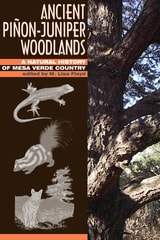
Ancient Piñon-Juniper Woodlands
A Natural History of Mesa Verde CountryLisa M. Floyd
University Press of Colorado, 2003
Impressively broad in scope, Floyd's volume thoroughly explores Mesa Verde Country's important and historic ecosystem. Covering such diverse topics as geologic evolution, natural history, human history, bats, and fungi, to name but a few, this volume will appeal to scientists, resource managers, conservationists, and the lay reader with an interest in this most western of ecosystems. Technical Editors: David D. Hanna, William H. Romme and Marilyn Colyer
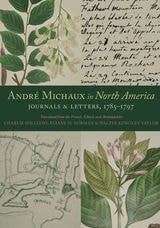
André Michaux in North America
Journals and Letters, 1785–1797Translated from the French, Edited, and Annotated by Charlie Williams, Eliane M. Norman, and Walter Kingsley Taylor
University of Alabama Press, 2020
Tracing the roots of American botany through the journals of an eighteenth-century explorer.
Known to today’s biologists primarily as the “Michx.” at the end of more than 700 plant names, André Michaux was an intrepid French naturalist. Under the directive of King Louis XVI, he was commissioned to search out and grow new, rare, and never-before-described plant species and ship them back to his homeland in order to improve French forestry, agriculture, and horticulture. He made major botanical discoveries and published them in his two landmark books, Histoire des chênes de l’Amérique (1801), a compendium of all oak species recognized from eastern North America, and Flora Boreali-Americana (1803), the first account of all plants known in eastern North America.
Straddling the fields of documentary editing, history of the early republic, history of science, botany, and American studies, André Michaux in North America: Journals and Letters, 1785–1797 is the first complete English edition of Michaux’s American journals. This copiously annotated translation includes important excerpts from his little-known correspondence as well as a substantial introduction situating Michaux and his work in the larger scientific context of the day.
To carry out his mission, Michaux traveled from the Bahamas to Hudson Bay and west to the Mississippi River on nine separate journeys, all indicated on a finely rendered, color-coded map in this volume. His writings detail the many hardships—debilitating disease, robberies, dangerous wild animals, even shipwreck—that Michaux endured on the North American frontier and on his return home. But they also convey the soaring joys of exploration in a new world where nature still reigned supreme, a paradise of plants never before known to Western science. The thrill of discovery drove Michaux ever onward, even ultimately to his untimely death in 1802 on the remote island of Madagascar.
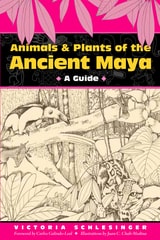
Animals and Plants of the Ancient Maya
A GuideBy Victoria Schlesinger
University of Texas Press, 2002
A growing interest in all things Maya brings an increasing number of visitors to prehistoric Maya ruins and contemporary Maya communities in Guatemala, Belize, El Salvador, western Honduras, the Yucatán Peninsula, and the southern areas of Chiapas and Tabasco, Mexico. For these visitors and indeed everyone with an interest in the Maya, this field guide highlights nearly 100 species of plants and animals that were significant to the ancient Maya and that continue to inhabit the Maya region today.
Drawing from the disciplines of biology, ecology, and anthropology, Victoria Schlesinger describes each plant or animal's habitat and natural history, identifying characteristics (also shown in a black-and-white drawing), and cultural significance to the ancient and contemporary Maya. An introductory section explains how to use the book and offers a concise overview of the history, lifeways, and cosmology of the ancient Maya. The concluding section describes the collapse of ancient Maya society and briefly traces the history of the Maya region from colonial times to the present.
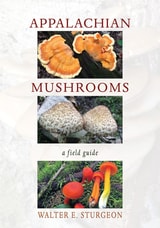
Appalachian Mushrooms
A Field GuideWalter E. Sturgeon
Ohio University Press, 2018
From one of the region’s foremost mushroom hunters—Walter E. Sturgeon—comes a long-overdue field guide to finding and identifying the mushrooms and fleshy fungi found in the Appalachian mountains from Canada to Georgia. Edibility and toxicity, habitat, ecology, and detailed diagnostic features of the disparate forms they take throughout their life cycles are all included, enabling the reader to identify species without the use of a microscope or chemicals.
Appalachian Mushrooms is unparalleled in its accuracy and currency, from its detailed photographs to descriptions based on the most advanced classification information available, including recent DNA studies that have upended some mushrooms’ previously accepted taxonomies. Sturgeon celebrates more than 400 species in all their diversity, beauty, and scientific interest, going beyond the expected specimens to include uncommon ones and those that are indigenous to the Appalachian region.
This guide is destined to be an indispensable authority on the subject for everyone from beginning hobbyists to trained experts, throughout Appalachia and beyond.
Aquatic and Wetland Plants of Northeastern North America
Garrett E. Crow and C. Barre Hellquist
University of Wisconsin Press, 2023
This is by far the best and most comprehensive manual and illustrated guide to native and naturalized vascular plants—ferns, conifers, and flowering plants—growing in aquatic and wetland habitats in northeastern North America, from Newfoundland west to Minnesota and south to Virginia and Missouri. Published in two volumes, this long-awaited work completely revises and greatly expands Norman Fassett’s 1940 classic A Manual of Aquatic Plants, yet retains the features that made Fassett’s book so useful.
Features include:
* coverage of 1139 plant species, 1186 taxa, 295 genera, 109 families
* more than 600 pages of illustrations, and illustrations for more than 90% of the taxa
* keys for each species include references to corresponding illustrations
* habitat information, geographical ranges, and synonomy
* a chapter on nuisance aquatic weeds
* glossaries of botanical and habitat terms
* a full index for each volume
Wetland ecologists, botanists, resource managers, public naturalists, and environmentalists concerned with the preservation of wetland areas, which are increasingly threatened, will welcome this clear, workable, and comprehensive guide.
Aquatic and Wetland Plants of Northeastern North America, Volume I
A Revised and Enlarged Edition of Norman C. Fassett's A Manual of Aquatic Plants, Volume I: Pteridphytes, Gymnosperms, and Angiosperms: DicotyledonsGarrett E. Crow and C. Barre Hellquist
University of Wisconsin Press, 2000
This is by far the best and most comprehensive manual and illustrated guide to native and naturalized vascular plants—ferns, conifers, and flowering plants—growing in aquatic and wetland habitats in northeastern North America, from Newfoundland west to Minnesota and south to Virginia and Missouri. Published in two volumes, this long-awaited work completely revises and greatly expands Norman Fassett’s 1940 classic A Manual of Aquatic Plants, yet retains the features that made Fassett’s book so useful.
Features include:
* coverage of 1139 plant species, 1186 taxa, 295 genera, 109 families
* more than 600 pages of illustrations, and illustrations for more than 90% of the taxa
* keys for each species include references to corresponding illustrations
* habitat information, geographical ranges, and synonomy
* a chapter on nuisance aquatic weeds
* glossaries of botanical and habitat terms
* a full index for each volume
Wetland ecologists, botanists, resource managers, public naturalists, and environmentalists concerned with the preservation of wetland areas, which are increasingly threatened, will welcome this clear, workable, and comprehensive guide.
Aroids
Plants of the Arum Family, Third EditionDeni Bown
Royal Botanic Gardens, Kew, 2024
This third edition of the best-selling book by Deni Bown is fully updated and revised and includes new taxa and advances in research to ensure that Aroids: Plants of the Arum Family continues to be the go-to book for aroid enthusiasts.
Since the first edition of Aroids: Plants of the Arum Family was published in 1988, many new genera and over one thousand additional species have been discovered by botanists globally. This expansion of knowledge, made possible through the application of technological advances, has stimulated further interest in the plant family both within the scientific community and in the general public. One of the most famous aroids, the titan arum (Amorphophallus titanum), known for its gigantic size and stench of rotting flesh at the blooming stage, has become a botanical superstar!
Atlas of Nevada Conifers
A Phytogeographic ReferenceDavid Alan Charlet
University of Nevada Press, 1996
Atlas of Nevada Conifers is a major scientific contribution to our understanding of the ecology of Nevada. It documents in great detail the distribution of all native conifer species in the state—critical information because of the primary ecological importance of conifers for all organisms and because of the lack of documentation of these distributions in the scientific literature before now. Charlet maps and documents the exact location of herbarium records for 1,600 individual trees. The data found in 23 tables and 22 range maps will serve as a primary reference for botanists, land managers, and conservation biologists for years to come.