Results by title
4 books match the query 'Plants, Edible'
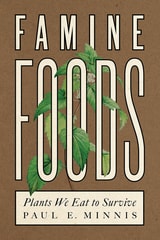
Famine Foods
Plants We Eat to SurvivePaul E. Minnis
University of Arizona Press, 2021
How people eat today is a record of food use through the ages—and not just the decadent, delicious foods but the less glamorous and often life-saving foods from periods of famine as well. In Famine Foods, Paul E. Minnis focuses on the myriad plants that have sustained human populations throughout the course of history, unveiling the those that people have consumed, and often still consume, to avoid starvation. For the first time, this book offers a fascinating overview of famine foods—how they are used, who uses them, and, perhaps most importantly, why they may be critical to sustain human life in the future.
In addition to a broader discussion of famine foods, Minnis includes fourteen short case studies that examine the use of alternative foods in human societies throughout the world, from hunter-gatherers to major nations. When environmental catastrophes, war, corrupt governments, annual hunger seasons, and radical agricultural policies have threatened to starve populations, cultural knowledge and memories of food shortages have been crucial to the survival of millions of people.Famine Foods dives deeply into the cultural contexts of famine food use, showing the curious, strange, and often unpleasant foods people have turned to in order to get by. There is not a single society or area of the world that is immune to severe food shortages, and gaining a deeper knowledge of famine foods will be relevant for the foreseeable future of humanity.

Moveable Gardens
Itineraries and Sanctuaries of MemoryEdited by Virginia D. Nazarea and Terese V. Gagnon
University of Arizona Press, 2021
Moveable Gardens highlights itineraries and sanctuaries in an era of massive dislocation, addressing concerns about finding comforting and familiar refuges in the Anthropocene. The worlds of marginalized individuals who live in impoverished rural communities, many Indigenous peoples, and refugees are constantly under threat of fracturing. Yet, in every case, there is resilience and regeneration as these individuals re-create their worlds through the foods, traditions, and plants they carry with them into their new realities.
This volume offers a new understanding of the performances and routines of sociality in the face of daunting market forces and perilous climate transformations. These traditions sustained our ancestors, and they may suffice to secure a more meaningful, diverse future. By delving into the nature of nostalgia, burrowing into memory and knowledge, and embracing the specific wonders of each deeply rooted or newly displaced community, endlessly valuable ways of being and understanding can be preserved.
Contributors: Guntra A. Aistara, Aida Curtis, Terese V. Gagnon, John Hartigan Jr., Tracey Heatherington, Taylor Hosmer, Hayden S. Kantor, Melanie Narciso, Virginia D. Nazarea, Emily F. Ramsey, Krishnendu Ray, David Sutton, James R. Veteto, Marc N. Williams
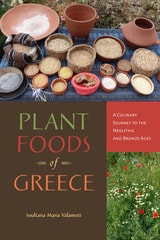
Plant Foods of Greece
A Culinary Journey to the Neolithic and Bronze AgesSoultana Maria Valamoti
University of Alabama Press, 2023
2024 INAUGURAL MARY BEAUDRY BOOK AWARD FOR THE ARCHAEOLOGY OF FOOD
A synthesis of culinary practices of prehistoric Greece based on plant food ingredients
In Plant Foods of Greece, Greek archaeologist Soultana Maria Valamoti takes readers on a culinary journey, reconstructing the plant foods and culinary practices of Neolithic and Bronze Age Greece. For more than thirty years, she has been analyzing a large body of archaeobotanical data that was retrieved from nearly twenty sites in mainland Greece and the Greek islands, with an additional analysis of other sites as referenced by published colleagues. Plant foods were the main ingredients of daily meals in prehistoric Greece and most likely of special dishes prepared for feasts and rituals.
Valamoti’s approach allows an exploration of culinary variability through time. The thousands of charred seeds identified from occupation debris correspond to minuscule time capsules. She is able to document changes from the cooking of the first farmers to the sophisticated cuisines of the elites who inhabited palaces in the first cities of Europe in the south of Greece during the Late Bronze Age. Along the way, she explains the complex processes for the addition of new ingredients (such as millet and olives), condiments, sweet tastes, and complex recipes. Valamoti also addresses regional variability and diversity as well as detailing experimentation and research using occasional input from ancient written sources.
Comprehensive and synthetic coverage encompasses bread/cereals, pulses, oils, fruit and nuts, fermented brews, healing foods, cooking, and identity. In addition, Valamoti offers insight into engaging in public archaeology and provides recipes that incorporate ancient plant ingredients and connect prehistory to the present in a critical way. A definitive source for a range of food scientists and scholars, it will also appeal to foodies.
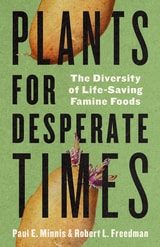
Plants for Desperate Times
The Diversity of Life-Saving Famine FoodsPaul E. Minnis and Robert L. Freedman
University of Arizona Press, 2024
Plants for Desperate Times is an introduction to the diversity of plant foods that have saved millions of lives during lethal food shortages. While not a field guide, it addresses questions about what famine foods are and why they are important. The work highlights one hundred plants. Each entry includes the common and scientific names, botanical family, distribution, use as a famine food and other uses, and nutritional information. The species come from across the botanical kingdom, demonstrating the diversity of life-saving plants and the human ingenuity of making what might seem to be inedible plants edible. Unexpectedly, important famine foods include alternative uses of important crops as well as native plants.
Beyond a study of famine foods, the authors share why keeping an inventory of plant foods of last resort is so important. They help to build an understanding of little-known and underappreciated foods that may have a greater role in provisioning humanity in the future. As much as we may hope that severe food scarcity will never occur again, history suggests otherwise, and Plants for Desperate Times provides invaluable documentation of these vital foods.