Results by title
12 books match the query 'Pleasures'
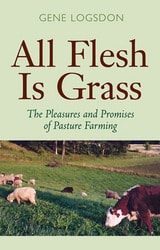
All Flesh Is Grass
The Pleasures and Promises of Pasture FarmingGene Logsdon
Ohio University Press, 2004
Amidst Mad Cow scares and consumer concerns about how farm animals are bred, fed, and raised, many farmers and homesteaders are rediscovering the traditional practice of pastoral farming. Grasses, clovers, and forbs are the natural diet of cattle, horses, and sheep, and are vital supplements for hogs, chickens, and turkeys. Consumers increasingly seek the health benefits of meat from animals raised in green paddocks instead of in muddy feedlots.
In All Flesh Is Grass: The Pleasures and Promises of Pasture Farming, Gene Logsdon explains that well-managed pastures are nutritious and palatable—virtual salads for livestock. Leafy pastures also hold the soil, foster biodiversity, and create lovely landscapes. Grass farming might be the solution for a stressed agricultural system based on an industrial model and propped up by federal subsidies.
In his clear and conversational style, Logsdon explains historically effective practices and new techniques. His warm, informative profiles of successful grass farmers offer inspiration and ideas. His narrative is enriched by his own experience as a “contrary farmer” on his artisan-scale farm near Upper Sandusky, Ohio.
All Flesh Is Grass will have broad appeal to the sustainable commercial farmer, the home-food producer, and all consumers who care about their food.
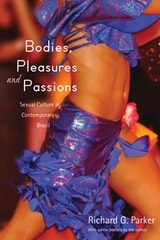
Bodies, Pleasures, and Passions
Sexual Culture in Contemporary Brazil, Second EditionRichard G. Parker
Vanderbilt University Press, 2009
Originally published in the early 1990s, Bodies, Pleasures, and Passions quickly became a classic ethnographic study of the social, cultural and historical construction of sexuality and sexual diversity. Drawing on extensive field research and interviews, together with the analysis of historical and literary texts, anthropologist Richard Parker mapped out the multiple cultural systems that structure gender, sexuality, and erotic practices in Brazil, and helped to open up a new wave of social science research on sexuality.
Using ethnographic methods focusing on sexual meanings as an alternative to traditional surveys of sexual behavior, Parker argues that sexual life can only be fully understood through an analysis of the cultural logics that shape experience. Drawing on the tradition of interpretive anthropology, he focuses on the diverse sexual scripts that have been articulated in Brazilian culture and examines the often contradictory ways in which these scripts shape the sexual experience of different individuals. He highlights the sexual socialization of children and young people, and the changing sexual realities of adults living in a rapidly changing world. He underlines the ways in which complex cultural forms such as carnaval can be understood as stories that Brazilians tell themselves about themselves and about the meaning of sexuality in contemporary Brazilian life.
Duties, Pleasures, and Conflicts
Essays in StruggleMichael M. Thelwell
University of Massachusetts Press, 1987
This powerful collection of essays and short stories provides a unique perspective on the black civil rights movement over the past twenty-five years. A long-time activist, Michael Thelwell was a member of the Student Non-Violent Coordinating Committee (SNCC) and the Mississippi Freedom Democratic Party in the early 1960s, a founder of the W.E.B. Du Bois Department of Afro-American Studies at the University of Massachusetts in 1970, author of the widely praised novel The Harder They Come published in 1980, and an organizer for Jesse Jackson's presidential campaign in 1984. Thelwell is a writer of rare grace, integrity, and strong political convictions.
The collection begins with three stories. Set in the Mississippi Delta in the 1960s, the stories explore how individuals manage to preserve their dignity in a world of racism and violence. The next six essays, also written in the 1960s, are historical and journalistic. They discuss the March on Washington for Jobs and Freedom, the situation in the South as seen by SNCC workers, the political challenges in Mississippi, the articulation of the Black Power movement, the causes of the black student revolt at Cornell, and the need for Black Studies as the intellectual offensive in the struggle for black liberation.
The section that follows is composed of literary pieces: two appreciative essays on James Baldwin, two critical reviews of William Styron and his treatment of Nat Turner, an excoriating assessment of V. S. Naipaul, a profile of Amos Tutuola, and a thoughtful analysis of the social responsibility of the black writer.
The final essay examines the history of Jesse Jackson's presidential campaign and comments on the political climate of the 1980s.
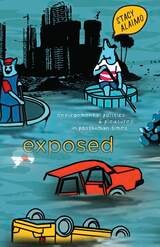
Exposed
Environmental Politics and Pleasures in Posthuman TimesStacy Alaimo
University of Minnesota Press, 2016
Opening with the statement “The anthropocene is no time to set things straight,” Stacy Alaimo puts forth potent arguments for a material feminist posthumanism in the chapters that follow.
From trans-species art and queer animals to naked protesting and scientific accounts of fishy humans, Exposed argues for feminist posthumanism immersed in strange agencies and scale-shifting ethics. Including such divergent topics as landscape art, ocean ecologies, and plastic activism, Alaimo explores our environmental predicaments to better understand feminist occupations of transcorporeal subjectivity.
She puts scientists, activists, artists, writers, and theorists in conversation, revealing that the state of the planet in the twenty-first century has radically transformed ethics, politics, and what it means to be human. Ultimately, Exposed calls for an environmental stance in which, rather than operating from an externalized perspective, we think, feel, and act as the very stuff of the world.
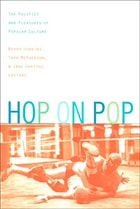
Hop on Pop
The Politics and Pleasures of Popular CultureHenry Jenkins, Tara McPherson and Jane Shattuc, eds.
Duke University Press, 2003
The essays cover a wide and colorful array of subjects including pro wrestling, the computer games Myst and Doom, soap operas, baseball card collecting, the Tour de France, karaoke, lesbian desire in the Wizard of Oz, Internet fandom for the series Babylon 5, and the stress-management industry. Broader themes examined include the origins of popular culture, the aesthetics and politics of performance, and the social and cultural processes by which objects and practices are deemed tasteful or tasteless. The commitment that binds the contributors is to an emergent perspective in cultural studies, one that engages with popular culture as the culture that "sticks to the skin," that becomes so much a part of us that it becomes increasingly difficult to examine it from a distance. By refusing to deny or rationalize their own often contradictory identifications with popular culture, the contributors ensure that the volume as a whole reflects the immediacy and vibrancy of its objects of study.
Hop on Pop will appeal to those engaged in the study of popular culture, American studies, cultural studies, cinema and visual studies, as well as to the general educated reader.
Contributors. John Bloom, Gerry Bloustein, Aniko Bodroghkozy, Diane Brooks, Peter Chvany, Elana Crane, Alexander Doty, Rob Drew, Stephen Duncombe, Nick Evans, Eric Freedman, Joy Fuqua, Tony Grajeda, Katherine Green, John Hartley, Heather Hendershot, Henry Jenkins, Eithne Johnson, Louis Kaplan, Maria Koundoura, Sharon Mazer, Anna McCarthy, Tara McPherson, Angela Ndalianis, Edward O’Neill, Catherine Palmer, Roberta Pearson, Elayne Rapping, Eric Schaefer, Jane Shattuc, Greg Smith, Ellen Strain, Matthew Tinkhom, William Uricchio, Amy Villarego, Robyn Warhol, Charles Weigl, Alan Wexelblat, Pamela Robertson Wojcik, Nabeel Zuberi

One for the Girls!
The Pleasures and Practices of Reading Women's PornClarissa Smith
Intellect Books, 2007
We usually think of women as the victims of pornography rather than its consumers. Whether appearing in films, peering provocatively from the pages of magazines, or posing on explicit Web-sites, women are considered the dehumanized objects of unseen lascivious male viewers. But in her controversial new book One for the Girls!, Clarissa Smith debunks this myth and challenges women to read, watch, and enjoy pornography on their own terms. Focusing on the British magazine For Women, Smith looks at its readers’ responses to male pinups and erotica and explores the intricacies of women’s unique reactions to pornography.
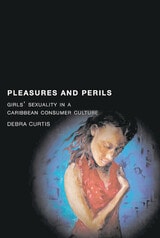
Pleasures and Perils
Girls' Sexuality in a Caribbean Consumer CultureCurtis, Debra
Rutgers University Press, 2009
Curtis shows that girls are often caught between conflicting discourses of Christian teachings about chastity, public health cautions about safe sex, and media enticements about consumer delights. Sexuality's contradictions are exposed: power and powerless¡ness, self-determination and cultural control, violence and pleasure. Pleasures and Perils illuminates the methodological and ethical issues anthropologists face when they conduct research on sex, especially among girls. The sexually explicit narratives conveyed in this book challenge not only the reader's own thoughts on sexuality but also the broader limits and possibilities of ethnography.
Pleasures in Socialism
Leisure and Luxury in the Eastern BlocDavid Crowley
Northwestern University Press, 2012
Much has been written about the workings of communist governments in the USSR and the Soviet bloc, yet there is still a great deal to explore regarding their relationship to the everyday lives of the citizens living under them. This third volume builds on the editors’ Style and Socialism and Socialist Spaces, showing how the rise of consumer culture took a unique form in these countries.
Essays from top scholars address topics ranging from fashion and game shows to smoking and camping. The authors of the essays in this collection investigate the ways in which pleasurable activities, like many other facets of daily life, were both a space in which these communist governments tried to insinuate themselves and thereby further expand the reach of their authority,
and also an opportunity for people to assert their individuality.
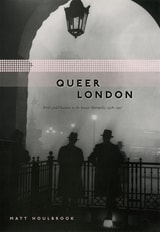
Queer London
Perils and Pleasures in the Sexual Metropolis, 1918-1957Matt Houlbrook
University of Chicago Press, 2005
Cyril's story is Matt Houlbrook's point of entry into the queer worlds of early twentieth-century London. Drawing on previously unknown sources, from police reports and newspaper exposés to personal letters, diaries, and the first queer guidebook ever written, Houlbrook here explores the relationship between queer sexualities and modern urban culture that we take for granted today. He revisits the diverse queer lives that took hold in London's parks and streets; its restaurants, pubs, and dancehalls; and its Turkish bathhouses and hotels—as well as attempts by municipal authorities to control and crack down on those worlds. He also describes how London shaped the culture and politics of queer life—and how London was in turn shaped by the lives of queer men. Ultimately, Houlbrook unveils the complex ways in which men made sense of their desires and who they were. In so doing, he mounts a sustained challenge to conventional understandings of the city as a place of sexual liberation and a unified queer culture.
A history remarkable in its complexity yet intimate in its portraiture, Queer London is a landmark work that redefines queer urban life in England and beyond.
Winner of History Today’s Book of the Year Award, 2006
Racist Love
Asian Abstraction and the Pleasures of FantasyLeslie Bow
Duke University Press, 2022
The Pleasures of Exile
George Lamming
University of Michigan Press, 1992
Through a series of interrelated essays, The Pleasures of Exile explores the cultural politics and relationships created in the crucible of colonization. Drawing on Shakespeare’s The Tempest and C. L. R. James’s The Black Jacobins, as well as his own fiction and poetry, Lamming deftly locates the reader in a specific intellectual and cultural domain while conjuring a rich and varied spectrum of physical, intellectual, psychological, and cultural responses to colonialism. “My subject,” he writes, “is the migration of the West Indian writer, as colonial and exile, from his native kingdom, once inhabited by Caliban, to the tempestuous island of Prospero’s and his language. This book is a report on one man’s way of seeing.”

The Pleasures of Exile
George Lamming
Pluto Press, 2005