Results by title
7 books match the query 'Pleistocene'
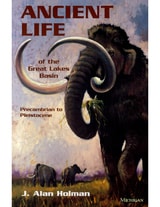
Ancient Life of the Great Lakes Basin
Precambrian to PleistoceneJ. Alan Holman
University of Michigan Press, 1995
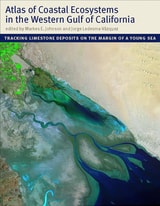
Atlas of Coastal Ecosystems in the Western Gulf of California
Tracking Limestone Deposits on the Margin of a Young SeaEdited by Markes E. Johnson and Jorge Ledesma-Vásquez
University of Arizona Press, 2009
With an emphasis on the intricate workings of the Gulf, a team of scientists led by Markes E. Johnson and Jorge Ledesma-Vázquez explores how marine invertebrates such as corals and bivalves, as well as certain algae, contribute to the operation of a vast “organic engine” that acts as a significant carbon trap. The Atlas reveals that the role of these organisms in the ecology of the Gulf was greatly underestimated in the past. The organisms that live in these environments (or provide the sediments for beaches and dunes) are mass producers of calcium carbonate. Until now, no book has considered the centrality of calcium carbonate production as it functions today across multiple ecosystems and how it has evolved over time.
An important work of scholarship that also evokes the region’s natural splendor, the Atlas will be of interest to a wide range of scientists, including geologists, paleontologists, marine biologists, ecologists, and conservation biologists.
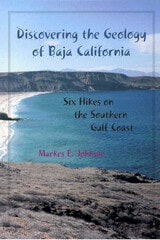
Discovering the Geology of Baja California
Six Hikes on the Southern Gulf CoastMarkes E. Johnson
University of Arizona Press, 2009
For those who wish to unlock the mysteries of Baja California, geologist Markes Johnson offers the key. He has taken a body of technical research on the geology and paleontology of the region and made it accessible in plain language for anyone who visits the peninsula, whether for study or recreation. His book teaches general concepts in coastal geomorphology and tectonics, as well as the basic geological and natural history of the Gulf of California, in a conversive, intellectually stimulating fashion.
Johnson's guide takes the form of six day-long hikes in the area of Punta Chivato on the east coast of the southern Baja California peninsula. Punta Chivato is presented as a microcosm of the entire region; it can enable visitors to better understand major themes in the natural history of the Gulf of California and its geological past. All of the hikes begin at the southeast corner of the Punta Chivato promontory and loop out in different directions. Each circuit is designed to minimize overlap with adjacent hikes and to maximize the visitor's exposure to instructive variations in the landscape. Each chapter features additional reflections on a geologist of another time and place who has advanced the field in a way that elucidates the material covered in that chapter. Through these asides, readers will learn the basic lessons about how geologists read the secrets hidden in landscapes.
Discovering the Geology of Baja California invites visitors to these shores to explore not only rocks and fossils but also the continuum of past ecosystems with the ecology of the present. It offers both an unparalleled guide to a remote area and a new understanding of life caught in an endless cycle of change.

Ice Age Peoples of North America
Robonson Bonnichsen
Oregon State University Press, 1999
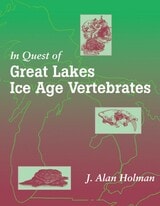
In Quest of Great Lakes Ice Age Vertebrates
J. Alan Holman
Michigan State University Press, 2001
The first book of its kind, In Quest of Great Lakes Ice Age Vertebrates details the Ice Age fishes, amphibians, reptiles, birds and mammals in the provinces and states surrounding the Great Lakes. Holman's work begins with definitions of concepts and terms for the general audience and a general discussion of how the last ice age, the Pleistocene Epoch, affected our physical and biological world. Methods employed and tools used in the collection of vertebrate fossils, as well as ethics and protocol in the maintenance of a useful collection follow, coupled with details of each animal's structure, habits, habitats, and ecological importance. The heart of the book is a species-by-species account of the Pleistocene vertebrates of the region, followed by an examination of the compelling problems of the Pleistocene relative to faunal interpretations, including overall ecological makeup of the region's fauna, vertebrate range adjustment that occurred in the region, Pleistocene extinction effects on the animals of the region, the aftermath of the Ice Age, and a look at what the future may hold for the region.

Owls, Caves and Fossils
Predation, Preservation and Accumulation of Small Mammal Bones in Caves, with an Analysis of the Pleistocene Cave Faunas From Westbury-Sub-Mendip, Somerset, U.K.Peter Andrews
University of Chicago Press, 1990
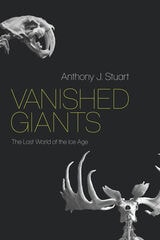
Vanished Giants
The Lost World of the Ice AgeAnthony J. Stuart
University of Chicago Press, 2021
Long after the extinction of dinosaurs, when humans were still in the Stone Age, woolly rhinos, mammoths, mastodons, sabertooth cats, giant ground sloths, and many other spectacular large animals that are no longer with us roamed the Earth. These animals are regarded as “Pleistocene megafauna,” named for the geological era in which they lived—also known as the Ice Age.
In Vanished Giants: The Lost World of the Ice Age, paleontologist Anthony J. Stuart explores the lives and environments of these animals, moving between six continents and several key islands. Stuart examines the animals themselves via what we’ve learned from fossil remains, and he describes the landscapes, climates, vegetation, ecological interactions, and other aspects of the animals’ existence. Illustrated throughout, Vanished Giants also offers a picture of the world as it was tens of thousands of years ago when these giants still existed. Unlike the case of the dinosaurs, there was no asteroid strike to blame for the end of their world. Instead, it appears that the giants of the Ice Age were driven to extinction by climate change, human activities—especially hunting—or both. Drawing on the latest evidence provided by radiocarbon dating, Stuart discusses these possibilities. The extinction of Ice Age megafauna can be seen as the beginning of the so-called Sixth Extinction, which is happening right now. This has important implications for understanding the likely fate of present-day animals in the face of contemporary climate change and vastly increasing human populations.