Results by title
23 books match the query 'Plots, themes, etc'
A Thousand Screenplays
The French Imagination in a Time of CrisisSabine Chalvon-Demersay
University of Chicago Press, 1999
The time of crisis presented by the amateur writers was not one of war, famine, or disease—it was the millennial dilemma of representation. In a world plagued by alienation, individualization, and a lack of mobility, how can members of a society combat their declining senses of self?
Although the contestants wrote about life in France, their concerns and struggles have a distinctly universal ring. A lucid, witty writer, Chalvon-Demersay offers a clear, if still developing, photograph of the contemporary imagination.
American Cinema 1890-1909
Themes and VariationsGaudreault, Andre
Rutgers University Press, 2009
The essays in American Cinema 1890-1909 explore and define how the making of motion pictures flowered into an industry that would finally become the central entertainment institution of the world. Beginning with all the early types of pictures that moved, this volume tells the story of the invention and consolidation of the various processes that gave rise to what we now call "cinema." By examining the battles over patents, production, exhibition, and the reception of film, readers learn how going to the movies became a social tradition in American society.
In the course of these two decades, cinema succeeded both in establishing itself among other entertainment and instructional media and in updating various forms of spectacle.
American Cinema of the 1910s
Themes and VariationsKeil, Charlie
Rutgers University Press, 2009
The essays in American Cinema of the 1910s explore the rapid developments of the decade that began with D. W. Griffith's unrivaled one-reelers. By mid-decade, multi-reel feature films were profoundly reshaping the industry and deluxe theaters were built to attract the broadest possible audience. Stars like Mary Pickford, Charlie Chaplin, and Douglas Fairbanks became vitally important and companies began writing high-profile contracts to secure them. With the outbreak of World War I, the political, economic, and industrial groundwork was laid for American cinema's global dominance. By the end of the decade, filmmaking had become a true industry, complete with vertical integration, efficient specialization and standardization of practices, and self-regulatory agencies.
American Cinema of the 1920s
Themes and VariationsFischer, Lucy
Rutgers University Press, 2009
In ten original essays, American Cinema of the 1920s examines the film industry's continued growth and prosperity while focusing on important themes of the era.
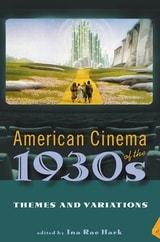
American Cinema of the 1930s
Themes and VariationsHark, Ina Rae
Rutgers University Press, 2007
The ten original essays in American Cinema of the 1930s focus on sixty diverse films of the decade, including Dracula, The Public Enemy, Trouble in Paradise, 42nd Street, King Kong, Imitation of Life, The Adventures of Robin Hood, Swing Time, Angels with Dirty Faces, Nothing Sacred, Jezebel, Mr. Smith Goes toWashington, and Stagecoach .
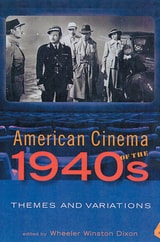
American Cinema of the 1940s
Themes and VariationsDixon, Wheeler Winston
Rutgers University Press, 2005
The 1940s was a watershed decade for American cinema and the nation. Shaking off the grim legacy of the Depression, Hollywood launched an unprecedented wave of production, generating some of its most memorable classics, including Citizen Kane, Rebecca, The Lady Eve, Sergeant York, and How Green Was My Valley. In 1942, Hollywood joined the national war effort with a vengeance, creating a series of patriotic and escapist films, such as Casablanca, Mrs. Miniver, The Road to Morocco, and Yankee Doodle Dandy.
With the end of the war, returning GIs faced a new America, in which the country had been transformed overnight. Film noir reflected a new public mood of pessimism and paranoia, in such classic films of betrayal and conflict as Kiss of Death, Force of Evil, Caught, and Apology for Murder, depicting a poisonous universe of femme fatales, crooked lawyers, and corrupt politicians.
With the threat of the atom bomb lurking in the background and the beginnings of the Hollywood Blacklist, the 1940s was a decade of crisis and change. Featuring essays by a group of respected film scholars and historians, American Cinema of the 1940s brings this dynamic and turbulent decade to life. Illustrated with many rare stills and filled with provocative insights, the volume will appeal to students, teachers, and to all those interested in cultural history and American film of the twentieth century.
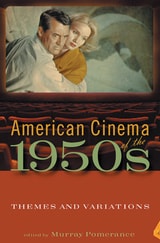
American Cinema of the 1950s
Themes and VariationsPomerance, Murray
Rutgers University Press, 2005
From cold war hysteria and rampant anticommunist witch hunts to the lure of suburbia, television, and the new consumerism, the 1950s was a decade of sensational commercial possibility coupled with dark nuclear fears and conformist politics. Amid this amalgamation of social, political, and cultural conditions, Hollywood was under siege: from the Justice Department, which pressed for big film companies to divest themselves of their theater holdings; from the middleclass, whose retreat to family entertainment inside the home drastically decreased the filmgoing audience; and from the House Un-American Activities Committee, which was attempting to purge the country of dissenting political views. In this difficult context, however, some of the most talented filmmakers of all time, including John Ford, Alfred Hitchcock, Vincente Minnelli, Nicholas Ray, and Billy Wilder produced some of their most remarkable work.
Bringing together original essays by ten respected scholars in the field, American Cinema of the 1950s explores the impact of the cultural environment of this decade on film, and the impact of film on the American cultural milieu. Contributors examine the signature films of the decade, including From Here to Eternity, Sunset Blvd., Singin' in the Rain, Shane, Rear Window, and Rebel Without a Cause, as well as lesser-known but equally compelling films, such as Dial 1119, Mystery Street, Suddenly, Summer Stock, The Last Hunt, and many others.
Provocative, engaging, and accessible to general readers as well as scholars, this volume provides a unique lens through which to view the links between film and the prevailing social and historical events of the decade.
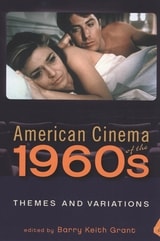
American Cinema of the 1960s
Themes and VariationsGrant, Barry Keith
Rutgers University Press, 2008
At the same time, American cinema underwent radical change as well. The studio system crumbled, and the Production Code was replaced by a new ratings system. Among the challenges faced by the film industry was the dawning shift in theatrical exhibition from urban centers to surburban multiplexes, an increase in runaway productions, the rise of independent producers, and competition from both television and foreign art films. Hollywood movies became more cynical, violent, and sexually explicit, reflecting the changing values of the time.
In ten original essays, American Cinema of the 1960s examines a range of films that characterized the decade, including Hollywood movies, documentaries, and independent and experimental films. Among the films discussed are Elmer Gantry, The Apartment, West Side Story, The Manchurian Candidate, To Kill a Mockingbird, Cape Fear, Bonnie and Clyde, 2001: A Space Odyssey, Midnight Cowboy, and Easy Rider.
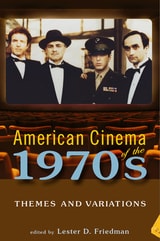
American Cinema of the 1970s
Themes and VariationsFriedman, Lester D
Rutgers University Press, 2007
Far from a placid era, the seventies was a decade of social upheavals. Events such as the killing of students at Kent State and Jackson State universities, the Watergate investigations, the legalization of abortion, and the end of the American involvement in Vietnam are only a few among the many landmark occurrences that challenged the foundations of American culture. The director-driven movies of this era reflect this turmoil, experimenting with narrative structures, offering a gallery of scruffy antiheroes, and revising traditional genre conventions.
Bringing together ten original essays, American Cinema of the 1970s examines the range of films that marked the decade, including Jaws, Rocky, Love Story, Shaft, Dirty Harry, The Godfather, Deliverance, The Exorcist, Shampoo, Taxi Driver, Star Wars, Saturday Night Fever, Kramer vs. Kramer,and Apocalypse Now .
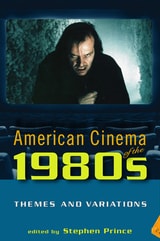
American Cinema of the 1980s
Themes and VariationsPrince, Stephen
Rutgers University Press, 2007
Bringing together original essays by ten respected scholars in the field, American Cinema of the 1980s examines the films that marked the decade, including Ordinary People, Body Heat, Blade Runner, Zelig, Platoon, Top Gun, Aliens, Blue Velvet, Robocop, Fatal Attraction, Die Hard, Batman, and sex, lies & videotape.
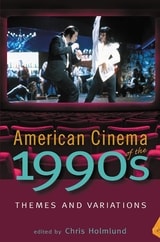
American Cinema of the 1990s
Themes and VariationsHolmlund, Chris
Rutgers University Press, 2008
The essays in American Cinema of the 1990s examine the big-budget blockbusters and critically acclaimed independent films that defined the decade. The 1990s' most popular genre, action, channeled anxieties about global threats such as AIDS and foreign terrorist attacks into escapist entertainment movies. Horror films and thrillers were on the rise, but family-friendly pictures and feel-good romances netted big audiences too. Meanwhile, independent films captured hearts, engaged minds, and invaded Hollywood: by decade's end every studio boasted its own "art film" affiliate.
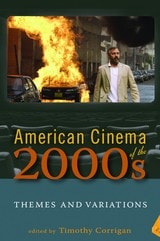
American Cinema of the 2000s
Themes and VariationsCorrigan, Timothy
Rutgers University Press, 2012
The decade from 2000 to 2009 is framed, at one end, by the traumatic catastrophe of the 9/11 attacks on the World Trade Center and, at the other, by the election of the first African American president of the United States. In between, the United States and the world witnessed the rapid expansion of new media and the Internet, such natural disasters as Hurricane Katrina, political uprisings around the world, and a massive meltdown of world economies.
Amid these crises and revolutions, American films responded in multiple ways, sometimes directly reflecting these turbulent times, and sometimes indirectly couching history in traditional genres and stories. In American Cinema of the 2000s, essays from ten top film scholars examine such popular series as the groundbreaking Matrix films and the gripping adventures of former CIA covert operative Jason Bourne; new, offbeat films like Juno; and the resurgence of documentaries like Michael Moore’s Fahrenheit 9/11. Each essay demonstrates the complex ways in which American culture and American cinema are bound together in subtle and challenging ways.
American Cinema of the 2010s
Themes and VariationsDennis Bingham
Rutgers University Press, 2022
The newest installment in the Screen Decades series, American Cinema in the 2010s takes a close look at the memorable movies, visionary filmmakers, and behind-the-scenes drama that made this decade such an exciting time to be a moviegoer. Each chapter offers an in-depth examination of a specific year, covering a wide variety of films, from blockbuster superhero movies like Black Panther and animated films like Frozen to smaller-budget biopics like I, Tonya and horror films like Hereditary. This volume introduces readers to a decade in which established auteurs like Quentin Tarantino were joined by an exceptionally diverse set of new talents, taking American cinema in new directions.
Cinema of Sincerity
Soviet Films and Culture During the ThawViktoria Paranyuk
University of Wisconsin Press, 2025
Using both theory and close readings of specific films produced in the Soviet Union during the Thaw, a period known for its relative political and cultural liberalization, Cinema of Sincerity treats sincerity as both a concept and an aesthetic strategy. Viktoria Paranyuk argues that Soviet cinema’s use of sincerity was a reworking of a trend in global cinema that sought to bridge the gap between reality and the filmed image. This period saw increased accessibility to world cinematic traditions, new voices in criticism, and, above all, the multigenerational effort in filmmaking that developed and thrived in centers outside Moscow. Paranyuk demonstrates how these changes allowed Soviet cinema to renew its visual language and use film as a space for collective self-examination.
Crash
Cinema and the Politics of Speed and StasisKaren Beckman
Duke University Press, 2010
Fictions Inc.
The Corporation in Postmodern Fiction, Film, and Popular CultureClare, Ralph
Rutgers University Press, 2014
Figures of Time
Affect and the Television of PreemptionToni Pape
Duke University Press, 2019

Hardboiled in Hollywood
Five Black Mask Writers and the MoviesUniversity of Wisconsin Press, 1991
Lost in Translation
Orientalism, Cinema, and the Enigmatic SignifierHomay King
Duke University Press, 2010
Quantum Screens
Nonlinear Universes in Film and TelevisionMartha P. Nochimson
University of Texas Press, 2026
An exploration of how nonlinear storytelling opens a post-Newtonian reality and changes both the hero’s journey and how we understand history in film and television.
Begin at the beginning and keep going until the end. That’s the cardinal rule of conventional storytelling. But ever since the modernists of the early twentieth century, popular narratives have occasionally eschewed this linear approach to temporality. It’s as though our stories, formerly unfolding in the stable, predictable universe of Newtonian physics, can now take place in multidimensional time where anything and anyone can be as incalculable as Schrödinger’s cat.
Quantum Screens is a journey through the past and present of nonlinear time in film and television. Moving beyond the early experiments of Luis Buñuel and the first nonlinear commercial films, such as 2001: A Space Odyssey, Martha Nochimson shows how risk-taking auteurs David Lynch, Damon Lindelof, and Terrence Malik have opened new horizons and a new concept of beauty in storytelling through their revelatory creations. Quantum Screens takes us deep into the audience’s experience of nonlinearity, exploring the emotional dislocations such storytelling creates, using television programs such as Twin Peaks, Westworld, and Watchmen, and films including The Tree of Life, BlacKkKlansman, and Arrival. Indeed, viewers are at the heart of a changing aesthetics of nonlinearity, Nochimson argues. Amid innovations like on-demand viewing, unlimited replay, and binge-watching, the experience of real time is more malleable than ever, and creators are responding by structuring their stories in compelling new ways.
Reinventing Hollywood
How 1940s Filmmakers Changed Movie StorytellingDavid Bordwell
University of Chicago Press, 2017
If this sounds like today’s cinema, that’s because it is. In Reinventing Hollywood, David Bordwell examines the full range and depth of trends that crystallized into traditions. He shows how the Christopher Nolans and Quentin Tarantinos of today owe an immense debt to the dynamic, occasionally delirious narrative experiments of the Forties. Through in-depth analyses of films both famous and virtually unknown, from Our Town and All About Eve to Swell Guy and The Guilt of Janet Ames, Bordwell assesses the era’s unique achievements and its legacy for future filmmakers. Reinventing Hollywood is a groundbreaking study of how Hollywood storytelling became a more complex art and essential reading for lovers of popular cinema.

Television Drama in Spain and Latin America
Genre and Format TranslationPaul Julian Smith
University of London Press, 2018
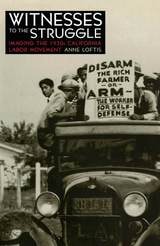
Witnesses to the Struggle
Imaging the 1930s California Labor MovementAnne Loftis
University of Nevada Press, 2014
In this groundbreaking interdisciplinary study, Loftis examines the artists who put a human face on the farmworkers’ plight in California during the Great Depression, focusing on writer John Steinbeck, photographer Dorothea Lange, sociologist and author Paul Taylor, and journalist Carey McWilliams. Loftis probes the interplay between journalism and art in the 1930s, when both academics and artists felt an urgent need to be relevant in the face of enormous misery. The power of their work grew out of their personal involvement in both the labor struggles and the hardships endured by workers and their families. Steinbeck, Lange, and the other artists and intellectuals in their circles created the public images of their times. Works such as The Grapes of Wrath or Lange’s Migrant Mother actually helped mold public opinion and form government policies. Even today these works remain icons in our shared perception of that era. Loftis helps us understand why this art still seems the truest representation of those desperate times, three-quarters of a century later.