Results by title

3 books match the query 'Plow'
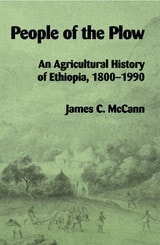
cover of People of the Plow: An Agricultural History of Ethiopia, 1800–1990

People of the Plow

An Agricultural History of Ethiopia, 1800–1990

James C. McCann

University of Wisconsin Press, 1995

For more than two thousand years, Ethiopia’s ox-plow agricultural system was the most efficient and innovative in Africa, but has been afflicted in the recent past by a series of crises: famine, declining productivity, and losses in biodiversity. James C. McCann analyzes the last two hundred years of agricultural history in Ethiopia to determine whether the ox-plow agricultural system has adapted to population growth, new crops, and the challenges of a modern political economy based in urban centers.
    This agricultural history is set in the context of the larger environmental and landscape history of Ethiopia, showing how farmers have integrated crops, tools, and labor with natural cycles of rainfall and soil fertility, as well as with the social vagaries of changing political systems. McCann traces characteristic features of Ethiopian farming, such as the single-tine scratch plow, which has retained a remarkably consistent design over two millennia, and a crop repertoire that is among the most genetically diverse in the world.
    People of the Plow provides detailed documentation of Ethiopian agricultural practices since the early nineteenth century by examining travel narratives, early agricultural surveys, photographs and engravings, modern farming systems research, and the testimony of farmers themselves, collected during McCann’s five years of fieldwork. He then traces the ways those practices have evolved in the twentieth century in response to population growth, urban markets, and the presence of new technologies.

[more]
cover of The Plow, the Hammer, and the Knout: An Economic History of Eighteenth-Century Russia

The Plow, the Hammer, and the Knout

An Economic History of Eighteenth-Century Russia

Arcadius Kahan

University of Chicago Press, 1985
In this extraordinary rich and subtle work, Arcadius Kahan analyzes a massive collection of documents which revise traditional interpretations of eighteenth-century Russian economic history. Kahan stresses economic rationality in the context of social constraints, offering the fullest and most convincing explanation yet of the economic foundations of Russia's power. He shows that what have been taken as major failings in the Russian economy were in fact resourceful and even ingenious methods of circumventing deeply rooted structural obstacles to change. Kahan also escapes two extremes that have bedeviled Russian historians since the nineteenth century: he avoids depicting the state as an autonomous structure that acted with impunity upon a passive society, and he refutes the notion of the state as a mere instrument for advancing selfish class interests.
[more]
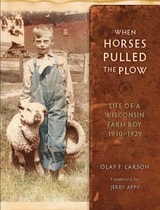
cover of When Horses Pulled the Plow: Life of a Wisconsin Farm Boy, 1910–1929

When Horses Pulled the Plow

Life of a Wisconsin Farm Boy, 1910–1929

Olaf F. Larson

University of Wisconsin Press, 2011

In 1910, when Olaf F. Larson was born to tenant livestock and tobacco farmers in Rock County, Wisconsin, the original barn still stood on the property. It was filled with artifacts of an earlier time—an ox yoke, a grain cradle, a scythe used to cut hay by hand. But Larson came of age in a brave new world of modern inventions—tractors, trucks, combines, airplanes—that would change farming and rural life forever.
            When Horses Pulled the Plow is Larson’s account of that rural life in the early twentieth century. He weaves invaluable historical details—including descriptions of farm equipment, crops, and livestock—with wry tales about his family, neighbors, and the one-room schoolhouse he attended, revealing the texture of everyday life in the rural Midwest almost a century ago. This memoir, written by Larson in his ninth decade, provides a wealth of details recalled from an earlier era and an illuminating read for anyone with their own memories of growing up on a farm.
 
[more]