Results by title
3 books match the query 'Plutarch'
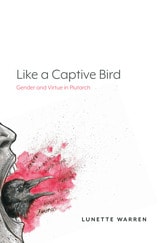
Like a Captive Bird
Gender and Virtue in PlutarchLunette Warren
Lever Press, 2023
The full extent of Plutarch’s moral educational program remains largely understudied, at least in those aspects pertaining to women and the gendered other. As a result, scholarship on his views on women have differed significantly in their conclusions, with some scholars suggesting that he is overwhelmingly positive towards women and marriage and perhaps even a “precursor to feminism,” and others arguing that he was rather negative on the issue. Like a Captive Bird: Gender and Virtue in Plutarch is an examination of these educational methods employed in Plutarch’s work to regulate the expression of gender identity in women and men. In six chapters, author Lunette Warren analyzes Plutarch’s ideas about women and gender in Moralia and Lives. The book examines the divergences between real and ideal, the aims and methods of moral philosophy and psychagogic practice as they relate to identity formation, and Plutarch’s theoretical philosophy and metaphysics.
Warren argues that gender is a flexible mode of being that expresses a relation between body and soul, and that gender and virtue are inextricably entwined. Plutarch’s expression of gender is also an expression of a moral condition that signifies relationships of power, Warren claims, especially power relationships between the husband and wife. Uncovered in these texts is evidence of a redistribution of power, which allows some women to dominate other women and, in rare cases, men too. Like a Captive Bird offers a unique and fresh interpretation of Plutarch’s metaphysics which centers gender as one of the organizational principles of nature. It is aimed at scholars of Plutarch, ancient philosophy, and ancient gender studies, especially those who are interested in feminist studies of antiquity.

The Afterlife of Plutarch
Edited by John North and Peter Mack
University of London Press, 2018
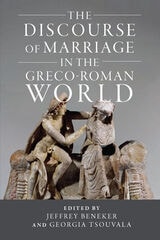
The Discourse of Marriage in the Greco-Roman World
Edited by Jeffrey Beneker and Georgia Tsouvala
University of Wisconsin Press, 2022
Through aesthetically informed and sensitive modes of analysis, these contributors examine a wealth of representations—including violence in weddings and spousal devotion after death. The Discourse of Marriage in the Greco-Roman World demonstrates the varying conceptions of an institution that was central to ancient social and political life—and remains prominent in the modern world. This volume will contribute to scholars' understanding of the era and fascinate anyone interested in historic depictions of marriage and the role and status of women in the late Hellenistic and early Imperial periods.