Results by title
20 books match the query 'Poetry & Wisdom Literature'
4QInstruction
Matthew J. Goff
SBL Press, 2013
Agur's Wisdom and the Coherence of Proverbs 30
Alexander T. Kirk
SBL Press, 2024
In this first in-depth study of Proverbs 30, the Words of Agur, Alexander T. Kirk examines a puzzling text attributed to an unknown figure that has long fascinated scholars. While this material has been read as everything from a devout confession to a cry of despair, few interpreters have found any real coherence in the chapter. In this detailed philological study engaging both genre and tone, Kirk demonstrates that the chapter is best read as a coherent collection that mocks pride and greed while it commends humility and contentment. Kirk draws out many subtle literary features that augment Agur’s message, including humor and animal imagery. Ultimately, Proverbs 30 deepens the presentation of wisdom in the book of Proverbs by orienting it toward a proper relationship with God.
Body as Landscape, Love as Intoxication
Conceptual Metaphors in the Song of SongsBrian P. Gault
SBL Press, 2019
Explore metaphors in the exquisite and enigmatic poetry of Song of Songs
One of the chief difficulties in interpreting the Song's lyrics is the unusual imagery used to depict the lovers' bodies. Why is the maiden's hair compared to a flock of goats (4:1), the man’s cheeks likened to garden beds of spice (5:13), and the eyes of both lovers described as doves (4:1; 5:12)? While scholars speculate on the significance of these images, a systematic inquiry into the Song's body metaphors is curiously absent. Based on insights from cognitive linguistics, this study incorporates biblical and comparative data to uncover the meaning of these metaphors surveying literature in the eastern Mediterranean (and beyond) that shares a similar form (poetry) and theme (love). Gault presents an interpretation of the Song's body imagery that sheds light on the perception of beauty in Israel and its relationship to surrounding cultures.
Features
- Exploration of the Song's use of universal themes and culturally specific variations
- Discussion of the Song's literary structure and unity

Conquered Conquerors
Love and War in the Song of SongsDanilo Verde
SBL Press, 2020
The first comprehensive study of the Song of Songs' use of military metaphors
Although love transcends historical and cultural boundaries, its conceptualizations, linguistic expressions, and literary representations vary from culture to culture. In this study, Danilo Verde examines love through the military imagery found throughout the Song’s eight chapters. Verde approaches the military metaphors, similes, and scenes of the Song using cognitive metaphor theory to explore the overlooked representation of love as war. Additionally, this book investigates how the Song conceptualizes both the male and the female characters, showing that the concepts of masculinity and femininity are tightly interconnected in the poem. Conquered Conquerors provides fresh insights into the Song's figurative language and the conceptualization of gender in biblical literature.
Crainte de Dieu, Sagesse et Loi
Aspects théologiques à partir de Si 10,19-11,6Katharina Lentz
SBL Press, 2020
Peu d'études spécifiques ont été consacrées à Ben Sira 10,19-11,6. Lentz examine le texte en hébreu, grec, syriaque et latin, en essayant d'identifier les différences majeures entre ces versions et leurs orientations fondamentales respectives. Dans cette péricope, elle révèle trois thèmes importants: la crainte de Dieu, la sagesse et la loi. En prenant comme point de départ le thème de la crainte de Dieu dans le Deutéronome, les Psaumes et les Proverbes, Job et Qoheleth en plus de Ben Sira, Lentz examine la relation de ce thème avec la sagesse et la loi. La relation étroite entre la crainte de Dieu, la sagesse et la loi devrait inciter les spécialistes à se demander si celles-ci ne représentent pas trois aspects de la même réalité.
Few specific studies have been devoted to Ben Sira 10:19-11:6. Lentz examines the text in Hebrew, Greek, Syriac, and Latin, trying to identify the major differences between these versions and their respective fundamental orientations. In this pericope she reveals three important themes: the fear of God, wisdom, and the law. Taking as a point of departure the theme of the fear of God in Deuteronomy, Psalms, and Proverbs, Job, and Qoheleth, in addition to Ben Sira, Lentz examines the relationship of this theme with wisdom and the law. The close relationship between the fear of God, wisdom, and the law should lead scholars to ask if these do not represent three aspects of the same reality.
Genre and Openness in Proverbs 10
1-22:16Suzanna R. Millar
SBL Press, 2020
A fruitful reading strategy that reveals expansive meaning in Proverbs
Interpreters often characterize Proverbs 10:1–22:16 as a dead-end of cold, disengaged dogma closed off from the realities of the world. In Genre and Openness in Proverbs 10:1–22:16, Suzanna R. Millar takes a different view, arguing that the didactic proverbs in these chapters are not dull and dry but are filled with poetic complexities open to many possible interpretations and uses. By incorporating paremiology, the technical study of the proverb genre, Millar sheds light on important debates such as character development, kingship, the connection between act and consequence, and the acquisition of wisdom.
Features
- A clarification of the genre of the sayings in light of modern genre theory
- A linguistic analysis of how openness is generated in biblical proverbs
- An examination of the didactic use of proverbs to train the hearer’s mind
Gerhard von Rad and the Study of Wisdom Literature
Timothy J. Sandoval
SBL Press, 2022
Gerhard von Rad's study of biblical wisdom literature in Weisheit in Israel (1970) is widely regarded as one of the most important studies in the field of ancient Israelite wisdom literature. More than fifty years later, contributors to Gerhard von Rad and the Study of Wisdom Literature reevaluate the significance and shortcomings of the late scholar's work and engage new methods and directions for wisdom studies today. Contributors include George J. Brooke, Ariel Feldman, Edward L. Greenstein, Arthur Jan Keefer, Jennifer L. Koosed, Will Kynes, Christl M. Maier, Timothy J. Sandoval, Bernd U. Schipper, Mark Sneed, Hermann Spieckermann, Anne W. Stewart, Raymond C. Van Leeuwen, Stuart Weeks, and Benjamin G. Wright III. This collection of essays is essential reading not only for specialists in wisdom studies but also for scholars and advanced students of the Hebrew Bible in general.
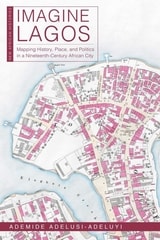
Imagine Lagos
Mapping History, Place, and Politics in a Nineteenth-Century African CityAdemide Adelusi-Adeluyi
Ohio University Press, 2024
Jerome, Epistle 106 (On the Psalms)
Michael Graves
SBL Press, 2022
A fresh interpretation of the nature, purpose, and date of Jerome’s Epistle 106
In this volume of the Writings from the Greco-Roman World series, Michael Graves offers the first accessible English translation and commentary on Jerome’s Epistle 106, an important work of patristic biblical interpretation. In his treatise Jerome discusses different textual and exegetical options according to various Greek and Latin copies of the Psalms with input from the Hebrew. Epistle 106 provides insightful commentary on the Gallican Psalter, Jerome’s translation of Origen’s hexaplaric edition. Jerome’s work offers a unique window into the complex textual state of the Psalter in the late fourth century and serves as an outstanding example of ancient philological scholarship on the Bible. Graves’s translation and commentary is an essential resource for scholars and students of patristic exegesis, biblical textual criticism, and late antique Christianity.
Job 1–21
Interpretation and CommentaryC. L. Seow
SBL Press, 2013
Pedagogy in Ancient Judaism and Early Christianity
Karina Martin Hogan
SBL Press, 2017
Engage fourteen essays from an international group of experts
There is little direct evidence for formal education in the Bible and in the texts of Second Temple Judaism and early Christianity. At the same time, pedagogy and character formation are important themes in many of these texts. This book explores the pedagogical purpose of wisdom literature, in which the concept of discipline (Hebrew musar) is closely tied to the acquisition of wisdom. It examines how and why the concept of musar came to be translated as paideia (education, enculturation) in the Greek translation of the Hebrew Bible (Septuagint), and how the concept of paideia was deployed by ancient Jewish authors writing in Greek. The different understandings of paideia in wisdom and apocalyptic writings of Second Temple Judaism are this book's primary focus. It also examines how early Christians adapted the concept of paideia, influenced by both the Septuagint and Greco-Roman understandings of this concept.
Features
Sensing World, Sensing Wisdom
The Cognitive Foundation of Biblical MetaphorsNicole L. Tilford
SBL Press, 2017
Examine new insights into the conceptual worldview of biblical wisdom communities
The Bible is full of metaphors. On the surface, these metaphors seem like simple literary flourishes that have been added to the text for artistic effect. This book, however, argues that biblical metaphors reflect more basic, prelinguistic cognitive structures. These conceptual metaphors developed out of common concrete experiences and only gradually developed into the complex metaphors that one finds within biblical texts. This book explores how common sensory activities like seeing, hearing, touching, eating, breathing, and walking developed into the abstract metaphors for wisdom that one finds in Proverbs, Job, and Qohelet. Because it traces the cognitive development of a set of related metaphors across several congruent texts, it provides a model by which scholars can trace the cognitive development of biblical metaphors more generally in the Hebrew Bible and other early Jewish and Christian texts.
Features:
- A synthesis of conceptual metaphor theory that provides a workable theory for examining biblical texts
- An analytical framework for studying sensory experience and sensory metaphors in biblical texts
- Diagrams
Texts and Contexts of the Book of Sirach / Texte und Kontexte des Sirachbuches
Gerhard Karner
SBL Press, 2017
Now available from SBL Press
Thirteen essays, some in German and others in English, tackle the complicated history of textual transmission of Sirach. This book presents the proceedings of an international conference held in 2014 in Eichstaett, Germany on the text of Ben Sira within its historical contexts.Contributors include James K. Aitken, Pierre-Maurice Bogaert, Franz Böhmisch, Anthony J. Forte SJ, Jan Joosten, Otto Kaiser, Siegfried Kreuzer, Jean-Sébastien Rey, Werner Urbanz, Knut Usener, Oda Wischmeyer, Markus Witte, Benjamin G. Wright, and Burkard M. Zapff.
Features:
- A sociocultural and theological history of Sirach
- Philological and textual problems of the Hebrew, Greek, Syriac, and Latin versions
- Translation strategies based on Greek, Syriac, and Latin text traditions and related hermeneutical questions
The Hermeneutics of Torah
Proverbs 2, Deuteronomy, and the Composition of Proverbs 1–9Bernd U. Schipper
SBL Press, 2021
This revised and expanded English edition of Bernd U. Schipper’s 2012 Hermeneutik der Tora incorporates the results of his continued research and writings on Proverbs. For nearly a century, many biblical scholars have argued that the main theological traditions, such as the divine law, God’s torah, do not appear in the book of Proverbs. In this volume, however, Schipper demonstrates that Proverbs interacts in a sophisticated way with the concept of the torah. A detailed analysis of Proverbs 2 and other passages from the first part of the book of Proverbs shows that Proverbs engages in a postexilic discourse around “wisdom and torah” concerning the abilities of humans to fulfill the will of YHWH exemplified in the divine torah.
The Writings and Later Wisdom Books
Christl M. Maier
SBL Press, 2014
An international collection of ecumenical, gender-sensitive interpretations
The latest volume in the Bible and Women series seeks to provide an ecumenical, gender-sensitive interpretation and reception history of the Writings and later wisdom traditions including Ben Sira and the Wisdom of Solomon. Articles trace the living conditions of women, examine the presentation of female figures in the Israelite wisdom tradition, discuss women and gender relations in single books, and explore narratives about great female protagonists, such as Ruth, Esther, and Susanna, who prove their wit and strength in situations of conflict.
Features:
- Essays by scholars from five European countries, Israel, and the United States
- An introduction and fourteen essays focused on women and gender relations
- Coverage of power relations and ideologies within the texts and in current interpretations.
Theology and Anthropology in the Book of Sirach
Bonifatia Gesche
SBL Press, 2020
New research on Sirach for scholars and students
The present volume of English and German essays includes the proceedings of an international conference held in Eichstaett, Germany, in 2017. Themes of creation, emotions, life, death, wisdom, knowledge, the individual and society, family, gender, mercy, justice, and freedom are but a few of the topics that contributors explore in this new collection. Essays explore the rich intertextual connections between Sirach and other biblical texts.
Features:
- Attention to theological distinctions presented in the Hebrew, Greek, Syriac, and Latin versions of the book of Sirach
- Examination of the reception of Sirach in the New Testament and the early modern era
- English abstracts for German-language essays and German abstracts for English-language essays
Transformations in Translation
Comparing Qumran Aramaic Job and Old Greek JobAlun Morton Thomas
SBL Press, 2026
Was There a Wisdom Tradition
New Prospects in Israelite Wisdom StudiesMark R. Sneed
SBL Press, 2015
Essential reading for scholars and students in wisdom studies
This collection of essays explores questions that challenge the traditional notion of a wisdom tradition among the Israelite literati, such as: Is the wisdom literature a genre or mode of literature or do we need new terminology? Who were the tradents? Is there such a thing as a “wisdom scribe” and what would that look like? Did the scribes who composed wisdom literature also have a hand in producing the other “traditions,” such as the priestly, prophetic, and apocalyptic, as well as other non-sapiential works? Were Israelite sages open to non-sapiential forms of knowledge in their conceptualization of wisdom?
Features:
- Recent genre theory in distinction from traditional form criticism
- Ancient Near Eastern comparative material
- A balanced collection that includes essays that seriously challenge and affirm the consensus view, as well as those that reconfigure it
Wisdom Discourse and Torah in Second Temple Judaism
Challenging the Integration ParadigmJiseong James Kwon
SBL Press, 2025
Did wisdom literature in the Hebrew Bible develop over time from secular to religious, as many early modern scholars believed? Did it develop in reaction to historical events or out of conflict with other traditions, including Torah? In Wisdom Discourse and Torah in Second Temple Judaism, JiSeong James Kwon moves beyond this impasse by applying a discourse-critical method to intertextual readings of Proverbs, Ben Sira, the Wisdom of Solomon, Baruch, the Dead Sea Scrolls, and Deuteronomy. Kwon’s study reveals that wisdom literature maintained an independent identity and theological orientation distinct from the legal traditions of the Torah. Rather than wisdom being subsumed into legal material, Jewish intellectual production remained pluralistic in form, genre, and theological orientation throughout the Persian and Hellenistic periods.
Wisdom from the Late Bronze Age
Yoram Cohen
SBL Press, 2013