Results by title
2 books match the query 'Poisons'
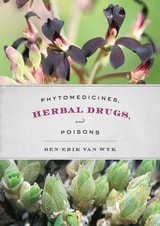
Phytomedicines, Herbal Drugs, and Poisons
Edited by Ben-Erik van Wyk and Michael Wink
University of Chicago Press, 2015
Plants have been used to treat disease throughout human history. On a clay slab that dates back approximately five thousand years, the Sumerians recorded medicinal recipes that made use of hundreds of plants, including poppy, henbane, and mandrake. During the Middle Ages, monks commonly grew and prescribed plants such as sage, anise, and mint in their monasteries. And as the market for herbal remedies and natural medicine grows, we continue to search the globe for plants and plant compounds to combat our various ailments.
In Phytomedicines, Herbal Drugs, and Poisons, Ben-Erik van Wyk offers a richly illustrated, scientific guide to medicinal and poisonous plants, including those used for their mind-altering effects. Van Wyk covers approximately 350 species—from Aloe vera and Ephedra sinica to Cannabis sativa and Coffea arabica—detailing their botanical, geographical, pharmacological, and toxicological data as well as the chemical structures of the active compounds in each. Readers learn, for example, that Acacia senegal, or gum acacia, is used primarily in Sudan and Ethiopia as a topical ointment to protect the skin and mucosa from bacterial and fungal infections, and that Aconitum napellus, more commonly known as aconite, is used in cough syrups but can be psychedelic when smoked or absorbed through the skin.
With 350 full-color photographs featuring the plants and some of their derivative products, Phytomedicines, Herbal Drugs, and Poisons will be an invaluable reference not only for those in the health care field but also for those growing their own medicinal herb gardens, as well as anyone who needs a quick answer to whether a plant is a panacea or a poison.
[more]
The Poison Trials
Wonder Drugs, Experiment, and the Battle for Authority in Renaissance ScienceAlisha Rankin
University of Chicago Press, 2021
In 1524, Pope Clement VII gave two condemned criminals to his physician to test a promising new antidote. After each convict ate a marzipan cake poisoned with deadly aconite, one of them received the antidote, and lived—the other died in agony. In sixteenth-century Europe, this and more than a dozen other accounts of poison trials were committed to writing. Alisha Rankin tells their little-known story.
At a time when poison was widely feared, the urgent need for effective cures provoked intense excitement about new drugs. As doctors created, performed, and evaluated poison trials, they devoted careful attention to method, wrote detailed experimental reports, and engaged with the problem of using human subjects for fatal tests. In reconstructing this history, Rankin reveals how the antidote trials generated extensive engagement with “experimental thinking” long before the great experimental boom of the seventeenth century and investigates how competition with lower-class healers spurred on this trend.
The Poison Trials sheds welcome and timely light on the intertwined nature of medical innovations, professional rivalries, and political power.
[more]