Results by title
27 books match the query 'Political questions and judicial power'
Administering Justice
Placing the Chief Justice in American State PoliticsRichard L. Vining Jr. and Teena Wilhelm
University of Michigan Press, 2023
Administering Justice examines the leadership role of chief justices in the American states, including how those duties require chief justices to be part of the broader state political environment. Vining and Wilhelm focus extensively on the power of chief justices as public spokespersons, legislative liaisons, and reform leaders. In contrast to much existing research on chief justices in the states, this study weighs their extrajudicial responsibilities rather than intracourt leadership. By assessing the content of State of the Judiciary remarks delivered over a period of sixty years, Vining and Wilhelm are able to analyze the reform agendas advanced by chief justices and determine what factors influence the likelihood of success. These analyses confirm that chief justices engage with state politics in meaningful ways and that reactions to their proposals are influenced by ideological congruence with other political elites and the scope of their requests. Administering Justice also examines the chief justice position as an institution, provides a collective profile of its occupants, and surveys growing diversity among court leaders.
Choosing State Supreme Court Justices
Merit Selection and the Consequences of Institutional ReformGreg Goelzhauser
Temple University Press, 2016
Since 1940, more than half of all states have switched at least in part from popular election or elite appointment to experiment with merit selection in choosing some or all of their state supreme court justices. Under merit selection, a commission—often comprising some combination of judges, attorneys, and the general public—is tasked with considering applications from candidates vying to fill a judicial vacancy. Ostensibly, the commission forwards the best candidates to the governor, who ultimately appoints them. Presently, numerous states are debating whether to adopt or abolish merit selection.
In his short, sharp book, Choosing State Supreme Court Justices, Greg Goelzhauser utilizes new data on more than 1,500 state supreme court justices seated from 1960 through 2014 to answer the question, Does merit selection produce better types of judges? He traces the rise of merit selection and explores whether certain judicial selection institutions favor candidates who have better qualifications, are more diverse, and have different types of professional experience.
Goelzhauser’s results ultimately contribute to the broader debate concerning comparative institutional performance with respect to state judicial selection.
Fear and the First Amendment
Controversial Cases of the Roberts CourtKevin A. Johnson and Craig R. Smith
University of Alabama Press, 2024
DISTINGUISHED PUBLICATION AWARD FOR THE NATIONAL COMMUNICATION ASSOCIATION'S COMMUNICATION AND LAW DIVISION
The First Amendment: protected by law, threatened by fear in the Roberts Supreme Court.
In Fear and the First Amendment: Controversial Cases of the Roberts Court, Kevin A. Johnson and Craig R. Smith offer a deeply considered examination of the ways fear figures in First Amendment questions. Bringing together literature on theories of fear in rhetorical and philosophical traditions, Johnson and Smith focus on the rulings from the Roberts Court, which form a pivotal era of dramatic precedents. Each chapter analyzes one or more First Amendment cases and a variety of related fears—whether evidentiary or not—that pertain to a given case.
These cases include Morse v. Frederick, which takes up the competing fears of school administrators’ loss of authority and students’ loss of free speech rights. The authors touch on corporate funding of elections in Citizens United v. Federal Elections Commission, from the fear of corporate influence on electoral politics to corporate fears of alienating their consumers by backing political candidates. They explore religious freedom and fears of homosexuality in Christian Legal Society v. Martinez. Similarly, in Snyder v. Phelps, the authors delve further into fears of God, death, emotional distress, failing as a parent, and losing one’s reputation. Next, they investigate parents’ anxieties about violence in video games in Brown v. Entertainment Merchants Association. Finally, Johnson and Smith examine the role of fear in indecent, obscene, and graphic communication in three cases: FCC v. Fox Television Stations, Ashcroft v. American Civil Liberties Union, and United States v. Stevens.
Together these cases reveal fear to be an endemic factor in the rhetoric of First Amendment cases. This fascinating and original work will appeal to current legal practitioners and students of law, rhetoric, philosophy, and the First Amendment.
Independence Corrupted
How America's Judges Make Their DecisionsCharles Benjamin Schudson
University of Wisconsin Press, 2018
As political attacks on judges increase, Schudson calls for reforms to protect judicial independence and for vigilance to ensure justice for all. Independence Corrupted is invaluable for students and scholars, lawyers and judges, and all citizens concerned about the future of America's courts.
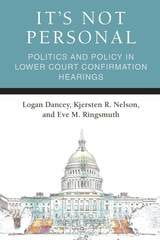
It's Not Personal
Politics and Policy in Lower Court Confirmation HearingsLogan Dancey, Kjersten R. Nelson, and Eve M. Ringsmuth
University of Michigan Press, 2020
In order to be confirmed to a lifetime appointment on the federal bench, all district and circuit court nominees must appear before the Senate Judiciary Committee for a confirmation hearing. Despite their relatively low profile, these lower court judges make up 99 percent of permanent federal judgeships and decide cases that relate to a wide variety of policy areas. To uncover why senators hold confirmation hearings for lower federal court nominees and the value of these proceedings more generally, the authors analyzed transcripts for all district and circuit court confirmation hearings between 1993 and 2012, the largest systematic analysis of lower court confirmation hearings to date. The book finds that the time-consuming practice of confirmation hearings for district and circuit court nominees provides an important venue for senators to advocate on behalf of their policy preferences and bolster their chances of being re-elected. The wide variation in lower court nominees’ experiences before the Judiciary Committee exists because senators pursue these goals in different ways, depending on the level of controversy surrounding a nominee. Ultimately, the findings inform a (re)assessment of the role hearings play in ensuring quality judges, providing advice and consent, and advancing the democratic values of transparency and accountability.
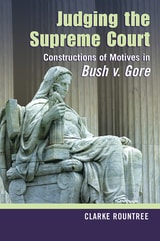
Judging the Supreme Court
Constructions of Motives in Bush v. GoreClarke Rountree
Michigan State University Press, 2007
This volume questions the motives of Supreme Court justices in a landmark case: The Supreme Court's intervention in the presidential election of 2000, and its subsequent decision in favor of George W. Bush, elicited immediate, heated, and widespread debate. Critics argued that the justices used weak legal arguments to overturn the Florida Supreme Court's ruling, ending a ballot recount and awarding the presidency to Bush. More fundamentally, they questioned the motives of conservative judges who arrived at a decision in favor of the candidate who reflected their political leanings.
Judging the Supreme Court examines this controversial case and the extensive attention it has received. To fully understand the case, Clarke Rountree argues, we must understand "judicial motives." These are comprised of more than each judge's personal opinions. Judges' motives, which Rountree calls "rhetorical performances," are as influential and publicly discussed as their decisions themselves. Before they are dissected in the media, judges' motives are carefully crafted by the decision- makers themselves, their critics, and their defenders. Justices consider not only the motives of the government, of military officials, of criminals, of public speakers, and of others, they also consider, construct, construe, spin, and deconstruct the motives of dissenters (whom they want to show are "misguided"), earlier courts, lower courts, and, especially, themselves.
Every judicial opinion is essentially a portrait of motives that says, "Here's what we did and here's why we did it." Well-constructed judicial motives reinforce the idea that we live under "the rule of law," while motives articulated less successfully raise questions about the legitimacy not just of individual judicial decisions but also of our political system and its foundation on an impartial judiciary. In Bush v. Gore, Rountree concludes, the judges of the majority opinion were not motivated by judicial concerns about law and justice, but rather by their own political and personal motives.
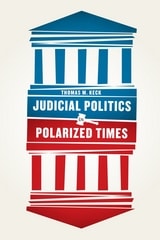
Judicial Politics in Polarized Times
Thomas M. Keck
University of Chicago Press, 2014
Drawing on a sweeping survey of litigation on abortion, affirmative action, gay rights, and gun rights across the Clinton, Bush, and Obama eras, Thomas M. Keck argues that, while each of these stories captures part of the significance of judicial politics in polarized times, each is also misleading. Despite judges’ claims, actual legal decisions are not the politically neutral products of disembodied legal texts. But neither are judges “tyrants in robes,” undermining democratic values by imposing their own preferences. Just as often, judges and the public seem to be pushing in the same direction. As for the argument that the courts are powerless institutions, Keck shows that their decisions have profound political effects. And, while advocates on both the left and right engage constantly in litigation to achieve their ends, neither side has consistently won. Ultimately, Keck argues, judges respond not simply as umpires, activists, or political actors, but in light of distinctive judicial values and practices.
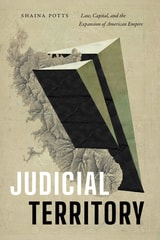
Judicial Territory
Law, Capital, and the Expansion of American EmpireShaina Potts
Duke University Press, 2024
LITIGATION AS LOBBYING
REPRODUCTIVE HAZARDS & INTEREST AGGREGATIONJULIANNA S. GONEN
The Ohio State University Press, 2003
Law at the End of Life
The Supreme Court and Assisted SuicideCarl E. Schneider, Editor
University of Michigan Press, 2000
Measuring Judicial Independence
The Political Economy of Judging in JapanJ. Mark Ramseyer and Eric B. Rasmusen
University of Chicago Press, 2003
The Japanese Constitution, like many others, requires that all judges be "independent in the exercise of their conscience and bound only by this Constitution and its laws." Consistent with this requirement, Japanese courts have long enjoyed a reputation for vigilant independence—an idea challenged only occasionally, and most often anecdotally. But in this book, J. Mark Ramseyer and Eric B. Rasmusen use the latest statistical techniques to examine whether that reputation always holds up to scrutiny—whether, and to what extent, the careers of lower court judges can be manipulated to political advantage.
On the basis of careful econometric analysis of career data for hundreds of judges, Ramseyer and Rasmusen find that Japanese politics do influence judicial careers, discreetly and indirectly: judges who decide politically charged cases in ways favored by the ruling party enjoy better careers after their decisions than might otherwise be expected, while dissenting judges are more likely to find their careers hampered by assignments to less desirable positions.
Ramseyer and Rasmusen's sophisticated yet accessible analysis has much to offer anyone interested in either judicial independence or the application of econometric techniques in the social sciences.
Mission Accomplished
On Founding Constitutional Adjudication in Central EuropeRadoslav Procházka
Central European University Press, 2002
Presidential Accountability in Wartime
President Bush, the Treatment of Detainees, and the Laws of WarStuart Streichler
University of Michigan Press, 2023
The American presidency has long tested the capacity of the system of checks and balances to constrain executive power, especially in times of war. While scholars have examined presidents starting military conflicts without congressional authorization or infringing on civil liberties in the name of national security, Stuart Streichler focuses on the conduct of hostilities. Using the treatment of war-on-terror detainees under President George W. Bush as a case study, he integrates international humanitarian law into a constitutional analysis of the repercussions of presidential war powers for human rights around the world.
Putting President Bush’s actions in a wider context, Presidential Accountability in Wartime begins with a historical survey of the laws of war, with particular emphasis on the 1949 Geneva Conventions and the Nuremberg Tribunal. Streichler then reconstructs the decision-making process that led to the president’s approval of interrogation methods that violated Geneva’s mandate to treat wartime captives humanely. While taking note of various accountability options—from within the executive branch to the International Criminal Court—the book illustrates the challenge in holding presidents personally responsible for violating the laws of war through an in-depth analysis of the actions taken by Congress, the Supreme Court, and the public in response. In doing so, this book not only raises questions about whether international humanitarian law can moderate wartime presidential behavior but also about the character of the presidency and the American constitutional system of government.
Pushback
The Political Fallout of Unpopular Supreme Court DecisionsDave Bridge
University of Missouri Press, 2024
Certain to appeal to anyone interested in American political science and history, Pushback closes with a detailed examination of the unequivocally countermajoritarian Supreme Court ruling of our lifetimes, Dobbs v. Jackson Women’s Health Organization, which overturned Roe. For the first time in 50 years, conditions are ripe for a party to win votes by campaigning against the will of the Court. Upcoming elections will tell if the Republicans overplayed their hand, or if Democrats will play theirs as skillfully as did the GOP after Roe.
Still a Hollow Hope
State Power and the Second AmendmentAnthony D. Cooling
University of Michigan Press, 2022
The U.S. Supreme Court increasingly matters in American political life when those across the political spectrum look at the Court for relief from policies they oppose and as another venue for advancing their own policy agendas. However, the evidence is mounting, to include this book in a big way, that courts are more of a sideshow to the culture war. While court decisions, especially Supreme Court decisions, do have importance, the decisions emanating from the Court reflect social, cultural, and political change that occurred long prior to their decision ever being made.
This book tests how much political and social change has been made primarily through Gerald Rosenberg’s framework from his seminal work, The Hollow Hope: Can Courts Bring About Social Change, but it also utilizes Daniel Elazar’s Political Culture Theory to explain state level variations in political and social change. The findings indicate that while courts are not powerless institutions, reformers will not have success unless supported by the public and the elected branches, and most specifically, that preexisting state culture is a determining factor in the amount of change courts make. In short, federalism still matters.
Supreme Court Appointments
Judge Bork and the Politicization of Senate ConfirmationsNorman Vieira and Leonard Gross
Southern Illinois University Press, 1998
Norman Vieira and Leonard Gross provide an in-depth analysis of the political and legal framework surrounding the confirmation process for Supreme Court nominees.
President Ronald Reagan’s nomination of Judge Robert Bork to the Supreme Court met with a fierce opposition that was apparent in his confirmation hearings, which were different in many ways from those of any previous nominee. Lasting longer than any other Supreme Court confirmation battle, the Senate hearings dragged on for eighty-seven hours over a twelve-day period. Bork personally testified for more than thirty hours, outlining his legal philosophy in greater detail than had ever before been required of a Supreme Court nominee. Nor had any previous Supreme Court nominee faced the number of witnesses who testified at the Bork hearings.
Deriving their material from hundreds of in-depth interviews with those who participated in the confirmation hearings, Vieira and Gross present a firsthand account of the behind-the-scenes pressure on senators to oppose Bork. Special-interest groups, they note, attempted to control the confirmation process, with both the media and public-opinion polls playing major roles in the defeat of the nomination. Both liberal and conservative groups used the Bork debate to raise money for political war chests.
This behind-the-scenes view of the politics and personalities involved in the Bork confirmation controversy provides a framework for future debates regarding the confirmation process. To help establish that framework, Vieira and Gross examine the similarities as well as the differences between the Bork confirmation battle and other confirmation proceedings for Supreme Court nominees. They also analyze the Supreme Court nominations made after the Bork hearings, including an extensive examination of the controversial Clarence Thomas nomination.
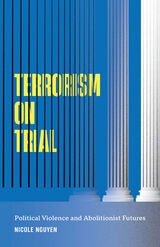
Terrorism on Trial
Political Violence and Abolitionist FuturesNicole Nguyen
University of Minnesota Press, 2023
A landmark sociological examination of terrorism prosecution in United States courts
Rather than functioning as a final arbiter of justice, U.S. domestic courts are increasingly seen as counterterrorism tools that can incapacitate terrorists, maintain national security operations domestically, and produce certain narratives of conflict. Terrorism on Trial examines the contemporary role that these courts play in the global war on terror and their use as a weapon of war: hunting, criminalizing, and punishing entire communities in the name of national security.
Nicole Nguyen advocates for a rethinking of popular understandings of political violence and its root causes, encouraging readers to consider anti-imperial abolitionist alternatives to the criminalization, prosecution, and incarceration of individuals marked as real or perceived terrorists. She exposes how dominant academic discourses, geographical imaginations, and social processes have shaped terrorism prosecutions, as well as how our fundamental misunderstanding of terrorism has led to punitive responses that do little to address the true sources of violence, such as military interventions, colonial occupations, and tyrannical regimes. Nguyen also explores how these criminal proceedings bear on the lives of defendants and families, seeking to understand how legal processes unevenly criminalize and disempower communities of color.
A retheorization of terrorism as political violence, Terrorism on Trial invites readers to carefully consider the role of power and politics in the making of armed resistance, addressing the root causes of political violence, with a goal of building toward a less violent and more liberatory world.
The Cloaking of Power
Montesquieu, Blackstone, and the Rise of Judicial ActivismPaul O. Carrese
University of Chicago Press, 2003
The Collision of Political and Legal Time
Foreign Affairs and the Supreme Court's Transformation of Executive AuthorityKimberley L. Fletcher
Temple University Press, 2018
How does the U.S. Supreme Court shape constitutional and political development? In The Collision of Political and Legal Time, Kimberley Fletcher answers this question by analyzing the key role the Court has played in interpreting presidential decision-making in the area of foreign affairs since 1936. She reconsiders the Curtiss-WrightCourt, which instituted a new constitutional order that established plenary powers independent of congressional delegation. Fletcher also reexamines Japanese internment and detainee cases, demonstrating the entrenchment of the new constitutional order and how presidential ascendency becomes institutionalized. Other cases, such as Youngstown, illustrate how the Court, during a time of war, will check Executive power and authority.
The Collision of Political and Legal Time examines these cases and controversies in foreign policymaking through the twentieth and into the twenty-first centuries to show that the Court is not passive or constrained; it does not merely follow politics or the majority coalition. Through her nuanced analysis, Fletcher makes a larger argument about the role of the U.S. Supreme Court as an agent of change, which ultimately transforms power, shapes politics, and redirects history.
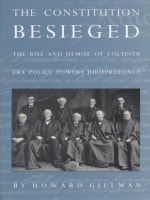
The Constitution Besieged
The Rise & Demise of Lochner Era Police Powers JurisprudenceHoward Gillman
Duke University Press, 1993
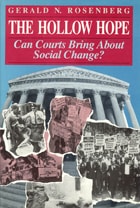
The Hollow Hope
Can Courts Bring About Social Change?Gerald N. Rosenberg
University of Chicago Press, 1991
Rosenberg presents, with remarkable skill, an overwhelming case that efforts to use the courts to generate significant reforms in civil rights, abortion, and women's rights were largely failures.
"The real strength of The Hollow Hope . . . is its resuscitation of American Politics—the old-fashioned representative kind—as a valid instrument of social change. Indeed, the flip side of Mr. Rosenberg's argument that courts don't do all that much is the refreshing view that politics in the best sense of the word—as deliberation and choice over economic and social changes, as well as over moral issues—is still the core of what makes America the great nation it is. . . . A book worth reading."—Gary L. McDowell, The Washington Times
The Hollow Hope
Can Courts Bring About Social Change?Gerald N. Rosenberg
University of Chicago Press, 2023
Since its first publication in 1991, The Hollow Hope has spurred debate and challenged assumptions on both the left and the right about the ability of courts to bring about durable political and social change. What Gerald N. Rosenberg argued then, and what he confirms today through new evidence in this edition, is that it is nearly impossible to generate significant reforms through litigation: American courts are ineffective and relatively weak, far from the uniquely powerful sources for change they are often portrayed to be.
This third edition includes new data and a substantially updated analysis of civil rights, abortion rights and access, women’s rights, and marriage equality. Addressing changes in the political and social environment, Rosenberg draws lessons from the re-segregation of public schools, victories in marriage equality, and new obstacles to abortion access. Through these and other cases, the third edition confirms the power of the book’s original explanatory framework and deepens our understanding of the limits of judicial action in support of social reform, as well as the conditions under which courts do produce change. Up-to-date, thorough, and thought-provoking, The Hollow Hope remains vital reading.
The Hollow Hope
Can Courts Bring About Social Change? Second EditionGerald N. Rosenberg
University of Chicago Press, 2008
Finding that the answer is still a resounding no, Rosenberg reaffirms his powerful contention that it’s nearly impossible to generate significant reforms through litigation. The reason? American courts are ineffective and relatively weak—far from the uniquely powerful sources for change they’re often portrayed as. Rosenberg supports this claim by documenting the direct and secondary effects of key court decisions—particularly Brown v. Board of Education and Roe v. Wade. He reveals, for example, that Congress, the White House, and a determined civil rights movement did far more than Brown to advance desegregation, while pro-choice activists invested too much in Roe at the expense of political mobilization. Further illuminating these cases, as well as the ongoing fight for same-sex marriage rights, Rosenberg also marshals impressive evidence to overturn the common assumption that even unsuccessful litigation can advance a cause by raising its profile.
Directly addressing its critics in a new conclusion, The Hollow Hope, Second Edition promises to reignite for a new generation the national debate it sparked seventeen years ago.
The Power of Judges
David Neuberger and Peter Riddell
Haus Publishing, 2018
In this lucid account of the judiciary, David Neuberger and Peter Riddell lead us through an array of topics both philosophical and logistical, including the relationships between morality and law and between Parliament and the judiciary. They explain the effects of cuts in legal aid and shed light on complex and controversial subjects like assisted dying and the complexities of combating mass terrorism while protecting personal liberty. Given that many of these issues span national borders, the book also compares the United Kingdom’s legal system with its counterparts in the United States and Germany.
Full of insights, The Power of Judges is an informative and accessible account of the United Kingdom’s judicial system, its contribution to running the country, and the challenges it faces—including the many threats to its effectiveness.
The Puzzle of Judicial Behavior
Lawrence Baum
University of Michigan Press, 1997
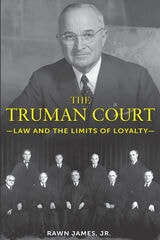
The Truman Court
Law and the Limits of LoyaltyRawn James
University of Missouri Press, 2021
The Truman Court: Law and the Limits of Loyalty argues that the years between FDR’s death in 1945 and Chief Justice Earl Warren’s confirmation in 1953—the dawn of the Cold War—were, contrary to widespread belief, important years in Supreme Court history. Never before or since has a president so quickly and completely changed the ideological and temperamental composition of the Court. With remarkable swiftness and certainty, Truman constructed a Court on which he relied to lend constitutional credence to his political agenda.
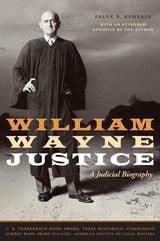
William Wayne Justice
A Judicial BiographyBy Frank Kemerer, with an extended epilogue by the author
University of Texas Press, 2008
In his forty years on the federal bench in Texas, William Wayne Justice has been a formidable force for change. His rulings have prompted significant institutional reforms in education, prisons, and racial relations, to name only a few areas of society in Texas and beyond that have been affected by Justice's work. For his labors, Judge Justice has received numerous awards, including the Outstanding Federal Trial Judge Award, the Thurgood Marshall Award from the Section on Individual Rights and Responsibilities of the American Bar Association, and the Morris Dees Justice Award from the University of Alabama School of Law.
This paperback reprint of William Wayne Justice chronicles his judicial career and the decisions he reached. It includes a new epilogue that describes Justice's move to Austin as a judge on senior status yet with a full caseload, tracks the long-running institutional reform cases to their conclusion, and examines the legacy of this remarkable and controversial jurist.