Results by title
28 books match the query 'Politics in literature'
Amoral Gower
Language, Sex, and PoliticsDiane Watt
University of Minnesota Press, 2003
An innovative reading of John Gower’s work and an exciting new approach to medieval vernacular texts
“Moral Gower” he was called by friend and sometime rival Geoffrey Chaucer, and his “Confessio Amantis” has been viewed as an uncomplicated analysis of the universe, combining erotic narratives with ethical guidance and political commentary. Diane Watt offers the first sustained reading of John Gower’s “Confessio” to argue that this early vernacular text offers no real solutions to the ethical problems it raises—and in fact actively encourages perverse readings.
Drawing on a combination of queer and feminist theory, ethical criticism, and psychoanalytic, historicist, and textual criticism, Watt focuses on the language, sex, and politics in Gower’s writing. How, she asks, is Gower’s “Confessio” related to contemporary controversies over vernacular translation and debates about language politics? How is Gower’s treatment of rhetoric and language gendered and sexualized, and what bearing does this have on the ethical and political structure of the text? What is the relationship between the erotic, ethical, and political sections of “Confessio Amantis”? Watt demonstrates that Gower engaged in the sort of critical thinking more commonly associated with Chaucer and William Langland at the same time that she contributes to modern debates about the ethics of criticism.
Anything but Novel
Pushing the Margins in Latin American Post-Utopian Historical NarrativeJennie Irene Daniels
University of Alabama Press, 2024
The first in-depth study in English to analyze post-utopian historical novels written during and in the wake of brutal Latin American dictatorships and authoritarian regimes
During neoliberal reforms in the 1980s and 1990s, murder, repression, and exile had reduced the number of intellectuals and Leftists, and many succumbed to or were coopted by market forces and ideologies. The opposition to the economic violence of neoliberal projects lacked a united front, and feasible alternatives to the contemporary order no longer seemed to exist. In this context, some Latin American literary intellectuals penned post-utopian historical novels as a means to reconstruct memory of significant moments in national history. Through the distortion and superimposition of distinct genres within the narratives, authors of post-utopian historical novels incorporated literary, cultural, and political traditions to expose contemporary challenges that were rooted in unresolved past conflicts.
In Anything but Novel, Jennie Irene Daniels closely examines four post-utopian novels—César Aira’s Ema, la cautiva, Rubem Fonseca’s O Selvagem da Ópera, José Miguel Varas’s El correo de Bagdad, and Santiago Páez’s Crónicas del Breve Reino—to make their contributions more accessible and to synthesize and highlight the literary and social interventions they make. Although the countries the novels focus on (Argentina, Brazil, Chile, and Ecuador) differ widely in politics, regime changes, historical precedents, geography, and demographics, the development of a shared subgenre among the literary elite suggests a common experience and interpretation of contemporary events across Latin America. These novels complement one another, extending shared themes and critiques.
Daniels argues the novels demonstrate that alternatives exist to neoliberalism even in times when it appears there are none. Another contribution of these novels is their repositioning of the Latin American literary intellectuals who have advocated for the marginalized in their societies. Their work has opened new avenues and developed previous lines of research in feminist, queer, and ethnic studies and for nonwhite, nonmale writers.
Apostate Englishman
Grey Owl the Writer and the MythsAlbert Braz
University of Manitoba Press, 2015
Broken Masculinities
Solitude, Alienation, and Frustration in Turkish Literature after 1970Cimen Günay-Erkol
Central European University Press, 2016
Broken Masculinities portrays the post-dictatorial novel of the 1970s in all its complexity, and introduces the reader to a 1968-era Turkey, a period which challenges Turkey’s now reinforced Islamic image by portraying the quest for sexual liberation and critical student uprisings. Günay-Erkol argues that the literature written after the 1971 coup in Turkey constitutes a coherent sub-genre and needs to be considered together. These novels share a common ground which is rich in images of men and women craving for power: general isolation, sexual-emotional frustration, and a traumatic sense of solitude and alienation.
This book is an original and significant contribution to two major fields of study: (1) gender and sexuality with respect to formation of subjectivity through literature, and (2) modern literature and history through the study of Turkish literature. The chief concern in this book is not only literature’s response to a particular period in Turkey, but also the role of literature in bearing witness to trauma and drastic political acts of violence—and coming to terms with them.B
Colonial Itineraries of Contemporary Mexico
Literary and Cultural InquiriesEdited by Oswaldo Estrada and Anna M. Nogar
University of Arizona Press, 2014
Through a transformative interdisciplinary lens, this book studies the ultra-contemporary chronicles of Carlos Monsiváis, the poetry of Carmen Boullosa and Luis Felipe Fabre, and the novels of Enrique Serna, Héctor de Mauleón, Mónica Lavín, and Pablo Soler Frost, among others. The book also pays close attention to a good sample of recent children’s literature that revisit Mexico’s colonia. It includes the transatlantic perspective of Spanish novelist Inma Chacón, and a detailed analysis of the strategies employed by Laura Esquivel in the creation of a best seller. Other chapters are devoted to the study of transnational film productions, a play by Flavio González Mello, and a set of novels set in the nineteenth-century colonia that problematize static notions of both personal and national identity within specific cultural palimpsests. Taken together, these incisive readings open broader conversations about Mexican coloniality as it continues well into the twenty-first century.

From Utopia to Apocalypse
Science Fiction and the Politics of CatastrophePeter Y. Paik
University of Minnesota Press, 2010
Herman Melville's Ship of State
will morrisey
St. Augustine's Press, 2020
“Does Melville also intend to be a founder in the ‘New World’?” Morrisey’s study is a compelling look at the early political moments of a new nation, but one that at the time perceived itself as already aging and maturing in the process of political voyage and adventure. Dangers lie ahead, Melville seems to warn, and in his disenchantment of the vigor of the Young America he once endorsed he tells the story of what really happens when democracy is idealized and the surrounding waters of chaos are thereby veiled; and yet also of what happens when one would seek to command the chaos only to transform into the unpredictably destructive prey he pursues, especially under the guise of moral outrage.
Melville, like Ishmael, urges a new vision of both God and nature, and challenges the notion of rule in all its expressions. Americans, the people of the New World, are invited to be unafraid, but also careful. In wandering as on the open waters one wonders, beyond civic boundaries and conventions, and in that wonder one may finally come face to face with what is good and grand––but in beholding the great white whale, can one resist the urge to conquest, now that he is likewise by the leviathan beholden? Is the rule of man and the coronation of a specific dialectic of power an untenable victory, given that “‘Nature is nobody’s ally’: it wounds or kills any person or nation that violates it, impartially”?
Morrisey writes with lucidity and weaves together elements of history, literature, politics and perhaps his own affinity for Ishmael’s passenger spirit to reveal just how broad and boundless of a narrative Melville’s Moby Dick truly is.
Howling for Justice
New Perspectives on Leslie Marmon Silko’s Almanac of the DeadEdited by Rebecca Tillett
University of Arizona Press, 2014
Howling for Justice actively engages with both the literary achievements and the politics of Silko’s text. It brings together essays by international scholars reacting to the novel while keeping in mind its larger concern with issues of social justice, both local and transnational. Aiming both to refocus critical attention and open the book to a broader array of readers, this collection offers fresh perspectives on its transnational vision, on its sociocultural, historical, and political ambitions, and on its continued relevance in the twenty-first century. The essays examine and explain some of the key points that readers and critics have identified as confusing, problematic, and divisive. Together, they offer new ways to approach and appreciate the text.
The book concludes with a new, never-before-published interview in which Silko reflects on the twenty years since the novel’s publication and relates the concerns of Almanac to her current work.
Omnicompetent Modernists
Poetry, Politics, and the Public SphereMatthew Hofer
University of Alabama Press, 2022
An innovative exploration of early twentieth-century avant-garde poetry’s relationship to the public sphere
“It is difficult / to get the news from poems / yet men die miserably every day / for lack / of what is found there,” as the poet William Carlos Williams memorably declared. In Omnicompetent Modernists: Poetry, Politics, and the Public Sphere, Matthew Hofer examines, through a multilayered literary critique of interwar modernist poetry, what it might mean to get the news, and more, from a poet.
Using pragmatist ideas about the public sphere as a tool, Hofer reveals how Langston Hughes, Ezra Pound, and Mina Loy sought to use literature to both express and enable thought. In Hughes, Pound, and Loy, Hofer attends to poets whose work vigorously imagined possible new relationships between language, thinking, and public society. Each poet had different goals and used different methods, but all found both inspiration and encouragement in popular political theory. Hughes advocated for a more just vision of color and class in the United States. Pound sought to condemn those whom he associated with public harm, linguistically, socially, economically, and politically. Loy championed the “psycho-democratic” representation of women, in both public and private life.
Although Hughes, Pound, and Loy are rarely considered together, what unites these three writers is how each reconceived the public realm, and revolutionized aesthetic form to articulate those visions. Hofer combines sharp intellectual historiography with rigorous literary criticism and the result is a study that reinvigorates both the poems and poets under consideration and speaks to the immense power of language in manipulating public opinion—with pertinent implications for the politics of the present.

Politics and Poetic Value
Edited by Robert von Hallberg
University of Chicago Press, 1987

Politics, Gender, and the Mexican Novel, 1968-1988
Beyond the PyramidBy Cynthia Steele
University of Texas Press, 1992
The student massacre at Tlatelolco in Mexico City on October 2, 1968, marked the beginning of an era of rapid social change in Mexico. In this illuminating study, Cynthia Steele explores how the writers of the next two decades responded to the massacre and to the social crisis it signaled in terms of political change and gender identity.

Politics, Writing, Mutilation
The Cases of Bataille, Blanchot, Roussel, Leiris, and PongeAllan Stoekl
University of Minnesota Press, 1985
Politics, Writing, Mutilation was first published in 1985. Minnesota Archive Editions uses digital technology to make long-unavailable books once again accessible, and are published unaltered from the original University of Minnesota Press editions.
Five twentieth-century French writers played, and continue to play, a pivotal role in the development of literary-philosophical thinking that has come to be known in the United States as post-structuralism. The work of Georges Bataille, Maurice Blanchot, Raymond Roussel, Michel Leiris, and Francis Ponge in the 1930s and 1940s amounts to a prehistory of today's theoretical debates; the writings of Foucault and Derrida in particular would have been unthinkable outside the context provided by these writers. In Politics, Writing, Mutilation,Allan Stoekl emphasizes their role as precursors, but he also makes clear that they created a distinctive body of work that must be read and evaluated on its own terms.
Stoekl's critical readings of their work—selected novels, poems, and autobiographical fragments—reveal them to be battlegrounds not only of disruptive language practices, but of conflicting political drives as well. These irreconcilable tendencies can be defined as progressive political revolution, on the one hand with its emphasis on utility, conservation, and labor; and, on the other hand, a notion of dangerous and sinister production that stresses orgiastic sexuality and delirious expenditure. Caught between these forces is the intellectual of Bataille's time (and indeed of ours), locked in impotence, self-betrayal, and automutilation.
Stoekl develops his critique through dual readings of each writer's central work—the first reading deconstructive, the second a search for the political meaning excluded by a deconstructive approach. Repeating this process on a larger scale, he shows how Derrida and Foucault are indebted to their precursors even while they have betrayed them by stripping their work of political conflict and historical specificity. And he acknowledges that one of the most painful questions faced in prewar and Occupied France—that of the unthinkable guilt and duplicity of the intellectual—may not be as remote from contemporary theoretical concerns as some would have us believe.
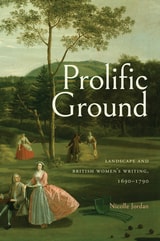
Prolific Ground
Landscape and British Women's Writing, 1690–1790Nicolle Jordan
Bucknell University Press, 2025
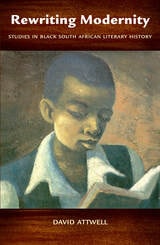
Rewriting Modernity
Studies in Black South African Literary HistoryDavid Attwell
Ohio University Press, 2006
Rewriting Modernity: Studies in Black South African Literary History connects the black literary archive in South Africa—from the nineteenth-century writing of Tiyo Soga to Zakes Mda in the twenty-first century—to international postcolonial studies via the theory of transculturation, a position adapted from the Cuban anthropologist Fernando Ortiz.
David Attwell provides a welcome complication of the linear black literary history—literature as a reflection of the process of political emancipation—that is so often presented. He focuses on cultural transactions in a series of key moments and argues that black writers in South Africa have used print culture to map themselves onto modernity as contemporary subjects, to negotiate, counteract, reinvent, and recast their positioning within colonialism, apartheid, and the context of democracy.
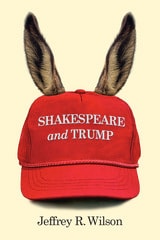
Shakespeare and Trump
Jeffrey R. Wilson
Temple University Press, 2020
Should we draw an analogy between Shakespeare’s tyrants—Richard III, Julius Caesar, Macbeth, and King Lear—and Donald Trump? In Shakespeare and Trump, Jeffrey Wilson applies literary criticism to real life, examining plot, character, villainy, soliloquy, tragedy, myth, and metaphor to identify the formal features of the Trump phenomenon, and its hidden causes, structure, and meanings.
Wilsonapproaches his comparison prismatically. He first considers two high-concept (read: far-fetched) Shakespeare adaptations penned by Trump’s former chief political strategist Steve Bannon. He looks at University of Pennsylvania students protesting Trump by taking down a monument to Shakespeare. He reads Trump’s first 100 days in office against Netflix’s House of Cards. Wilson also addresses the summer 2017 Shakespeare in the Park production of Julius Caesar wherein an assassination of a Trump-ian leader caused corporations to withdraw sponsorship.
These stories reveal a surprising—and bizarre—relationship between the provincial English playwright and the billionaire President of the United States, ostensibly a medieval king living in a modern world. The comparison reveals a politics that blends villainy and comedy en route to tragedy.
Shakespeare’s Politic Comedy
Will Morrisey
St. Augustine's Press, 2022
INTRODUCTORY NOTE: The Politic Character of Shakespeare’s Comedy
PART ONE: THREE REGIMES: OLIGARCHY, ARISTOCRACY, MONARCHY
Chapter One: Shakespearean Comedy: Two Points on the Compass
Chapter Two: Gentlemen and Gentlemanliness
Chapter Three: Royal Dreaming
PART TWO: THE RULE OF LAW
Chapter Four: Comic Errors, Legal Slapstick
Chapter Five: What Will You?
PART THREE: THE COMEDY OF MORALS
Chapter Six: Taming Our Shrewishness
Chapter Seven: What Does Shakespeare Mean When He Says, “As You Like It”?
PART FOUR: THE COMEDY OF POLITICS
Chapter Eight: Is All Well That Ends Well?
Chapter Nine: The Geopolitics of Love
Chapter Ten: The Wisest Beholder
SHAKESPEARE’S POLITIC MERRIMENT
Space, Drama, and Empire
Mapping the Past in Lope de Vega's ComediaJavier Lorenzo
Bucknell University Press, 2023

Text/Politics in Island Southeast Asia
Essays in InterpretationD.M. Roskies
Ohio University Press, 1993
The Avant-Garde and the Popular in Modern China
Tian Han and the Intersection of Performance and PoliticsLiang Luo
University of Michigan Press, 2014
The Future of Illusion
Political Theology and Early Modern TextsVictoria Kahn
University of Chicago Press, 2013
Kahn draws on theorists such as Carl Schmitt, Leo Strauss, Walter Benjamin, and Hannah Arendt and their readings of Shakespeare, Hobbes, Machiavelli, and Spinoza to illustrate that the dialogue between these modern and early modern figures can help us rethink the contemporary problem of political theology. Twentieth-century critics, she shows, saw the early modern period as a break from the older form of political theology that entailed the theological legitimization of the state. Rather, the period signaled a new emphasis on a secular notion of human agency and a new preoccupation with the ways art and fiction intersected the terrain of religion.
The Industrial Reformation of English Fiction
Social Discourse and Narrative Form, 1832-1867Catherine Gallagher
University of Chicago Press, 1985
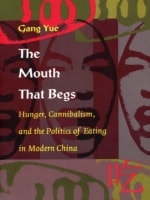
The Mouth That Begs
Hunger, Cannibalism, and the Politics of Eating in Modern ChinaGang Yue
Duke University Press, 1999
Yue’s discussion begins with a brief look at ancient Chinese alimentary writing and then moves on to its main concern: the exploration and textual analysis of themes of eating in modern Chinese literature from the May Fourth period through the post-Tiananmen era. The broad historical scope of this volume illustrates how widely applicable eating-related metaphors can be. For instance, Yue shows how cannibalism symbolizes old China under European colonization in the writing of Lu Xun. In Mo Yan’s 1992 novel Liquorland, however, cannibalism becomes the symbol of overindulgent consumerism. Yue considers other writers as well, such as Shen Congwen, Wang Ruowang, Lu Wenfu, Zhang Zianliang, Ah Cheng, Zheng Yi, and Liu Zhenyun. A special section devoted to women writers includes a chapter on Xiao Hong, Wang Anyi, and Li Ang, and another on the Chinese-American women writers Jade Snow Wong, Maxine Hong Kingston, and Amy Tan. Throughout, the author compares and contrasts the work of these writers with similarly themed Western literature, weaving a personal and political semiotics of eating.
The Mouth That Begs will interest sinologists, literary critics, anthropologists, cultural studies scholars, and everyone curious about the semiotics of food.
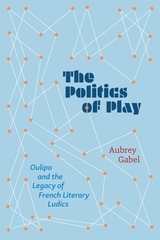
The Politics of Play
Oulipo and the Legacy of French Literary LudicsAubrey Gabel
Northwestern University Press, 2026
Showing the political importance of play in postwar French literature
In postwar France, authors approached writing ludically, placing rules and conditions on language and on the context of composition itself. They eliminated “e’s” and feminized texts; they traveled according to strict rules and invented outright silly public personas. The Politics of Play: Oulipo and the Legacy of French Literary Ludics is a comprehensive examination of how and why French authors turned to these ludic methods to grapple with their political moment.
These writers were responding to a range of historical upheavals, from the rise and fall of French feminist and Third-Worldist groups to the aftermath of international socialism both at home, in the former Parisian Belt and in France more broadly, and abroad, in post-Yugoslavia Balkan states and elsewhere. Juxtaposing an array of case studies and drawing on cross-disciplinary methodologies, Aubrey Gabel reads three generations of the formalist literary group Oulipo, including Raymond Queneau, Georges Perec, and Jacques Jouet, alongside writers not traditionally deemed ludic—or sometimes not even conventionally known as novelists—such as the lesbian activist-writer Monique Wittig and the editor François Maspero. Gabel argues that literary ludics serve as both an authorial strategy and a political form: playful methods allow writers not only to represent history in code but also to intervene creatively—as political actors—in the fraught social fields of midcentury France and beyond.
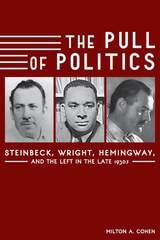
The Pull of Politics
Steinbeck, Wright, Hemingway, and the Left in the Late 1930sMilton A. Cohen
University of Missouri Press, 2018
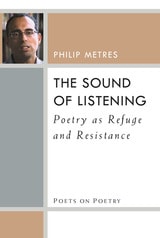
The Sound of Listening
Poetry as Refuge and ResistancePhilip Metres
University of Michigan Press, 2018
Philip Metres stakes a claim for the cultural work that poems can perform—from providing refuge to embodying resistance, from recovering silenced voices to building a more just world, in communities of solitude and solidarity. Gathering a decade of his writing on poetry, he widens our sense of poetry as a way of being in the world, proposing that poems can offer a permeability to marginalized voices and a shelter from the imperial noise and despair that can silence us. The Sound of Listening ranges between expansive surveys of the poetry of 9/11, Arab American poetry, documentary poetry, landscape poetry, installation poetry, and peace poetry; personal explorations of poets such as Adrienne Rich, Khalil Gibran, Lev Rubinstein, and Arseny Tarkovsky; and intimate dialogues with Randa Jarrar, Fady Joudah, and Micah Cavaleri, that illuminate Metres’s practice of listening in his 2015 work, Sand Opera.
The Way to Hell
Machiavelli for Catastrophic TimesNathan Crick
University of Alabama Press, 2024
An incisive and erudite survey of Machiavelli, the catastrophes of his times and ours, and his counsel for responding to an era of constant crises.
Catastrophe looms. Political, environmental, epidemic, and military crises arrive with increasing frequency. In The Way to Hell, Nathan Crick argues that our perilous times call for the strongest medicine in the Western canon: Machiavelli. Crick reminds contemporary readers about the Florentine master’s advice—that one must learn the road to Hell precisely to avoid taking it.
Like a knowledgeable friend, Crick offers contemporary readers a guide to Machiavelli’s world, work, and warnings. He takes in the sweep of Western history, comparing Machiavelli’s work with ancient sources such as Cicero and Thucydides. And as Machiavelli has never stopped provoking comment, Crick treats readers to a feast of responses to Machiavelli’s work—caustic, learned, and humorous—in the five centuries since he lived.
Including both Machiavelli’s best-known works, The Prince and Discourses on Livy, as well as his personal correspondence and comic plays, Crick asks anew the questions that bedeviled Machiavelli’s beloved Florentine republic: When is force necessary? When are lies justified? Is cruelty defensible? When does social protest slip into violent revolution? What is the correct response to catastrophe?
Like Machiavelli himself, The Way to Hell is witty, stimulating, and challenging. In a world seemingly on the road to Hell, Machiavelli offers an alternative route. His bracing vision exhorts readers to see the dangers in their path and to take action with vigor and determination. Far from a vision of cynicism, Machiavelli offers a beacon of hope for a world that seems on the brink.
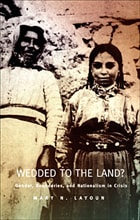
Wedded to the Land?
Gender, Boundaries, and Nationalism in CrisisMary N. Layoun
Duke University Press, 2001
Drawing on readings of literature and of official documents and decrees, songs, poetry, cinema, public monuments, journalism, and conversations with exiles, refugees, and public officials, Layoun uses each historical incident as a means of highlighting a recurring trope within constructs of nationalism. The displacement of the Greek refugees in the 1920s calls into question the very idea of home, as well as the desire for ethnic homogeneity within nations. She reads the Cypriot coup and invasion as an illustration of the gendering of nation and how the notion of the inviolable woman came to represent sovereignity. In her third example she shows how the Palestinian and PLO expulsion from Beirut highlights the ambiguity of the borders upon which many manifestations of nationalism putatively depend. These chapters are preceded and introduced by a discussion of “culturing the nation” and closed by a consideration of citizenship and silence in which Layoun discusses rights ostensibly possessed by all members of a political community.
This book will be of interest to scholars engaged in cultural and critical theory, Middle Eastern and Mediterranean history, literary studies, political science, postcolonial studies, and gender studies.
Writing
The Political TestClaude Lefort
Duke University Press, 2000
In Writing: The Political Test, France’s leading political philosopher, Claude Lefort, illuminates the process by which writers negotiate difficult path to free themselves from the ideological and contextual traps that would doom their attempts to articulate a new vision. Lefort examines writers whose works provide special insights into this problem of risk, both literary artists and political philosophers. Among them are Salman Rushdie, Sade, Tocqueville,m Machiavelli, Leo Strauss, Orwell, Kant, Robespierre, Guizot, and Pierre Clastres. In Tocqueville, for example, Lefort finds that the author’s improvisatory and open-ended expression represents the character of the democratic experience. Orwell’s work on totalitarianism shows up the totalitarian subject’s complicity in this political regime. And Rushdie is remarkable for his solid attack on relativism. With the character and fate of the political forms of modernity, democracy, and totalitarianism a central theme, Lefort concludes with some reflections on the collapse of the Soviet Union.
This intriguing and accessible exploration of literature’s political aspects and political philosophy’s literary ones will be welcomed by those who have been stymied by current efforts to bridge these two fields. Taken together, the essays in this volume also stand as an intellectual autobiography of Lefort, making it an excellent introduction to his work for less experience students of political theory or philosophy.