Results by title
3 books match the query 'Popular Cinema'
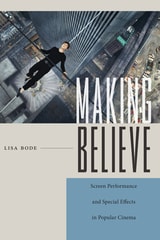
Making Believe
Screen Performance and Special Effects in Popular CinemaBode, Lisa
Rutgers University Press, 2017
Making Believe incorporates North American film reviews and editorials, actor and crew interviews, trade and fan magazine commentary, actor training manuals, and film production publicity materials to discuss the shifts in screen acting practice and philosophy around transfiguring makeup, doubles, motion capture, and acting to absent places or characters. Along the way it considers how performers and visual and special effects crew work together, and struggle with the industry, critics, and each other to define the aesthetic value of their work, in an industrial system of technological reproduction. Bode opens our eyes to the performing illusions we love and the tensions we experience in wanting to believe in spite of our knowledge that it is all make believe in the end.
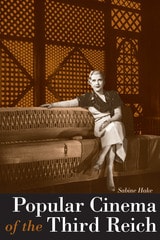
Popular Cinema of the Third Reich
By Sabine Hake
University of Texas Press, 2002
Too often dismissed as escapist entertainment or vilified as mass manipulation, popular cinema in the Third Reich was in fact sustained by well-established generic conventions, cultural traditions, aesthetic sensibilities, social practices, and a highly developed star system—not unlike its Hollywood counterpart in the 1930s. This pathfinding study contributes to the ongoing reassessment of Third Reich cinema by examining it as a social, cultural, economic, and political practice that often conflicted with, contradicted, and compromised the intentions of the Propaganda Ministry. Nevertheless, by providing the illusion of a public sphere presumably free of politics, popular cinema helped to sustain the Nazi regime, especially during the war years.
Rather than examining Third Reich cinema through overdetermined categories such as propaganda, ideology, or fascist aesthetics, Sabine Hake concentrates on the constituent elements shared by most popular cinemas: famous stars, directors, and studios; movie audiences and exhibition practices; popular genres and new trends in set design; the reception of foreign films; the role of film criticism; and the representation of women. She pays special attention to the forced coordination of the industry in 1933, the changing demands on cinema during the war years, and the various ways of coming to terms with these filmic legacies after the war. Throughout, Hake's findings underscore the continuities among Weimar, Third Reich, and post-1945 West German cinema. They also emphasize the codevelopment of German and other national cinemas, especially the dominant Hollywood model.
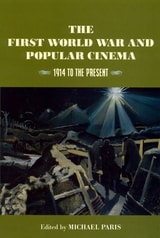
The First World War and Popular Cinema
1914 to the PresentParis, Michael
Rutgers University Press, 2000
The Great War played an instrumental role in the development of cinema, so necessary was it to the mobilization efforts of the combatant nations. In turn, after the war, as memory began to fade, cinema continued to shape the war's legacy and eventually to determine the ways in which all warfare is imagined.
The First World War and Popular Cinema provides fresh insight into the role of film as an historical and cultural tool. Through a comparative approach, essays by contributors from Europe, Australia, Canada, and the United States enrich our understanding of cinematic depictions of the Great War in particular and combat in general. New historical research on both the uses of propaganda and the development of national cinemas make this collection one of the first to show the ways in which film history can contribute to our study of national histories. The contributors to the volume monitor popular perceptions of the war, the reshaping of the war's legacy, and the evolution of cinematic clichés that are perpetuated in filmmaking through the century. Some of the films they discuss are All Quiet on the Western Front, Gallipoli, The Grand Illusion, The Big Parade, Battle of the Somme, J'Accuse, Regeneration, and many more. The First World War and Popular Cinema is a vital addition to film studies and history, two fields only recently united in a productive way.