Results by title
5 books match the query 'Popular Media'
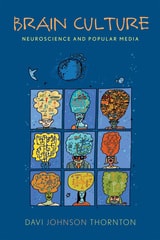
Brain Culture
Neuroscience and Popular MediaDavi Johnson Thornton
Rutgers University Press, 2011
Brain Culture investigates the American obsession with the health of the brain. The brain has become more than a bodily organ, acquiring a near-mystical status. The message that this organ is the key to everything is everywhere--in self-help books that tell us to work on our brains to achieve happiness and enlightenment, in drug advertisements that promise a few tweaks to our brain chemistry will cure us of our discontents, and in politicians' speeches that tell us that our brains are national resources essential to our economic prosperity.
Davi Johnson Thornton looks at these familiar messages, tracing the ways that brain science and colorful brain images produced by novel scientific technologies are taken up and distributed in popular media. She tracks the impact of the message that, "you are your brain" across multiple contemporary contexts, analyzing its influence on child development, family life, education, and public policy. Brain Culture shows that our fixation on the brain is not simply a reaction to scientific progress, but a cultural phenomenon deeply tied to social and political values of individualism and limitless achievement.
Multiple Modernities
Cinemas & Popular Media In Transcultural East AsiaJenny Lau
Temple University Press, 2002
Out of Sync
Ventriloquism in Popular Media from Vinyl to TikTokSarah Rebecca Kessler
Duke University Press, 2026
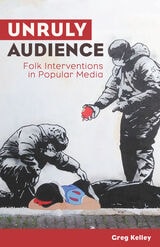
Unruly Audience
Folk Interventions in Popular MediaGreg Kelley
Utah State University Press, 2020
Greg Kelley examines how “folk interventions” challenge institutional media with active—often public—social engagement. Drawing on a diverse range of examples—popular music parodies of “The Colonel Bogey March,” jokes about Disney’s Snow White and the Seven Dwarfs, touristic performance at Jamaica’s haunted Rose Hall, internet memes about NBC’s The Office, children’s parodies of commercials, and jokes about joking—Kelley demonstrates how active audiences mobilize folklore to disrupt dominant modes of media discourse. With materials both historical and contemporary and compiled from print, internet archives, and original fieldwork, Kelley’s audience-centered analysis demonstrates that producers of media are not the sole arbiters of meaning. With folklore as an important tool, unruly audiences refashion mediated expression so that the material becomes more relevant to their own circumstances.
Unruly Audience foregrounds the fluid interplay between media production and audience reception and between forces of cultural domination and cultural resistance, bringing new analytical insights to familiar folk practices. This carefully crafted book will speak to students and scholars in folklore, popular culture, and media studies in multidisciplinary ways.
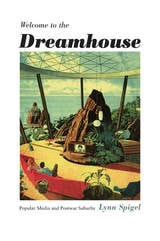
Welcome to the Dreamhouse
Popular Media and Postwar SuburbsLynn Spigel
Duke University Press, 2001
The volume considers not only how the media portrayed suburban family life, but also how both middle-class ideals and a perceived division between private and public worlds helped to shape the visual forms, storytelling practices, and reception of postwar media and consumer culture. Spigel also explores those aspects of suburban culture that media typically render invisible. She looks at the often unspoken assumptions about class, nation, ethnicity, race, and sexual orientation that underscored both media images (like those of 1960s space missions) and social policies of the mass-produced suburb. Issues of memory and nostalgia are central in the final section as Spigel considers how contemporary girls use television reruns as a source for women’s history and then analyzes the current nostalgia for baby boom era family ideals that runs through contemporary images of new household media technologies.
Containing some of Spigel’s well-known essays on television’s cultural history as well as new essays on a range of topics dealing with popular visual culture, Welcome to the Dreamhouse is important reading for students and scholars of media and communications studies, popular culture, American studies, women’s studies, and sociology.