Results by title
3 books match the query 'Popular Struggle'
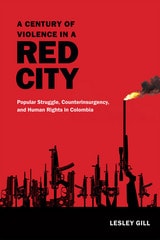
A Century of Violence in a Red City
Popular Struggle, Counterinsurgency, and Human Rights in ColombiaLesley Gill
Duke University Press, 2016
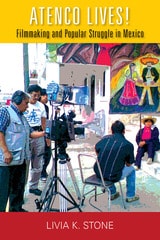
Atenco Lives!
Filmmaking and Popular Struggle in MexicoLivia K. Stone
Vanderbilt University Press, 2019
Stone highlights the importance of how the circulation of the physical videos, and not just their content, promotes the social movement. More broadly she shows how videographers perform their activism, navigating the tensions between neoliberal personhood or ego and an ethos of compañerismo that privileges community. Grounded in the lived experiences of Atenco's activists and allied filmmakers, Atenco Lives! documents the making and circulating of films as an ethical and political practice purposefully used to transform human relationships.
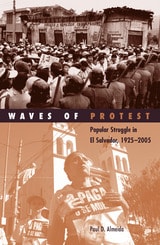
Waves of Protest
Popular Struggle in El Salvador, 1925–2005Paul D. Almeida
University of Minnesota Press, 2008
One of the first longitudinal studies of collective resistance in the developing world, Waves of Protest examines large-scale contentious action in El Salvador during critical eras in the country’s history.
Providing a compelling analysis of the massive waves of protests from the early twentieth century to the present in El Salvador, Paul D. Almeida fully chronicles one of the largest and most successful campaigns against globalization and privatization in the Americas. Drawing on original protest data from newspapers and other archival sources, Almeida makes an impassioned argument that regime liberalization organizes civil society and, conversely, acts of state-sponsored repression radicalize society. He correlates the ebb and flow of protest waves to the changes in regime liberalization and subsequent de-democratization and back to liberalization.
Almeida shows how institutional access and competitive elections create opportunity for civic organizations that become radicalized when authoritarianism increases, resulting at times in violent protest campaigns that escalate to revolutionary levels. In doing so, he brings negative political conditions and threats to the forefront as central forces driving social movement activity and popular contention in the developing world.
Paul D. Almeida is assistant professor of sociology at Texas A&M University. He is coeditor with Hank Johnston of Latin American Social Movements: Globalization, Democratization, and Transnational Networks.