Results by title

8 books match the query 'Popular culture and globalization'
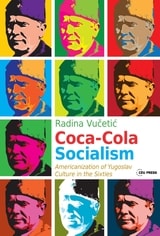
cover of Coca-Cola Socialism: Americanization of Yugoslav Culture in the Sixties

Coca-Cola Socialism

Americanization of Yugoslav Culture in the Sixties

Radina Vucetic

Central European University Press, 2018

This book is about the Americanization of Yugoslav culture and everyday life during the nineteen-sixties. After falling out with the Eastern bloc, Tito turned to the United States for support and inspiration. In the political sphere the distance between the two countries was carefully maintained, yet in the realms of culture and consumption the Yugoslav regime was definitely much more receptive to the American model. For Titoist Yugoslavia this tactic turned out to be beneficial, stabilising the regime internally and providing an image of openness in foreign policy.


Coca-Cola Socialism addresses the link between cultural diplomacy, culture, consumer society and politics. Its main argument is that both culture and everyday life modelled on the American way were a major source of legitimacy for the Yugoslav Communist Party, and a powerful weapon for both USA and Yugoslavia in the Cold War battle for hearts and minds.


Radina Vučetić explores how the Party used American culture in order to promote its own values and what life in this socialist and capitalist hybrid system looked like for ordinary people who lived in a country with communist ideology in a capitalist wrapping. Her book offers a careful reevaluation of the limits of appropriating the American dream and questions both an uncritical celebration of Yugoslavia’s openness and an exaggerated depiction of its authoritarianism.
[more]
cover of Cultural Production of Hallyu in the Digital Platform Era: Industry Perspectives

Cultural Production of Hallyu in the Digital Platform Era

Industry Perspectives

Dal Yong Jin

University of Michigan Press, 2025

Cultural Production of Hallyu in the Digital Platform Era explores how histories, industry structures, and politics interact in the platformization of the Korean Wave. Dal Yong Jin argues that while much research centers on the Korean culture takeover and the dominance of Korean products on premier global media platforms, Korean cultural industries also experience reshaping and changing depending on the platforms, often on the global stage. 

Addressing the increasing significance of digital platforms, this work examines the transformative roles of over-the-top streaming services—Netflix, Viki, and V Live—video-sharing platforms such as YouTube, and social media platforms such as TikTok and Instagram, and the power relations between content producers, information technology sectors, the government, creative laborers, and audiences in the globalization of Korean culture and media. By developing critical cultural industries studies as a new theoretical framework, Cultural Production of Hallyu in the Digital Platform Era explores the ever-growing Korean Wave phenomenon with the advent of global digital platforms. 
 
[more]
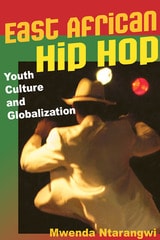
cover of East African Hip Hop: Youth Culture and Globalization

East African Hip Hop

Youth Culture and Globalization

Mwenda Ntarangwi

University of Illinois Press, 2008

In this book, Mwenda Ntarangwi analyzes how young hip hop artists in the East African nations of Kenya, Uganda, and Tanzania showcase the opportunities and challenges brought by the globalization of music. Combining local popular music traditions with American and Jamaican styles of rap, East African hip hop culture reflects the difficulty of creating commercially accessible music while honoring tradition and East African culture. Ntarangwi pays special attention to growing cross-border exchanges within East African hip hop, collaborations in recording music and performances, and themes and messages that transcend local geographic boundaries.

In using hip hop as a medium for discussing changes in East African political, economic, and social conditions, artists vocalize their concerns about economic policies, African identity, and political establishments, as well as important issues of health (such as HIV/AIDS), education, and poverty. Through three years of fieldwork, rich interviews with artists, and analysis of live performances and more than 140 songs, Ntarangwi finds that hip hop provides youth an important platform for social commentary and cultural critique and calls attention to the liberating youth music culture in East Africa.

[more]
cover of Emergent Genders: Living Otherwise in Tokyo's Pink Economies

Emergent Genders

Living Otherwise in Tokyo's Pink Economies

Michelle H. S. Ho

Duke University Press, 2025

In Emergent Genders, Michelle H. S. Ho traces the genders manifesting alongside Japanese popular culture in Akihabara, an area in Tokyo renowned for the fandom and consumption of anime, manga, and games. Drawing on ethnographic fieldwork in josō and dansō cafe-and-bars, establishments where male-to-female and female-to-male crossdressing is prevalent, Ho shows how their owners, employees, and customers creatively innovate what she calls emergent genders—new practices, categories, and ways of being stemming from the simultaneous fracturing, contestations, and (re)imaginations of older forms of gender and sexual variance in Japan. Such emergent genders initiate new markets for alternative categories of expression and subjectivity to thrive in a popular cultural hub like Akihabara instead of Tokyo’s gay and lesbian neighborhood of Shinjuku Ni-chōme. By rethinking identitarian models of gender and sexuality, reconfiguring the significance of capitalism for trans studies and queer theory, and decentering theoretical frameworks incubated in a predominantly United States academic context, Ho offers new ways of examining how trans and gender nonconforming individuals may survive and flourish under capitalism.
[more]
cover of Fantasies of Hong Kong Disneyland: Attempted Indigenizations of Space, Labor, and Consumption

Fantasies of Hong Kong Disneyland

Attempted Indigenizations of Space, Labor, and Consumption

Jenny Banh

Rutgers University Press, 2025
Fantasies of Hong Kong Disneyland: Attempted Indigenizations of Space, Labor, and Consumption examines the attempt to transplant Disney's "happiest place on Earth" ethos to Hong Kong—with unhappy results. Focusing on the attempted localization/indigenization of this idea in a globalized transnational park, the book delves into the three-way dynamics of an American culture-corporation's intentions, Hong Kong, China's government investment and Hong Konger audience, and the Hong Kong Chinese locale. The triple actors introduce an especially complex case as two of the world's most powerful entities, the nominally Communist state of China and corporate behemoth Disney, come together for a project in the third space of Hong Kong. The situation poses special challenges for Disney's efforts to manage space, labor, and consumption to achieve local adaptation and business success. 
[more]
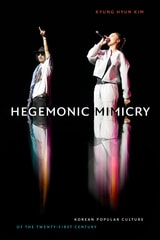
cover of Hegemonic Mimicry: Korean Popular Culture of the Twenty-First Century

Hegemonic Mimicry

Korean Popular Culture of the Twenty-First Century

Kyung Hyun Kim

Duke University Press, 2021
In Hegemonic Mimicry, Kyung Hyun Kim considers the recent global success of Korean popular culture—the Korean wave of pop music, cinema, and television, which is also known as hallyu—from a transnational and transcultural perspective. Using the concept of mimicry to think through hallyu's adaptation of American sensibilities and genres, he shows how the commercialization of Korean popular culture has upended the familiar dynamic of major-to-minor cultural influence, enabling hallyu to become a dominant global cultural phenomenon. At the same time, its worldwide popularity has rendered its Koreanness opaque. Kim argues that Korean cultural subjectivity over the past two decades is one steeped in ethnic rather than national identity. Explaining how South Korea leaped over the linguistic and cultural walls surrounding a supposedly “minor” culture to achieve global ascendance, Kim positions K-pop, Korean cinema and television serials, and even electronics as transformative acts of reappropriation that have created a hegemonic global ethnic identity.
[more]
cover of Networked Reenactments: Stories Transdisciplinary Knowledges Tell

Networked Reenactments

Stories Transdisciplinary Knowledges Tell

Katie King with a foreword by Donna Haraway

Duke University Press, 2012
Since the 1990s, the knowledge, culture, and entertainment industries have found themselves experimenting, not altogether voluntarily, with communicating complex information across multiple media platforms. Against a backdrop of competing national priorities, changing technologies, globalization, and academic capitalism, these industries have sought to reach increasingly differentiated local audiences, even as distributed production practices have made the lack of authorial control increasingly obvious. As Katie King describes in Networked Reenactments, science-styled television—such as the Secrets of Lost Empires series shown on the PBS program Nova—demonstrates how new technical and collaborative skills are honed by television producers, curators, hobbyists, fans, and even scholars. Examining how transmedia storytelling is produced across platforms such as television and the web, she analyzes what this all means for the humanities. What sort of knowledge projects take up these skills, attending to grain of detail, evoking affective intensities, and zooming in and out, representing multiple scales, as well as many different perspectives? And what might this mean for feminist transdisciplinary work, or something sometimes called the posthumanities?
[more]
cover of New Korean Wave: Transnational Cultural Power in the Age of Social Media

New Korean Wave

Transnational Cultural Power in the Age of Social Media

Dal Yong Jin

University of Illinois Press, 2016

The 2012 smash "Gangnam Style" by the Seoul-based rapper Psy capped the triumph of Hallyu , the Korean Wave of music, film, and other cultural forms that have become a worldwide sensation. Dal Yong Jin analyzes the social and technological trends that transformed South Korean entertainment from a mostly regional interest aimed at families into a global powerhouse geared toward tech-crazy youth. Blending analysis with insights from fans and industry insiders, Jin shows how Hallyu exploited a media landscape and dramatically changed with the 2008 emergence of smartphones and social media, designating this new Korean Wave as Hallyu 2.0. Hands-on government support, meanwhile, focused on creative industries as a significant part of the economy and turned intellectual property rights into a significant revenue source. Jin also delves into less-studied forms like animation and online games, the significance of social meaning in the development of local Korean popular culture, and the political economy of Korean popular culture and digital technologies in a global context.
[more]