Results by title
3 books match the query 'Popular culture in literature'

Artificial Mythologies
A Guide to Cultural InventionCraig J. SaperForeword by Laura Kipnis
University of Minnesota Press, 1997
Artificial Mythologies was first published in 1997. Minnesota Archive Editions uses digital technology to make long-unavailable books once again accessible, and are published unaltered from the original University of Minnesota Press editions.
Cultural critics teach us that myths are artificial. Cultural innovators use the artificial to make something new. In this exhilarating guide, Craig J. Saper takes us on an eye-opening tour of the process of cultural invention-willfully entertaining foolish, absurd, even fake, solutions as a way of reaching new perspectives on cultural problems. Saper deploys this method to reveal unsuspected connections among major cultural issues, such as urban decay, the dangers of television's power, family values, and conservative criticism of higher education.
The model Saper uses builds on the later works of the revered French cultural critic Roland Barthes. These works, Saper argues, suggest poignant, playful, and productive ways of engaging dominant methodologies and mythologies. Artificial Mythologies shows us how, by allowing the artificial-our received ideas, common responses, and cultural mythologies-full play, we can arrive at provocative new solutions. The book demonstrates that the very conceptions of media and sociocultural issues that stymie innovation can be made to serve the cause of invention.
Craig J. Saper is assistant professor in the Department of English at the University of Pennsylvania.
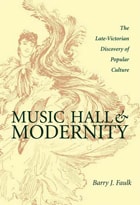
Music Hall and Modernity
The Late-Victorian Discovery of Popular CultureBarry J. Faulk
Ohio University Press, 2004
The late-Victorian discovery of the music hall by English intellectuals marks a crucial moment in the history of popular culture. Music Hall and Modernity demonstrates how such pioneering cultural critics as Arthur Symons and Elizabeth Robins Pennell used the music hall to secure and promote their professional identity as guardians of taste and national welfare. These social arbiters were, at the same time, devotees of the spontaneous culture of “the people.”
In examining fiction from Walter Besant, Hall Caine, and Henry Nevinson, performance criticism from William Archer and Max Beerbohm, and late-Victorian controversies over philanthropy and moral reform, scholar Barry Faulk argues that discourse on music-hall entertainment helped consolidate the identity and tastes of an emergent professional class. Critics and writers legitimized and cleaned up the music hall, at the same time allowing issues of class, respect, and empowerment to be negotiated.
Music Hall and Modernity offers a complex view of the new middle-class, middlebrow mass culture of late-Victorian London and contributes to a body of scholarship on nineteenth-century urbanism. The book will also interest scholars concerned with the emergence of a professional managerial class and the genealogy of cultural studies.
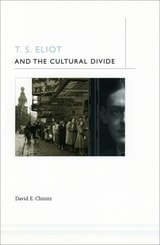
T. S. Eliot and the Cultural Divide
David E. Chinitz
University of Chicago Press, 2003
David Chinitz argues that Eliot was productively engaged with popular culture in some form at every stage of his career, and that his response to it, as expressed in his poetry, plays, and essays, was ambivalent rather than hostile. He shows that American jazz, for example, was a major influence on Eliot's poetry during its maturation. He discusses Eliot's surprisingly persistent interest in popular culture both in such famous works as The Waste Land and in such lesser-known pieces as Sweeney Agonistes. And he traces Eliot's long, quixotic struggle to close the widening gap between high art and popular culture through a new type of public art: contemporary popular verse drama.
What results is a work that will persuade adherents and detractors alike to return to Eliot and find in him a writer who liked a good show, a good thriller, and a good tune, as well as a "great" poem.