Results by title
5 books match the query 'Porter, Catherine'

Blind Date
Sex and PhilosophyAnne Dufourmantelle. Translated by Catherine Porter.
University of Illinois Press, 2007
Bringing sex and philosophy together on a blind date, Anne Dufourmantelle’s provocative study uses this analogy to uncover and examine philosophy’s blind spot. Delightful and startling comparisons spring from the date: both sex and philosophy are dangerous, both are socially subversive, and both are obsessions. Although sex and philosophy have much in common, however, they have scarcely known one another until now.
Socrates and Diogenes had little to say about sex, and although it was notoriously explored by the Marquis de Sade, this study explains why philosophy has never been fully sexualized nor sex really philosophized. Blind Date highlights the marked deletion of sexual topics and themes from philosophical works, while also opening doors for their union. Inviting readers to remember that thought does not require repressed desire, Dufourmantelle argues that sex is everywhere, and it affects all kinds of thinking.
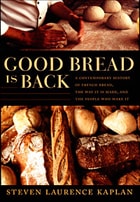
Good Bread Is Back
A Contemporary History of French Bread, the Way It Is Made, and the People Who Make ItSteven Laurence Kaplan
Duke University Press, 2006
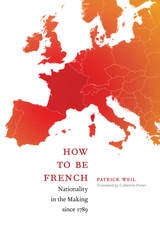
How to Be French
Nationality in the Making since 1789Patrick Weil
Duke University Press, 2008
Throughout How to Be French, Weil compares French laws to those of other countries, including the United States, Great Britain, and Germany, showing how France both borrowed from and influenced other nations’ legislation. Examining moments when a racist approach to nationality policy held sway, Weil brings to light the Vichy regime’s denaturalization of thousands of citizens, primarily Jews and anti-fascist exiles, and late-twentieth-century efforts to deny North African immigrants and their children access to French nationality. He also reveals stark gender inequities in nationality policy, including the fact that until 1927 French women lost their citizenship by marrying foreign men. More than the first complete, systematic study of the evolution of French nationality policy, How to be French is a major contribution to the broader study of nationality.
Romanticism Against the Tide of Modernity
Michael Löwy and Robert Sayre
Duke University Press, 2001
After critiquing previous conceptions of romanticism and discussing its first European manifestations, Löwy and Sayre propose a typology of the sociopolitical positions held by romantic writers-from “restitutionist” to various revolutionary/utopian forms. In subsequent chapters, they give extended treatment to writers as diverse as Coleridge and Ruskin, Charles Peguy, Ernst Bloch and Christa Wolf. Among other topics, they discuss the complex relationship between Marxism and romanticism before closing with a reflection on more contemporary manifestations of romanticism (for example, surrealism, the events of May 1968, and the ecological movement) as well as its future.
Students and scholars of literature, humanities, social sciences, and cultural studies will be interested in this elegant and thoroughly original book.
The Arachnean and Other Texts
Fernand Deligny
University of Minnesota Press, 2013
The network as a mode of being
In 1968, Fernand Deligny established a “network” for informally taking care of children with autism that was more than a mere site of living; it was a milieu created out of a reflection on the mode of being autistic. What is a space perceived outside of language? What is the form of a movement without perspective or goal? How do we engage with a world that is not our own, a world turned upside down yet truly common, where acting cohabitates with our actions and the unknown with our forms of knowledge? Such is the mythical web of the “Arachnean,” made of lines, holes, traces, enigmas, and questions without answers that demand to see that which cannot be seen. The Arachnean and Other Texts is a collection of Deligny’s writings from the second half of the 1970s. Long before the digital age of social networks, meshworks, and digital webs, Deligny speaks to us in his own autobiographical and aphoristic manner. For him, life was always experienced in the form of “the network as a mode of being.”g.”