Results by title
115 books match the query 'Portraits' and 9 start with a
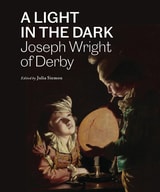
A Light in the Dark
Joseph Wright of DerbyJulia Siemon
J. Paul Getty Trust, The, 0
A timely reexamination of Joseph Wright’s captivating “candlelight” paintings, featuring the recently rediscovered Two Boys with a Bladder.
The dramatic “candlelight” paintings of Joseph Wright of Derby (1734–1797) cast a spell, enthralling viewers with striking scenes that portray human curiosity, the quiet intensity of domestic life, and the excitement of scientific discovery. With a variety of brushstrokes—dabbed here, whiskered there, and dragged elsewhere—Wright pushed boundaries with the transformative power of light. In 2020, the Getty Museum acquired the newly rediscovered Two Boys with a Bladder (1767), a luminous study of innovation, intimacy, and artistic brilliance that challenged established assumptions about Wright and sparked renewed interest in his experiments with light.
A Light in the Dark presents new research to uncover the origins of Two Boys and expand our understanding of Wright's early candlelights, tracing the invention and initial development of his distinctive style. Whereas recent scholarship has maintained an outward approach that ties the artist’s oeuvre to places that he visited, this volume returns the focus to Wright himself—his biography, technique, and hometown of Derby—in a much-needed reexamination. Complete with fresh historical and technical evidence, this is a fascinating look into the inspirations, aspirations, and experiments behind some of the most remarkable paintings in the history of British art.
This volume is published to accompany an exhibition on view at the J. Paul Getty Museum at the Getty Center from November 24, 2026, to March 14, 2027.
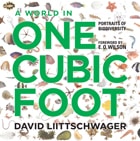
A World in One Cubic Foot
Portraits of BiodiversityDavid Liittschwager
University of Chicago Press, 2012
For A World in One Cubic Foot, esteemed nature photographer David Liittschwager took a bright green metal cube—measuring precisely one cubic foot—and set it in various ecosystems around the world, from Costa Rica to Central Park. Working with local scientists, he measured what moved through that small space in a period of twenty-four hours. He then photographed the cube’s setting and the plant, animal, and insect life inside it—anything visible to the naked eye. The result is a stunning portrait of the amazing diversity that can be found in ecosystems around the globe. Many organisms captured in Liittschwager’s photographs have rarely, if ever, been presented in their full splendor to the general reader, and the singular beauty of these images evocatively conveys the richness of life around us and the essential need for its conservation. The breathtaking images are accompanied by equally engaging essays that speak to both the landscapes and the worlds contained within them, from distinguished contributors such as Elizabeth Kolbert and Alan Huffman, in addition to an introduction by E. O. Wilson. After encountering this book, you will never look at the tiniest sliver of your own backyard or neighborhood park the same way; instead, you will be stunned by the unexpected variety of species found in an area so small.
A World in One Cubic Foot puts the world accessibly in our hands and allows us to behold the magic of an ecosystem in miniature. Liittschwager’s awe-inspiring photographs take us to places both familiar and exotic and instill new awareness of the life that abounds all around.

African Royal Court Art
Michèle Coquet
University of Chicago Press, 1998
More than ornamentation, royal objects embodied the strength and status of African rulers. The gold-plated stools of the Ashanti, the delicately carved ivory bracelets of the Edo-these objects were meant not simply to adorn but to affirm and enhance the power and prestige of the wearer. Unlike the abstract style frequently seen in African ritual art, realism became manifest in courtly arts. Realism directly linked the symbolic value of the object-a portrait or relief-with the physical person of the king. The contours of the monarch's face, his political and military exploits rendered on palace walls, became visual histories, the work of art in essence corroborating the ruler's sovereign might.
Richly illustrated and wonderfully detailed, Coquet's influential volume offers both a splendid visual presentation and an authoritative analysis of African royal arts.
"[This] beautiful and exciting book emphasizes the skillful court art of the Benin, Dahomey, and the Kongo. A very interesting and unusual approach to the art of the continent that has been too easily situated 'outside of history.'"—Le Figaro
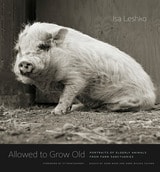
Allowed to Grow Old
Portraits of Elderly Animals from Farm SanctuariesIsa Leshko
University of Chicago Press, 2019
Isa Leshko shows us, brilliantly, with this collection of portraits. To create these portraits, she spent hours with her subjects, gaining their trust and putting them at ease. The resulting images reveal the unique personality of each animal. It’s impossible to look away from the animals in these images as they unforgettably meet our gaze, simultaneously calm and challenging. In these photographs we see the cumulative effects of the hardships of industrialized farm life, but also the healing that time can bring, and the dignity that can emerge when farm animals are allowed to age on their own terms.
Each portrait is accompanied by a brief biographical note about its subject, and the book is rounded out with essays that explore the history of animal photography, the place of beauty in activist art, and much more. Open this book to any page. Meet Teresa, a thirteen-year-old Yorkshire Pig, or Melvin, an eleven-year-old Angora Goat, or Tom, a seven-year-old Broad Breasted White Turkey. You’ll never forget them.
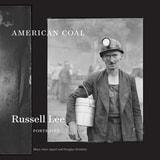
American Coal
Russell Lee PortraitsMary Jane Appel and Douglas Brinkley
University of Texas Press, 2024
More than 100 powerful images by noted photographer Russell Lee that document the working conditions and lives of coal mining communities in the postwar United States; publication coincides with an exhibition at the National Archives in Washington, DC.
In 1946 the Truman administration made a promise to striking coal miners: as part of a deal to resume work, the government would sponsor a nationwide survey of health and labor conditions in mining camps. One instrumental member of the survey team was photographer Russell Lee. Lee had made his name during the Depression, when, alongside Dorothea Lange and Walker Evans, he used his camera to document agrarian life for the Farm Security Administration (FSA). Now he trained his lens on miners and their families to show their difficult circumstances despite their essential contributions to the nation's first wave of postwar growth.
American Coal draws from the thousands of photographs that Lee made for the survey—also on view in the US National Archives and Records Administration’s exhibition Power & Light—and includes his original, detailed captions as well as an essay by biographer Mary Jane Appel and historian Douglas Brinkley. They place his work in context and illuminate how Lee helped win improved conditions for his subjects through vivid images that captured an array of miners and their communities at work and at play, at church and in school, in moments of joy and struggle, ultimately revealing to their fellow Americans the humanity and resilience of these underrecognized workers.
American Congregations, Volume 1
Portraits of Twelve Religious CommunitiesEdited by James P. Wind and James W. Lewis
University of Chicago Press, 1994
"This study refreshingly illuminates [congregations'] strengths as places where the public and private lives of their members meet in dynamic creativity and as havens of religious meaning and comfort in the midst of a secular world."—Choice
"A major contribution to how debates about American religion will be framed in the years ahead. . . . In giving us these case histories and a set of excellent interpretive essays, Wind and Lewis have reminded us that American religion must be understood in its particular, local, gathered, human forms. They remind us that congregations matter."—Nancy T. Ammerman, First Things
"Well-presented and engaging essays, by some of the foremost religious scholars working today, examining the histories of twelve diverse religious institutions. . . . A fascinating and important social history of religion."—Kirkus Reviews
"Scholarship and the religious traditions have been enriched by the labors of the Congregational History Project. Theologically, its pioneering research invites us to examine ourselves."—Gabriel Fackre, Christian Century
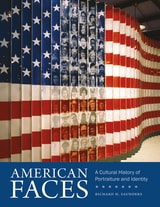
American Faces
A Cultural History of Portraiture and IdentityRichard H. Saunders
University Press of New England, 2016
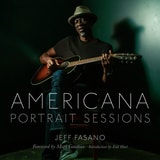
Americana Portrait Sessions
Jeff Fasano
Vanderbilt University Press, 2023
Fasano's unparalleled access to Americana artists like Sheryl Crow, Rhiannon Giddens, Vince Gill, Keb' Mo', Judy Collins, John Oates, The Avett Brothers, The McCrary Sisters, Lucinda Williams, Margo Price, Blind Boys of Alabama, and Kris Kristofferson gives Americana Portrait Sessions the kind of authority that comes from true reach into the breadth of the genre. But this collection is as important for the artists few fans know as for the ones with successful careers behind them. While the book champions the diversity of race, gender, sexuality, and age inherent in Americana music, it also spans career arcs to bring lesser-known acts into the spotlight.
Americana Portrait Sessions brings you backstage to the greenrooms and quiet corners where artists like The War and Treaty, Jewel, Jason Isbell, and The Wooten Brothers aren't just artists performing, but people hanging out.

Aviation's Golden Age
Portraits From 1920S And 1930SWilliam M. Leary
University of Iowa Press, 1989