Results by title

5 books match the query 'Portraiture'
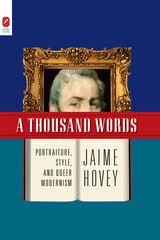
cover of A THOUSAND WORDS: PORTRAITURE, STYLE, AND QUEER MODERNISM

A THOUSAND WORDS

PORTRAITURE, STYLE, AND QUEER MODERNISM

Jaime Hovey

The Ohio State University Press, 2006

A Thousand Words argues that there is such a thing as queer modernism, and that the (mostly) literary portrait—one of the more prominent forms of experimentalism in late-nineteenth- and early-twentieth-century writing—functions as one of its most important erotically dynamic aesthetic mechanisms, one modeled on visual portraiture’s relationships of looking between the artists, sitters, and spectators of paintings. Jaime Hovey looks at how the dynamic structure of visual portraiture was appropriated by modernist writers—including Oscar Wilde, Gertrude Stein, T. S. Eliot, Virginia Woolf, Ernest Hemingway, and Colette, among others, who used the self-conscious literary portrait.

Portraiture speaks to the complex relationship between identity, sexuality, and art, and the presence of so many portraits in this era suggests that sexual, gender, and racial aspects of character, personality, and personal identity were of major concern to most modernist writers. Yet it took most of the twentieth century for critical work to appear that meaningfully explored these themes, and very little has been said about the queerness of literary portraiture. This book demonstrates that literary portraiture is enamored of its own self-consciousness, with the pleasures of looking at itself seeing itself, and that its texts circulate this pleasure between writers, narrators and other characters, and readers as a perverse aesthetics
[more]
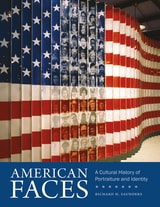
cover of American Faces: A Cultural History of Portraiture and Identity

American Faces

A Cultural History of Portraiture and Identity

Richard H. Saunders

University Press of New England, 2016
Portraits. We know what they are, but why do we make them? Americans have been celebrating themselves in portraits since the arrival of the first itinerant portrait painters to the colonies. They created images to commemorate loved ones, glorify the famous, establish our national myths, and honor our shared heroes. Whether painting in oil, carving in stone, casting in bronze, capturing on film, or calculating in binary code, we spend considerable time creating, contemplating, and collecting our likenesses. In this sumptuously illustrated book, Richard H. Saunders explores our collective understanding of portraiture, its history in America, how it shapes our individual and national identity, and why we make portraits—whether for propaganda and public influence or for personal and private appreciation. American Faces is a rich and fascinating view of ourselves.
[more]
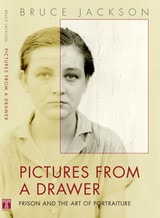
cover of Pictures from a Drawer: Prison and the Art of Portraiture

Pictures from a Drawer

Prison and the Art of Portraiture

Bruce Jackson

Temple University Press, 2009
For more than forty years, Bruce Jackson has been documenting—in books, photographs, audio recording and film—inmates' lives in American prisons. In November 1975, he acquired a collection of old ID photos while he was visiting the Cummins Unit, a state prison farm in Arkansas. They are published together for the first time in this remarkable book. The 121 images that appear here were likely taken between 1915-1940. As Jackson describes in an absorbing introduction, the function of these photos was not portraiture— their function was to "fold a person into the controlled space of a dossier." Here, freed from their prison "jackets" and printed at sizes far larger than their originals, these one-time ID photos have now become portraits. Jackson's restoration transforms what were small bureaucratic artifacts into moving images of real men and women. Pictures from a Drawer also contains an extraordinary description of everyday life at Cummins prison in the 1950s, written originally by hand and presented to Jackson in 1973 by its author, a longtime inmate.
[more]
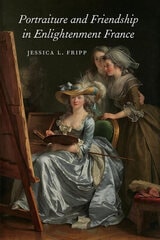
cover of Portraiture and Friendship in Enlightenment France

Portraiture and Friendship in Enlightenment France

Jessica Fripp

University of Delaware Press, 2011
Portraiture and Friendship in Enlightenment France examines how new and often contradictory ideas about friendship were enacted in the lives of artists in the eighteenth century. It demonstrates that portraits resulted from and generated new ideas about friendship by analyzing the creation, exchange, and display of portraits alongside discussions of friendship in philosophical and academic discourse, exhibition criticism, personal diaries, and correspondence. This study provides a deeper understanding of how artists took advantage of changing conceptions of social relationships and used portraiture to make visible new ideas about friendship that were driven by Enlightenment thought.
[more]
cover of The Subject in Art: Portraiture and the Birth of the Modern

The Subject in Art

Portraiture and the Birth of the Modern

Catherine M. Soussloff

Duke University Press, 2006

Challenging prevailing theories regarding the birth of the subject, Catherine M. Soussloff argues that the modern subject did not emerge from psychoanalysis or existential philosophy but rather in the theory and practice of portraiture in early-twentieth-century Vienna. Soussloff traces the development in Vienna of an ethics of representation that emphasized subjects as socially and historically constructed selves who could only be understood—and understand themselves—in relation to others, including the portrait painters and the viewers. In this beautifully illustrated book, she demonstrates both how portrait painters began to focus on the interior lives of their subjects and how the discipline of art history developed around the genre of portraiture.

Soussloff combines a historically grounded examination of art and art historical thinking in Vienna with subsequent theories of portraiture and a careful historiography of philosophical and psychoanalytic approaches to human consciousness from Hegel to Sartre and from Freud to Lacan. She chronicles the emergence of a social theory of art among the art historians of the Vienna School, demonstrates how the Expressionist painter Oskar Kokoschka depicted the Jewish subject, and explores the development of pictorialist photography. Reflecting on the implications of the visualized, modern subject for textual and linguistic analyses of subjectivity, Soussloff concludes that the Viennese art historians, photographers, and painters will henceforth have to be recognized as precursors to such better-known theorists of the subject as Sartre, Foucault, and Lacan.

[more]