Results by title
7 books match the query 'Post-Traumatic Stress Disorder (PTSD)'
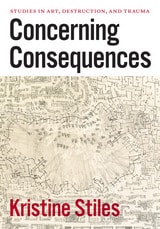
Concerning Consequences
Studies in Art, Destruction, and TraumaKristine Stiles
University of Chicago Press, 2016
The essays in this book focus primarily on performance art and photography. From war and environmental pollution to racism and sexual assault, Stiles analyzes the consequences of trauma as seen in the works of artists like Marina Abramovic, Pope.L, and Chris Burden. Assembling rich intellectual explorations on everything from Paleolithic paintings to the Bible’s patriarchal legacies to documentary images of nuclear explosions, Concerning Consequences explores how art can provide a distinctive means of understanding trauma and promote individual and collective healing.
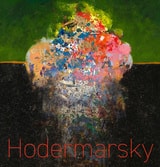
Hodermarsky
Daniel Hodermarsky
The Artist Book Foundation, 2024
Daniel Hodermarsky's work embraces both the representational and the abstract, reflecting the intricate spaces of both his psyche and shared human experience.
Daniel Hodermarsky was the son of Slovak immigrants who emigrated from Hačava to settle and work in the coal fields of Pennsylvania and later in the auto-manufacturing industries of Ohio. He served in World War II on the Western front and was awarded two presidential citations, two Croix de Guerre, and one combat star. He returned home with severe and persistent post-traumatic stress disorder that left an indelible mark on his life and art.
Throughout his career, Hodermarsky’s work embraced both the representational and the abstract. His early works experimented with new media (such as Dayglo paint) and new styles such as Op Art and performance. In the 1970s and beyond, he engaged landscape—rural, urban, and imaginary—wherein he explored the interplay of terrain (land or water, horizon, and sky). The human figure—Slovak farmers, wounded or dismembered soldiers, and mythical and historical figures—were among his favorite subjects. He was fascinated by how age, human nature, and personality combine to create the physical form. His eclectic themes mirror his own unique complexities and experiences. Later in his career, he focused on abstract works that reflect the intricate spaces of both his psyche and shared human experience.
A deeply spiritual man with a strong religious faith, Hodermarsky’s abstract paintings ask the existential questions that have challenged humankind across millennia. By showing us his own experience of these great mysteries, his art underscores life’s abiding beauty. Over his long career of interpreting the world in which he lived, Hodermarsky invites us to inhabit a realm filled with joy, reverence, and passion.
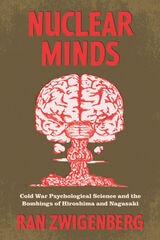
Nuclear Minds
Cold War Psychological Science and the Bombings of Hiroshima and NagasakiRan Zwigenberg
University of Chicago Press, 2023
In 1945, researchers on a mission to Hiroshima with the United States Strategic Bombing Survey canvassed survivors of the nuclear attack. This marked the beginning of global efforts—by psychiatrists, psychologists, and other social scientists—to tackle the complex ways in which human minds were affected by the advent of the nuclear age. A trans-Pacific research network emerged that produced massive amounts of data about the dropping of the bomb and subsequent nuclear tests in and around the Pacific rim.
Ran Zwigenberg traces these efforts and the ways they were interpreted differently across communities of researchers and victims. He explores how the bomb’s psychological impact on survivors was understood before we had the concept of post-traumatic stress disorder. In fact, psychological and psychiatric research on Hiroshima and Nagasaki rarely referred to trauma or similar categories. Instead, institutional and political constraints—most notably the psychological sciences’ entanglement with Cold War science—led researchers to concentrate on short-term damage and somatic reactions or even, in some cases, on denial of victims’ suffering. As a result, very few doctors tried to ameliorate suffering.
But, Zwigenberg argues, it was not only that doctors “failed” to issue the right diagnosis; the victims’ experiences also did not necessarily conform to our contemporary expectations. As he shows, the category of trauma should not be used uncritically in a non-Western context. Consequently, this book sets out, first, to understand the historical, cultural, and scientific constraints in which researchers and victims were acting and, second, to explore how suffering was understood in different cultural contexts before PTSD was a category of analysis.
One Hour in Paris
A True Story of Rape and RecoveryKaryn L. Freedman
University of Chicago Press, 2014
At once deeply intimate and terrifyingly universal, One Hour in Paris weaves together Freedman’s personal experience with the latest philosophical, neuroscientific, and psychological insights on what it means to live in a body that has been traumatized. Using her background as a philosopher, she looks at the history of psychological trauma and draws on recent theories of posttraumatic stress disorder and neuroplasticity to show how recovery from horrific experiences is possible. Through frank discussions of sex and intimacy, she explores the consequences of sexual violence for love and relationships, and she illustrates the steep personal cost of sexual violence and the obstacles faced by individual survivors in its aftermath. Freedman’s book is an urgent call to face this fundamental social problem head-on, arguing that we cannot continue to ignore the fact that sexual violence against women is rooted in gender inequalities that exist worldwide—and must be addressed.
One Hour in Paris is essential reading for survivors of sexual violence as well as an invaluable resource for therapists, mental health professionals, and family members and friends of victims.
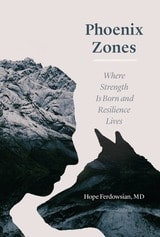
Phoenix Zones
Where Strength Is Born and Resilience LivesHope Ferdowsian, MD
University of Chicago Press, 2018
With Phoenix Zones, Dr. Hope Ferdowsian shows us how. Ferdowsian has spent years traveling the world to work with people and animals who have endured trauma—war, abuse, displacement. Here, she combines compelling stories of survivors with the latest science on resilience to help us understand the link between violence against people and animals and the biological foundations of recovery, peace, and hope. Taking us to the sanctuaries that give the book its title, she reveals how the injured can heal and thrive if we attend to key principles: respect for liberty and sovereignty, a commitment to love and tolerance, the promotion of justice, and a fundamental belief that each individual possesses dignity. Courageous tales show us how: stories of combat veterans and wolves recovering together at a California refuge, Congolese women thriving in one of the most dangerous places on earth, abused chimpanzees finding peace in a Washington sanctuary, and refugees seeking care at Ferdowsian’s own medical clinic.
These are not easy stories. Suffering is real, and recovery is hard. But resilience is real, too, and Phoenix Zones shows how we can foster it. It reveals how both people and animals deserve a chance to live up to their full potential—and how such a view could inspire solutions to some of the greatest challenges of our time.
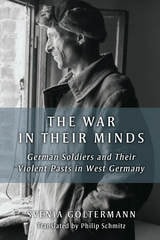
The War in Their Minds
German Soldiers and Their Violent Pasts in West GermanySvenja Goltermann
University of Michigan Press, 2017
Originally published in German as Die Gesellschaft der Uberlebenden, The War in Their Minds examines hitherto unused source material—psychiatric medical files of soldiers—to make clear how difficult it was for the soldiers and their families to readjust to normal, everyday life. Goltermann allows these testimonies of violence, guilt, justification, and helplessness speak for themselves and sensitively explores how the pension claims of returning soldiers were to compete with the claims of the Holocaust victims to compensation.
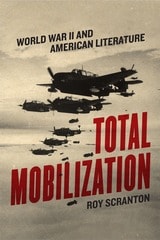
Total Mobilization
World War II and American LiteratureRoy Scranton
University of Chicago Press, 2019
Since World War II, the story of the trauma hero—the noble white man psychologically wounded by his encounter with violence—has become omnipresent in America’s narratives of war, an imaginary solution to the contradictions of American political hegemony. In Total Mobilization, Roy Scranton cuts through the fog of trauma that obscures World War II, uncovering a lost history and reframing the way we talk about war today.
Considering often overlooked works by James Jones, Wallace Stevens, Martha Gellhorn, and others, alongside cartoons and films, Scranton investigates the role of the hero in industrial wartime, showing how such writers struggled to make sense of problems that continue to plague us today: the limits of American power, the dangers of political polarization, and the conflicts between nationalism and liberalism. By turning our attention to the ways we make war meaningful—and by excavating the politics implicit within the myth of the traumatized hero—Total Mobilization revises the way we understand not only World War II, but all of postwar American culture.