81 books match the query 'Post-communism' and 9 start with a
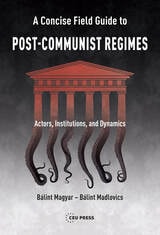
cover of A Concise Field Guide to Post-Communist Regimes: Actors, Institutions, and Dynamics

A Concise Field Guide to Post-Communist Regimes

Actors, Institutions, and Dynamics

Bálint Madlovics

Central European University Press, 2022

While the literature of hybrid regimes has given up the presumption that post-communist countries must democratize, its language and concepts still mostly relate to Western democracies. Magyar and Madlovics strongly argue for a vocabulary and grammar tailored to the specifics of the region. In 120 theses they unfold a conceptual framework with (1) a typology of post-communist regimes and (2) a detailed presentation of ideal-type actors and the political, economic, and social phenomena in these regimes. The book is a more digestible companion to the 800-page The Anatomy of Post-Communist Regimes (CEU Press, 2020), which was a detailed theoretical study with plenty of empirical illustrations.

Each of the 120 theses contains a statement and its concise discussion supported by illustrative tables, figures, and QR-codes that connect the interested reader to the more detailed analysis in the Anatomy. In a condensed variety, this book has kept the holistic approach of the Anatomy and treats the spheres of political, market, and communal action as parts of a single, coherent whole. The endeavor to synthesize a vast range of ideas does not, however, result in a too complicated text. On the contrary, freed from the implicit presumptions of democracy theory, the new terminology yields a readily usable toolkit of unambiguous means of expression to speak about post-communism.
[more]
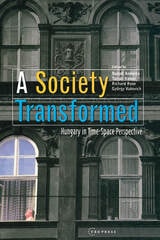
cover of A Society Transformed: Hungary in Time-Space Perspective

A Society Transformed

Hungary in Time-Space Perspective

Richard Rose

Central European University Press, 1999
In the past half-century every Central and East European society has been twice subject to transformation. Initially, Hungary was transformed by communist-style modernization, increasing industry, expanding secondary education and improving health. The second shock was the collapse of the communist regime and the introduction of democratic institutions and a market economy. How much or how little impact has institutional change had on the lives of ordinary people? Drawing on detailed surveys, highlighted in tables and figures, the authors identify long-term changes in Hungary from the late 1940s to the late 1980s and provide an in-depth analysis of the impact of the collapse of the communist system in the 1990s. They also compare long-term and shor-term change in Hungary with trends in other Central and Eastern European countries.
[more]
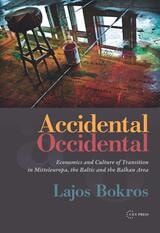
cover of Accidental Occidental: Economics and Culture of Transition in Mitteleuropa, the Baltic and the Balkan Area

Accidental Occidental

Economics and Culture of Transition in Mitteleuropa, the Baltic and the Balkan Area

Lajos Bokros

Central European University Press, 2013
Besides providing a historical record of the long road from the economic agenda of the 1917 Bolshevik revolution to the present transition from communism, this book can be considered a staunch defense of market capitalism and liberal democracy. Any celebration of the current transition in Eastern Europe necessarily affirms the superiority of a market system over a non-market one and of a democratic system over a non-democratic one. The author does not deny the failures, shortcomings or imperfections of market economy and democracy. Nor does he take the survival of market capitalism and liberal democracy for granted. On the contrary, by highlighting the valiant and painful process of transition and attempting to understand its economics and culture, he seeks to contribute to the theoretical (academic) and practical (political) defense of Western civilization.
[more]
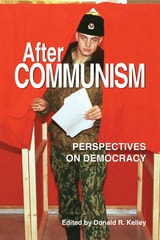
cover of After Communism: Perspectives on Democracy

After Communism

Perspectives on Democracy

Donald R. Kelley

University of Arkansas Press, 2003
In this collection, top scholars of Soviet and post-Soviet studies convene to explore communism's aftermath. They consider state building and consitutionalism; the transition to market capitalism and democracy across Eastern Europe; the political development of Muslim states; the complex and differential developments of electoral systems; the risks and opportunities of nationalism; and new political and economic activities in Russia, from corruption to contracts. Editor Donald Kelley introduces the volume with a synthesis of the theoretical and empirical findings of the volume, and his brief chapter introductions place each contribution in relation to the other essays and to larger debates on democratization.
[more]
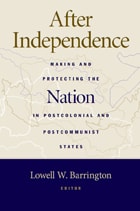
cover of After Independence: Making and Protecting the Nation in Postcolonial and Postcommunist States

After Independence

Making and Protecting the Nation in Postcolonial and Postcommunist States

Lowell W. Barrington, Ed.

University of Michigan Press, 2006

The majority of the existing work on nationalism has centered on its role in the creation of new states. After Independence breaks new ground by examining the changes to nationalism after independence in seven new states. This innovative volume challenges scholars and specialists to rethink conventional views of ethnic and civic nationalism and the division between primordial and constructivist understandings of national identity.

"Where do nationalists go once they get what they want? We know rather little about how nationalist movements transform themselves into the governments of new states, or how they can become opponents of new regimes that, in their view, have not taken the self-determination drive far enough. This stellar collection contributes not only to comparative theorizing on nationalist movements, but also deepens our understanding of the contentious politics of nationalism's ultimate product--new countries."
--Charles King, Chair of the Faculty and Ion Ratiu Associate Professor, Georgetown University School of Foreign Service

"This well-integrated volume analyzes two important variants of nationalism-postcolonial and postcommunist-in a sober, lucid way and will benefit students and scholars alike."
--Zvi Gitelman, University of Michigan


Lowell W. Barrington is Associate Professor of Political Science, Marquette University.
[more]
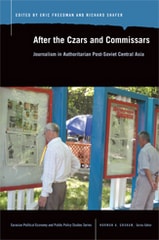
cover of After the Czars and Commissars: Journalism in Authoritarian Post-Soviet Central Asia

After the Czars and Commissars

Journalism in Authoritarian Post-Soviet Central Asia

Eric Freedman

Michigan State University Press, 2011
From Czarism and Bolshevism to the current post-communist era, the media in Central Asia has been tightly constrained. Though the governments in the region assert that a free press is permitted to operate, research has shown this to be untrue. In all five former Soviet republics of Central Asia, the media has been controlled, suppressed, punished, and often outlawed. This enlightening collection of essays investigates the reasons why these countries have failed to develop independent and sustainable press systems. It documents the complex relationship between the press and governance, nation-building, national identity, and public policy. In this book, scholars explore the numerous and broad-reaching implications of media control in a variety of contexts, touching on topics such as Internet regulation and censorship, press rights abuses, professional journalism standards and self-censorship, media ownership, ethnic newspapers, blogging, Western broadcasting into the region, and coverage of terrorism.
[more]
cover of Altering States: Ethnographies of Transition in Eastern Europe and the Former Soviet Union

Altering States

Ethnographies of Transition in Eastern Europe and the Former Soviet Union

Daphne Berdahl, Matti Bunzl, and Martha Lampland, Editors

University of Michigan Press, 2000
The dominant focus in transition studies to date has been on economic and political factors -- analyses generally conducted at the national or international level. The essays in Altering States instead bring us a closer look at what has been happening in everyday life in urban contexts in Germany, the Czech Republic, Slovakia, Austria, Hungary, Romania, Armenia, and Russia. The contributors to the volume -- all anthropologists -- use ethnographic methods to make visible problems and challenges that have until now been obscured. From synagogue restoration in Eastern Europe to gay tourism in Prague to the politics of rock music in Hungary, specific, local topics lead the authors to confront difficult questions of individual agency and discursive practices in the move away from socialism. Broader themes touched on include race and ethnicity, sexuality and postcoloniality, the politics of environmental restoration, and memory and remembrance in the politics of history. Altering States will fill an important gap in the study of transition in Eastern Europe and the former Soviet Union. It will appeal to anthropologists, political scientists, and sociologists and will be accessible to undergraduate and graduate students alike.
[more]
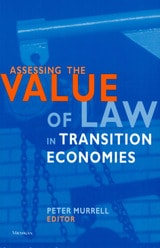
cover of Assessing the Value of Law in Transition Economies

Assessing the Value of Law in Transition Economies

Peter Murrell, Editor

University of Michigan Press, 2001
Does law play a role in the economies that are moving from Soviet-style socialism to market capitalism? The essays in this book examine that question, providing a vivid picture of how the new institutions of capitalism affect the lives of business people, legal practitioners, investors, and bureaucrats. They analyze the determinants of successful institutional reform, suggesting that law can influence economic behavior even in inhospitable environments. Contributors--including economists, political scientists, and legal and business scholars--examine the pathways through which legal and institutional reforms affect behavior and identify the circumstances under which such reforms add value. They ask: What are the microeconomic mechanisms by which law contributes to the activities of economic agents? How do the characteristics of economic agents affect their ability to use the law? Which spheres of the economy are most affected by institutional reforms and where does law fail? What are the preconditions for effective legal and institutional reforms? Which types of political processes produce a workable system of economic legislation? The focus throughout is on the analysis of the individual economic agent who is subject to the new institutions, and thus the decisions of the individual actor, the shopkeeper, the lawyer, the court, the legislator-politician, the enterprise, the bureaucrat, the regulatory authority, and the outside investor. There are lessons on research methodology, on the economic role of institutions, and on the practice of institutional development. The focus is on the transition economies, but the conclusions and methodologies are pertinent when understanding the role of law in any context. The book will be important reading for scholars and practitioners with a wide range of interests and in a wide range of disciplines and of interest to all those concerned with economic, legal, and institutional development, economists, political scientists, lawyers, and development specialists alike.
[more]
cover of Austerities and Aspirations: A Comparative History of Growth, Consumption, and Quality of Life in East Central Europe since 1945

Austerities and Aspirations

A Comparative History of Growth, Consumption, and Quality of Life in East Central Europe since 1945

Béla Tomka

Central European University Press, 2020

This monograph provides an analysis of the economic performance and living standard in Czechoslovakia and its successor states, Hungary, and Poland since 1945. The novelty of the book lies in its broad comparative perspective: it places East Central Europe in a wider European framework that underlines the themes of regional disparities and European commonalities. Going beyond the traditional growth paradigm, the author systematically studies the historical patterns of consumption, leisure, and quality of life—aspects that Tomka argues can best be considered in relation to one other. By adopting this “triple approach,” he undertakes a truly interdisciplinary research drawing from history, economics, sociology, and demography.

As a result of Tomka’s three-pillar comparative analysis, the book makes a major contribution to the debates on the dynamics of economic growth in communist and postcommunist East Central Europe, on the socialist consumer culture along with its transformation after 1990, and on how the accounts on East Central Europe can be integrated into the emerging field of historical quality of life research.

[more]