Results by title
24 books match the query 'Postcards'
"Wish You Were Here"
Arkansas Postcard Past, 1900–1925HANLEY RAY & STEVE
University of Arkansas Press, 1997
Colonial Harem
Malek Alloula
University of Minnesota Press, 1986
A collection of picture postcards of Algerian women exploited by the French, this “album” illustrates a powerful analysis of the distorting, denigrating effects of their presence on Algerian Society.
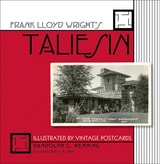
Frank Lloyd Wright’s Taliesin
Illustrated by Vintage PostcardsRandolph C. Henning
University of Wisconsin Press, 2011
The Wisconsin-born Frank Lloyd Wright (1867–1959) is recognized worldwide as an iconic architectural genius. In 1911 he designed Taliesin to use as his personal residence, architectural studio, and working farm. A century later Randolph C. Henning has assembled a splendid collection of rare vintage postcards, some never before published, that provides a revealing and visually unique journey through Wright’s work at Taliesin. Included are intimate images of Taliesin at various stages and views of the building just after the tragic 1914 fire. The postcards also depict nearby buildings designed by Wright, including the Romeo and Juliet windmill and two buildings for the Hillside Home School. Henning provides useful explanations that highlight relevant details and accompany each image. Frank Lloyd Wright’s Taliesin documents and celebrates Wright’s 100-year-old masterpiece.
Best Books for General Audiences, selected by the American Association of School Librarians
Best Books for General Audiences, selected by the Public Library Reviewers
Israeli and Palestinian Postcards
Presentations of National SelfBy Tim Jon Semmerling
University of Texas Press, 2004
Searing images of suicide bombings and retaliatory strikes now define the Israeli-Palestinian conflict for many Westerners, but television and print media are not the only visual realms in which the conflict is playing out. Even tourist postcards and greeting cards have been pressed into service as vehicles through which Israelis and Palestinians present competing visions of national selfhood and conflicting claims to their common homeland.
In this book, Tim Jon Semmerling explores how Israelis and Palestinians have recently used postcards and greeting cards to present images of the national self, to build national awareness and reinforce nationalist ideologies, and to gain international acceptance. He discusses and displays the works of numerous postcard/greeting card manufacturers, artists, and photographers and identifies the symbolic choices in their postcards, how the choices are arranged into messages, what the messages convey and to whom, and who benefits and loses in these presentations of national self. Semmerling convincingly demonstrates that, far from being ephemeral, Israeli and Palestinian postcards constitute an important arena of struggle over visual signs and the power to produce reality.
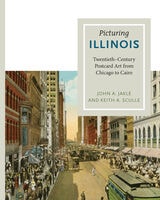
Picturing Illinois
Twentieth-Century Postcard Art from Chicago to CairoJohn A. Jakle and Keith A. Sculle
University of Illinois Press, 2012
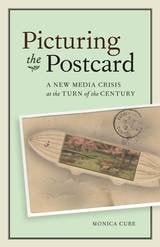
Picturing the Postcard
A New Media Crisis at the Turn of the CenturyMonica Cure
University of Minnesota Press, 2018
The first full-length study of a once revolutionary visual and linguistic medium
Literature has “died” many times—this book tells the story of its death by postcard. Picturing the Postcard looks to this unlikely source to shed light on our collective, modern-day obsession with new media. The postcard, almost unimaginably now, produced at the end of the nineteenth century the same anxieties and hopes that many people think are unique to twenty-first-century social media such as Facebook or Twitter. It promised a newly connected social world accessible to all and threatened the breakdown of authentic social relations and even of language.
Arguing that “new media” is as much a discursive object as a material one, and that it is always in dialogue with the media that came before it, Monica Cure reconstructs the postcard’s history through journals, legal documents, and sources from popular culture, analyzing the postcard’s representation in fiction by well-known writers such as E. M. Forster and Edith Wharton and by more obscure writers like Anne Sedgwick and Herbert Flowerdew. Writers deployed uproar over the new medium of the postcard by Anglo-American cultural critics to mirror anxieties about the changing nature of the literary marketplace, which included the new role of women in public life, the appeal of celebrity and the loss of privacy, an increasing dependence on new technologies, and the rise of mass media. Literature kept open the postcard’s possibilities and in the process reimagined what literature could be.
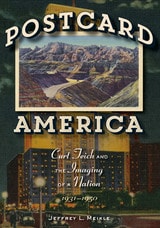
Postcard America
Curt Teich and the Imaging of a Nation, 1931-1950By Jeffrey L. Meikle
University of Texas Press, 2016
Extensively illustrated with representative images, this unique book illuminates the cultural significance of the highly colorized “linen” postcards that depicted a glowing America in the 1930s and 1940s and that fascinate collectors today.
From the Great Depression through the early postwar years, any postcard sent in America was more than likely a “linen” card. Colorized in vivid, often exaggerated hues and printed on card stock embossed with a linen-like texture, linen postcards celebrated the American scene with views of majestic landscapes, modern cityscapes, roadside attractions, and other notable features. These colorful images portrayed the United States as shimmering with promise, quite unlike the black-and-white worlds of documentary photography or Life magazine. Linen postcards were enormously popular, with close to a billion printed and sold.
Postcard America offers the first comprehensive study of these cards and their cultural significance. Drawing on the production files of Curt Teich & Co. of Chicago, the originator of linen postcards, Jeffrey L. Meikle reveals how photographic views were transformed into colorized postcard images, often by means of manipulation—adding and deleting details or collaging bits and pieces from several photos. He presents two extensive portfolios of postcards—landscapes and cityscapes—that comprise a representative iconography of linen postcard views. For each image, Meikle explains the postcard’s subject, describes aspects of its production, and places it in social and cultural contexts. In the concluding chapter, he shifts from historical interpretation to a contemporary viewpoint, considering nostalgia as a motive for collectors and others who are fascinated today by these striking images.
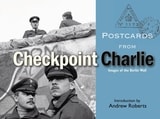
Postcards from Checkpoint Charlie
Images of the Berlin WallEdited by the Bodleian Library
Bodleian Library Publishing, 2008
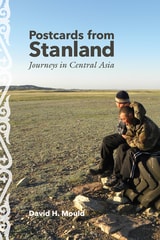
Postcards from Stanland
Journeys in Central AsiaDavid H. Mould
Ohio University Press, 2015
Central Asia has long stood at the crossroads of history. It was the staging ground for the armies of the Mongol Empire, for the nineteenth-century struggle between the Russian and British empires, and for the NATO campaign in Afghanistan. Today, multinationals and nations compete for the oil and gas reserves of the Caspian Sea and for control of the pipelines. Yet “Stanland” is still, to many, a terra incognita, a geographical blank.
Beginning in the mid-1990s, academic and journalist David Mould’s career took him to the region on Fulbright Fellowships and contracts as a media trainer and consultant for UNESCO and USAID, among others. In Postcards from Stanland, he takes readers along with him on his encounters with the people, landscapes, and customs of the diverse countries—Kazakhstan, Kyrgyzstan, Tajikistan, and Uzbekistan—he came to love. He talks with teachers, students, politicians, environmental activists, bloggers, cab drivers, merchants, Peace Corps volunteers, and more.
Until now, few books for a nonspecialist readership have been written on the region, and while Mould brings his own considerable expertise to bear on his account—for example, he is one of the few scholars to have conducted research on post-Soviet media in the region—the book is above all a tapestry of place and a valuable contribution to our understanding of the post-Soviet world.
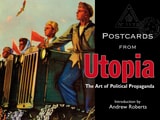
Postcards from Utopia
The Art of Political PropagandaEdited by the Bodleian Library
Bodleian Library Publishing, 2009
Politicians are famous for making extravagant campaign promises. But there are few promises as powerful—or as idealistically utopian—as those put forth by state-sponsored propaganda. Collected here are colorful images of political ideology created and disseminated by the political regimes of Europe, the Soviet Union, and China from the 1920s through the ‘70s.
State leaders of the twentieth century were highly conscious of the need to present a unified national image during a time of serious political transition in Europe, and state-sanctioned art performed a key function in an attempt to consolidate a country behind an idea. These spectacular images provide a rare opportunity to witness how abstract political ideas were rendered as visual picture for a mass audience. Fifty compelling postcards, held in the collection of the Bodleian Library, from the former Soviet Union, China, Germany, Italy, Spain, Czechoslovakia, Hungary, and Albania, reveal that despite national differences there are surprising similarities in political expression and the idealized images presented by each government. An introduction that contextualizes the images within a broader understanding of the ideologies and political powers of the time is provided by European historian, Andrew Roberts.
Taken together, the images in Postcards from Utopia offer a striking look at the art of power and its mythical representation at a time of great political upheaval and experiment.
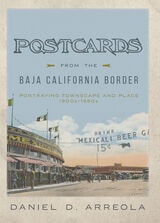
Postcards from the Baja California Border
Portraying Townscape and Place, 1900s–1950sDaniel D. Arreola
University of Arizona Press, 2021
This form of place study calls attention to how we can see a past through a serial view of places, by the nature of repetition, and the photographing of the same place over and over again. Arreola draws our focus to townscapes, or built landscapes, of four border towns—Tijuana, Mexicali, Tecate, and Algodones—during the first half of the twentieth century. With an emphasis on the tourist’s view of these places, this book creates a vivid picture of what life was like for tourists and residents of these towns in the early and mid-twentieth century. Postcards from the Baja California Border is a rich and fascinating experience, one that takes you on a time-travel journey through border town histories and geographies while celebrating the visual intrigue of postcards.
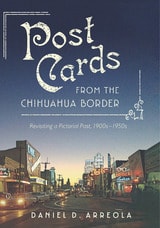
Postcards from the Chihuahua Border
Revisiting a Pictorial Past, 1900s–1950sDaniel D. Arreola
University of Arizona Press, 2019
In Postcards from the Chihuahua Border Daniel D. Arreola captures the exhilaration of places in time, taking us back to Mexico’s northern border towns of Cuidad Juárez, Ojinaga, and Palomas in the early twentieth century. Drawing on more than three decades of archival work, Arreola uses postcards and maps to unveil the history of these towns along west Texas’s and New Mexico’s southern borders.
Postcards offer a special kind of visual evidence. Arreola’s collection of imagery and commentary about them shows us singular places, enriching our understandings of history and the history of change in Chihuahua. No one postcard tells the entire story. But image after image offers a collected view and insight into changing perceptions. Arreola’s geography of place looks both inward and outward. We see what tourists see, while at the same time gaining insight about what postcard photographers and postcard publishers wanted to be seen and perceived about these border communities.
Postcards from the Chihuahua Border is a colorful and dynamic visual history. It invites the reader to time travel, to revisit another era—the first half of the last century—when these border towns were framed and made popular through picture postcards.

Postcards from the Road
Robert Frank’s ‘The Americans’Jonathan Day
Intellect Books, 2014
Taking Frank’s iconic images as his point of reference, Day shot new photographs that commented on the road and contemporary America. Here, these images are paired with critical commentary that details the aspects of the work that are visually expounded and explained in Day’s complementary images. A visual entryway to the photographs and themes of this iconic book in the history of photography, Postcards from the Road represents an innovative, carefully considered departure from standard photographic textbooks.
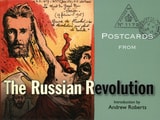
Postcards from the Russian Revolution
Edited by the Bodleian Library
Bodleian Library Publishing, 2008
The postcards originated not only from Russia, but also from Germany, the United States, Belgium, and France, and they reflect their diverse origins in the rich array of artistic styles employed to create them. Whether simply drawn, hand-painted, or mass-printed, the cards present compelling and complex images of the Bolshevik Revolution of 1917 and the people who were enmeshed in it. The cards serve as concise yet powerful artistic documents of Russian history and culture, as they display bloody and graphic street scenes, rare pictures of lesser-known revolutionary leaders, satirical sketches of Russian rulers, portraits of the royal family, illustrations of palaces and institutional buildings, and depictions of pivotal events leading up to the Revolution such as the 1905 assassination of Grand Duke Alexander. Also included in this fascinating visual narrative are cards depicting crucial events from the aftermath of the Revolution, including the great famine of 1921 and public celebrations of the newly formed Union of Soviet Socialist Republics.
An unprecedented and arresting exploration of the Russian Empire in its death throes, Postcards from the Russian Revolution reveals a wholly new and vibrant perspective on one of the most important political movements of the twentieth century.
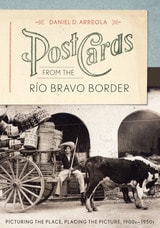
Postcards from the Río Bravo Border
Picturing the Place, Placing the Picture, 1900s–1950sBy Daniel D. Arreola
University of Texas Press, 2013
Between 1900 and the late 1950s, Mexican border towns came of age both as tourist destinations and as emerging cities. Commercial photographers produced thousands of images of their streets, plazas, historic architecture, and tourist attractions, which were reproduced as photo postcards. Daniel Arreola has amassed one of the largest collections of these border town postcards, and in this book, he uses this amazing visual archive to offer a new way of understanding how the border towns grew and transformed themselves in the first half of the twentieth century, as well as how they were pictured to attract American tourists.
Postcards from the Río Bravo Border presents nearly two hundred images of five significant towns on the lower Río Bravo—Matamoros, Reynosa, Nuevo Laredo, Piedras Negras, and Villa Acuña. Using multiple images of sites within each city, Arreola tracks changes both within the cities as places and in the ways in which the cities have been pictured for tourist consumption. He makes a strong case that visual imagery has a shaping influence on how we negotiate and think about places, creating a serial scripting or narrating of the place. Arreola also shows how postcard images, when systematically and chronologically arranged, can tell us a great deal about how Mexican border towns have been viewed over time. This innovative visual approach demonstrates that historical imagery, no less than text or maps, can be assembled to tell a compelling geographical story about place and time.
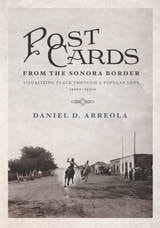
Postcards from the Sonora Border
Visualizing Place Through a Popular Lens, 1900s–1950sDaniel D. Arreola
University of Arizona Press, 2017
Young men ride horses on a dusty main road through town. Cars and gas stations gradually intrude on the land, and, years later, curiosity shops and cantinas change the face of Mexican border towns south of Arizona. Between 1900 and the late 1950s, Mexican border towns came of age both as centers of commerce and as tourist destinations. Postcards from the Sonora Border reveals how images—in this case the iconic postcard—shape the way we experience and think about place.
Making use of his personal collection of historic images, Daniel D. Arreola captures the evolution of Sonoran border towns, creating a sense of visual “time travel” for the reader. Supported by maps and visual imagery, the author shares the geographical and historical story of five unique border towns—Agua Prieta, Naco, Nogales, Sonoyta, and San Luis Río Colorado.
Postcards from the Sonora Border introduces us to these important towns and provides individual stories about each, using the postcards as markers. No one postcard view tells the complete story—rather, the sense of place emerges image by image as the author pulls readers through the collection as an assembled view. Arreola reveals how often the same locations and landmarks of a town were photographed as postcard images generation after generation, giving a long and dynamic view of the inhabitants through time. Arranged chronologically, Arreola’s postcards allow us to discover the changing perceptions of place in the borderlands of Sonora, Mexico.
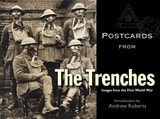
Postcards from the Trenches
Images from the First World WarEdited by the Bodleian Library
Bodleian Library Publishing, 2008
The cards in this compelling volume were created not only by soldiers, but also by embedded journalists from France, Belgium, Austria, Germany, and Britain. The images capture scenes both humorous and poignant, including soldiers having a mock party with little food to eat, wounded soldiers smiling for the camera, a makeshift trench hospital, the bloody aftermath of a battle, and a huddle of men taking what they know could be their last communion before marching onto the battlefield. Other cards document the mundane duties that dominated wartime life, including men digging trenches, troops marching to new trenches and battlefields, and or soldiers nearly comatose with boredom while waiting for the fight to begin. This stunning visual narrative opens a new window into one of the most analyzed events in history, as the postcards’ images testify to the resilience and bravery of soldiers in the most trying circumstances.
A fascinating and unprecedented historical document, Postcards from the Trenches draws back the curtain to unflinchingly show the daily horror and humanity that define life in war.
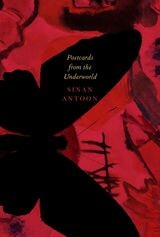
Postcards from the Underworld
PoemsSinan Antoon
Seagull Books, 2023
To confront time, pre-modern Arabic poems often began with the poet standing before the ruins, real and imagined, of a beloved’s home. In Postcards from the Underworld, Sinan Antoon works in that tradition, observing the detritus of his home city, Baghdad, where he survived two wars—the Iran-Iraq War of 1980 and the First Gulf War of 1991—and which, after he left, he watched from afar being attacked during the US invasion in 2003. Antoon’s poems confront violence and force us not to look away as he traces death’s haunting presence in the world. Nature offers consolation, and flowers and butterflies are the poet’s interlocutors, but they too cannot escape ruin. Composed in Arabic and translated into English by the poet himself, Postcards from the Underworld is a searing meditation on the destruction of humans, habitats, and homes.
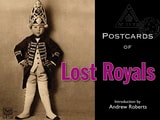
Postcards of Lost Royals
Edited by the Bodleian Library
Bodleian Library Publishing, 2009
This enchanting, unique collection of postcards recovers an old world swept away and forgotten over the decades. The lost royals captured here have not been misplaced or gone missing—what has been lost is the very foundation of their royalty. Collected here are royal figures from around the world who lost their titles and were displaced as a result of World War I and other early twentieth-century political movements.
The royal houses of Europe, Africa, and Asia once ruled a continent and held dominions beyond the seas. Today, just ten monarchs still reign in Europe, and those with only limited powers. Captured in these distinctive postcards held in the collection of the Bodleian Library are these lost emperors, kings and queens, czars and czarinas, princes and princess, and grand dukes and duchesses, who were left behind by the sweep of history. Featuring monarchs from the Balkans to the Iberian Peninsula, from Ethiopia to Korea, these portraits include members of the Russian imperial family, and royals from Romania, Bulgaria, and Germany, among others. But this is more than just a picture book; it provides a narrative snapshot of world history—alongside each postcard is an intriguing mini-biography of the pictured royal that provides a gripping account of his or her story.
Reminiscent of a forgotten era of glamour, grace, and regal power, Postcards of Lost Royals brings history to life and distills the essence of a long-vanished world of royalty.
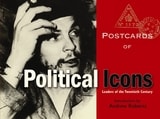
Postcards of Political Icons
Leaders of the Twentieth CenturyEdited by the Bodleian Library
Bodleian Library Publishing, 2008

Postcards, Translators and Esperanto Pioneers
An Alternative History of International CommunicationGuilherme Fians, Bernhard Struck, and Claire Taylor
University of London Press, 2025
The early twentieth century was a time when steamships, international postal services and the telephone were setting the pace of an early wave of globalisation in Europe. In this increasingly international scenario, what role did language play? To address the geopolitical problem of cross-border linguistic (mis)understanding, international auxiliary languages like Esperanto were created. But what happened to a constructed language when it travelled to different places?
This book tackles these questions by exploring the letters, postcards and activities of John Beveridge (1857–1943) and his family. This Scottish clergyman was a proficient Esperanto speaker, translator and co-founder of several Esperanto organisations. His long-standing engagement with the language left a unique archive that reveals how many Esperanto speakers exchanged letters across borders, produced literature for an international readership, organised congresses and used this language as an entry point into modernity and globalisation from their ‘marginal’ positions in the world.
By tracing this language-based form of grassroots internationalism, the book uncovers wide-reaching networks connecting a corner of Scotland with rural settings and villages in Finland, Bulgaria and Brazil. Ultimately, it asks: what do we learn about international communication and globalisation through the lens of Esperanto and postcards? Focusing on a constructed language and communication technologies that preceded the dominance of global English and social media, this book offers an alternative vantage point on the history of international communication.

Railroad Postcards In Age Steam
H. Roger Grant
University of Iowa Press, 1994
Out of the tradition of those long-gone days of great, heaving steam locomotives and endless rail lines comes this remarkable selection of vintage cards, a treasure trove selected from John Vander Maas' consummate collection at the University of Iowa Libraries.
This lavish volume is the first general book-length work devoted to the once-ubiquitous railroad picture postcard. It comprises an introductory essay and an album of cards. The former fully examines the nature of the postcard craze, which reached its zenith about 1910, and discusses why images of American railroads played such an important part in the card phenomenon. The album divides an engaging assortment of more than 150 representative views into five sections: “Trains and Rolling Stock,” “Depots and Railway Structures,” “The Railroad Corridor,” “People and Railroads,” and “The Lighter Side of Railroading.”
Railroad historians, train enthusiasts, postcard collectors, and all other readers will find much to interest them in this selection of images. Not only are the cards themselves visually striking, but they convey a sense of how important railroads once were to the nation's citizenry. The sight of steaming locomotives and the hustle and bustle associated with “train time” caused hearts to quicken. These feelings made views of railroad scenes popular with buyers of postcards and now with latter-day railroad fans and card collectors.
Railroads in the Heartland
Steam and Traction in the Golden Age of PostcardsH. Roger Grant
University of Iowa Press, 1997
Historians of midwestern railroading during the early part of the twentieth century have generally focused on the production of railroad company histories while ignoring the regional view. Fortunately for railway historians and buffs, coincidentally with the zenith of the Railway Age, the national fad for producing and mailing postcards was at its height. Millions of cards, including "real-photo" images, were produced between 1905 and 1915. Roger Grant has selected more than a hundred representative picture postcards to visualize the principal themes and characteristics that gave this dynamic industry its distinctive regional features.
By the turn of the century, the railroad map of the Midwest was unequaled. Anyone who examined it carefully sensed that this was the vital center of America's massive network of steel rails. Depots erected in the western prairie environment were spartan, with only minor decoration, but those in the Midwest usually mirrored more ornate New England styles. These features are often reflected in the images in this heavily illustrated book, which depicts the spare but strong pioneering spirit of the enterprise.
Was This Heaven?
A Self-Portrait of Iowa on Early PostcardsLyell D. Jr. Henry
University of Iowa Press, 1995
In the early decades of the twentieth century, Iowans all across the Hawkeye State succumbed to the nationwide craze for exchanging photographic postcards, mailing each other thousands of images—serious and whimsical—of Uncle Bob and Baby Dora, the Sunday school outing, train wrecks, the Fourth of July celebration, the merchants' carnival, the record-setting blizzard following the bin-busting harvest, the new courthouse, Ackley's Sauer-Kraut Band. Now, thanks to the generosity of David A. Wilson, whose ample collection of photographic cards would be the envy of those early Iowans, Lyell Henry has organized more than two hundred postcards into eight reflective chapters that create a beguiling collective portrait of Iowa life and culture from 1905 to 1919.