Results by title
11 books match the query 'Postmodernity'
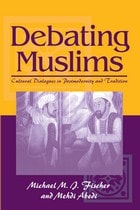
Debating Muslims
Cultural Dialogues in Postmodernity and TraditionMichael M. J. Fischer and Mehdi Abedi
University of Wisconsin Press, 1990
In a world of multinational commerce, satellite broadcasting, migration, terrorism, and global arms dealing, what is said and how it is said in one society can no longer be isolated from what is said and how it is said in another. Debating Muslims focuses on Iranian culture, Shi’ite Islam, and Iranians in the United States, offering an experiment in postmodern ethnography and an invitation to think in a multifaceted way about Islam in the contemporary world.

Identity Crises
A Social Critique Of PostmodernityRobert G. Dunn
University of Minnesota Press, 1998
A readable analysis of postmodernity that provides a cultural context for its rise.
Though the term “postmodern” looms large on our cultural landscape, rarely do we find a systematic and impartial discussion of the circumstances of its ascendance. Identity Crises offers just such an accounting. In this book, Robert G. Dunn situates the intellectual currency of “the postmodern” within the larger context of social and cultural change shaping the movement over the past several decades. Along the way, he offers a necessary corrective to both the sociological and historical shortcomings of cultural criticism and the cultural myopia of social science in considering the postmodern world.
Dunn explains contemporary culture and contemporary cultural criticism as part of a distinct historical moment, one that entails new social relations as a consequence of new means of production. In place of prevailing cultural and political constructions, Dunn proposes a “social relational” approach that explicitly recognizes the structural and situational contexts of identity formation. He conceptualizes issues of identity and difference in terms of social, cultural, and political transformations in the transition from modern to postmodern society. This provides a socio-historical perspective through which to consider the impact of consumption, mass media, globalization, and new social movements on identity-forming processes. Unique to this undertaking and crucial to Dunn’s critique of poststructuralist and postmodern theories is his application of the theory of George Herbert Mead as a more effective means of theorizing identity and difference. Dunn’s focus on postmodernity as opposed to postmodernism serves to ground the analysis of identity and difference materially and socially. Learned, evenhanded, and enlightening, Identity Crises is an essential demonstration of the connections between cultural theory and criticism, contemporary culture, and sociological analysis. ISBN 0-8166-3072-0 Cloth $49.95xxISBN 0-8166-3073-9 Paper $19.95x304 pages 5 7/8 x 9 MarchTranslation inquiries: University of Minnesota Press
Love and Friendship in the Western Tradition
From Plato to PostmodernityJames McEvoy
Catholic University of America Press, 2023
Nietzsche, Heidegger, and the Transition to Postmodernity
Gregory Bruce Smith
University of Chicago Press, 1995
Smith argues that, while much of postmodern thought is rooted in Nietzsche and Heidegger, it has ironically attempted, whether unwittingly or by design, to deflect their philosophy back onto a modern path. Other alternative paths emanating from both Nietzschean and Heideggerian thought that might more powerfully speak to postmodern culture have been ignored. Nietzsche and Heidegger, Smith suggests, have made possible a far more revolutionary critique of modernity then even their most ardent postmodern admirers have realized.
Smith contends that the influences on the postmodern in the thought of Nietzsche and Heidegger are founded in a new vision of praxis liberated from theory. Ultimately, these philosophers do transcend the nihilism often found in the guise of postmodernism. Their thought is, moreover, consistent with the possibility of limited constitutional government and the rule of law. Smith's book takes the first step toward recovering these possibilities and posing the fundamental questions of politics and ethics in ways that have heretofore been closed off by late-modern thought.
Observing Complexity
Systems Theory and PostmodernityWilliam Rasch
University of Minnesota Press, 2000
Shakes up postmodern criticism with paradigms from the social and techno-sciences.
Shakes up postmodern criticism with paradigms from the social and techno-sciences.
The rubric of systems theory brings together conceptual models and approaches in the sciences and social sciences that study complexity. It attempts to provide a coherent means of describing all systems, whether organic or inorganic, and offers a theory of knowledge that can account for the integration of humans in the social, informational, and ecological systems in which we are enmeshed. Observing Complexity brings the major concepts and foremost thinkers of systems theory into interaction with the major figures of postmodern theory. The format is multiplex and open-a rich montage, including interviews, exemplary essays, and staged dialogues. The writers’ aim is not to solidify theory but to provide a thorough explication and an open-ended exploration of how systems theory can address, in a fresh and productive way, theoretical questions that too often have led to impasses between different schools of postmodern theory. Contributors: Drucilla Cornell, Rutgers U; Jonathan Elmer, Indiana U; N. Katherine Hayles, UCLA; Peter Uwe Hohendahl, Cornell U; Eva Knodt; Marjorie Levinson, U of Michigan; Niklas Luhmann; Brian Massumi, SUNY, Albany.
Postmodernity in Latin America
The Argentine ParadigmSantiago Colás
Duke University Press, 1994
Focusing on literature, Colás uses Julio Cortázar’s Hopscotch to characterize modernity for Latin America as a whole, Manuel Puig’s Kiss of the Spider Woman to identify the transition to a more localized postmodernity, and Ricardo Piglia’s Artificial Respiration to exemplify the cultural coordinates of postmodernity in Argentina. Informed by the cycle of political transformation beginning with the Cuban Revolution, including its effects on Peronism, to the period of dictatorship, and finally to redemocratization, Colás’s examination of this literary progression leads to the reconstruction of three significant moments in the history of Argentina. His analysis provokes both a revised understanding of that history and the recognition that multiple meanings of postmodernity must be understood in ways that incorporate the complexity of regional differences.
Offering a new voice in the debate over postmodernity, one that challenges that debate’s leading thinkers, Postmodernity in Latin America will be of particular interest to students of Latin American literature and to scholars in all disciplines concerned with theories of the postmodern.
Scattered Hegemonies
Postmodernity and Transnational Feminist PracticesInderpal Grewal
University of Minnesota Press, 1994
The Ethics of Postmodernity
Current Trends in Continental ThoughtGary B. Madison and Marty Fairbarn
Northwestern University Press, 1997
Contributors include Barry Allen, Caroline Bayard, Robert Bernasconi, Thomas W. Busch, M.C. Dillon, Marty Fairbairn, Paul Fairfield, Morny Joy, Richard Kearney, Gary B. Madison, Joseph Margolis, Tom Rockmore, Charles E. Scott, Evan Simpson, and Mark Williams.
The Language of Public Administration
Bureaucracy, Modernity, and PostmodernityDavid John Farmer
University of Alabama Press, 1995
Rethinking bureaucracy through the lenses of modernity, postmodernity, and administrative imagination.
Coping with the practical problems of bureaucracy is hampered by the limited self-conception and the constricted mindsets of mainstream public administration thinking. Modernist public administration theory, although valuable and capable of producing ever more remarkable results, is limiting as an explanatory and catalytic force in resolving fundamental problems about the nature, size, scope, and functioning of public bureaucracy and in transforming public bureaucracy into a more positive force.
This original study specifies a reflexive language paradigm for public administration thinking and shows how a postmodern perspective permits a revolution in the character of thinking about public bureaucracy. The author considers imagination, deconstruction, deterritorialization, and alterity. Farmer's work emphasizes the need for an expansion in the character and scope of public administration's disciplinary concerns and shows clearly how the study and practice of public administration can be reinvigorated.
The Vietnam War and Postmodernity
Michael Bibby
University of Massachusetts Press, 1999
The longest war in the nation's history, the American military intervention in Vietnam dominated United States culture and politics from 1965 to 1975. In addition to causing immense devastation in Southeast Asia, the war transformed American society, with effects that continue to be felt today. Yet aside from a few cultural studies of the war's representations, scholars have tended to ignore the relationship between the American war in Vietnam and broader cultural developments in the West. Frederic Jameson once characterized the Vietnam War as “the first terrible postmodernist war,” suggesting that it embodied or reflected the sensibility of an emerging historical epoch. But does it make sense to place a military conflict within a category of cultural and aesthetic periodization? Is it possible to see the Vietnam War as an expression and reflection of postmodernity—what Jameson calls “the cultural logic of late capitalism?” These are some of the questions addressed in this volume. Ranging across a variety of disciplines, including philosophy, cultural studies, literary criticism, and film studies, the essays explore the war's discourses and technologies in relation to the post-modern condition. At the same time, they reinterpret key cultural representations of the war from a postmodern perspective. The result is a book that poses important challenges to both Vietnam War studies and postmodern studies, at once reshaping the ways postmodernity is conceived and reminding us of the war's enduring significance in contemporary cultural history. In addition to Michael Bibby, contributors are Philip D. Beidler, Michael Clark, Cynthia J. Fuchs, Brady Harrison, Tony Williams, Eric Gadzinski, Chris Hables Gray, and Douglas Kellner.
Transcendence and History
The Search for Ultimacy from Ancient Societies to PostmodernityGlenn Hughes
University of Missouri Press, 2020