Results by title
4 books match the query 'Postpartum depression'

All that We Ask of You Is to Always Be Happy
Bridget Bell
CavanKerry Press, 2025
Maternal mental illness is an ongoing health crisis and deserves awareness, not only in the medical world but in the poetry world, too. Bridget Bell’s All that We Ask of You Is to Always Be Happy offers support to current mothers, mothers-to-be, family members of people suffering from perinatal mental illnesses, OB-GYNs, nurses, and any other healthcare providers. Bell uses various poetic forms to shed light on the challenges that come with motherhood, including the physical and emotional challenges of childbirth while celebrating the beauty of women’s strength and resilience. Written with deep care and fearlessness, Bell’s debut collection is both an educational tool and a powerful component of recovery in that shares others’ similar stories.

Blue
A History of Postpartum Depression in AmericaRachel Louise Moran
University of Chicago Press, 2024
New motherhood is often seen as a joyful moment in a woman’s life; for some women, it is also their lowest moment. For much of the twentieth century, popular and medical voices blamed women who had emotional and mental distress after childbirth for their own suffering. By the end of the century, though, women with postpartum mental illnesses sought to take charge of this narrative. In Blue: A History of Postpartum Depression in America, Rachel Louise Moran explores the history of the naming and mainstreaming of postpartum depression. Coalitions of maverick psychiatrists, psychologists, and women who themselves had survived substantial postpartum distress fought to legitimize and normalize women’s experiences. They argued that postpartum depression is an objective and real illness and fought to avoid it being politicized alongside other fraught medical and political battles over women’s health.
Based on insightful oral histories and in-depth archival research, Blue reveals a secret history of American motherhood, women’s political activism, and the rise of postpartum depression advocacy amid an often-censorious conservative culture. By breaking new ground with the first book-length history of postpartum mental illness in the twentieth century, Moran brings mothers’ battles with postpartum depression out of the shadows and into the light.

Persevered
A Maternal Mental Health MemoirKara Zivin
Ohio University Press, 0
If you think you know what mental health during and after pregnancy looks like, Persevered: A Maternal Mental Health Memoir will make you reconsider. Dr. Kara Zivin offers a rare, unfiltered look at what happened when a respected mental health researcher faced her own grave battle with depression and anxiety during and after pregnancy. This book is a raw personal account of surviving the darkest moments of new motherhood while juggling high expectations at home and at work.
Zivin takes the reader on an intimate and eye-opening journey that weaves together her perinatal medical records, journal entries, research, and imperfect memories. The story unfolds across hospital rooms, the author’s home, and the university where she works, highlighting the complexity of holding on to one’s identity when everything feels uncertain. Zivin writes with striking honesty about the confusion, guilt, and isolation that so many mothers experience alone but rarely admit to others. Her willingness to lay bare her struggles and her gradual journey toward hope and recovery makes every page feel authentic and deeply relatable.
Persevered moves beyond one woman’s survival, breaking the silence that still surrounds maternal mental health. Zivin’s story reminds us that reaching out, sharing our experiences, and demanding better support can make a difference, not just for mothers but for families and communities. This memoir is for anyone who has ever felt overwhelmed, anyone who has supported a loved one through challenging times, or anyone who believes that honest storytelling can spark real change.
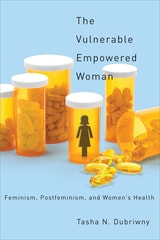
The Vulnerable Empowered Woman
Feminism, Postfeminism, and Women's HealthDubriwny, Tasha N
Rutgers University Press, 2012
Winner of the Organization for the Study of Communication, Language, and Gender 2013 Outstanding Book Award
Winner of the 2013 Bonnie Ritter Book Award from the Feminist and Women's Division of the National Communication Association
The feminist women’s health movement of the 1960s and 1970s is credited with creating significant changes in the healthcare industry and bringing women’s health issues to public attention. Decades later, women’s health issues are more visible than ever before, but that visibility is made possible by a process of depoliticization
The Vulnerable Empowered Woman assesses the state of women’s healthcare today by analyzing popular media representations—television, print newspapers, websites, advertisements, blogs, and memoirs—in order to understand the ways in which breast cancer, postpartum depression, and cervical cancer are discussed in American public life. From narratives about prophylactic mastectomies to young girls receiving a vaccine for sexually transmitted disease, the representations of women’s health today form a single restrictive identity: the vulnerable empowered woman. This identity defuses feminist notions of collective empowerment and social change by drawing from both postfeminist and neoliberal ideologies. The woman is vulnerable because of her very femininity and is empowered not to change the world, but to choose from among a limited set of medical treatments.
The media’s depiction of the vulnerable empowered woman’s relationship with biomedicine promotes traditional gender roles and affirms women’s unquestioning reliance on medical science for empowerment. The book concludes with a call to repoliticize women’s health through narratives that can help us imagine women—and their relationship to medicine—differently.