Results by title
14 books match the query 'Pottery'
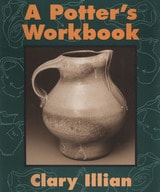
A Potter's Workbook
Clary Illian
University of Iowa Press, 1999
In A Potter's Workbook, renowned studio potter and teacher Clary Illian presents a textbook for the hand and the mind. Her aim is to provide a way to see, to make, and to think about the forms of wheel-thrown vessels; her information and inspiration explain both the mechanics of throwing and finishing pots made simply on the wheel and the principles of truth and beauty arising from that traditional method.
Each chapter begins with a series of exercises that introduce the principles of good form and good forming for pitchers, bowls, cylinders, lids, handles, and every other conceivable functional shape. Focusing on utilitarian pottery created on the wheel, Illian explores sound, lively, and economically produced pottery forms that combine an invitation to mindful appreciation with ease of use. Charles Metzger's striking photographs, taken under ideal studio conditions, perfectly complement her vigorous text.
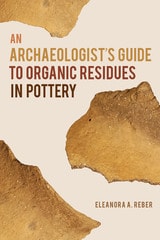
An Archaeologist's Guide to Organic Residues in Pottery
Eleanora A. Reber
University of Alabama Press, 2022
Unlock the chemical secrets of ancient pottery in this guide for mastering organic residue pottery analysis.
Pottery analysis is a crucial component of excavating an archaeological site. Organic residues in pottery are made up of chemicals that absorb into pots over their lifetime. These residues can reveal what people ate, whether different types of vessels were used for different cooking or foodstuffs preparation, and whether “elite” vessels were in use.
Organic residue analysis is a technical specialty that blends an unusual type of instrumental organic chemistry and archaeology. Because it is considered an obscure technique, archaeologists of all degrees of experience tend to struggle with how to apply the technology to archaeological questions and how to sample effectively in the field to answer these questions.
Eleanora A. Reber’s An Archaeologist’s Guide to Organic Residues in Pottery is a user-friendly resource for all archaeologists. Composed of case studies gleaned from Reber’s more than twenty years of archaeological research, this guide covers the range of residues encountered in the field and explains the methods and application of organic residue analysis.
Reber illustrates the useful aspects of residue analysis, such as compound-specific isotope analysis for the identification of traces of maize and marine resources, conifer resins, and the psychoactive alkaloid biomarkers caffeine and nicotine. Special attention is paid to sampling and construction of meaning as well as research questions to help field archaeologists integrate residue analysis seamlessly into their projects
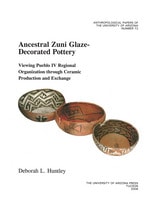
Ancestral Zuni Glaze-Decorated Pottery
Viewing Pueblo IV Regional Organization through Ceramic Production and ExchangeDeborah L. Huntley
University of Arizona Press, 2008
Ceramic Ethnoarchaeology
Edited by William A. Longacre
University of Arizona Press, 1991
Drawing on projects undertaken around the world, in the Phillipines, East Africa, Mesoamerica, India, in both traditional and complex societies, the contributors focus on identifying social and behavioral sources of ceramic variation to show how analogical reasoning is fundamental to archaeological interpretation. As the number of pottery-making societies declines, opportunities for such research must be seized. By bringing together a variety of ceramic ethnoarchaeological analyses, this volume offers the profession a much-needed touchstone on method and theory for the study of pottery-making among living peoples.
Human Values and Beliefs
A Cross-Cultural SourcebookRonald Inglehart, Miguel Basanez, and Alejandro Moreno
University of Michigan Press, 1998
Integrative Approaches in Ceramic Petrography
Edited by Mary Ownby, Isabelle Druc, and Maria Masucci
University of Utah Press, 2016
Ceramic petrography, a microscopic examination of the mineral content and structure within ceramic thin sections, reveals the origin and movement of pottery and sheds light on the technology of the artifact. Practiced by archaeologists since the 1930s, ceramic petrography was less commonly practiced until recently. Integrative Approaches in Ceramic Petrography highlights new results from this field and incorporates it prominently within current archaeological work.
Thirteen papers cover a broad spectrum of regional and temporal contexts with case studies that provide practical examples combining petrography with scientific, ethnographic, and experimental methods. The varied uses of ceramic petrography and the insights it has generated, illustrate the significance of this method for understanding past societies and the volume’s conclusion provides an astute overview of the field.
Living with Pottery
Ethnoarchaeology among the Gamo of Southwest EthiopiaArthur, John W
University of Utah Press, 2006
The southwestern region of Ethiopia is one of the few places in the world where locally made pottery is still the dominant choice for everyday domestic use. The Gamo people continue to produce and use pottery for transporting water, cooking, storing, and serving. Ethnoarchaeology undertaken in a society where people still use low-fired ceramics in daily life provides a powerful framework for archaeological inferences, especially since little behavioral information exists concerning the relationship between status, wealth, and household pottery.
Based on John Arthur’s extensive fieldwork, this study sheds light on some of the puzzles common to archaeology in any region. It also helps decipher evidence of inter- and intravillage social and economic organization and offers insight on markers for pottery-producing and nonproducing villages and socioeconomic variability.
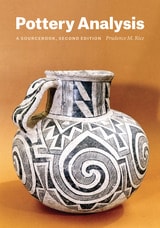
Pottery Analysis, Second Edition
A SourcebookPrudence M. Rice
University of Chicago Press, 2015
This new edition fully incorporates more than two decades of growth and diversification in the fields of archaeological and ethnographic study of pottery. It begins with a summary of the origins and history of pottery in different parts of the world, then examines the raw materials of pottery and their physical and chemical properties. It addresses ethnographic and ethnoarchaeological perspectives on pottery production; reviews the methods of studying pottery’s physical, mechanical, thermal, mineralogical, and chemical properties; and discusses how proper analysis of artifacts can reveal insights into their culture of origin. Intended for use in the classroom, the lab, and out in the field, this essential text offers an unparalleled basis for pottery research.
Pottery Analysis
A SourcebookPrudence M. Rice
University of Chicago Press, 1987
Pottery and Chronology at Angel
Sherri Hilgeman
University of Alabama Press, 2000
By analyzing the pottery found at a well-known archaeological site, Hilgeman constructs the long-awaited timeline for the rise and decline of this ancient society.
Located near present-day Evansville, Indiana, the Angel site is one of the important archaeological towns associated with prehistoric Mississippian society. More than two million artifacts were collected from this site during excavations from 1939 to 1989, but, until now, no systematic survey of the pottery sherds had been conducted. This volume, documenting the first in-depth analysis of Angel site pottery, also provides scholars of Mississippian culture with a chronology of this important site.
Angel is generally thought to have been occupied from before A.D. 1200 to 1450, but scholars have been forced to treat this period as one chronological unit without any sense of the growth and decline of the society that occupied it. Using radiocarbon assays and an analysis of its morphological and stylistic attributes of pottery, Sherri Hilgeman is able to divide the occupation of Angel into a series of recognizable stages. She then correlates those stages with similar ones at other archaeological excavations—especially nearby Kincaid—making it possible to compare Angel society with other native cultures of the lower Ohio Valley. Through this important contribution to native pottery studies, Hilgeman opens a window into the lifeways of prehistoric Angel society and places that society in the larger context of Mississippian culture.
Pottery and People
James Skibo
University of Utah Press, 1998
This volume emphasizes the complex interactions between ceramic containers and people in past and present contexts.
Pottery, once it appears in the archaeological record, is one of the most routinely recovered artifacts. It is made frequently, broken often, and comes in endless varieties according to economic and social requirements. Moreover, even in shreds ceramics can last almost forever, providing important clues about past human behavior.
The contributors to this volume, all leaders in ceramic research, probe the relationship between humans and ceramics. Here they offer new discoveries obtained through traditional lines of inquiry, demonstrate methodological breakthroughs, and expose innovative new areas for research. Among the topics covered in this volume are the age at which children begin learning pottery making; the origins of pottery in the Southwest U.S., Mesoamerica, and Greece; vessel production and standardization; vessel size and food consumption patterns; the relationship between pottery style and meaning; and the role pottery and other material culture plays in communication.
Pottery and People provides a cross-section of the state of the art, emphasizing the complete interactions between ceramic containers and people in past and present contexts. This is a milestone volume useful to anyone interested in the connections between pots and people.
Pottery of the Great Basin and Adjacent Areas
UUAP 111Suzanne Griset
University of Utah Press, 1986
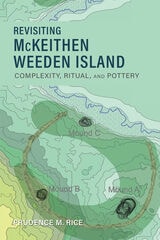
Revisiting McKeithen Weeden Island
Complexity, Ritual, and PotteryPrudence M. Rice
University of Alabama Press, 2024
Reassesses the ancient Indigenous McKeithen site in northern Florida in light of new data, analyses, and theories
Revisiting McKeithen Weeden Island further illuminates an Indigenous Late Woodland (ca. AD 200–900) mound-and-village community in northern Florida that was first excavated in the late 1970s. Since then, some artifacts received additional analyses, and the topic of prechiefdom societies has been broadly reconsidered in anthropology and archaeology. These developments allow new perspectives on McKeithen’s history and significance.
Prudence M. Rice, a Mayanist who began her career at the University of Florida, revisits what is known about McKeithen and recontextualizes the 1970s excavations. Weeden Island and McKeithen are best known through mortuary mounds and mortuary ritual, mainly involving unusual pottery bird effigies. Rice discusses current theoretical trends in studies of ritual and belief systems and their relation to mound-building at McKeithen in early stages of developing societal complexity.
Revisiting McKeithen Weeden Island serves as a masterful example of an esteemed archaeologist advancing the field through rethought and updated interpretations of the site and its significance, primarily through its pottery. Rice’s case study ultimately also fosters understanding of later Mississippian society and other civilizations around the world at this time period. Archaeologists, anthropologists, and social historians as well as students and avocational readers will welcome Rice’s insight.
The Jealous Potter
Claude Lévi-Strauss
University of Chicago Press, 1988
"Electrifying. . . . A brilliant demonstration of structural analysis in action. . . . Can be read with pleasure and profit by anyone interested in that aspect of self-discovery that comes through knowledge of the universal and timeless myths that live on in all of us."—Jonathan Sharp, San Francisco Examiner-Chronicle
"A characteristic tour de force. . . . One remains awed by him."—Colin Thubron, Sunday Times
"With all its epistemological depth, the book reads at times like a Simenon or a Lewis Carroll, fusing concise methodology with mastery of style."—Bernadette Bucher, American Ethnologist
"[An] engagingly provocative exploration of mythology in the Americas. . . . Always a good read."—Choice
"A playful, highly entertaining book, fluently and elegantly translated by Bénédicte Chorier."—Wendy Doniger O'Flaherty, New York Times Book Review