160 books match the query 'Poverty & Homelessness' and 5 start with a
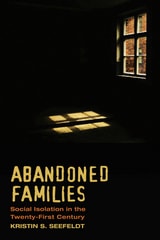
cover of Abandoned Families: Social Isolation in the Twenty-First Century

Abandoned Families

Social Isolation in the Twenty-First Century

Kristin S. Seefeldt

Russell Sage Foundation, 2016

Choosing whom to marry involves more than emotion, as racial politics, cultural mores, and local demographics all shape romantic choices. In Marriage Vows and Racial Choices, sociologist Jessica Vasquez-Tokos explores the decisions of Latinos who marry either within or outside of their racial and ethnic groups. Drawing from in-depth interviews with nearly 50 couples, she examines their marital choices and how these unions influence their identities as Americans.
 
Vasquez-Tokos finds that their experiences in childhood, adolescence, and young adulthood shape their perceptions of race, which in turn influence their romantic expectations. Most Latinos marry other Latinos, but those who intermarry tend to marry whites. She finds that some Latina women who had domineering fathers assumed that most Latino men shared this trait and gravitated toward white men who differed from their fathers. Other Latina respondents who married white men fused ideas of race and class and perceived whites as higher status and considered themselves to be “marrying up.” Latinos who married non-Latino minorities—African Americans, Asian Americans, and Native Americans—often sought out non-white partners because they shared similar experiences of racial marginalization. Latinos who married Latinos of a different national origin expressed a desire for shared cultural commonalities with their partners, but—like those who married whites—often associated their own national-origin groups with oppressive gender roles.
 
Vasquez-Tokos also investigates how racial and cultural identities are maintained or altered for the respondents’ children. Within Latino-white marriages, biculturalism—in contrast with Latinos adopting a white “American” identity—is likely to emerge. For instance, white women who married Latino men often embraced aspects of Latino culture and passed it along to their children. Yet, for these children, upholding Latino cultural ties depended on their proximity to other Latinos, particularly extended family members. Both location and family relationships shape how parents and children from interracial families understand themselves culturally.
 
As interracial marriages become more common, Marriage Vows and Racial Choices shows how race, gender, and class influence our marital choices and personal lives.
 
 
[more]
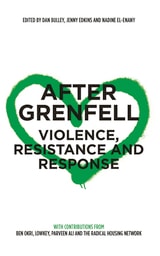
cover of After Grenfell: Violence, Resistance and Response

After Grenfell

Violence, Resistance and Response

Edited by Dan Bulley, Jenny Edkins and Nadine El-Enany

Pluto Press, 2019
[more]
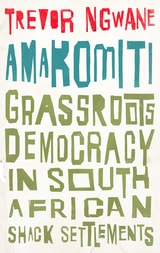
cover of Amakomiti: Grassroots Democracy in South African Shack Settlements

Amakomiti

Grassroots Democracy in South African Shack Settlements

Trevor Ngwane

Pluto Press, 2021

Can people who live in shantytowns, shacks and favelas teach us anything about democracy? About how to govern society in a way that is inclusive, participatory and addresses popular needs? This book argues that they can. In a study conducted in dozens of South Africa's shack settlements, where more than 9 million people live, Trevor Ngwane finds thriving shack dwellers' committees that govern local life, are responsive to popular needs and provide a voice for the community. These committees, called 'amakomiti' in the Zulu language, organize the provision of basic services such as water, sanitation, public works and crime prevention. Democracy on the Margins argues that, contrary to common perception, slum dwellers are in fact an essential part of the urban population, whose political agency must be recognized and respected. In a world searching for democratic alternatives that serve the many and not the few, it is to the shantytowns, rather than the seats of political power, that we should turn.
[more]
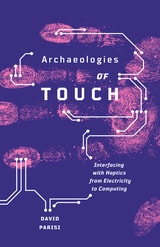
cover of Archaeologies of Touch: Interfacing with Haptics from Electricity to Computing

Archaeologies of Touch

Interfacing with Haptics from Electricity to Computing

David Parisi

University of Minnesota Press, 2018

A material history of haptics technology that raises new questions about the relationship between touch and media

Since the rise of radio and television, we have lived in an era defined increasingly by the electronic circulation of images and sounds. But the flood of new computing technologies known as haptic interfaces—which use electricity, vibration, and force feedback to stimulate the sense of touch—offering an alternative way of mediating and experiencing reality. 

In Archaeologies of Touch, David Parisi offers the first full history of these increasingly vital technologies, showing how the efforts of scientists and engineers over the past three hundred years have gradually remade and redefined our sense of touch. Through lively analyses of electrical machines, videogames, sex toys, sensory substitution systems, robotics, and human–computer interfaces, Parisi shows how the materiality of touch technologies has been shaped by attempts to transform humans into more efficient processors of information. 

With haptics becoming ever more central to emerging virtual-reality platforms (immersive bodysuits loaded with touch-stimulating actuators), wearable computers (haptic messaging systems like the Apple Watch’s Taptic Engine), and smartphones (vibrations that emulate the feel of buttons and onscreen objects), Archaeologies of Touch offers a timely and provocative engagement with the long history of touch technology that helps us confront and question the power relations underpinning the project of giving touch its own set of technical media.
[more]
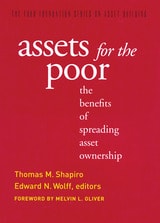
cover of Assets for the Poor: The Benefits of Spreading Asset Ownership

Assets for the Poor

The Benefits of Spreading Asset Ownership

Thomas M. Shapiro

Russell Sage Foundation, 2001

Over the past three decades, average household wealth in the United States has declined among all but the richest families, with a near 80 percent drop among the nation's poorest families. Although the national debate about inequality has focused on income, it is wealth—the private assets amassed and passed on within families—that provides the extra economic cushion needed to move beyond mere day-to-day survival. Assets for the Poor is the first full-scale investigation into the importance of family wealth and the need for policies to encourage asset-building among the poor. Assets for the Poor shows how institutional mechanisms designed to encourage acquisition of capital and property favor middle-class and high-income families. For example, the aggregate value of home mortgage tax deductions far outweighs the dollar amount of the subsidies provided by Section 8 rental vouchers and public housing. Banking definitions of creditworthiness largely exclude minorities, and welfare rules have made it nearly impossible for single mothers to accumulate savings, let alone stocks or real estate. Due to persistent residential segregation, even those minority families who do own homes are often denied equal access to better schools and public services. The research in this volume shows that the poor do make use of the assets they have. Cash gifts—although small in size—are frequent within families and often lead to such positive results as homebuying and debt reduction, while tangible assets such as tools and cars help increase employment prospects. Assets for the Poor examines policies such as Individual Development Account tax subsidies to reward financial savings among the poor, and more liberal credit rules to make borrowing easier and less costly. The contributors also offer thoughtful advice for bringing the poor into mainstream savings institutions and warn against developing asset building policies at the expense of existing safety net programs. Asset-building for low-income families is a powerful idea that offers hope to families searching for a way out of poverty. Assets for the Poor challenges current thinking regarding poverty reduction policies and proposes a major shift in the way we think about families and how they make a better life. A Volume in the Ford Foundation Series on Asset Building
[more]