Results by title
7 books match the query 'Power Politics'
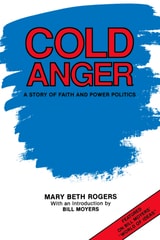
Cold Anger
A Story of Faith and Power PoliticsMary Beth Rogers
University of North Texas Press, 1990
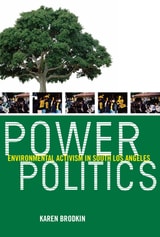
Power Politics
Environmental Activism in South Los AngelesBrodkin, Karen
Rutgers University Press, 2009
Power Politics is a rich and readable study of a grassroots campaign where longtime labor and environmental allies found themselves on opposite sides of a conflict that pitted good jobs against good air. Karen Brodkin analyzes how those issues came to be opposed and in doing so unpacks the racial and class dynamics that shape Americans' grasp of labor and environmental issues. Power Politics' activists stood at the forefront of a movement that is building broad-based environmental coalitions and placing social justice at the heart of a new and robust vision.
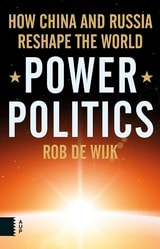
Power Politics
How China and Russia Reshape the WorldRob de Wijk
Amsterdam University Press, 2015

Sexual Bargaining
Power Politics in the American MarriageJohn Scanzoni
University of Chicago Press, 1982
In this updated edition of his fundamental study of modern marriage, John Scanzoni challenges the widespread assumption that marriage is a dying institution. By analyzing the "reward seeking" which generates conflicts between males and females, he shows that marriage indeed has a future but that its form will continue to change as sex-role equality emerges both within and outside of marriage.
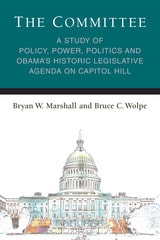
The Committee
A Study of Policy, Power, Politics and Obama's Historic Legislative Agenda on Capitol HillBryan W. Marshall and Bruce C. Wolpe
University of Michigan Press, 2018
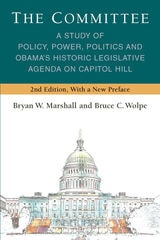
The Committee
A Study of Policy, Power, Politics and Obama’s Historic Legislative Agenda on Capitol HillBryan W. Marshall and Bruce C. Wolpe
University of Michigan Press, 2021
For three years while serving as a senior adviser to Rep. Henry A. Waxman (D-CA), chairman of the House Committee on Energy and Commerce—one of the most powerful committees in Congress—Bruce C. Wolpe kept a diary, a senior staffer’s look at how committees develop and promote legislation. With its insider’s view of the rough-and-tumble politics of cap-and-trade, healthcare reform, tobacco, oversight, and the debt ceiling agreement, The Committee uniquely melds the art of politics and policymaking with the theory and literature of political science. The authors engage with the important questions that political science asks about committee power, partisanship, and the strategies used to build winning policy coalitions both in the Committee and on the floor of the House. In this new edition, the authors revisit the relationship between the executive and Congress in the wake of the sweeping changes wrought by the Trump administration, as well as thoughts about how that relationship will change again as President Biden faces a 117th Congress that is strikingly similar to Obama’s 111th. The insider politics and strategies about moving legislation in Congress, from internal and external coalition building to a chairman’s role in framing policy narratives, will captivate both novice and die-hard readers of politics.
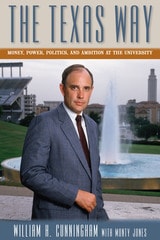
The Texas Way
Money, Power, Politics, and Ambition at The UniversityBy William H. Cunningham
University of Texas Press, 2013
This engaging memoir details Bill Cunningham’s seven years as president of the University of Texas at Austin and his eight years as chancellor of the UT System. Along the way, he relates accounts of the important issues UT faced during that time, including fraternity hazing, affirmative action, the demise of the Southwest Conference and the creation of the Big 12, apartheid and divestment protests, the future of higher education in Texas, and many other issues.
The Texas Way outlines how money, power, politics, and ambition all play roles in the business of running the state’s premier university system, particularly in its relations with the state government. As president and then as chancellor, Cunningham dealt with conflict from all sides of the political spectrum, always striving to protect the university’s interests.
Bill Cunningham was at the center of many important issues during the fifteen years he served as president and chancellor. The Dolph Briscoe Center for American History at the University of Texas at Austin is pleased to publish Cunningham’s detailed and insightful memoir, which serves as a reminder of how these issues continue to resonate and affect higher education in Texas.