Results by title
292 books match the query 'Power resources' and 22 start with a
A Handbook for EMC Testing and Measurement
David Morgan
The Institution of Engineering and Technology, 1994
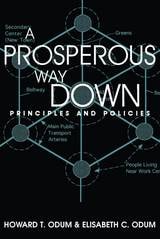
A Prosperous Way Down
Principles and PoliciesHoward T. Odum
University Press of Colorado, 2008
A Prosperous Way Down considers ways in which a future with less fossil fuel could be peaceful and prosperous. Although history records the collapse of countless civilizations, some societies and ecosystems have managed to descend in orderly stages, reducing demands and selecting and saving what is most important.
The authors make recommendations for a more equitable and cooperative world society, with specific suggestions based on their evaluations of trends in global population, wealth distribution, energy sources, conservation, urban development, capitalism and international trade, information technology, and education.
Available for the first time in paperback, this thoughtful, provocative book forces us to confront assumptions about our world 's future and provides both a steadying hand and a call to action with its pragmatic analysis of a global transition.

AC-DC Power System Analysis
Jos Arrillaga
The Institution of Engineering and Technology, 1998
AI Explainability and Governance in Smart Energy Systems
Pushpalatha Naveenkumar
The Institution of Engineering and Technology, 2026
AI and Digitalization in Energy Management
Antonio Sanfilippo
The Institution of Engineering and Technology, 2025
AI for Power Electronics and Renewable Energy Systems
Weihao Hu
The Institution of Engineering and Technology, 2024
AI for Status Monitoring of Utility Scale Batteries
Shunli Wang
The Institution of Engineering and Technology, 2022
AI for Wind Turbine Performance and Condition Monitoring
Davide Astolfi
The Institution of Engineering and Technology, 2026
AI-Based Forecasting of Solar Photovoltaics Power Generation
Elham Shirazi
The Institution of Engineering and Technology, 2026

Adaptive Sampling with Mobile WSN
Simultaneous robot localisation and mapping of paramagnetic spatio-temporal fieldsKoushil Sreenath
The Institution of Engineering and Technology, 2011
Advanced Characterization of Thin Film Solar Cells
Mowafak Al-Jassim
The Institution of Engineering and Technology, 2020
Advanced Dielectric Materials for Electrostatic Capacitors
Qi Li
The Institution of Engineering and Technology, 2020
Advances in High Voltage Engineering
A. Haddad
The Institution of Engineering and Technology, 2004
Advances in Power System Modelling, Control and Stability Analysis
Federico Milano
The Institution of Engineering and Technology, 2016
Advances in Power System Modelling, Control and Stability Analysis
Federico Milano
The Institution of Engineering and Technology, 2022

After Coal
Stories of Survival in Appalachia and WalesTom Hansell
West Virginia University Press, 2018
What happens when fossil fuels run out? How do communities and cultures survive?
Central Appalachia and south Wales were built to extract coal, and faced with coal’s decline, both regions have experienced economic depression, labor unrest, and out-migration. After Coal focuses on coalfield residents who chose not to leave, but instead remained in their communities and worked to build a diverse and sustainable economy. It tells the story of four decades of exchange between two mining communities on opposite sides of the Atlantic, and profiles individuals and organizations that are undertaking the critical work of regeneration.
The stories in this book are told through interviews and photographs collected during the making of After Coal, a documentary film produced by the Center for Appalachian Studies at Appalachian State University and directed by Tom Hansell. Considering resonances between Appalachia and Wales in the realms of labor, environment, and movements for social justice, the book approaches the transition from coal as an opportunity for marginalized people around the world to work toward safer and more egalitarian futures.
After Oil
Imre Szeman
West Virginia University Press, 2016
Energy plays a critical role in determining the shape, form and character of our daily existence, which is why a genuine shift in our energy usage demands a wholesale transformation of the petrocultures in which we live. After Oil provides readers with the resources to make this happen.
Agrivoltaics
Technical, ecological, commercial and legal aspectsConstantin Klyk
The Institution of Engineering and Technology, 2024
Alaska's Microgrid Innovators
How Communities Are Responding to Today's Energy ChallengesPeter Asmus
University of Alaska Press, 2026
As glaciers melt, treasured species such as salmon and crab decline, oil reserves wane, and consumer energy bills continue to rise, Alaska is reevaluating its energy future, and the state’s rural communities are leading the way. Alaska's Microgrid Innovators explores how climate change refocuses the story of the state’s energy development history, looking not at the well-told story of oil and natural gas but instead at wind, solar, hydro, and other low-carbon energy sources that have delivered immense economic savings and environmental benefits to both Alaska state residents and the world.
Renewable energy integration projects have sprung up in Alaska’s rural communities since the mid-1990s not due to regulatory fiat but rather to economic necessity. In Alaska’s Microgrid Innovators, pioneers across the stakeholder spectrum—including professionals, academics, Native peoples, policy makers, and other industry participants—describe how they have helped to develop more affordable and sustainable energy systems.
Along with chronicling technological innovation, Alaska’s Microgrid Innovators looks to the future, making the case for succession planning and new public policies as integral for Alaska to meet today’s energy challenges and those to come.
Ammonia Combustion Applications for Energy Systems
Agustin Valera-Medina
The Institution of Engineering and Technology, 2025
Artificial Intelligence Techniques in Power Systems
Kevin Warwick
The Institution of Engineering and Technology, 1997

Artificial Intelligence for Smarter Power Systems
Fuzzy logic and neural networksMarcelo Godoy Simões
The Institution of Engineering and Technology, 2021