Results by title
20 books match the query 'Powers'
Critical Understanding
The Powers and Limits of PluralismWayne C. Booth
University of Chicago Press, 1979
Gabriel Garcia Marquez and the Powers of Fiction
By Julio Ortega
University of Texas Press, 1988
Together with the late Jorge Luis Borges, Gabriel García Márquez, the 1982 Nobel laureate, stands at the pinnacle of Latin American literature. His work, in the words of Julio Ortega, "contains its own 'deconstructive' force—a literary power capable of reshaping natural order and rhetorical tradition in order to 'carnivalize' the Borges' library and allow us to hear the voices—and the laughter—of a culture, that of Latin America." This reshaping force invites us to read the works of García Márquez in a new way, one that bypasses the traditional, inadequate approaches through Latin American politics, history, and "magical realism."
In Gabriel García Márquez and the Powers of Fiction, noted scholars Julio Ortega, Ricardo Gutiérrez Mouat, Michael Palencia-Roth, Aníbal González, and Gonzalo Díaz-Migoyo offer English-speaking readers a new approach to García Márquez's work. Their poststructuralist readings focus on the peculiar sign-system, formal configuration, intradiscursivity, and unfolding representation in the novels One Hundred Years of Solitude, No One Writes to the Colonel, In Evil Hour, The Autumn of the Patriarch, and Chronicle of a Death Foretold and in several of the author's short stories. Also included as an appendix is a translation of García Márquez's Nobel Prize acceptance speech, "The Solitude of Latin America."
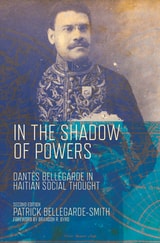
In the Shadow of Powers
Dantes Bellegarde in Haitian Social ThoughtPatrick Bellegarde-Smith
Vanderbilt University Press, 2019
Throughout much of the twentieth century and even to this day, there has been a dearth of scholarship on the intellectual and political contributions of Haitians. In the Shadow of Powers, first published in 1985, was a corrective to this oversight and remains a foundational text. Bellegarde-Smith traces the history of Haiti through the life and career of his grandfather Dantès Bellegarde, one of Haiti's influential diplomats and preeminent thinkers. As Brandon R. Byrd describes in his foreword to this new edition, "Bellegarde was driven by a subversive, racially inclusive vision of civilized progress. He believed in and continued to push for Haiti to establish an existence for itself, black people, and the colonized world independent of the considerable shadow cast by the world's military, economic, and industrial powers." Scholars and students who want to learn about the intellectual and political foundations of Haiti, its influence on other intellectuals worldwide, and its struggles against imperialism continue to find this to be an invaluable classic.
Knowing History in Schools
Powerful Knowledge and the Powers of KnowledgeEdited by Arthur Chapman
University College London, 2021
The “knowledge turn” in curriculum studies has drawn attention to the central role that the knowledge of the disciplines plays in education and the need for fresh perspectives on knowledge-building. Knowing History in Schools explores these issues in the context of the discipline of history through a dialogue between the eminent sociologist of curriculum Michael Young, and leading figures in history education research and practice from a range of traditions and contexts. Focusing on Young’s “powerful knowledge” theorization of the curriculum, and on his more recent articulations of the “powers” of knowledge, this dialogue explores the many complexities facing history education. The book attempts to clarify how educators can best conceptualize knowledge-building in history education, and it will be of interest to history education students, history teachers, teacher educators, and history curriculum designers, as they navigate the challenges that knowledge-building processes pose for learning history in schools.
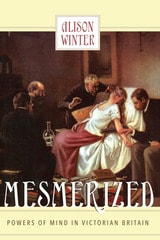
Mesmerized
Powers of Mind in Victorian BritainAlison Winter
University of Chicago Press, 1998
"Dazzling. . . . This splendid book . . . gives us a new form of historical understanding and a model for open and imaginative reading."—James R. Kinkaid, Boston Globe
"A landmark in the history of science scholarship."—John Sutherland, The Independent
"It is difficult to imagine the documentary side of the story being better done than by Winter's well-researched and generously illustrated study. . . . She is a lively and keen observer; and her book is a pleasure to read purely for its range of material and wealth of detail. . . . Fruitful and suggestive."—Daniel Karlin, Times Literary Supplement
"An ambitious, sweeping and fascinating historical study. . . . Beautifully written, thoroughly researched, and well-illustrated."—Bernard Lightman, Washington Times
Ontopower
War, Powers, and the State of PerceptionBrian Massumi
Duke University Press, 2015
Powers Of Diaspora
Two Essays On The Relevance Of Jewish CultureJonathan Boyarin
University of Minnesota Press, 2002
Reasserts the centrality of Jewish culture to contemporary discussions of diaspora
Diaspora: the scattering of a people, often described as a condition of helplessness and a pathology to be overcome. It can also be, as Jonathan Boyarin and Daniel Boyarin assert in this provocative work, a unique source of power and strength. Focusing on Jewish experience, Powers of Diaspora forcefully argues that diasporic communities exercise a distinct form of cultural power in order to maintain themselves.
With reference to rabbinic culture and contemporary Jewish ethnography, the authors evoke the cultural strategies of Jewish diaspora—of regeneration through statelessness—that should prove increasingly relevant to the dilemmas and possibilities of the "new diasporas" born in the midst and in the aftermath of the modern world-system. Their work exposes the various methods by which peoples in diaspora "legislate" distinctive ways of life and establish formal communal structures, thus creating fluid yet effective boundaries between themselves and the others who surround them, and critiques the internal power dynamics that can sometimes result.Powers of Diaspora strongly reasserts the place of Jewish culture in contemporary discussions of diaspora, where the cultural politics of postcolonialism have remarginalized Jewish experience; at the same time, it brings insights from studies of other diasporas to bear on the study of Jews. In challenging the equation of diaspora with powerlessness, the book questions the modern nation-state ideal and suggests that diasporic cultural formations offer important clues toward an alternative means of relating culture to polity.
Powers of Distinction
On Religion and ModernityNancy Levene
University of Chicago Press, 2017
In readings from Abraham to the present, Levene recovers this richer dualism in its difference from the alternatives—other dualisms, nondualism, multiplication. From Abraham we get the biblical call to give up tribal belonging for a promised land of covenantal relation. Yet modernity, inclusive of this call, is also the principle that critiques the promise when it divides self from other, us from them.
Drawing on a long tradition of thinkers and scholars even as she breaks new ground, Levene offers here nothing less than a new way of understanding modernity as an ethical claim about our world, a philosophy of the powers of distinction to include rather than to divide.

Powers of Exclusion
Land Dilemmas in Southeast AsiaHall Derek
National University of Singapore Press, 2011
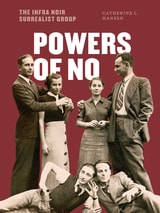
Powers of No
The Infra Noir Surrealist GroupCatherine L. Hansen
University of Minnesota Press, 2026
How five dissident poets applied Surrealism to everyday life under totalitarian rule
A collective biography of the Surrealist group Infra Noir, Powers of No reveals an important chapter in the history of the postwar European avant-garde. Detailing the group’s innovative program for cultivating community and political resistance, Catherine L. Hansen examines how its five members reimagined Surrealism as a means to endure life under totalitarianism and war.
Encompassing the careers and friendships of Gherasim Luca, Gellu Naum, Trost, Paul Păun, and Virgil Teodorescu, Powers of No is the first English-language book about this Francophone Romanian group active between 1941 and 1947. The members of Infra Noir created radical art and publications that attracted the attention of André Breton and other central figures in the wider Surrealist movement. Charting their course from the Bucharest avant-garde amid the rising tide of fascism through the turbulent intellectual and political scene of postwar France and Stalinist repression, Hansen unpacks the concepts this group developed, which envisioned new possibilities for emancipatory thought and praxis.
Grounded in a wealth of archival materials and original translations, Powers of No situates the unique legacy of Infra Noir’s revolutionary project among the various intellectual currents of a tumultuous era. Establishing Infra Noir as more than an obscure clique of dissident poets and artists, this book presents their work as a repertoire of lessons for resisting authoritarian oppression and avoiding despair even under the harshest political conditions.
Retail e-book files for this title are screen-reader friendly with images accompanied by short alt text and/or extended descriptions.
Powers of Time
Versions of BergsonDavid Lapoujade
University of Minnesota Press, 2017
How is it that when we think of time, we hardly think of the role affect plays in granting us access to time: the sense of waiting, regret, mourning, melancholy? In Powers of Time, David Lapoujade returns to two central themes that continuously converge throughout the writings of the French philosopher Henri Bergson: durée (duration) and intuition. If duration is synonymous with memory, how are we then capable of thinking an authentic sense of the future? Does this mean that freedom is nothing more than a reprisal of our past?
Lapoujade uncovers multiple versions of Bergson: a philosopher of sympathy, a melancholic philosopher, a perspectivist Bergson, a spiritualist Bergson. Leading us beyond simplistic anthropomorphic conceptions of temporality and intuition, Lapoujade’s multiple Bergsons guide us to encounter a rapport with time, memory, and duration that places us in direct contact with the nonhuman flows and movements of the universe.
Powers of the Mind
The Reinvention of Liberal Learning in AmericaDonald N. Levine
University of Chicago Press, 2006
It is one thing to lament the financial pressures put on universities, quite another to face up to the poverty of resources for thinking about what universities should do when they purport to offer a liberal education. In Powers of the Mind, former University of Chicago dean Donald N. Levine enriches those resources by proposing fresh ways to think about liberal learning with ideas more suited to our times.
He does so by defining basic values of modernity and then considering curricular principles pertinent to them. The principles he favors are powers of the mind—disciplines understood as fields of study defined not by subject matter but by their embodiment of distinct intellectual capacities. To illustrate, Levine draws on his own lifetime of teaching and educational leadership, while providing a marvelous summary of exemplary educational thinkers at the University of Chicago who continue to inspire. Out of this vital tradition, Powers of the Mind constructs a paradigm for liberal arts today, inclusive of all perspectives and applicable to all settings in the modern world.
Seven Contemporary Authors
Essays on Cozzens, Miller, West, Golding, Heller, Albee, and PowersEdited with an Introduction by Thomas B. Whitbread
University of Texas Press, 1966
These seven critical essays, each on a twentieth-century novelist, are disparate in content, but all are concerned with the problem of evil and inhumanity and with the paradoxes of human existence.
Each essay discusses a different author, but this independence of subject is resolved into a central theme through the interpretive approach followed by the seven critics. Each of the contributors presents his subject against the background of the current disillusionment and frustration of our age. Underlying each essay are undertones of the "absurdity" of life today for those who consider it thoughtfully, and the contrast between what men would like reality to be and what they actually find.
This unity of theme—the problem of evil, of inhumanity, of meaninglessness, the concern for the human being and his future—is developed in an interesting manner. It was exploited in different ways by the seven modern novelists discussed in the essays, and it is presented with different analytical techniques by the seven critics. Yet the reader senses the unity of feeling and purpose amid the diversity of fictional content and critical evaluation.
Besdies the interpretive Introduction by Thomas B. Whitbread, the book contains the following essays:
- R. W. Lewis, "The Conflicts of Reality: Cozzens' The Last Adam"
- Alan Friedman, "The Pitching of Love's Mansion in the Tropics of Henry Miller"
- Roger D. Abrahams, "Androgynes Bound: Nathanael West's Miss Lonelyhearts"
- George Clark, "An Illiberal Education: William Golding's Pedagogy"
- Vance Ramsey, "From Here to Absurdity: Heller's Catch-22"
- Anthony Channell Hilfer, "George and Martha: Sad, Sad, Sad"
- Robert G. Twombly, "Hubris, Health, and Holiness: The Despair of J. F. Powers"
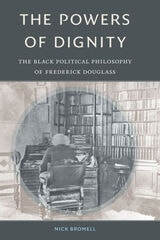
The Powers of Dignity
The Black Political Philosophy of Frederick DouglassNick Bromell
Duke University Press, 2021
The Powers of Philology
DYNAMICS OF TEXTUAL SCHOLARSHIPHans Ulrich Gumbrecht
University of Illinois Press, 2003
For two and a half millennia philologists have viewed themselves as the modest heirs and curators of their textual past's most glorious periods, collecting and editing text fragments, historicizing them and adding commentary, and ultimately teaching them to contemporary readers.
Gumbrecht argues for a return to this tradition as an alternative to an often free-floating textual interpretation and to the more recent redefinition of literary studies as "cultural studies," which risks a loss of intellectual focus. Such a return to philological core exercises, however, can become more than yet another movement of academic nostalgia only if it takes into account the hidden desire that has inspired
philology since its Hellenistic beginnings: the desire to make the past present again by embodying it.
The Powers of Pure Reason
Kant and the Idea of Cosmic PhilosophyAlfredo Ferrarin
University of Chicago Press, 2015
Ferrarin blows the dust off of two egregiously overlooked sections of the First Critique—the Transcendental Dialectic and the Doctrine of Method. There he discovers what he argues is the Critique’s greatest achievement: a conception of the unity of reason and an exploration of the powers it has to reach beyond itself and legislate over the world. With this in mind, Ferrarin dismantles the common vision of Kant as a philosopher writing separately on epistemology, ethics, and aesthetics and natural teleology, showing that the three Critiques are united by this underlying theme: the autonomy and teleology of reason, its power and ends. The result is a refreshing new view of Kant, and of reason itself.
The Powers of Sensibility
Aesthetic Politics through Adorno, Foucault, and RancièreMichael Feola
Northwestern University Press, 2018
Feola provides insightful engagements with the works of Adorno, Foucault, and Rancière as well as a survey of contemporary debates on aesthetics and politics. He uses this aesthetic framework to develop a more robust account of political agency, demonstrating that politics is not reducible to the exchange of views or the building of institutions, but rather incorporates public modes of feeling, seeing, and hearing (or not-seeing and not-hearing). These sensory modes must themselves be transformed in the work of emancipatory politics.
The book explores the core question: what does the aesthetic offer that is missing from the official languages of politics, citizenship, and power? Of interest to readers in the fields of critical theory, political theory, continental philosophy, and aesthetics, The Powers of Sensibility roots itself within the classical tradition of critical theory and yet uses these resources to speak to a variety of contemporary political movements.

The Powers of War and Peace
The Constitution and Foreign Affairs after 9/11John Yoo
University of Chicago Press, 2005
John Yoo, formerly a lawyer in the Department of Justice, here makes the case for a completely new approach to understanding what the Constitution says about foreign affairs, particularly the powers of war and peace. Looking to American history, Yoo points out that from Truman and Korea to Clinton's intervention in Kosovo, American presidents have had to act decisively on the world stage without a declaration of war. They are able to do so, Yoo argues, because the Constitution grants the president, Congress, and the courts very different powers, requiring them to negotiate the country's foreign policy. Yoo roots his controversial analysis in a brilliant reconstruction of the original understanding of the foreign affairs power and supplements it with arguments based on constitutional text, structure, and history.
Accessibly blending historical arguments with current policy debates, The Powers of War and Peace will no doubt be hotly debated. And while the questions it addresses are as old and fundamental as the Constitution itself, America's response to the September 11 attacks has renewed them with even greater force and urgency.
“Yoo’s theory promotes frank discussion of the national interest and makes it harder for politicians to parade policy conflicts as constitutional crises. Most important, Yoo’s approach offers a way to renew our political system’s democratic vigor.”—David B. Rivkin Jr. and Carlos Ramos-Mrosovsky, National Review
The Powers of the False
Reading, Writing, Thinking beyond Truth and FictionDoro Wiese
Northwestern University Press, 2014
The Powers
A NovelValerie Sayers
Northwestern University Press, 2015
In her inventive novel The Powers, Valerie Sayers, in both realistic and fantastic chapters, transports the reader to an age filled with giants: Dorothy Day and Walker Evans appear beside DiMaggio. The problems they face, from Catholic antisemitism to the challenge of pacifism in the face of overwhelming evil, play out in very public media, among them the photography of Evans and the baseball of DiMaggio. At once magical and familiar, The Powers is a story of witness and moral responsibility that will, like Joe DiMaggio, find some unlikely fans.