Results by title
3 books match the query 'Powers That Be'
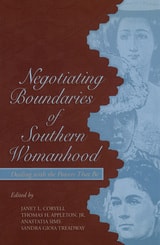
Negotiating Boundaries of Southern Womanhood
Dealing with the Powers That BeEdited & Intro by Janet L. Coryell, Thomas Appleton, Anastatia Sims, & Sandra Treadway
University of Missouri Press, 2000
In a time when most Americans never questioned the premise that women should be subordinate to men, and in a place where only white men enjoyed fully the rights and privileges of citizenship, many women learned how to negotiate societal boundaries and to claim a share of power for themselves in a male-dominated world.
Covering the early nineteenth through the early twentieth centuries, Negotiating Boundaries of Southern Womanhood describes the ways southern women found to advance their development and independence and establish their own identities in the context of a society that restricted their opportunities and personal freedom.
They confronted, cooperated with, and sometimes were co-opted by existing powers: the white and African American elite whose status was determined by wealth, family name, gender, race, skin color, or combinations thereof. Some women took action against established powers and, in so doing, strengthened their own communities; some bowed to the powers and went along to get along; some became the powers, using status to ensure their prosperity as well as their survival. All chose their actions based on the time and place in which they lived.
In these thought-provoking essays, the authors illustrate the complex intersections of race, class, and gender as they examine the ways in which southern women dealt with "the powers that be" and, in some instances, became those powers. Elitism, status, and class were always filtered through a prism of race and gender in the South, and women of both races played an important role in maintaining as well as challenging the hierarchies that existed.

The Powers That Be
David Halberstam
University of Illinois Press, 1979
Beginning with FDR's masterful use of radio to establish the sense of a personal, benevolently paternal relationship with the American people and culminating in the discovery and coverage of the Watergate break-in, Halberstam tracks the firm establishment of the media as a potent means of shaping both public opinion and public policy. He tells the story through vivid, intimate portraits of the men, women, and politics behind four key media organizations: CBS and its board chairman William S. Paley; Time magazine and its cofounder Henry Luce; the Washington Post and successive publishers Philip Graham and his wife, Katherine; and the Los Angeles Times and publishers Norman Chandler and his son, Otis.
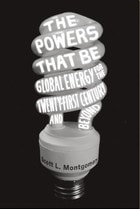
The Powers That Be
Global Energy for the Twenty-first Century and BeyondScott L. Montgomery
University of Chicago Press, 2010
Thirty years ago, our global energy landscape did not look remarkably different from what it does today. Three or four decades from now, it certainly will: dwindling oil reserves will clash with skyrocketing demand, as developing nations around the world lead their citizens into the modern energy economy, and all the while, the grave threat of catastrophic climate change looms ever larger. Energy worries are at an all-time high—just how will we power our future?
With The Powers That Be, Scott L. Montgomery cuts through the hype, alarmism, and confusion to give us a straightforward, informed account of where we are now, and a map of where we’re going. Starting with the inescapable fact of our current dependence on fossil fuels—which supply 80% of all our energy needs today—Montgomery clearly and carefully lays out the many alternative energy options available, ranging from the familiar, like water and solar, to such nascent but promising sources as hydrogen and geothermal power. What is crucial, Montgomery explains, is understanding that our future will depend not on some single, wondrous breakthrough; instead, we should focus on developing a more diverse, adaptable energy future, one that draws on a variety of sources—and is thus less vulnerable to disruption or failure.
An admirably evenhanded and always realistic guide, Montgomery enables readers to understand the implications of energy funding, research, and politics at a global scale. At the same time, he doesn’t neglect the ultimate connection between those decisions and the average citizen flipping a light switch or sliding behind the wheel of a car, making The Powers That Be indispensible for our ever-more energy conscious age.