Results by title
17 books match the query 'Prairie'
A Thousand Miles of Prairie
The Manitoba Historical Society and the History of Western CanadaJim Blanchard
University of Manitoba Press, 2002

An Illinois Sampler
Teaching and Research on the PrairieEdited by Mary-Ann Winkelmes and Antoinette Burton with Kyle Mays
University of Illinois Press, 2014
Aimed at alumni and prospective students interested in the university's ongoing mission, as well as current faculty and students wishing to stay up to date on the work being done around them, An Illinois Sampler showcases the best, the most ambitious, and the most effective teaching practices developed and nurtured at one of the world's premier research universities.
Contributors are Nancy Abelmann, Flavia C. D. Andrade, Jayadev Athreya, Betty Jo Barrett, Thomas J. Bassett, Hugh Bishop, Antoinette Burton, Lauren A. Denofrio-Corrales, Lizanne DeStefano, Karen Flynn, Bruce W. Fouke, Rebecca Ginsburg, Julie Jordan Gunn, Geoffrey Herman, Laurie Johnson, Kyle T. Mays, Rebecca Nettl-Fiol, Audrey Petty, Anke Pinkert, Raymond Price, Luisa-Maria Rosu, D. Fairchild Ruggles, Carol Spindel, Mark D. Steinberg, William Sullivan, Richard I. Tapping, Bradley Tober, Agniezska Tuszynska, Bryan Wilcox, Kate Williams, Mary-Ann Winkelmes, and Yi Lu.
Big House on the Prairie
Rise of the Rural Ghetto and Prison ProliferationJohn M. Eason
University of Chicago Press, 2017
In 2007, John M. Eason moved his family to Forrest City, Arkansas, in search of answers to key questions about this trend: Why is America building so many prisons? Why now? And why in rural areas? Eason quickly learned that rural demand for prisons is complicated. Towns like Forrest City choose to build prisons not simply in hopes of landing jobs or economic wellbeing, but also to protect and improve their reputations. For some rural leaders, fostering a prison in their town is a means of achieving order in a rapidly changing world. Taking us into the decision-making meetings and tracking the impact of prisons on economic development, poverty, and race, Eason demonstrates how groups of elite whites and black leaders share power. Situating prisons within dynamic shifts that rural economies are undergoing and showing how racially diverse communities lobby for prison construction, Big House on the Prairie is a remarkable glimpse into the ways a prison economy takes shape and operates.
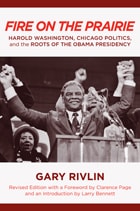
Fire on the Prairie
Harold Washington, Chicago Politics, and the Roots of the Obama PresidencyGary Rivlin
Temple University Press, 2012
Harold Washington’s historic and improbable victory over the vaunted Chicago political machine shook up American politics. The election of the enigmatic yet engaging Washington led to his serving five tumultuous years as the city’s first black mayor. He fashioned an uneasy but potent multiracial coalition that today still stands as a model for political change.
In this revised edition of Fire on the Prairie, acclaimed reporter Gary Rivlin chronicles Washington’s legacy—a tale rich in character and intrigue. He reveals the cronyism of Daley’s government and Washington’s rivalry with Jesse Jackson. Rivlin also shows how Washington’s success inspired a young community organizer named Barack Obama to turn to the electoral arena as a vehicle for change. While the story of a single city, , this political biography is anything but parochial.
From Peaks to Prairie
The Gifts of Walking in an Anxious LifeCara Chamberlain
Oregon State University Press, 2026
Along twenty-nine trails near Yellowstone National Park, Cara Chamberlain leads readers on a journey of perseverance, drawing lessons from human and natural history. She reflects on being diagnosed with generalized anxiety disorder (GAD) and obsessive-compulsive disorder (OCD) and explores how walking helps manage anxiety, opening rich pathways of perception.
In From Peaks to Prairie, Chamberlain examines her personal life, family history, and struggles as she encounters animals and plants of Montana and Wyoming. Each essay is an episode mingling the past with the present, combining sightings of bears, birds, and wildflowers with memories of her Utah childhood and family. She observes, “I walk. It’s the way I’ve found not to eliminate GAD and OCD, as I used to long to do, but to live with them.” Mountains and prairies offer strength and nurture those who need them. It is on their paths that Chamberlain finds clarity.
From Prairie to Prison
The Life of Social Activist Kate Richards O'HareSally M. Miller
University of Missouri Press, 1993
This is the first full-length biography of the woman who crusaded tirelessly for women, workers, and children, and became the most celebrated socialist woman from the West.
Gentlemen on the Prairie
Victorians in Pioneer IowaHarnack, Curtis
University of Iowa Press, 1985
@font-face { font-family: "Palatino";}@font-face { font-family: "?????? Pro W3";}p.MsoNormal, li.MsoNormal, div.MsoNormal { margin: 0in 0in 0.0001pt; font-size: 12pt; font-family: "Times New Roman"; }p.FreeForm, li.FreeForm, div.FreeForm { margin: 0in 0in 0.0001pt; font-size: 12pt; font-family: "Times New Roman"; color: black; }div.Section1 { page: Section1; }
In the 1880s, the well-connected young Englishman William B. Close and his three brothers, having bought thousands of acres of northwest Iowa prairie, conceived the idea of enticing sons of Britain’s upper classes to pursue the life of the landed gentry on these fertile acres. “Yesterday a wilderness, today an empire”: their bizarre experiment, which created a colony for people “of the better class” who were not in line to inherit land but whose fathers would set them up in farming, flourished in Le Mars, Iowa (and later in Pipestone, Minnesota), with over five hundred youths having a go at farming. In Gentlemen on the Prairie, Curtis Harnack tells the remarkable story of this quite unusual chapter in the settling of the Midwest.
Many of these immigrants had no interest in American citizenship but enjoyed or endured the challenging adventure of remaining part of the empire while stranded on the plains. They didn’t mix socially with other Le Mars area residents but enjoyed such sports as horse racing, fox hunts, polo, and an annual derby followed by a glittering grand ball. Their pubs were named the House of Lords, the House of Commons, and Windsor Castle; the Prairie Club was a replica of a London gentlemen’s club, an opera house attracted traveling shows, and their principal hotel was Albion House. In St. George’s Episcopal Church, prayers were offered for the well-being of Queen Victoria.
Problems soon surfaced, however, even for these well-heeled aristocrats. The chief problem was farm labor; there was no native population to exploit, and immigrant workers soon bought their own land. Although sisters might visit the colonists and sometimes marry one of them, appropriate female companionship was scarce. The climate was brutal in its extremes, and many colonists soon sold their acres at a profit and moved to countries affiliated with Britain. When the financial depression in the early 1890s lowered land values and made agriculture less profitable, the colony collapsed. Harnack skillfully draws upon the founder’s “Prairie Journal,” company ledgers, and other records to create an engaging, engrossing story of this quixotic pioneering experiment.
Grasses in Your Pocket
A Guide to the Prairie Grasses of the Upper MidwestAnna B. Gardner, Michael Hurst, Deborah Lewis, and Lynn G. Clark
University of Iowa Press, 2014
The authors have organized species into groups by their most easily noted field characteristics. Are the flowering heads branched or unbranched? Are the branches dense, narrow, or fingerlike? For each species, its native or exotic status is followed by the months of flowering, abundance, general habitat, height, diagnostic features, geographic range, and, if relevant, threatened or endangered status.
Even amateur naturalists can identify big and little bluestem and prairie dropseed in the field, but both professional and amateur naturalists find certain grasses harder to identify, especially the less common or rare species such as cluster fescue and sand reedgrass. The photographs and descriptions in Grasses in Your Pocket will be an invaluable reference for outdoor expeditions in midwestern grasslands.
Iowa Past to Present
The People and the Prairie, Revised Third EditionDorothy Schwieder
University of Iowa Press, 2011
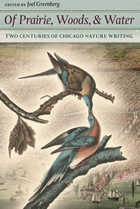
Of Prairie, Woods, and Water
Two Centuries of Chicago Nature WritingEdited by Joel Greenberg
University of Chicago Press, 2008
These writings tell the tale of a land in transition—one with abundant, unique, and incredibly lush flora and fauna, a natural history quite elusive today. Drawing on archives he uncovered while writing his acclaimed A Natural History of the Chicago Region, Greenberg hand-selected these first-person narratives, all written between 1721 and 1959. Not every author is familiar, but every contribution is distinctive. From a pioneer’s hilarious notes on life in the Kankakee marsh to Theodore Drieser’s poignant plea for conservation of the Tippecanoe River to infamous murderer Nathan Leopold’s charming description of a pet robin he kept in prison, the sources included are as diverse as the nature they describe.
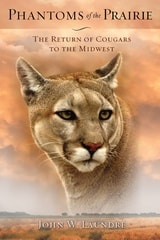
Phantoms of the Prairie
The Return of Cougars to the MidwestJohn W. Laundré
University of Wisconsin Press, 2012
Last seen in the 1880s, cougars (also known as pumas or mountain lions) are making a return to the plains regions of the Midwest. Their comeback, heralded by wildlife enthusiasts, has brought concern and questions to many. Will the people of the region make room for cougars? Can they survive the highly altered landscape of the Midwest? Is there a future for these intrepid pioneers if they head even farther east?
Using GIS technology, and historical data, among many other methods, Phantoms of the Prairie takes readers on a virtual journey, showing how the cougar might move over the landscape with minimal human contact. Drawing on his years of research on cougars, John W. Laundré offers an overview of what has been, what is, and what might be regarding the return of cougars to their ancestral prairie homeland.
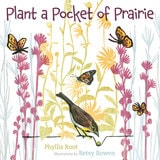
Plant a Pocket of Prairie
Phyllis Root
University of Minnesota Press, 2014
Author Phyllis Root and illustrator Betsy Bowen last explored the vast, boggy peatlands of northern Minnesota in their book Big Belching Bog. Now, in Plant a Pocket of Prairie, Root and Bowen take young readers on a trip to another of Minnesota’s important ecosystems: the prairie.
Once covering almost 40 percent of the United States, native prairie is today one of the most endangered ecosystems in the world. Plant a Pocket of Prairie teaches children how changes in one part of the system affect every other part: when prairie plants are destroyed, the animals who eat those plants and live on or around them are harmed as well. Root shows what happens when we work to restore the prairies, encouraging readers to “plant a pocket of prairie” in their own backyards.
By growing native prairie plants, children can help re-create food and habitat for the many birds, butterflies, and other animals that depend on them. “Plant cup plants,” Root suggests. “A thirsty chickadee might come to drink from a tiny leaf pool. Plant goldenrod. A Great Plains toad might flick its tongue at goldenrod soldier beetles.” An easy explanation of the history of the prairie, its endangered status, and how to go about growing prairie plants follows, as well as brief descriptions of all the plants and animals mentioned in the story.
With Betsy Bowen’s beautiful, airy illustrations capturing the feel of an open prairie and all its inhabitants, readers of all ages will be inspired to start planting seeds and watching for the many fascinating animals their plants attract. What a marvelous transformation could take place if we all planted a pocket of prairie!
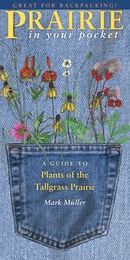
Prairie in Your Pocket
A Guide to Plants of the Tallgrass PrairieMark Muller
University of Iowa Press, 2000
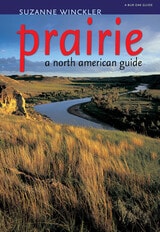
Prairie
A North American GuideSuzanne Winckler
University of Iowa Press, 2004
North America’s grasslands once stretched from southern Canada to northern Mexico, and across this considerable space different prairie types evolved to express the sum of their particular longitude and latitude, soils, landforms, and aspect. This prairie guide is your roadmap to what remains of this varied and majestic landscape.
Suzanne Winckler’s goal is to encourage travelers to get off the highways, out of their cars, and onto North America’s last remaining prairies. She makes this adventure as easy as possible by providing exact driving directions to the more than three hundred sites in her guide. She also includes information about size, management, phone numbers, and outstanding characteristics for every prairie site and provides readers with a thorough list of recommended readings and Web sites.
The scope of the guide is impressive. It encompasses prairies found within national grasslands, parks, forests, recreation areas, wildlife refuges, state parks, preserves, and natural areas and on numerous working ranches in Saskatchewan and Manitoba, the Dakotas, Minnesota, Illinois, Iowa, Kansas, Missouri, Nebraska, Oklahoma, and Texas. A series of maps locate the prairies both geographically and by name.
From “the largest restoration project within the historic range of tallgrass prairie” at Neal Smith National Wildlife Refuge in Iowa to Big Bend National Park in Texas, where “the Chisos Mountains, completely surrounded by the park, rise up majestically from the Chihuahuan Desert floor,” Winckler celebrates the dramatic expanses of untouched prairie, the crown jewels of prairie reconstruction and restoration, and the neglected remnants that deserve to be treasured.

THEY BROKE THE PRAIRIE
Earnest Elmo Calkins
University of Illinois Press, 1989
the Galesburg and Knox College Centenary, the book contains a wealth of
lively details and amusing anecdotes. Calkins traces the progress of the
community and the college through the arrival of the railroad, slave running,
abolitionist confrontations, the Lincoln-Douglas debates, the Civil War,
and the postwar era.
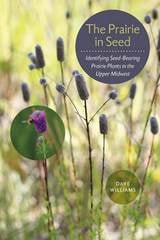
The Prairie in Seed
Identifying Seed-Bearing Prairie Plants in the Upper MidwestDave Williams
University of Iowa Press, 2016
As interest in these wildflowers and grasses has grown, so has demand for better resources to identify the hundreds of species that make up the native prairie. In The Prairie in Seed, Dave Williams shows us how to identify wildflowers when they are out of bloom and, in particular, how to harvest their seeds. Without the flower color and shape as guides, it can be difficult to identify prairie plants. Imagine trying to distinguish between a simple prairie sunflower and an ox-eye sunflower with no flowers to look at!
In this richly illustrated guide, Williams offers dormant plant identification information, seed descriptions, and advice on seed harvesting and cleaning for seventy-three of the most common wildflowers found in the tallgrass prairie. He includes photographs and descriptions of the plants in bloom and in seed to assist in finding them when you are ready to harvest. Each species description explains where the seeds are located on the plant, when seed ripening begins, and how many seeds each species produces, along with a photograph and approximate measurements of the actual seed. Finally, this guide provides assistance on how and when to hand-harvest seeds for each species, as well as some simple tips on seed cleaning.
An indispensable guide for anyone involved in prairie restoration or conservation, this book is the perfect complement to Williams’s The Tallgrass Prairie Center Guide to Seed and Seedling Identification in the Upper Midwest.
To Make a Prairie
Essays on Poets, Poetry, and Country LivingMaxine Kumin
University of Michigan Press, 1980